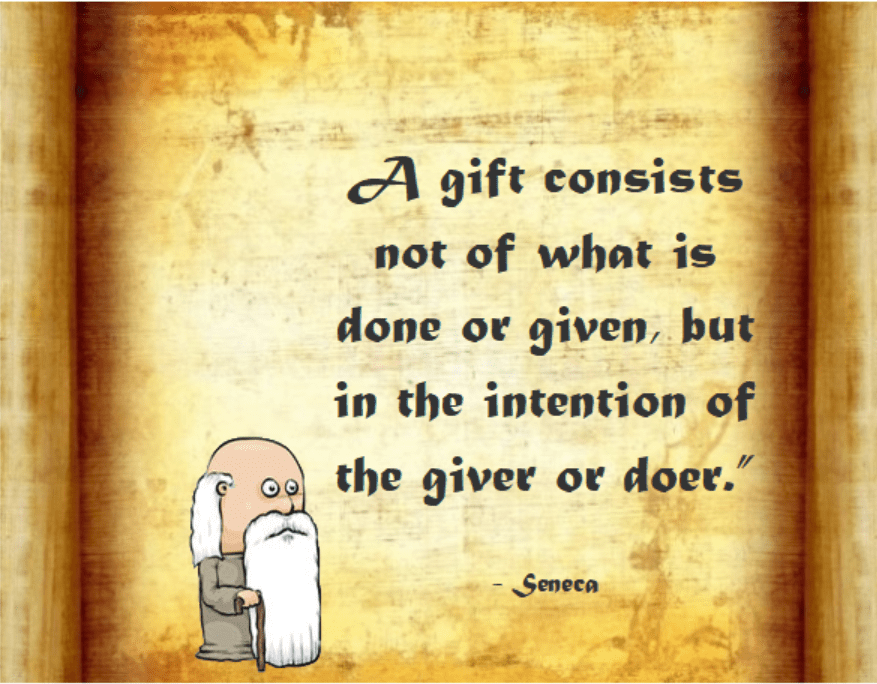
“A gift consists not in what is done or given, but in the intention of the giver or doer.”
Seneca
Seneca, also known as Seneca the Younger or Lucius Annaeus Seneca, was a prominent Roman philosopher, statesman, and playwright who lived from approximately 4 BC to AD 65. He was born in Corduba (present-day Córdoba, Spain) and came from a wealthy and influential family.
Seneca is best known for his contributions to Stoicism, a philosophical school that emphasized the development of virtue, self-control, and inner tranquility as the path to a happy and meaningful life. He wrote extensively on various subjects, including ethics, morality, and the nature of the universe.
In his philosophical works, Seneca explored the idea of living in accordance with nature, accepting life’s challenges with equanimity, and embracing personal responsibility for one’s actions and attitudes. He believed that true happiness and freedom come from cultivating one’s character and not being overly attached to external circumstances or material possessions.
Aside from his philosophical pursuits, Seneca also served as an advisor and tutor to the Roman emperor Nero, who was his nephew. Despite his close association with Nero, Seneca faced political challenges and eventually fell out of favor with the emperor. In AD 65, he was forced to commit suicide after being accused of involvement in a conspiracy against Nero, a fate he met with courage and philosophical composure.
Seneca’s writings have had a significant influence on Western philosophy and continue to be studied and admired to this day. His works, such as “Letters to Lucilius” and “On the Shortness of Life,” offer timeless wisdom and insights into human nature, making him one of the most celebrated thinkers of the ancient world.
The quote “A gift consists not in what is done or given, but in the intention of the giver or doer” emphasizes the importance of the motive or intention behind a gift or action, rather than solely focusing on the material value or outcome.
At its core, the quote suggests that the true essence of a gift or act of kindness lies in the thought and sentiment behind it. A meaningful gift is not merely determined by its monetary value or grandeur but is defined by the genuine care, love, or goodwill expressed by the giver. Similarly, a compassionate act carries greater significance when it is motivated by empathy, compassion, and a desire to help others.
In essence, the quote reminds us that the true worth of a gift or action is in the emotions, intentions, and feelings invested in it. It encourages us to be mindful of the deeper connections we share with others, fostering a sense of appreciation and gratitude for the sincerity and kindness of those who give or act with genuine intent.
This concept extends beyond material gifts and encompasses any gesture, deed, or support offered to others. It reminds us that the thoughtfulness and goodwill we put into our actions have the power to create a positive impact on the lives of those we interact with, enriching relationships and building a sense of community and empathy.
Thank you for reading my writings. If you’d like to, you can buy me a coffee for just £1 and I will think of you while writing my next post! Just hit the link below…. (thanks in advance)

 The Sage Page