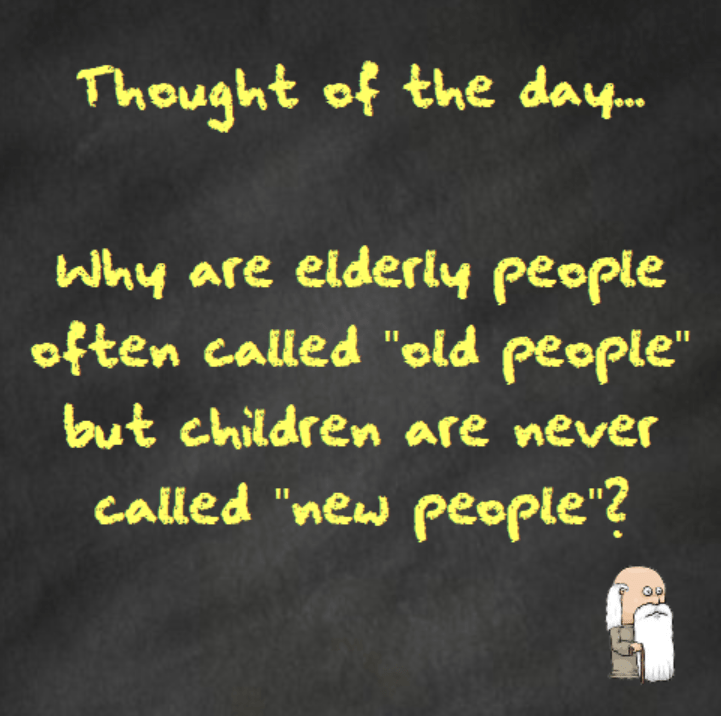
Why are elderly people often called “old people” but children are never called “new people”?
The terminology used for different age groups can be influenced by historical and cultural factors, as well as societal perceptions and norms. There are a few reasons why elderly people are often referred to as “old people,” while children are not commonly called “new people.”
- Lifespan Stages: Human life is often divided into stages, and “old people” is a term used to refer to individuals in the later stages of life, typically after retirement age. In contrast, “new people” is not a recognized life stage, and children are more commonly referred to as “children” or “kids.”
- Cultural Norms: Different cultures have different ways of referring to age groups. In many cultures, there’s a specific word or phrase for elderly individuals, while the terminology for children may focus on their developmental stage or age group (e.g., infants, toddlers, tweens, teens).
- Historical Language Use: The term “old people” has a long history of use in the English language and is often used as a descriptive term for seniors. Language evolves slowly, and historical terms can persist even as societal attitudes change.
- Respect and Sensitivity: When referring to children, terms like “new people” are less common because they may not capture the developmental stage or convey the same level of respect and sensitivity that terms like “children” or “kids” do. These latter terms acknowledge the unique needs, characteristics, and qualities of children.
- Identity and Self-Perception: Elderly individuals may sometimes embrace the term “old people” as part of their identity, while children typically don’t identify as “new people.” Elderly people often have distinct experiences, perspectives, and needs related to aging, which can lead to a shared identity.
It’s important to note that language is a dynamic aspect of culture and society. Over time, terms may evolve or change in response to shifts in societal attitudes and perceptions. The use of language can also vary greatly depending on context, individual preferences, and cultural norms. In any case, when referring to people of different age groups, it’s generally advisable to use respectful and age-appropriate terminology.
Thank you for reading my writings. If you’d like to, you can buy me a coffee for just £1 and I will think of you while writing my next post! Just hit the link below…. (thanks in advance)

 The Sage Page