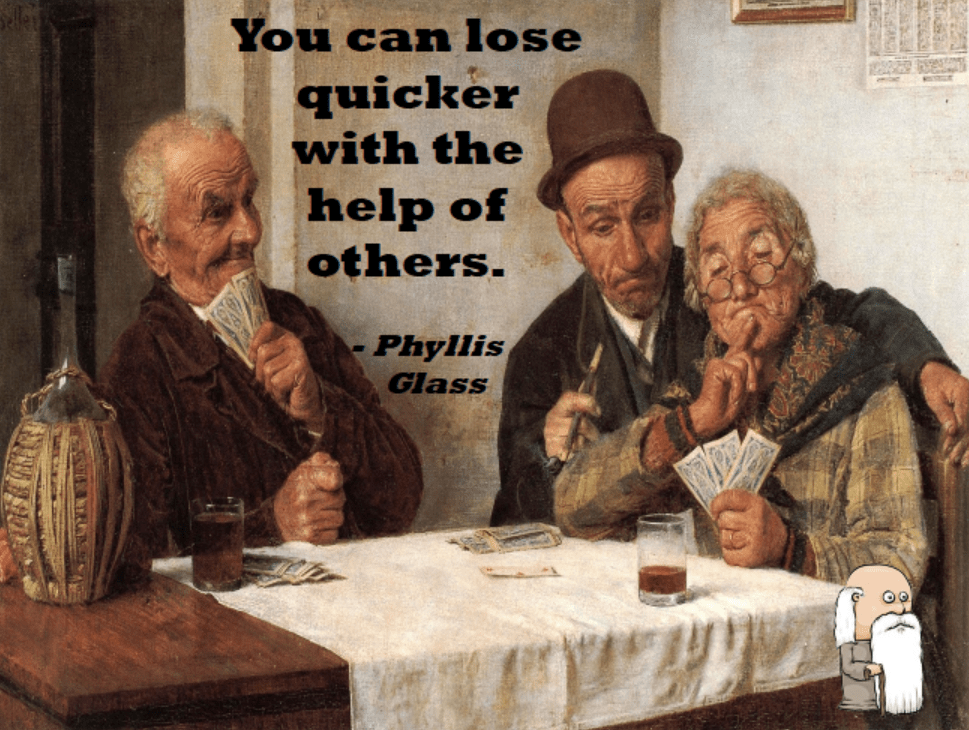
“You can lose quicker with the help of others”
Phyllis Glass
Phyllis Glass (Born March 8, 1960, in London, England) is a contemporary British author and social philosopher, known for her insightful observations on collaboration, individual agency, and the dynamics of interpersonal relationships.
Early Life:
Phyllis Glass was born into a creative and intellectually stimulating environment in London. Her early exposure to diverse perspectives and ideologies influenced her later philosophical explorations into human behavior.
Educational Pursuits:
Glass pursued her higher education at the University of Oxford, where she earned a degree in Social Psychology. This academic background provided her with a solid foundation for her future writings on the complexities of human interaction.
Literary Career:
In the early 2000s, Phyllis Glass emerged as a distinctive voice in contemporary social philosophy with her debut book, “The Prism of Relationships,” published in 2004. This work laid the groundwork for her exploration of the intricate connections between individuals and the impact of collaboration on personal outcomes.
Philosophical Insights:
Glass’s keen observations on the dynamics of collaboration culminated in her seminal work, “Interdependence and Influence: Navigating the Waters of Collective Action,” published in 2010. It was in this book that she introduced the provocative idea that “You can lose quicker with the help of others.” Glass argued that collaboration, while often beneficial, can also expedite negative outcomes when individuals fail to align their goals and actions effectively.
The Quote and Its Meaning:
“You can lose quicker with the help of others” encapsulates Glass’s nuanced perspective on collaboration and collective action. In positive terms, the quote serves as a reminder of the importance of strategic alignment and effective communication in group endeavors. Glass suggests that while working with others can lead to rapid success, it can also amplify setbacks if there is a lack of coordination or shared vision.
Legacy:
Phyllis Glass’s writings have garnered attention for their fresh perspective on social dynamics and collaboration. Her insights continue to influence discussions on teamwork, leadership, and the delicate balance between individual agency and collective effort.
Contemporary Impact:
In the 21st century, Phyllis Glass remains an influential figure in social philosophy, engaging in discussions and seminars on the complexities of collaboration. Her ideas, though initially provocative, have sparked meaningful conversations about the intricacies of working together and the potential pitfalls of collective endeavors.
Phyllis Glass’s ongoing contributions to the understanding of human relationships and collaboration affirm her place as a contemporary thinker whose ideas resonate with those navigating the challenges of interpersonal dynamics in an interconnected world.
Thank you for reading my writings. If you’d like to, you can buy me a coffee for just £1 and I will think of you while writing my next post! Just hit the link below…. (thanks in advance)

 The Sage Page