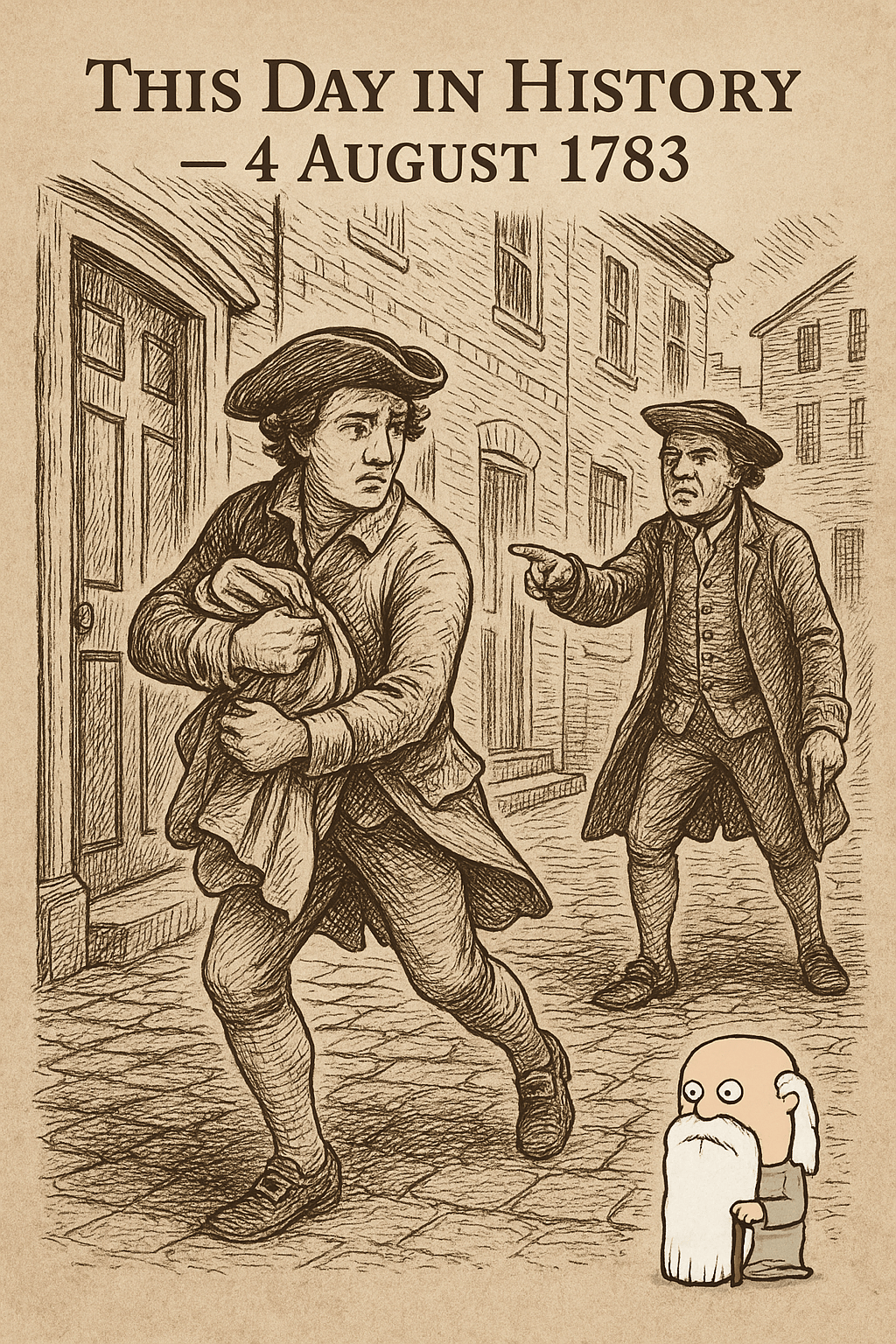
James Mackey and the Satin Waistcoat
A petty theft. A swift arrest. Seven years away from home.
🧥 The Crime
On 4 August 1783, James Mackey stood indicted at the Old Bailey for grand larceny, accused of stealing a satin waistcoat valued at 3 shillings, and a corded dimity waistcoat worth 5 shillings, from his own employer. Though modest, the combined value of 8 shillings was enough to trigger severe consequences.
🕵️ What Happened
Mackey was a servant in a modest London household. One afternoon, suspicion fell on him after a waistcoat went missing. The accusation seemed almost reflexive: servants were often blamed. But in Mackey’s case, the evidence followed swiftly.
Although detailed witness testimony isn’t available in the online summary, the court record confirms:
- The property was found in his possession.
- He was identified and brought before the magistrate.
- He offered no significant defence or denial.
The legal process was mercilessly efficient.
⚖️ The Verdict & Sentence
The verdict was:
Guilty
And the punishment:
Transportation for seven years
Mackey was sent to the convict ships bound for New South Wales, beginning an exile far from his London life. The sentence was typical for first-time thieves: no hanging, but permanent removal and forced labor overseas.
🔍 Why It Matters
- Even theft of small items like waistcoats could lead to exile.
- The case underscores how servants were both trusted and deeply vulnerable.
- The transport system was rapidly expanding—convicts became labourers in the colonies.
- It reflects the rigid nature of Georgian justice and the impact on poor Londoners.
Thank you for reading my writings. If you’d like to, you can buy me a coffee for just £1 and I will think of you while writing my next post! Just hit the link below…. (thanks in advance)

 The Sage Page