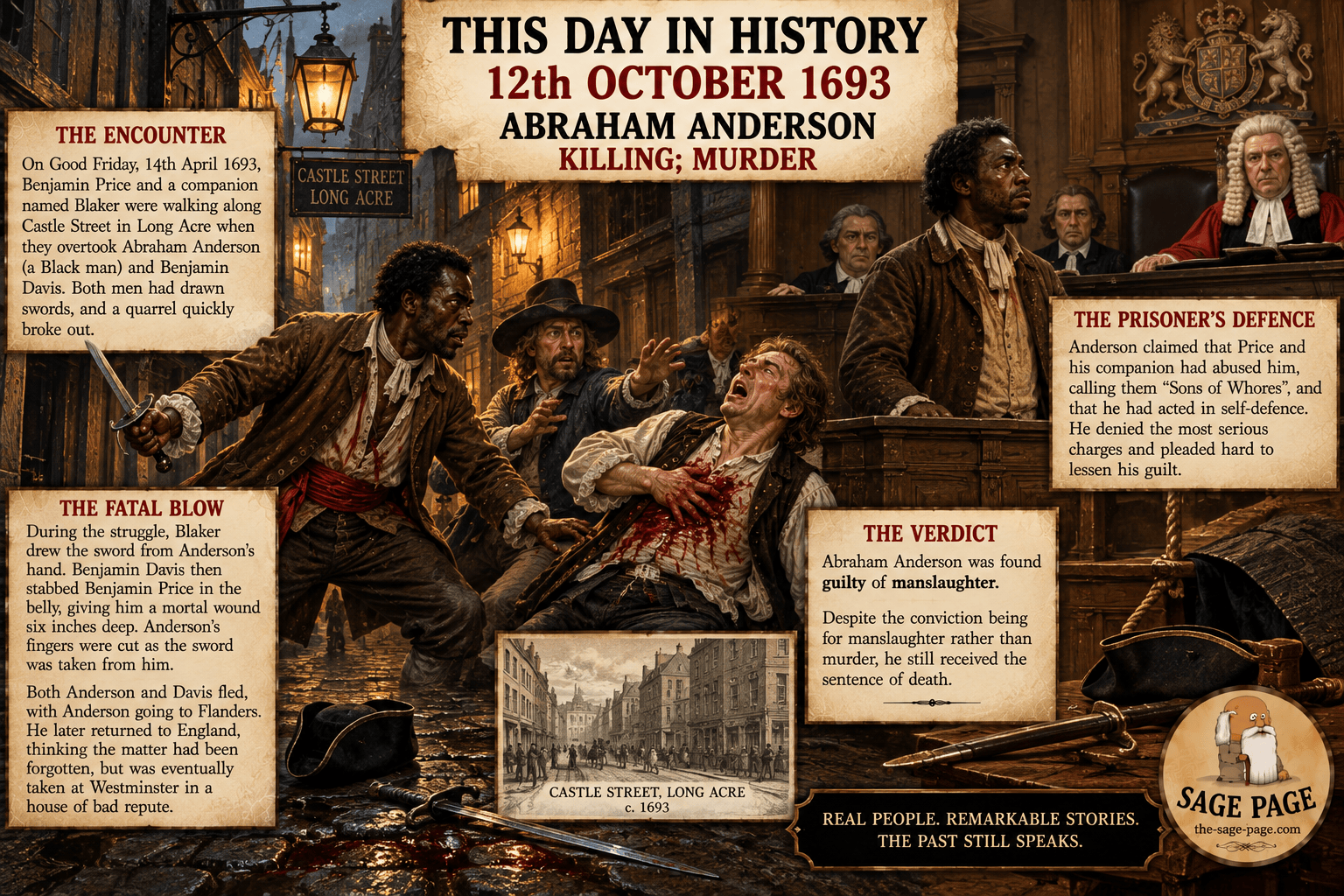
A Good Friday quarrel in 1693 ended in murder when Benjamin Price was fatally stabbed in London’s Castle Street. Abraham Anderson fled to Flanders, only to return and face trial at the Old Bailey. Although another man delivered the fatal wound, Anderson was convicted of manslaughter and sentenced to death.
Tag Archives: today in history
This Day in History – 9th September 1742
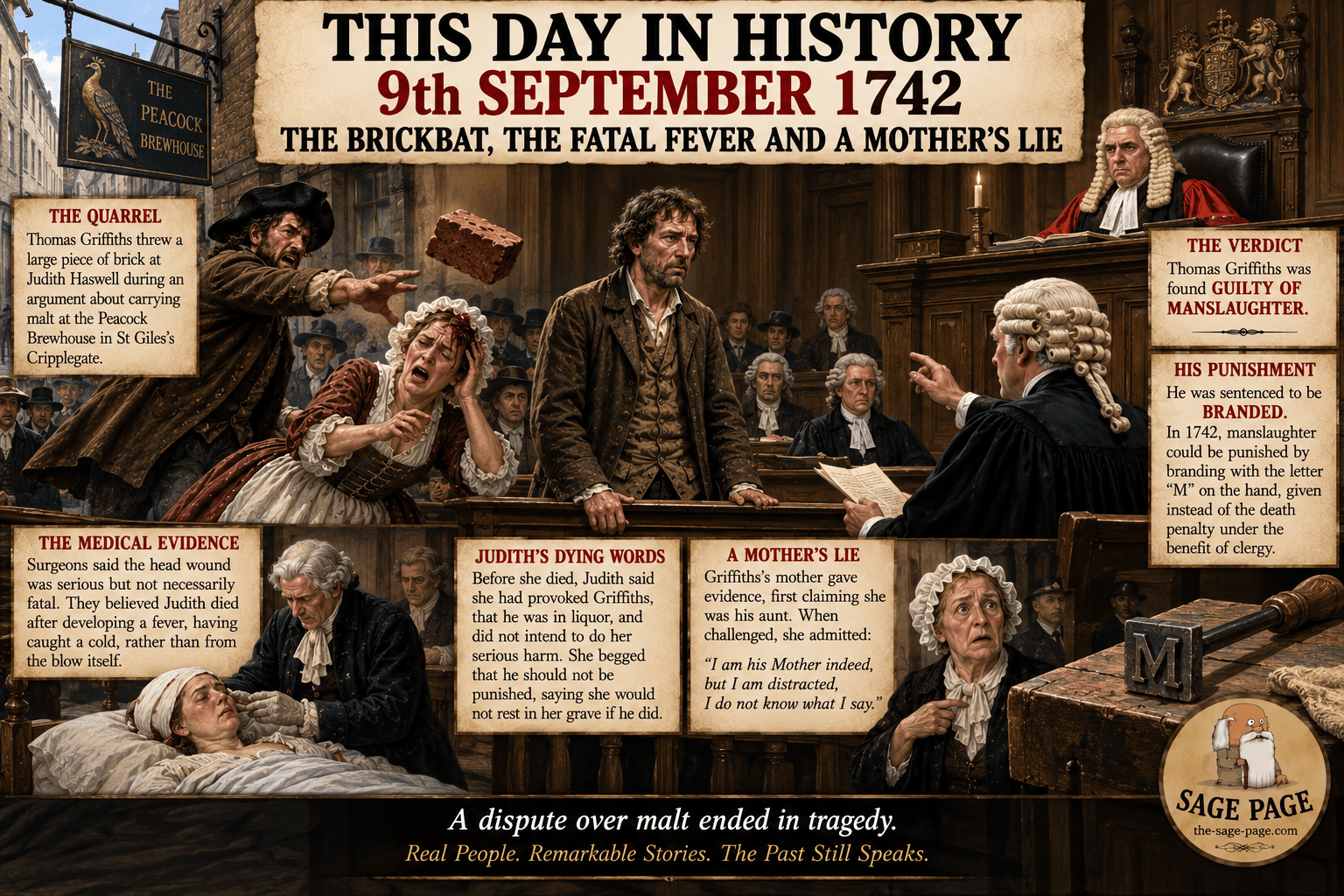
A quarrel over carrying malt ended in tragedy when Thomas Griffiths threw a brickbat at Judith Haswell in 1742. She survived for days before dying after developing a fever. With disputed medical evidence, Judith’s plea for mercy and even a courtroom lie from Griffiths’s mother, the jury chose manslaughter over murder.
This Day in History – 18th August 1856
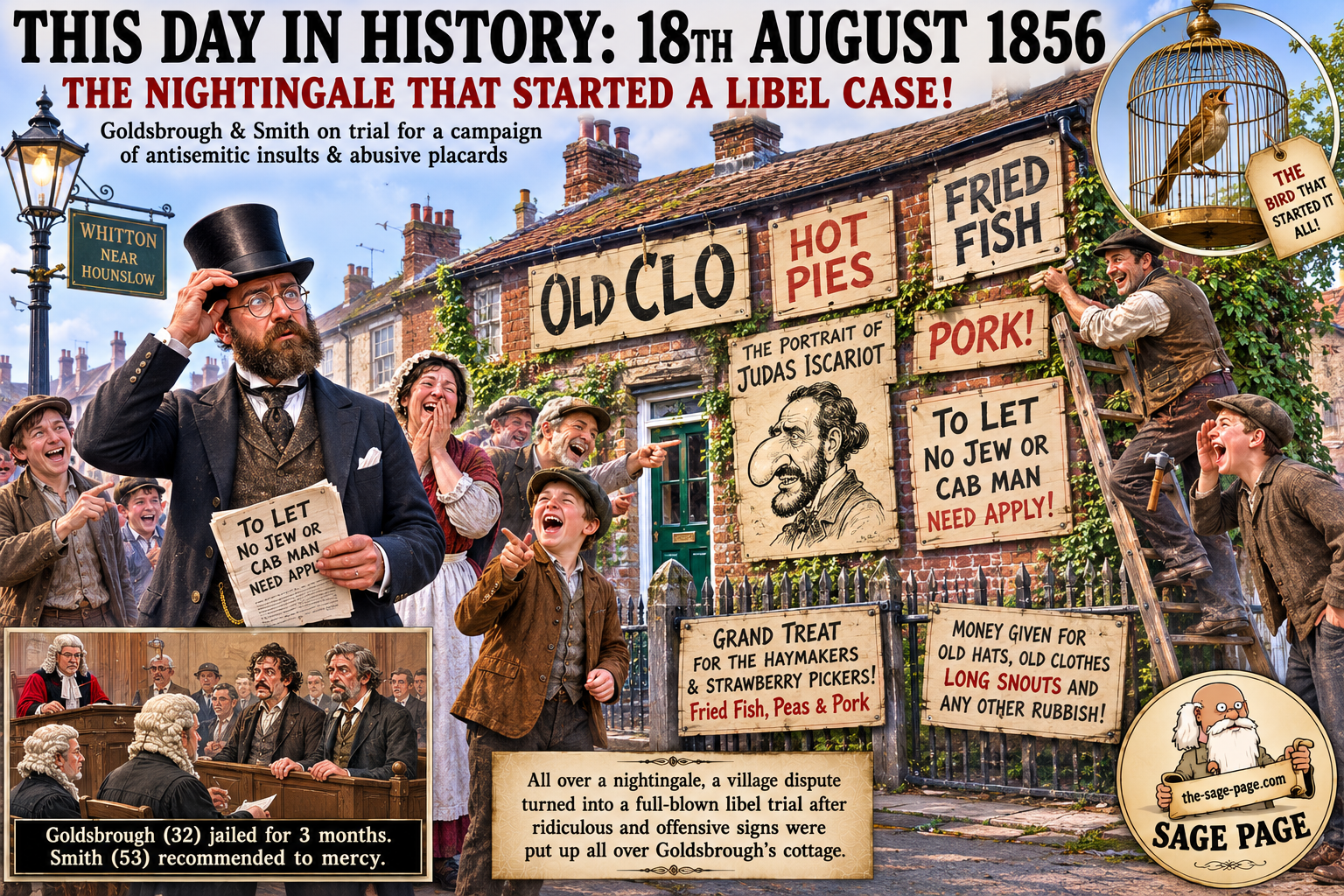
A dispute over a nightingale became something far uglier in August 1856 when Joseph George was targeted by insulting placards, caricatures and antisemitic abuse. The campaign became so severe that George considered leaving his home. Frederick Henry Goldsbrough and Henry Smith eventually found themselves facing an Old Bailey jury.
This Day in History – 5th August 1723

On 5th August 1723, highwaymen William Duce and James Butler were executed at Tyburn. Their remarkable final confessions reveal the workings of organised robbery gangs, betrayals by informers, violent attacks across London and Hampshire, and the personal reflections of two men who knew their criminal lives had reached a fatal end.
This Day in History – 4th August 1749

On 4th August 1749, smuggler Uriah Creed was executed after joining an armed gang landing contraband tea on the Kent coast. Once an honest labourer, he became an outlaw, lived under an alias in Essex, and was finally captured after calmly surrendering, admitting he was “already a dead man.”
This Day in History – 28th July 1721
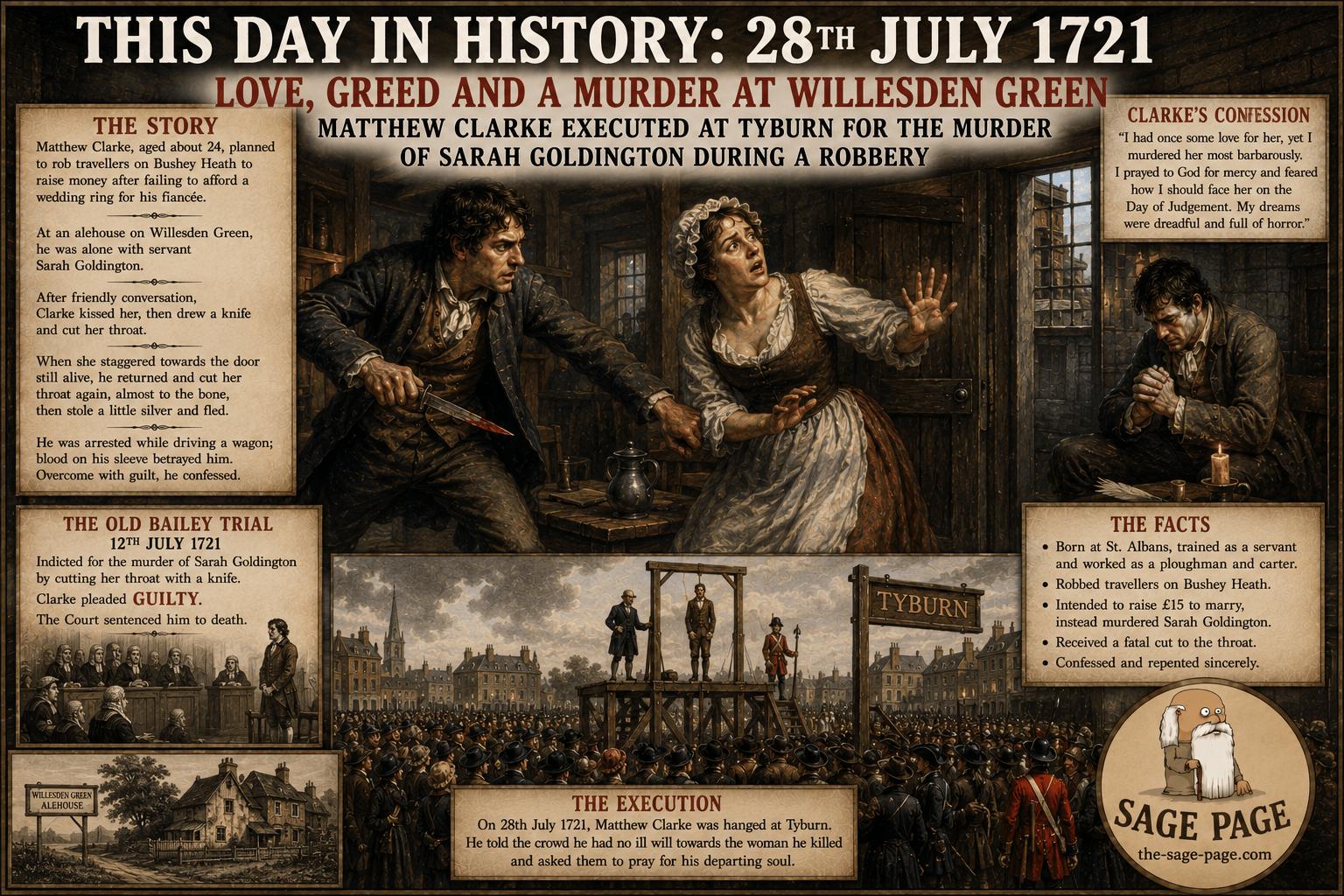
On 28th July 1721, Matthew Clarke was executed for murdering Sarah Goldington during a robbery at Willesden Green. His detailed confession reveals a failed marriage scheme, a robbery planned to raise money, overwhelming remorse, terrifying dreams, and a final plea for others to learn from his tragic and violent downfall.
This Day in History – 24th July 1685
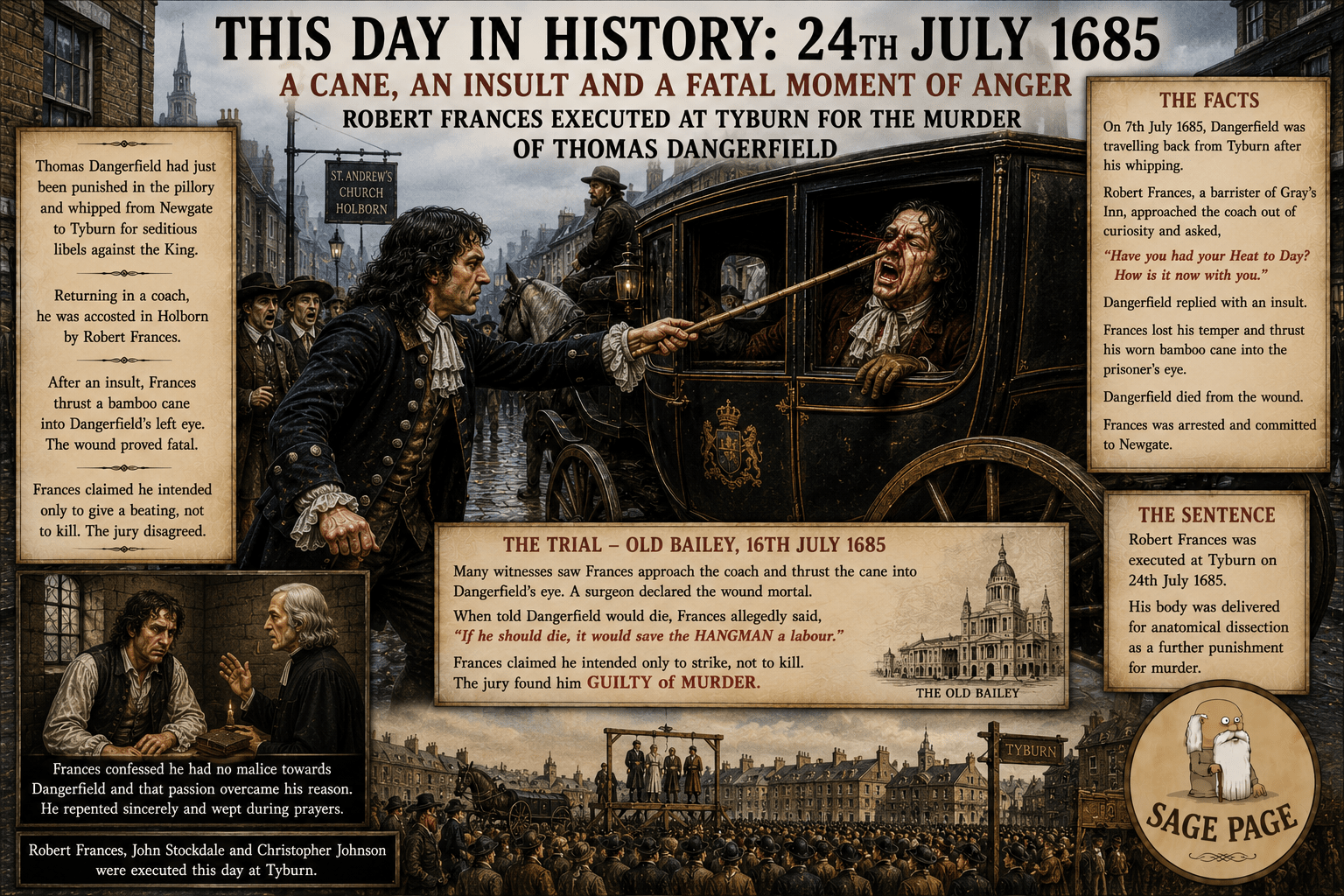
On 24th July 1685, barrister Robert Frances faced execution for killing the notorious Thomas Dangerfield. Frances claimed he merely intended to strike the recently whipped prisoner with his bamboo cane after being insulted. Instead, the cane entered Dangerfield’s eye, turning a fleeting burst of anger into a fatal encounter.
This Day in History – 23rd July 1753
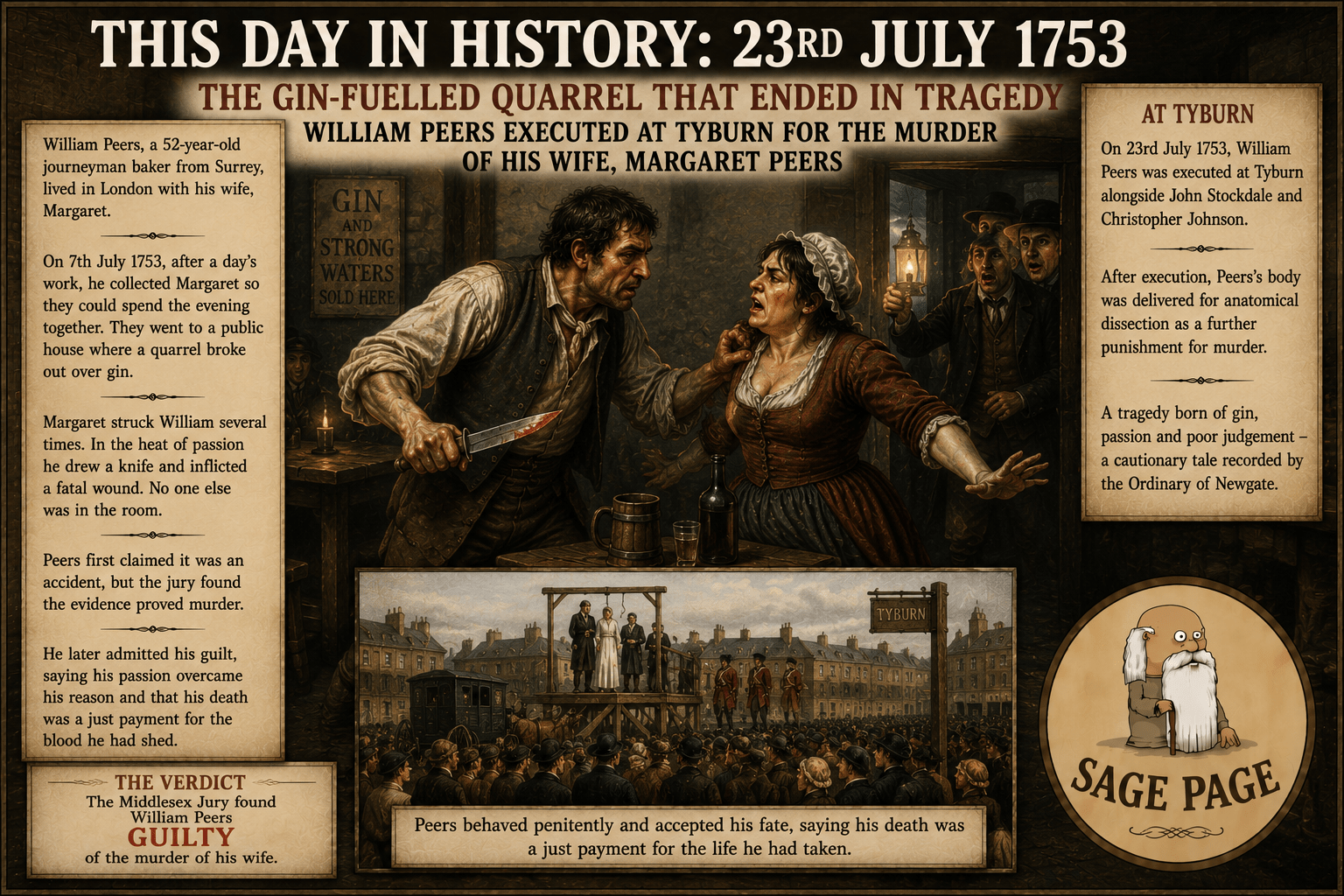
A quarrel over gin ended with one fatal knife wound and a journey to Tyburn. William Peers’ execution on 23rd July 1753 tells the tragic story of an ordinary London baker whose violent temper destroyed his wife, his own life, and left behind a cautionary tale recorded by the Ordinary of Newgate.
This Day in History – 22nd July 1895
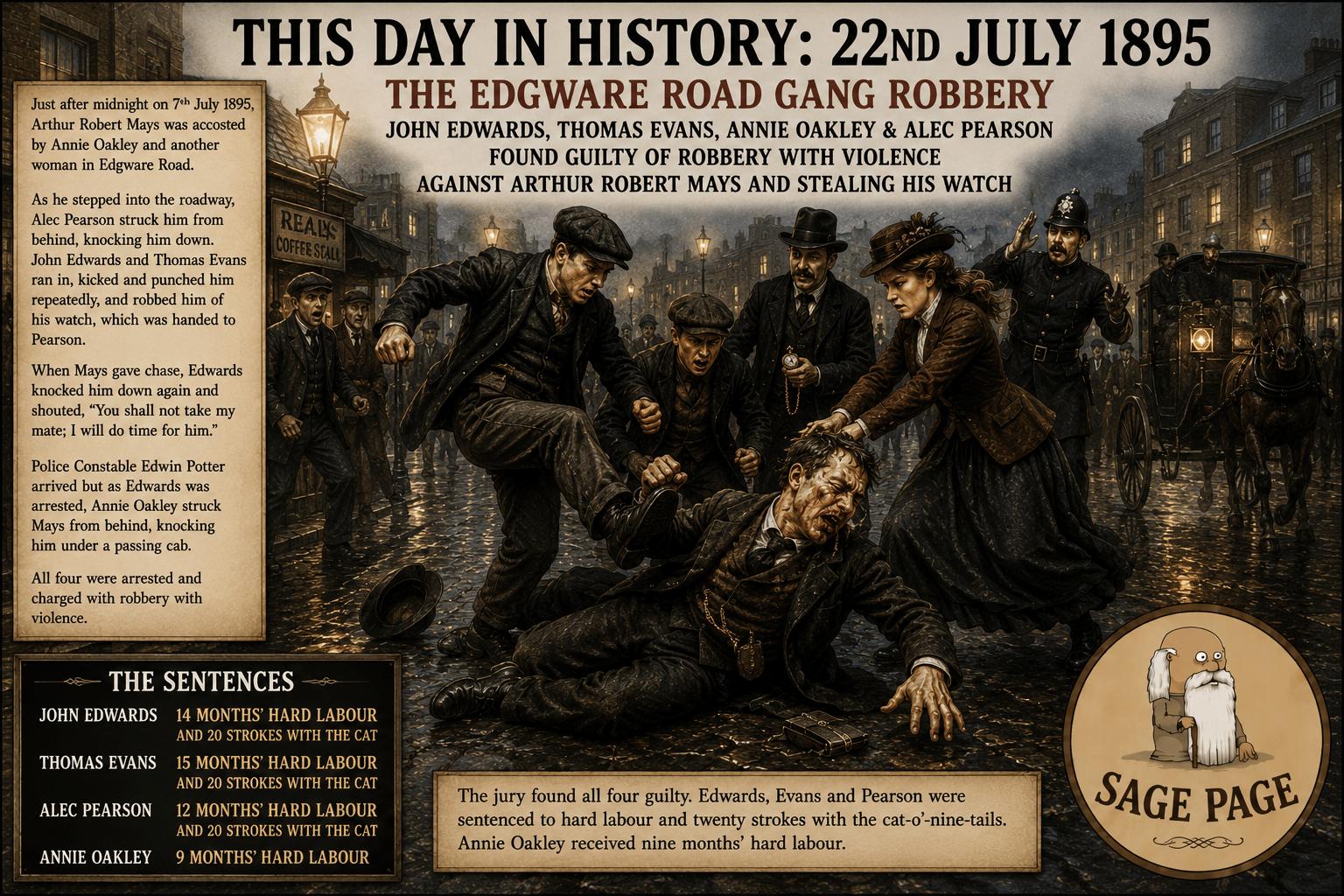
A late-night walk along Edgware Road turned into a brutal gang robbery when Arthur Robert Mays was attacked by four young offenders and robbed of his watch. Witnesses quickly identified the assailants, leading to convictions that ended with hard labour—and the brutal punishment of the cat-o’-nine-tails.
This Day in History – 21st July 1902
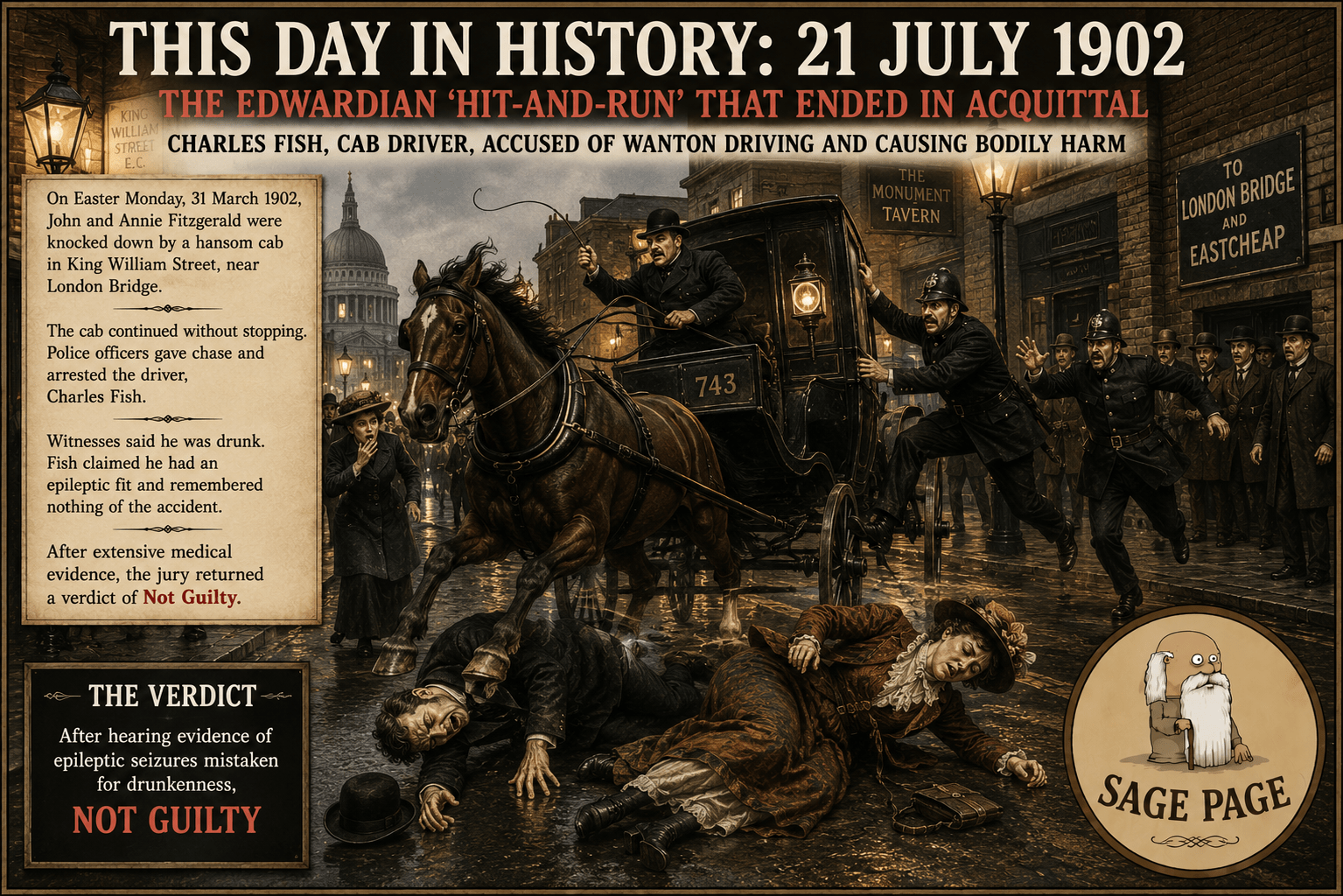
When a speeding hansom cab struck a couple in London’s streets in 1902, witnesses believed the driver was drunk and fleeing the scene. Yet remarkable medical evidence suggested an undiagnosed epileptic seizure instead. The Old Bailey’s verdict created one of Britain’s earliest courtroom debates over illness, driving and criminal responsibility.

