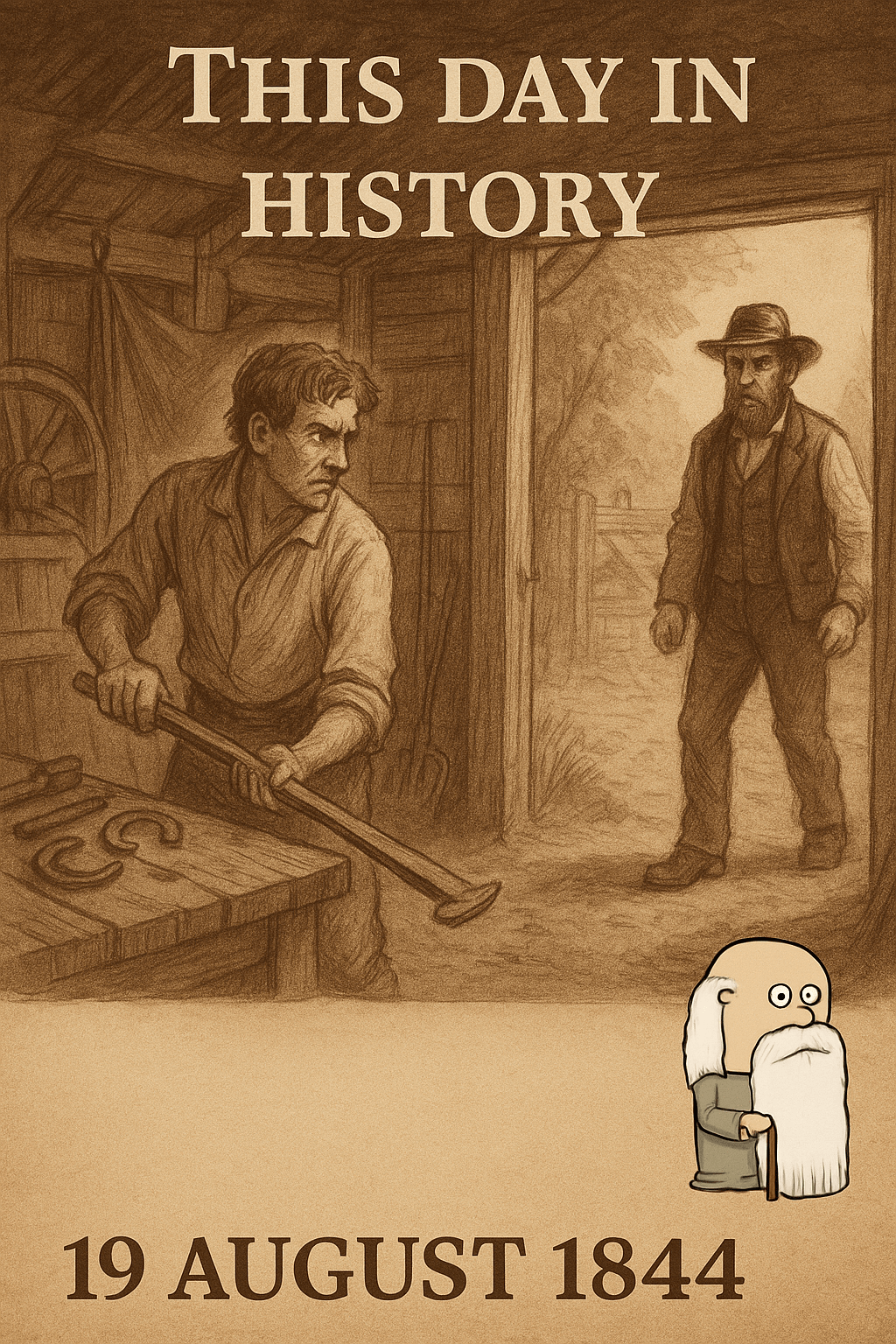
Tools of Betrayal – The Case of John Morphew
A stolen rasp, a line drawn in grief—and a laborer’s broken promise.
The Crime
On 19 August 1844, John Morphew was indicted for stealing a farmer’s iron tools: specifically, 19 horseshoes (2s 4d), a rasp (1l 10s), and a trimming iron (4d), all belonging to his employer, James Arscott, while in her service.
(oldbaileyonline.org)
The theft of tools—so essential to rural labour—was not just criminal: it was sabotage of livelihood.
The Trial
At the trial, Arscott testified with quiet hurt:
“I missing them soon after sending John to help round the stable. I valued the rasp particularly—it was lent to me and irreplaceable.”
Despite his service, Morphew was found to have betrayed his employer’s trust. The jury returned:
Guilty.
The Sentence
Though detailed sentencing isn’t in the brief abstract, theft of this nature typically led to a prison sentence—often a year or more, depending on remorse and prior record—rather than transportation or execution. The loss of tools and the breach of trust, however, would have marked him for harsh reproof from peers.
Why It Matters
- Tools stolen are livelihoods stolen: These implements were essential for rural labour and valuable. Without them, work couldn’t proceed.
- Class and intimacy: Working within a household or farm entwined professional and personal trust—making betrayal feel deeply personal.
- Proportional punishment: Unlike capital thefts, this one likely led to imprisonment—a reminder of the degree of crime and the justice system’s scaling.
Thank you for reading my writings. If you’d like to, you can buy me a coffee for just £1 and I will think of you while writing my next post! Just hit the link below…. (thanks in advance)

 The Sage Page