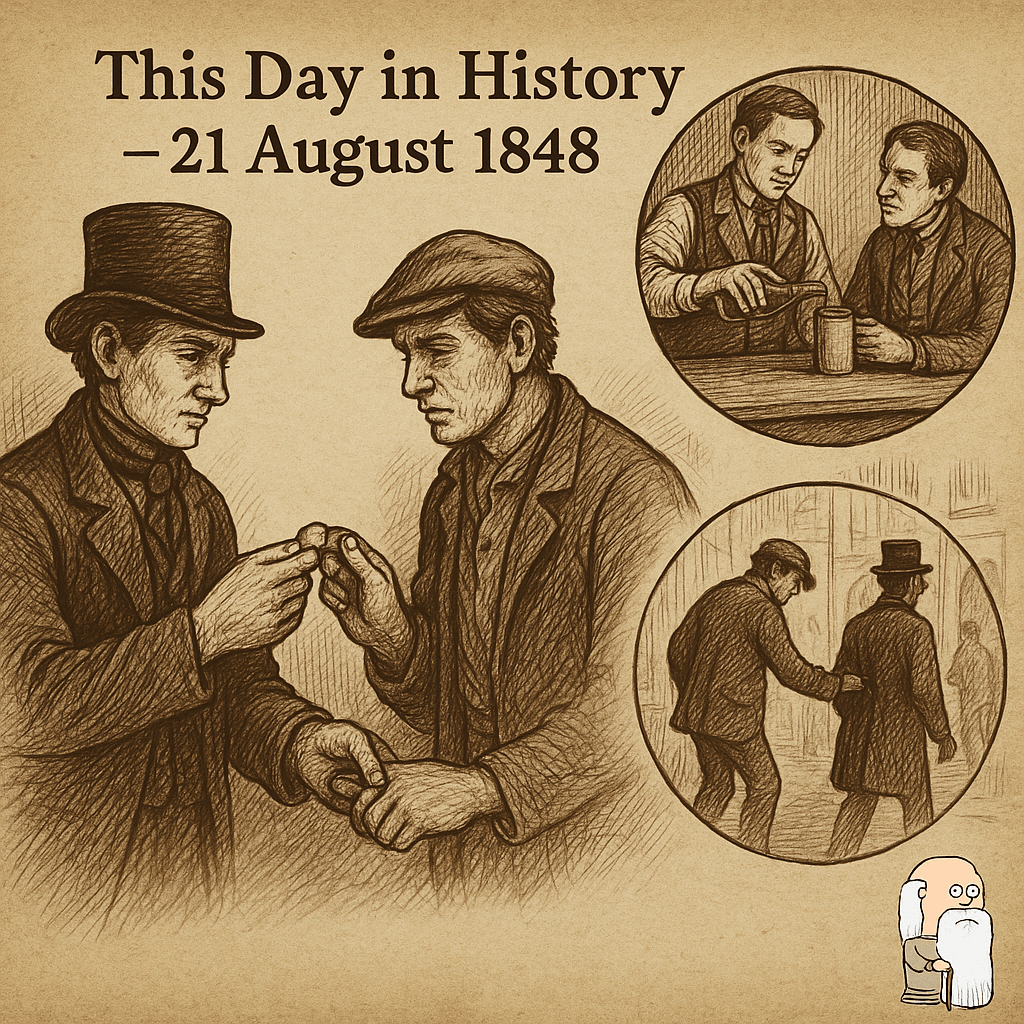
Thomas Lancaster & the Art of Counterfeit Coining
When one face could cover many crimes—and one forged coin meant a judge’s suspicion.
The Case
On 21 August 1848, Thomas Lancaster was indicted at the Old Bailey on charges of coining offences—that is, the intentional manufacture or uttering of counterfeit money, a grave royal offence under Victorian law. The trial transcript (reference t18480821-1805) reflects the gravity of coining—an attack not just on merchants but on the Crown’s authority itself.
At the same session:
- Albert Brown was accused of feloniously administering sugar of lead, a lethal poison, to William George Leath, with intent to kill.
The Guardian+2Wikipedia+2Old Bailey Online - John Boosey faced trial for simple larceny (pick-pocketing), a more pedestrian but defiant form of theft.
Old Bailey Online+4Old Bailey Online+4Old Bailey Online+4
Waxing Punishment
- Coining was punishable by transportation or death, depending on severity. It was seen as undermining economic and social order.
- Poisoning—especially using lead—was treated as attempted murder, often resulting in long imprisonment or execution.
- Larceny, especially repeat offenses, commonly led to imprisonment, transportation, or even branding.
Why This Session Stands Out
- The contrasting cases—from counterfeit coin to poisoning to theft—offer a cross-section of Victorian crime.
- Thomas Lancaster’s coining offence shows how financial destabilization was regarded as a serious political as well as criminal threat.
- Albert Brown’s poisoning case speaks to domestic betrayal or stealth, echoing domestic tension in 19th-century homes.
- Boosey’s pickpocketing reminds us that even small thefts were rigorously prosecuted in a crime-ridden metropolis.
Thank you for reading my writings. If you’d like to, you can buy me a coffee for just £1 and I will think of you while writing my next post! Just hit the link below…. (thanks in advance)

 The Sage Page