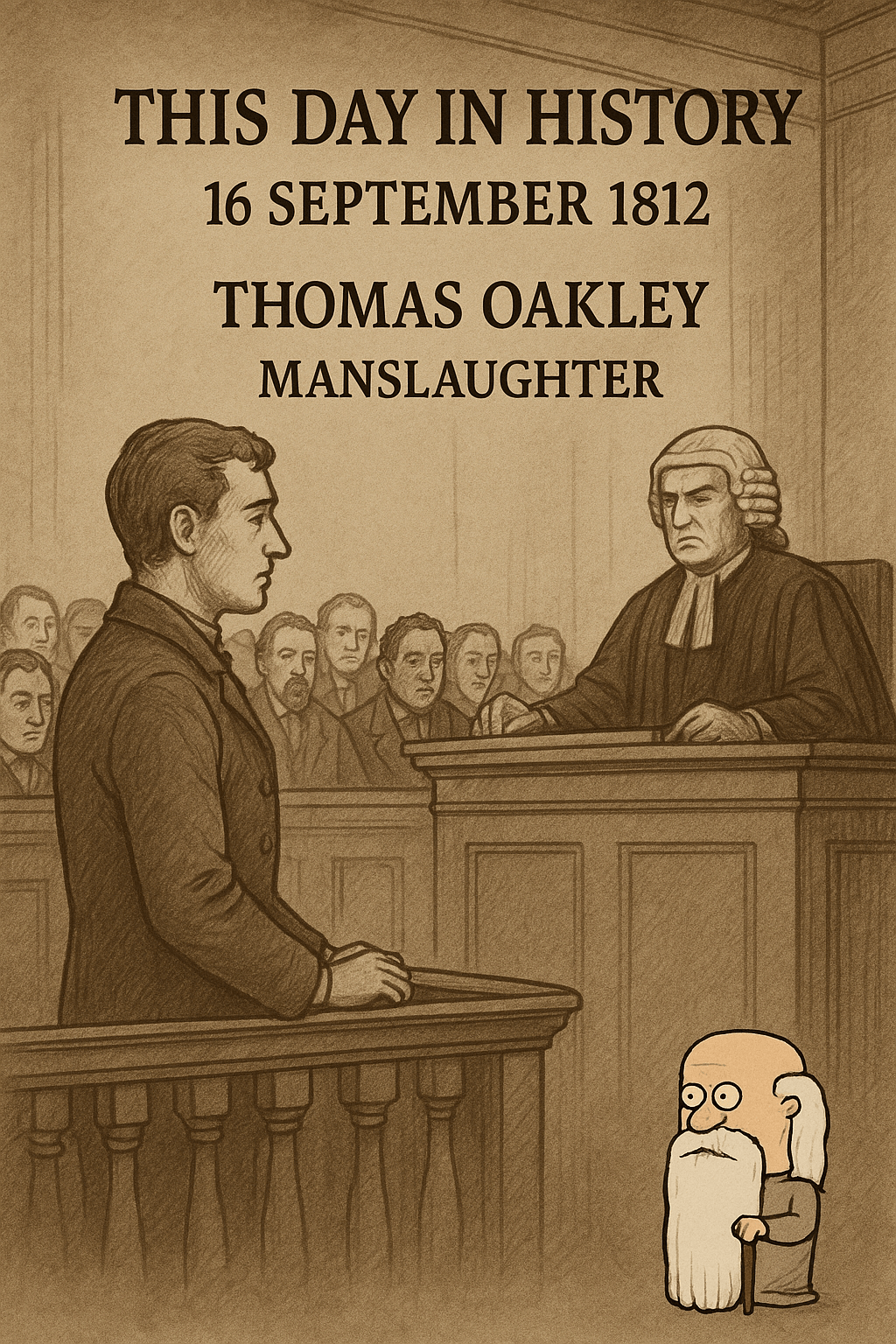
Thomas Oakley & the Manslaughter Case
Quick tempers, sudden death, and the murmur of justice.
⚔️ The Incident
London in 1812 was a city alive with tension — war abroad, scarcity at home, and crowded taverns where men’s nerves wore thin. It was in such a place that Thomas Oakley found himself accused of a crime that would mark him forever.
The charge was manslaughter. The death was real, but the law sought to answer: was it murder, or a blow struck in sudden passion?
🧑⚖️ The Trial
- Name: Thomas Oakley
- Date: 16 September 1812
- Charge: Manslaughter
- Case Ref: t18120916-75 from Old Bailey Proceedings oldbaileyonline.org
The case involved Thomas Oakley being indicted for manslaughter. The record doesn’t detail a full murder charge; nevertheless, the death was serious enough, and the offence was grave enough, to bring the case to the Old Bailey.
On 16 September 1812, Oakley stood at the bar of the Old Bailey. The indictment was read aloud:
“Thomas Oakley, you stand indicted for the felonious slaying of a fellow subject, against the peace of our Lord the King, his crown and dignity.”
Witnesses described an altercation — a quarrel that turned to violence. A shove, perhaps a strike, and the victim fell. Within hours, he was dead. The courtroom air must have been heavy; such cases blurred the line between chance and crime.
The jury was asked: did Oakley strike with malice, or was this a tragic excess of temper?
⚖️ Verdict & Sentence
The jury returned their decision:
Guilty — of manslaughter.
This distinction was everything. Instead of the noose at Tyburn, Oakley faced a punishment short of death — most likely imprisonment or transportation. The sentence acknowledged a life lost, but also the absence of murderous intent.
🕰️ Historical Context & Significance
- In early 19ᵗʰ-century England, manslaughter was a way for juries and judges to record that a death had occurred but lacked the premeditation or malice required for murder.
- Trials like Oakley’s show how the legal system valued intent and circumstance—not every death led to execution.
- The Old Bailey in that era often became a stage for public morals as well as law: people judged not just what was done but why — sudden provocation, mistake, grief.
- The law of intent: Oakley’s case shows how Georgian justice could distinguish between killing in anger and killing in cold blood.
- Manslaughter as mercy: Juries often leaned towards manslaughter to avoid condemning a man to death when circumstances were unclear.
- Social insight: The case reflects a society where personal disputes could turn deadly in an instant, and where the courts mediated not just justice, but public conscience.
Thank you for reading my writings. If you’d like to, you can buy me a coffee for just £1 and I will think of you while writing my next post! Just hit the link below…. (thanks in advance)

 The Sage Page