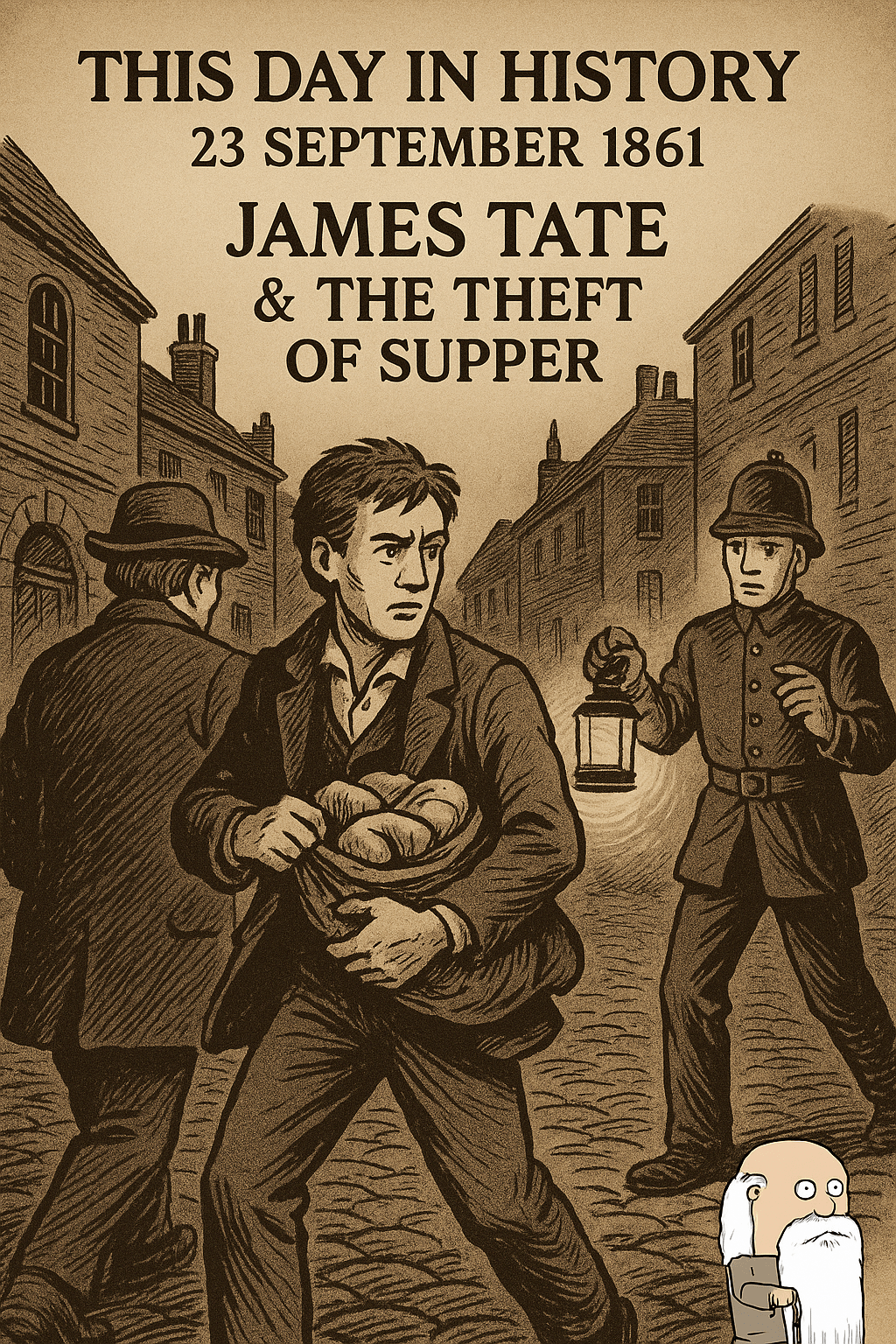
James Tate & the Theft of Supper
Bread, pie, pudding — and the law’s heavy hand.
🥖 The Incident
On 23 September 1861, James Tate, aged just 18, stood trial at the Old Bailey. His crime was simple larceny, but the haul was strikingly domestic:
6 lbs. of lamb, 4 lbs. of mutton, 1 dead rabbit, 6 lbs. of cheese, 1 pie, 1 pudding, 1 loaf of bread, and two dishes — all the property of a man named Benjamin Bovil.
This was not highway robbery or banknote forgery, but the theft of a full meal, lifted from a home or larder. In Victorian London, however, even the theft of supper was no small matter.
🏛️ The Trial
The indictment was read in the usual way:
“James Tate, you are indicted for feloniously stealing the goods of Benjamin Bovil, against the peace of our Sovereign Lady the Queen, her crown and dignity.”
Tate did not contest the charge. Instead, he entered a plea of guilty. The courtroom clerks moved quickly; for a youth of 18, the confession sealed his fate.
⚖️ Verdict & Sentence
- Verdict: Guilty (pleaded guilty)
- Sentence: Six months’ imprisonment
The punishment was severe enough to mark him, but merciful compared to transportation or the lash. For six months, James Tate would endure the discipline of Victorian prison life — hard labour, strict diet, and the stigma of conviction.
🧠 Why It Matters
- Theft as survival: The items suggest hunger more than greed — a meal rather than a fortune.
- Imprisonment as reform: By the 1860s, imprisonment was replacing transportation for lesser offences.
- Everyday justice: The case shows how ordinary thefts — not just murders and forgeries — filled the Old Bailey docket, reflecting daily struggles in London’s streets and kitchens.
Thank you for reading my writings. If you’d like to, you can buy me a coffee for just £1 and I will think of you while writing my next post! Just hit the link below…. (thanks in advance)

 The Sage Page