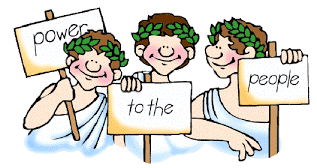
We should love democracy whether or not it gives us all we wish for. Democracy started out in Athens around 600BC. It was pretty crude.
“In Athenian democracy, every citizen was required to participate or suffer punishment. This practice stands in stark contrast to modern democratic governments in which citizens can choose whether or not they wish to participate. In Athenian democracy, all citizens pulled their weight.
Not everyone in Athens was considered a citizen. Only free, adult men enjoyed the rights and responsibility of citizenship. Only about 20 percent of the population of Athens were citizens. Women were not citizens and therefore could not vote or have any say in the political process. They were rarely permitted out in public and were even restricted as to where they could be within their own homes. Slaves and foreigners were not citizens and also could not participate in the democracy. In the end, democracy existed only for the free men who were originally from Athens.”
A good democracy is characterized by several key features that promote fairness, representation, and effective governance. Here are some essential elements:
- Free and Fair Elections:
- Regular, free, and fair elections are fundamental to democracy. Citizens should have the right to choose their leaders without coercion or manipulation.
- Rule of Law:
- A strong rule of law ensures that all individuals and institutions, including the government, are subject to and accountable under the law. This helps prevent abuse of power.
- Protection of Minority Rights:
- A robust democracy safeguards the rights of minorities, ensuring that the majority doesn’t suppress the interests or rights of minority groups.
- Freedom of Expression and Media:
- Democracy thrives when citizens have the freedom to express their opinions, and there is a vibrant, independent media that provides diverse perspectives and holds those in power accountable.
- Civil Liberties:
- Guaranteeing basic civil liberties, such as freedom of speech, assembly, and religion, is crucial. Citizens should be able to participate in public life without fear of repression.
- Political Pluralism:
- Democracy benefits from a diversity of political parties and interest groups, allowing citizens a range of choices and ensuring a broad representation of views.
- Responsive Government:
- Elected officials should be responsive to the needs and concerns of the citizens. This involves effective communication, accountability, and mechanisms for citizens to influence policymaking.
- Citizen Participation:
- Active citizen engagement goes beyond voting. A good democracy encourages and facilitates citizen participation in decision-making processes at various levels of government.
- Independent Judiciary:
- An independent judiciary acts as a check on the powers of the executive and legislative branches, ensuring that laws are consistent with the constitution and protecting individual rights.
- Decentralization of Power:
- Distributing power at various levels of government can prevent the concentration of power in one entity, making the system more resilient and responsive to local needs.
- Political Accountability:
- Elected officials should be accountable for their actions. This includes transparency in decision-making, ethical conduct, and mechanisms for holding leaders accountable for their actions.
- Education and Informed Citizenship:
- An educated and informed citizenry is essential for the functioning of democracy. Education enables citizens to make informed decisions and actively participate in civic life.
- Social Equality:
- Democracy is strengthened when there is a commitment to social equality, reducing disparities in wealth, education, and access to opportunities.
It’s important to note that these principles are interconnected, and the success of a democratic system often depends on the interplay of these elements. Additionally, the specific characteristics of a good democracy can vary across cultures and societies.
Does your state’s democracy measure up?
Thank you for reading my writings. If you’d like to, you can buy me a coffee for just £1 and I will think of you while writing my next post! Just hit the link below…. (thanks in advance)

 The Sage Page
Interesting article. How times have changed!
LikeLiked by 1 person