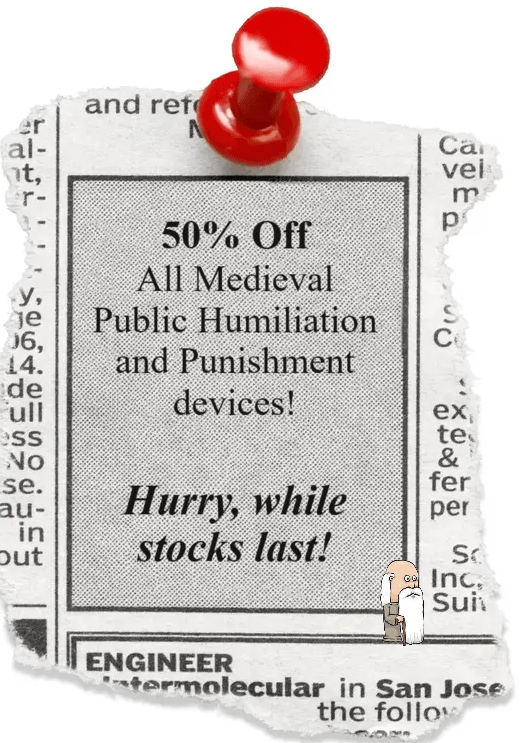
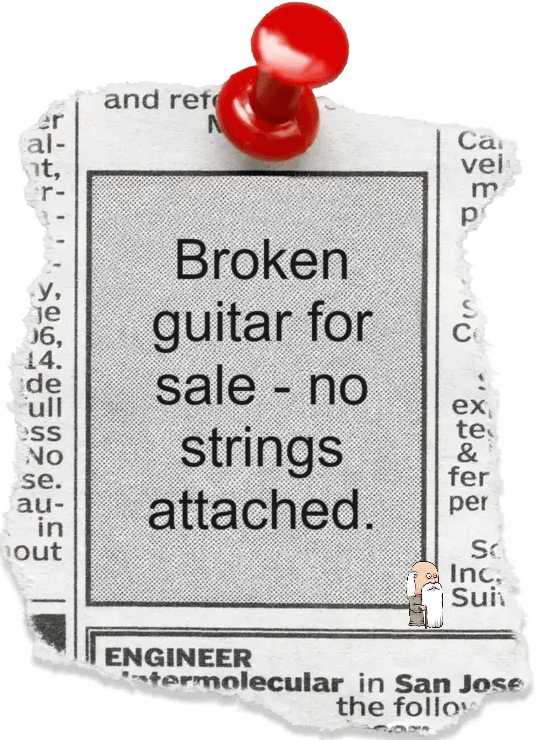
My dad always said “Don’t believe everything you hear”
It was great advice…
Or was it?
I’ve decided to put all my eggs in one basket so I don’t look daft walking around the supermarket.
Plan ahead – It wasn’t raining when Noah built the ark
When in doubt, mumble.
FOLLOW YOUR DREAMS!
Except that one where you’re naked in church.
Light travels faster than sound. This is why some people appear bright until you hear them speak
Lif is too short.
Don’t be a sexist, birds hate that.
Dwarfs and midgets have very little in common.
My motto is “Never say never.” Which makes it very difficult to tell people my motto.
We never really grow up, we only learn how to act in public.
Time flies like an arrow, fruit flies like a banana.
Who needs rhetorical questions?
People who live in glass houses shouldn’t throw stones….or sex parties.
An optimist is a person who doesn’t understand the enormity of the problem.
Taller people sleep longer in bed.
Those who get up at sunrise have many ideas dawn on them.
Never moon a werewolf.
Children in the back seat cause accidents.
And accidents in the back seat cause children.
Some days you’re the dog, some days you’re the lamp-post.
Red sky at night. Shepherd’s delight.
Blue sky at night. Day.
No matter how much you push the envelope, it’ll still be stationary.
Experience is a wonderful thing.
It enables you to recognize a mistake when you make it again.
Avoid cliches like the plague. (They’re old hat).
And that’s not all ….
Thank you for reading my writings. If you’d like to, you can buy me a coffee for just £1 and I will think of you while writing my next post! Just hit the link below…. (thanks in advance)
Why is it that people duck in the rain, do they really think the rain won’t hit them?
When people continue walking in the rain while ducking or adopting a stooped position, it’s often a natural and practical response to minimize exposure to the rain. While they may not be completely avoiding getting wet, this posture can help reduce the impact of raindrops on their face and upper body. Here are a few reasons why people might choose to walk in a stooped position in the rain:
Maintain Forward Visibility: By lowering their head and torso, individuals can maintain better visibility ahead of them. This is especially important when walking in crowded areas or on uneven terrain.
Reduce Discomfort: Walking with a stooped posture can help minimize the discomfort of raindrops hitting the face, which can be distracting or unpleasant.
Protect Personal Items: Even if individuals are willing to get somewhat wet, they may still adopt a stooped position to shield personal items such as books, bags, or electronic devices from direct exposure to rain.
Efficiency: Some people may continue walking without seeking complete shelter to reach their destination more quickly. They may adopt a stooped position as a compromise between moving forward and minimizing exposure to rain.
Habit or Instinct: It’s also possible that this behavior is a habitual or instinctive response to rain. People may not consciously think about it but may automatically adopt a posture that feels more comfortable in wet conditions.
Walking in a stooped position in the rain is a practical compromise between the desire to continue the journey and the wish to minimize the discomfort associated with getting wet. It allows individuals to navigate through the rain while making adjustments to reduce the impact of raindrops on their bodies and personal belongings.
Thank you for reading my writings. If you’d like to, you can buy me a coffee for just £1 and I will think of you while writing my next post! Just hit the link below…. (thanks in advance)
Good morning! Here are ten interesting historical events that took place on December 29th:
1170: Thomas Becket, the Archbishop of Canterbury, was assassinated in Canterbury Cathedral, England.
1845: Texas was admitted as the 28th U.S. state.
1911: Mongolia gained independence from the Qing Dynasty after the Outer Mongolian Revolution.
1934: Japan renounced the Washington Naval Treaty of 1922 and the London Naval Treaty of 1930.
1940: During World War II, Germany began the bombing of London with incendiary bombs in what became known as the Second Great Fire of London.
1972: Eastern Air Lines Flight 401, a Lockheed L-1011 Tristar, crashed in the Florida Everglades, resulting in 101 fatalities.
1989: Riots broke out in Czechoslovakia, leading to the downfall of the communist government.
2003: The last known speaker of Akkala Sami, a critically endangered Finno-Ugric language, passed away in Russia.
2006: Former Iraqi President Saddam Hussein was executed by hanging.
2015: A magnitude 6.8 earthquake struck northeastern India, causing widespread damage and resulting in the deaths of at least 11 people.
Thank you for reading my writings. If you’d like to, you can buy me a coffee for just £1 and I will think of you while writing my next post! Just hit the link below…. (thanks in advance)
Whenever an adult is kidnapped, why isn’t it called adultnapped?
The term “kidnapped” is derived from the word “kid,” which historically referred to a child or young person. The use of “kid” in this context can be traced back to the 17th century. Over time, the term “kidnap” evolved to describe the act of taking someone, usually a child, by force or threat.
As a result, the term “kidnapped” has become a widely accepted and commonly used word to describe the abduction of individuals of any age, not just children. Even when adults are taken against their will, the term “kidnapped” is still applied, and there hasn’t been a widely adopted alternative term like “adultnapped.”
Language often carries historical and cultural nuances, and changes in terminology can take time to gain acceptance. The use of “kidnapped” for adults reflects the historical origin of the term and the fact that it has become a standard expression for abductions of any age group.
Thank you for reading my writings. If you’d like to, you can buy me a coffee for just £1 and I will think of you while writing my next post! Just hit the link below…. (thanks in advance)
Here are ten interesting historical events that took place on December 28th:
1065: Westminster Abbey in London was consecrated, a significant event in English history.
1832: John C. Calhoun became the first Vice President of the United States to resign, stepping down over political differences with President Andrew Jackson.
1846: Iowa was admitted as the 29th U.S. state.
1895: The Lumière brothers, Auguste and Louis Lumière, held the first public screening of films in Paris, marking the birth of cinema.
1908: An earthquake in Messina, Italy, and the resulting tsunami killed over 70,000 people.
1945: The United States officially recognized the government of José Félix Estigarribia in Paraguay, which had taken power through a coup.
1973: The Endangered Species Act was signed into law by U.S. President Richard Nixon, aiming to protect species at risk of extinction.
1981: Elizabeth Jordan Carr, the first American “test-tube baby,” was born in Norfolk, Virginia.
2000: U.S. retail giant Montgomery Ward announced it was going out of business after 128 years.
2014: Indonesia AirAsia Flight QZ8501 crashed into the Java Sea, killing all 162 people on board.
Thank you for reading my writings. If you’d like to, you can buy me a coffee for just £1 and I will think of you while writing my next post! Just hit the link below…. (thanks in advance)
Can pleasure be measured in terms of quantity as well as quality? What’s more pleasurable to a ten-year-old – a kitten, a teddy bear, or a bar of chocolate? Can we turn a subjective concept like pleasure into an objective measure or comparison? A man called “Jeremy” thought so.
Jeremy Bentham (1748–1832) was an English philosopher, jurist, and social reformer, best known for his contributions to utilitarianism. Born in London, Bentham was a leading figure in the fields of ethics and political philosophy during the 18th and 19th centuries.
Bentham’s most influential idea was utilitarianism, a moral and ethical theory that asserts that the best action is the one that maximizes overall happiness or pleasure. According to Bentham, individuals should strive to act in a way that brings about the greatest happiness for the greatest number of people. To measure happiness and pleasure, Bentham developed the principle of “hedonistic calculus,” which aimed to quantify and compare the intensity, duration, certainty, and other factors of pleasure and pain.
In addition to his work on ethics, Bentham made significant contributions to legal philosophy. He advocated for legal and social reforms based on utilitarian principles. Bentham believed that laws and institutions should be designed to maximize happiness and minimize suffering in society.
Bentham’s ideas had a profound impact on the development of ethical and legal thought, and his legacy continues to influence discussions on utilitarianism, ethics, and social policy to this day.
Bentham developed a system known as the “Felicific Calculus” to objectively measure pleasure and pain. He proposed that the value or utility of any action, policy, or decision could be quantified and compared based on the amount of pleasure and pain it produced. The Felicific Calculus consisted of several criteria that Bentham believed could be used to evaluate and compare different actions or choices. These criteria included:
Intensity: The strength or intensity of the pleasure or pain experienced as a result of an action. Bentham believed that stronger pleasures or pains should be given greater weight.
Duration: The length of time that the pleasure or pain lasts. Longer-lasting pleasure or pain was considered more valuable.
Certainty or uncertainty: The likelihood that the pleasure or pain will occur. Certain pleasures or pains were considered more valuable than uncertain ones.
Propinquity or remoteness: The nearness or farness in time of the pleasure or pain. Pleasures or pains that are more immediate were given greater weight.
Fecundity: The likelihood that a pleasure will lead to more pleasures in the future or that a pain will lead to more pains. Actions that produced pleasures with higher fecundity were considered more valuable.
Purity: The extent to which an action produces only one type of pleasure or pain rather than a mixture of both. Actions that resulted in “pure” pleasures were considered more valuable.
Extent: The number of people or beings who experience the pleasure or pain as a result of the action. Actions that produced pleasure or prevented pain for a greater number of individuals were considered more valuable.
By using these criteria, Bentham aimed to provide a systematic and objective way to assess and compare the overall utility or goodness of different actions or policies. This utilitarian approach to ethics sought to maximize overall pleasure and minimize pain often referred to as the “greatest happiness principle.” However, it’s important to note that the Felicific Calculus has been subject to criticism and challenges, and not all philosophers or ethicists accept it as a comprehensive or infallible method for measuring pleasure and pain.
However, measuring pleasure in an objective and quantitative manner is challenging because pleasure is a subjective experience. Different individuals may have different preferences, and what brings pleasure to one person may not necessarily do the same for another. Additionally, the quality of pleasure can be influenced by personal, cultural, and contextual factors.
In the case of a ten-year-old and the choices of a kitten, a teddy bear, or a bar of chocolate, the preference for one over the others would likely vary among individuals. Some children might find joy in the companionship of a kitten, comfort in a teddy bear, or delight in a bar of chocolate. The choice depends on the child’s individual preferences and experiences.
While Bentham’s hedonistic calculus provides a framework for attempting to measure pleasure and pain objectively, it has limitations, especially when it comes to the inherently subjective nature of individual experiences. The complexity of human emotions and the diverse factors influencing pleasure make it challenging to create a universally applicable and objective measure of pleasure. Consequently, the subjective nature of pleasure remains a significant aspect of ethical and philosophical discussions.
Thank you for reading my writings. If you’d like to, you can buy me a coffee for just £1 and I will think of you while writing my next post! Just hit the link below…. (thanks in advance)
Thank you for reading my writings. If you’d like to, you can buy me a coffee for just £1 and I will think of you while writing my next post! Just hit the link below…. (thanks in advance)
What was the impact on the production of both written texts and music?
In considering the effect of the print revolution on the production of texts and music it is important to define what is meant by the term “print revolution”. In simple terms, this refers to a time period starting from around 1440 when Johannes Gutenberg invented the modern printing press and continued in technological development and geographical spread, and vastly increasing printed texts and music over the subsequent two to three centuries. The key part of Gutenberg’s new technology was the use of moveable type, together with the improvement and bringing together in one process of existing technologies such as large presses, printing on paper, and refined oil-based inks.
Although the technology had become available for mass production, printing was an expensive and labor-intensive process, requiring new tradesmen such as typesetters, pressmen, compositors, and proofreaders, as well as “factory” space. All this meant that a would-be printer needed capital upfront. So printing as an industry required (or contributed to) the growth of capitalism and gave rise to new jobs and businesses not only in the production of texts and music but also to bookbinders, publishers, book-sellers, ink and paper producers, etc. Indeed the advancement of associated technologies should not be under-estimated. In Europe in the thirteenth century paper manufactured from rags was first used as a writing material. Prior to this scribes would use expensive parchment or vellum (animal skin) as a substrate.
However, the advent of mass printing didn’t end manuscript production, which was suited to luxury items (e.g. as diplomatic gifts) and for circulation of texts (e.g. poetry) among a small coterie. Shakespeare’s early sonnets, for instance, were originally circulated in manuscript copies.
The vast up-scaling of volume in the production of texts was considerable and in the 1540s in Geneva, a skilled craftsman could produce 1,300 copies of a single sheet in one day. By contrast, the upscaling of production and proliferation of music was much slower. In Venice in 1498 a printer called Ottaviano Petrucci ‘ made claim to the invention of a unique music type and patented the printing method. However, the method was laborious and time-consuming, requiring three separate print runs for a single sheet of music – these being the printing of the staves, the musical notes, and finally text. That said, Younger and Barker’s research found that in 1549 there were ten music publishers in seven cities producing 43 collections of music equating to around 1500 individual pieces of music. This showed that there was both supply and demand during this period. could be demonstrated.
When looking at different examples of the kinds of texts and music produced in this period, there is one stand-out text that exemplifies the “revolutionary” label given to print production of this period, and that is the Bible. It is not only an important example of mass print (Luther’s translation of the Bible into German was a huge bestseller with over 100,000 copies sold) but was also a hugely significant move for ancient and religious (or sacred) texts to be printed in the vernacular. Thus the word of God could become available to the masses, not only in means of availability, but also in a language that could be understood without translation. So mass printed text could be argued as a catalyst or vehicle for the Protestant Reformation. Polyglot Bibles (texts written in several languages side by side) were produced extensively and this enabled the reader to study the gospels in Greek, Hebrew, Latin, and the vernacular tongue. These Bibles were expensive to produce and would have been the property of the church. Educational texts such as “ABC”s and catechism were much cheaper to produce and had a mass market and hence could help a printer and publisher finance larger projects. Steinberg found that ‘in 1585, 10,000 copies of an English ABC and Little Catechism were sold in eight months’. Medical textbooks helped promote the study of the sciences and can be seen to run alongside the growth of humanism
More humble texts, often a single side of paper, were produced in great numbers such as almanacs (containing calendars, or information for farmers) and broadside ballads. This type of product was cheap to produce as it did not require the other processes used to make books such as sorting, ordering, cutting, collating, or binding. Broadside ballads appealed to the masses as they could contain songs that were political, satirical, bawdy, or risqué. Broadside ballads are a cross-over point to the production of printed music as some contained simple musical scores. Indeed, many choral religious songs were printed on single sheets which allowed hymns to be sung en masse and in the vernacular. A collection of such songs were put together to produce the Lutheran hymn book in 1542. Also in the sixteenth century, many partbooks were produced, containing the music or choral part for each individual performer thus reducing the cost of the overall collective choral book.
The impact of increased production of printed texts marked a shift from image culture to word culture, especially as print was increasingly produced in the vernacular. This affected all tiers of society as news, gossip, and political or religious propaganda could be distributed quickly, efficiently, and cheaply, and in the case of religion, this was at the very least the catalyst for religious reform. Knowledge could be preserved and disseminated by mass copying, which also leads to uniformity, although it should be remembered that inaccuracies could be “standardised” also. With the production of musical texts, there was a shift from an oral to written tradition, and it was no longer the preserve of the rich as choristers and even the congregation had access. Moreover, musical knowledge could be spread by print. But aside from the well-documented scholarly, religious, and political impacts – the increased production also brought about fun and merriment via the popular broadside ballads.
Both with music and text a new industry grew, that of the pressmen, compositors, proofreaders, and bookbinders. Printing became a business, and it certainly can be linked to the rise of capitalism. Large capital was needed at the outset and to estimate the numbers of print runs could mean big profits or winding up the business – if you print too few you have lost opportunity, if you print too many you may go bust. This is exemplified by William Caxton producing a 2nd edition of “The Canterbury Tales” (this containing illustrations) in 1483 as the first edition had become a best seller.
Thank you for reading my writings. If you’d like to, you can buy me a coffee for just £1 and I will think of you while writing my next post! Just hit the link below…. (thanks in advance)
Did Comte’s religion of “Positivism” break this link?
Before discussing the thoughts of Auguste Comte (1798–1857), it is useful to define the terms “religion” and “supernatural” and then consider the philosopher’s approach within these boundaries. The Oxford English Dictionary defines religion as ‘Action or conduct indicating belief in, obedience to, and reverence for a god, gods, or similar superhuman power; the performance of religious rites or observances’ and defines supernatural in terms of divinity, metaphysics and the extraordinary. However, it could be argued that belief or faith can be exclusive of a deity, in short – a worship or following of some being (human or otherwise) greater than the individual.
Supernatural identity aside, with religions there is the commonality of features; there is dogma through following a set of rituals, ceremonies, and acting out beliefs, together with some form of community or gathering. And there is often a commonality of purpose, that is to say, high moral or ethical principles are generally pursued. When examining religion and its origins, the philosophy may vary from the etymology (Latin: obligation, bond, reverence) and the term can be thought of as a Western or European concept, particularly with the three main monotheistic strands relating to the god of the old testament, and the historic writings associated with it.
French philosopher Isidore Marie Auguste François Xavier Comte (1798 – 1857), better known as Auguste Comte, was the father of Positivism and inventor of the term sociology. Comte believed religion played an important role in the individual’s and society’s well-being through establishing a common, positive set of principles and practices around the belief that pursuit of altruism and helping others precipitated a collective improvement of morals and ethics.
Comte moved away from the traditional Western deistic view, instead putting the celebration of humanity at his new religion’s core. Comte’s religion of Positivism took a humanist approach with a celebration of, and a belief in, man’s scientific and rational endeavours and achievements. Comte defined “positivism” in terms of demarcating scientific knowledge through the gaining of scientific empirical evidence, Due to his belief that working with science, reason and rationality were male traits, he also wanted to celebrate and promote his view of female virtues – which he saw as being caring, loving, nurturing and empathetic, and as such his symbolic representation of a human “deity” was a mother nurturing her son,
However, Comte did recognise the role of the supernatural and metaphysical in human development and he outlined this in his “law of three stages” where the metaphysical stage is the link between the theological and the positive. Comte’s religion was intended to be invasive in many aspects of society, with a new 13 month calendar with notable worship events centring on historical and contemporary figures from the arts, sciences, philosophy and prophets, coupled with a new cannon of literature supporting these fields (although he recognised this had it’s limitations as it was centred too heavily on western civilisation).
From a contemporary perspective, Comte’s vision and timing for his religion was to find a path forward and away from the French Revolution by revering the achievements of all that is great in humanity, with a spirit of altruism at its core. Comte’s religion replaced the reverence to supernatural iconography (such as angels) and prayers directed to a formless god, with representations of great human figures to whom they can relate, and to humanity he referred to as the “Great Being” to which they can be a part of, and contribute to. An intention of his religion was to reflect the backdrop of Europe’s move towards a scientific, industrial and technological new age, and in political terms, he favoured a sociocracy, which can really be thought of as a meritocracy, as he favoured the sovereignty to be in the hands of scientists, industrialists and enlightened thinkers.
Kees de Groot has introduced the concept of “liquid religion”, simply put, fluid and dynamic forms of religion which embrace secular non-classical and non-institutional theistic beliefs. This marks a shift from the traditional dogmatic doctrinal church to anything from the purely philosophical, social or fantasy belief sets – which could even be “pop-up” in nature. Since Comte’s time many religions have sprung up which are not deity-based and the closest “religion” to that of Positivism is the secular movement of humanism.
In summary, in today’s multicultural society, many religions live harmoniously alongside each other. Comte proposed a new religion that was not supernatural deity based, instead promoting a belief in, and celebration of, the “Great Being” of humanity.
Thank you for reading my writings. If you’d like to, you can buy me a coffee for just £1 and I will think of you while writing my next post! Just hit the link below…. (thanks in advance)
In considering this question it is important to clarify the terms “tradition” and “collective memory”. The Oxford English Dictionary defines tradition as ‘A belief, statement, custom, etc., handed down by non-written means (esp. word of mouth, or practice) from generation to generation; such beliefs, etc., considered collectively.’ The key here is that beliefs are subjective, not objective, and as such are open to interpretation. Furthermore, a canon or a collection of beliefs is dependent on the person or people considering their inclusion or deletion – hence stories are promoted or relegated due to a person’s or a party’s bias (conscious or subconscious).
When linking “tradition” to “collective memory” it is important to note that the latter term infers less formality, ie. memory is not singular and unambiguous, but rather it is plural in two senses – it is the memories of more than one event by more than one person. When discussing memory Jordan Peterson states ‘Memory is vulnerable, easily distorted to fit beliefs and modes of action that are more expedient than accurate’ which highlights the point that collective memories, by selective reference to traditions, could be regarded by some as a means of manipulation of the masses.
The change in the commemoration of the Easter Rising happened almost immediately after and during the first part of the 20th Century but key dates include 1921, 1937, and 1966 (the Golden Jubilee). The War of Independence (1919-21) was mainly a guerilla war fought by the Irish Republican Army and the occupying British forces. Propaganda was very important to instill sympathy in the Southern Irish population and the portrayal of this conflict as an armed struggle for freedom on the backs of the “martyrs” of the Easter Rising was a powerful message. The outcome of the war was the signing of the Anglo-Irish Agreement in 1921, the commencement of the evacuation of British forces from Southern Ireland in 1922, and the establishment of an Irish Free State. But the change of culture should not be underestimated either, in so much as an estimated 275 “Big Houses” were destroyed during the War of Independence by the Irish Republican Army and this number rose to more than 300 during the ensuing few years. This served two purposes – removal of the English landowners and the associated symbolism therein, and also the redistribution of land to Irish rural land-workers and farmers.
The 1930s saw a movement towards depicting the Rising as a national military struggle against English oppression, and in 1935 Easter Sunday was marked by the Government of Ireland with pageantry usually reserved for wars, with military parades attended by veterans of the struggles and wreath-laying (which is associated in the UK with the endings of successful military campaigns). In 1937 the Constitution of Ireland came into being, replacing the 1922 Constitution of the Irish Free State. President De Valera supervised the drafting of the document and the importance of the constitution cannot be underestimated. The Constitution determined national sovereignty and gave the Irish people the right to self-determination. It also changed the nation’s name to “Éire” (the Irish word for Ireland), and adopted the tricolour of green, white, and orange as the national flag. More important for cultural identity was the adoption of Irish as the national language (English relegated to the second official language). But significantly for cultural appropriation – legislation was enacted so the Irish language and Irish history was taught in school (and this included “modern” history such as the Easter Rising). The most important clauses as regards the aims of the Easter Rising were Articles two and three which called for a unified Ireland on the premise that the whole of the island of Ireland be one national territory.
The change in legislation does not necessarily change the hearts and minds of the people. Symbolism and iconism played a key role, so stamps, coins, and banknotes were given Irish imagery, and the two Houses of Parliament were given Irish names. And the state commemorated those people who were involved in the uprising renaming streets and later railway stations in their honour.
The most significant change to collective memories of the Easter Rising came in the lead-up, during, and immediately after the Golden Jubilee remembrance celebrations in 1966. The Irish government wished to project an image of a modern, successful, and independent Ireland; and did this by staging a series of plays, pageants, lectures, church services, and exhibitions. Included in the celebrations were 1916 tours of the scenes of the Easter Rising, together with lectures and accounts intending to portray the leaders of the uprising as national heroes. The Rising was to be seen as a positive turning point on the road to nationalism and self-government. Popular music from groups such as The Dubliners sang songs commemorating the Rising such as “The Foggy Dew”. Indeed The Dubliners achieved UK chart success in 1966 with the song “Nelson’s Farewell” celebrating the blowing up and removal of Nelson’s Column in Dublin that year by the Irish Republican Army. Also at this time, Irish President Éamon de Valera opened the Garden of Remembrance in 1966, a memorial set out in a cross to commemorate all those who had lost their lives in the struggle for an independent Ireland.
So why have collective memories changed during this period? National identity and beliefs shared by national communities are often called collective memories. These can include national costume, stories, fables, songs, life stories, and memoirs of rural people. Maurice Halbachs in the 1920s asserted that personal memories are coloured by the people around us. And people in power, people with influence, or political parties will often see the need to shape collective memories into a homogenous record. The Easter Rising was at a time of significant social and political change right across Europe and boundaries and Empires were being redrawn with great rapidity, so there was therefore a need for national identity to be established. Pierre Nora wrote extensively about how national memory is established and crafted through mediums such as dictionaries, monuments, historic figures, museums, and sporting events.
From today’s perspective of racial tensions in the United Kingdom parallels can be drawn with the desire to rewrite or reinterpret British history too, with the recent boarding up in London of the statue of Winston Churchill, an important British National figure taught about in UK schools, but to some from the immigrant population, Churchill’s statue is a figure of a colonial and racist past which should not be on display.
Cultural nationalism can be defined as a nation in which its people identify with shared culture or heritage (real or stylised) as opposed to nationalism purely on racial, ethnic, or institutional lines. Examples of this can be seen throughout the British Isles. In England, for example, the focus on the reformation in art or Gothic architecture, or pageantry such as the Trooping if the Colour which only dates back 260 years. In Scotland the romanticism of the highland dress and games (which was a 19th Century invention). For Ireland, cultural nationalism is a promotion of the Celtic origins, Gaelic language, literature, dance, music, and sports. The invention of a culture comes with heroes and legends such as the patron Saint Patrick and the expulsion of snakes from the Island, and the adoption of Shamrock as the national plant (a representation of the catholic holy trinity). With the promotion of independence comes the demotion of the past chains of English occupation – a move away from industrialisation and urbanisation, to a time before the protestant reformation. By creating an idealised version of the past, it was intended to create an idealised vision of the future, with an Irish Free State leading to a united Ireland. From it’s inception, the Free State Government sought to unify a deeply divided country, with the common mantra being a unified hatred of the English.
Beliefs and interpretations of stories can be re-used. Like old songs recorded on vinyl, stories can be re-engineered, re-edited, and re-released as modern covers for the mp3 era. Thus by re-telling events like the Easter Rising with political spin, it is possible (and some would say desirable) to use the past to foster a sense of Irish pride of selected culture and promoted heritage. Political activists can use collective memories and tradition to foster a move towards an independent Irish state, and loyalty to a hitherto disconnected cause. It is not only powerful but also productive, to use the past to present the future, whilst at the same time engendering a sense of belonging and national moral servitude. Heroes are more easily identified by black and white photographs and Irish family names, by stories of valour against the odds, and by place names in the streets where you live, than by ancient romanticised Saints from the distant past. This is perhaps why the collective memories of the Easter Rising were, and still are, such a powerful force in the call for a united Ireland.
Thank you for reading my writings. If you’d like to, you can buy me a coffee for just £1 and I will think of you while writing my next post! Just hit the link below…. (thanks in advance)