The One-Pound Forgery
A small note, a sharp eye, and a charge that could cost a life.
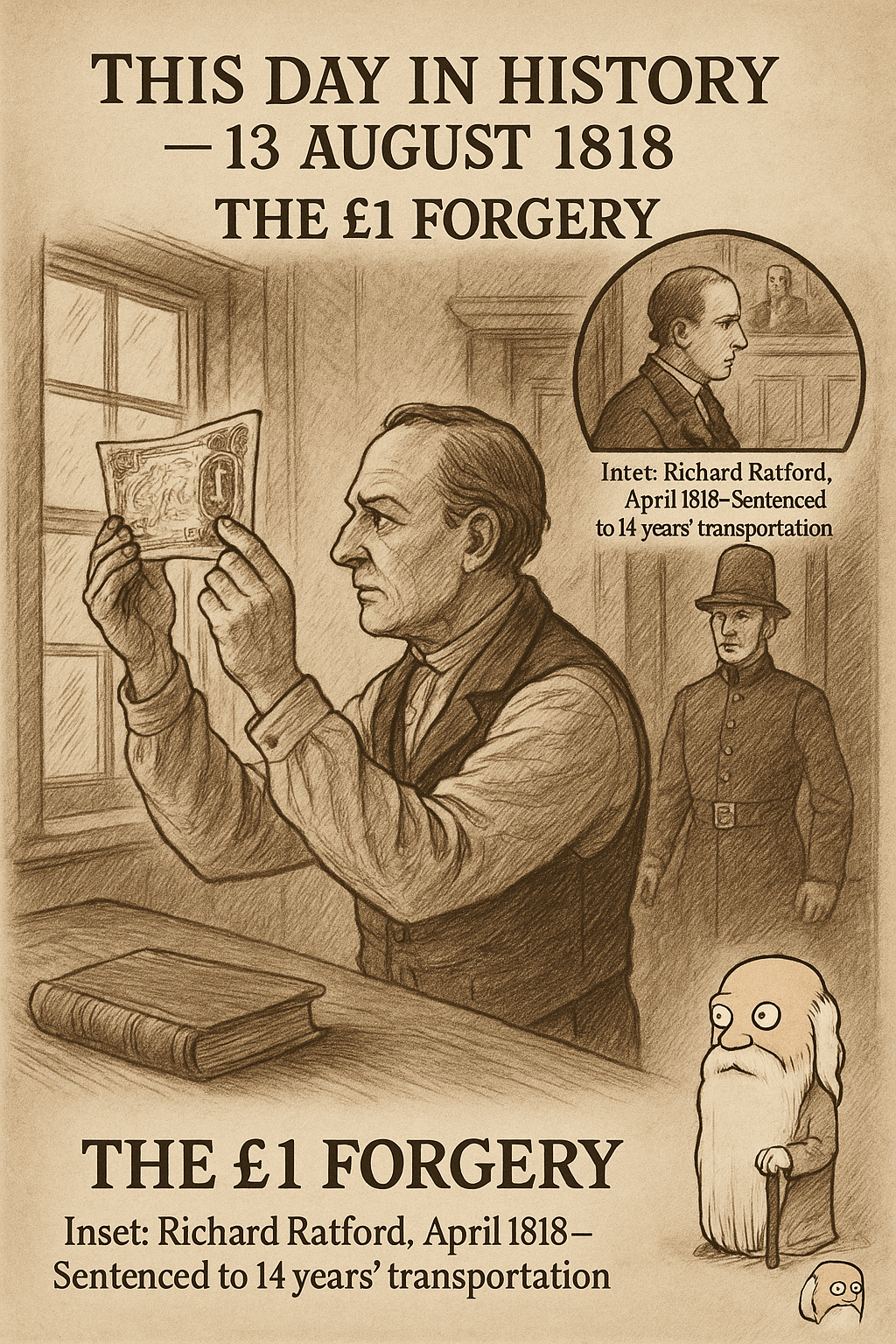
On 13 August 1818, a £1 Bank of England note (serial No. 75,121) dated that day was passed in payment. To the casual observer, it was simply currency. But to the trained eye of a London tradesman, it was suspicious—and later confirmed as forged. That single banknote became the centrepiece of a prosecution for uttering a forged banknote (passing a note knowing it to be false).
By the time the case reached the Old Bailey on 28 October 1818, the accused faced the full force of the law. In early 19th-century England, uttering forged notes was a capital offence. While juries were sometimes reluctant to convict when the gallows loomed, the courts treated such crimes as a threat to the very stability of the nation’s currency.
The name of the August 13 passer is lost to the shorthand Proceedings, but the crime itself is a textbook example of how a trivial purchase could spiral into a felony trial. In this era, even a single forged £1 note could lead to execution—though many sentences were commuted to transportation (forced exile, often for life) or long terms of imprisonment.
The Law in 1818
- Forgery and uttering banknotes were punishable by death until reforms in the 1830s.
- The Abolition of Punishment of Death Act 1832 first removed the death penalty for many forgery offences, but not all.
- The Forgery Act 1837 finally abolished the death penalty for all forgery crimes, replacing it with transportation or imprisonment.
An Exemplary Case – Richard Ratford
While the August 13 case leaves the accused unnamed, another 1818 trial shows exactly how these prosecutions played out.
On 1 April 1818, Richard Ratford stood in the dock at the Old Bailey, charged with possessing and uttering forged Bank of England notes—then known as “coining” in the paper-money sense. The evidence was clear, and Ratford pleaded guilty.
The verdict was swift: guilty. The sentence: 14 years’ transportation to New South Wales. While harsh, this spared him the gallows—a fate many in his position faced. Ratford’s life from that moment was effectively erased from England’s story; he became another name in the long ledger of those shipped to the penal colonies.
Why These Cases Matter
- Currency stability: In an economy built on paper money, trust in the note was paramount.
- Severe deterrence: The law punished financial crime more harshly than some violent offences, reflecting deep anxiety about counterfeiting.
- Human stories: Behind each case lay lives uprooted—by execution, by exile, or by the slow erasure of imprisonment.
Thank you for reading my writings. If you’d like to, you can buy me a coffee for just £1 and I will think of you while writing my next post! Just hit the link below…. (thanks in advance)

 The Sage Page