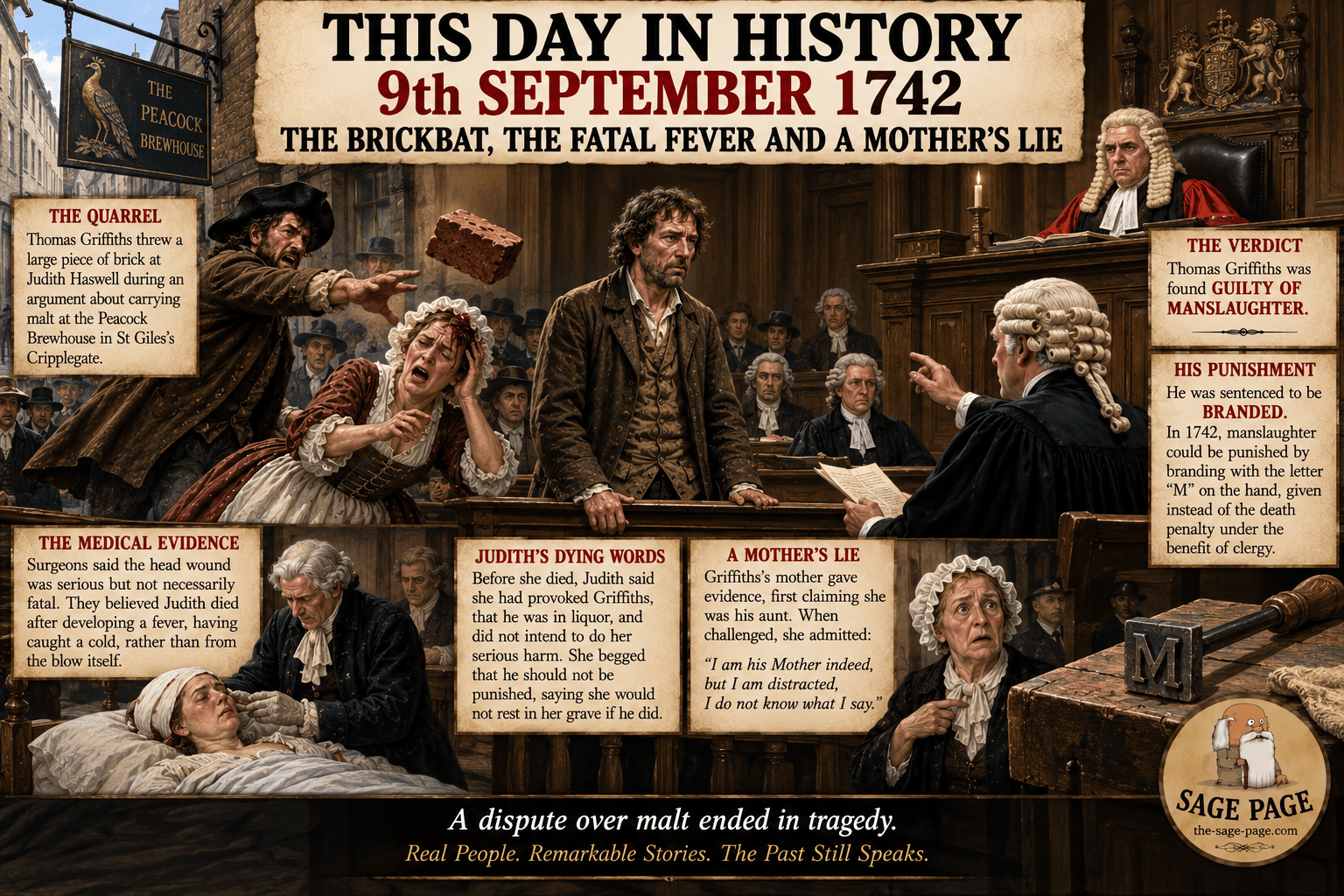
A quarrel over carrying malt ended in tragedy when Thomas Griffiths threw a brickbat at Judith Haswell in 1742. She survived for days before dying after developing a fever. With disputed medical evidence, Judith’s plea for mercy and even a courtroom lie from Griffiths’s mother, the jury chose manslaughter over murder.
Tag Archives: Georgian crime
This Day in History – 5th August 1723

On 5th August 1723, highwaymen William Duce and James Butler were executed at Tyburn. Their remarkable final confessions reveal the workings of organised robbery gangs, betrayals by informers, violent attacks across London and Hampshire, and the personal reflections of two men who knew their criminal lives had reached a fatal end.
This Day in History – 4th August 1749

On 4th August 1749, smuggler Uriah Creed was executed after joining an armed gang landing contraband tea on the Kent coast. Once an honest labourer, he became an outlaw, lived under an alias in Essex, and was finally captured after calmly surrendering, admitting he was “already a dead man.”
This Day in History – 28th July 1721
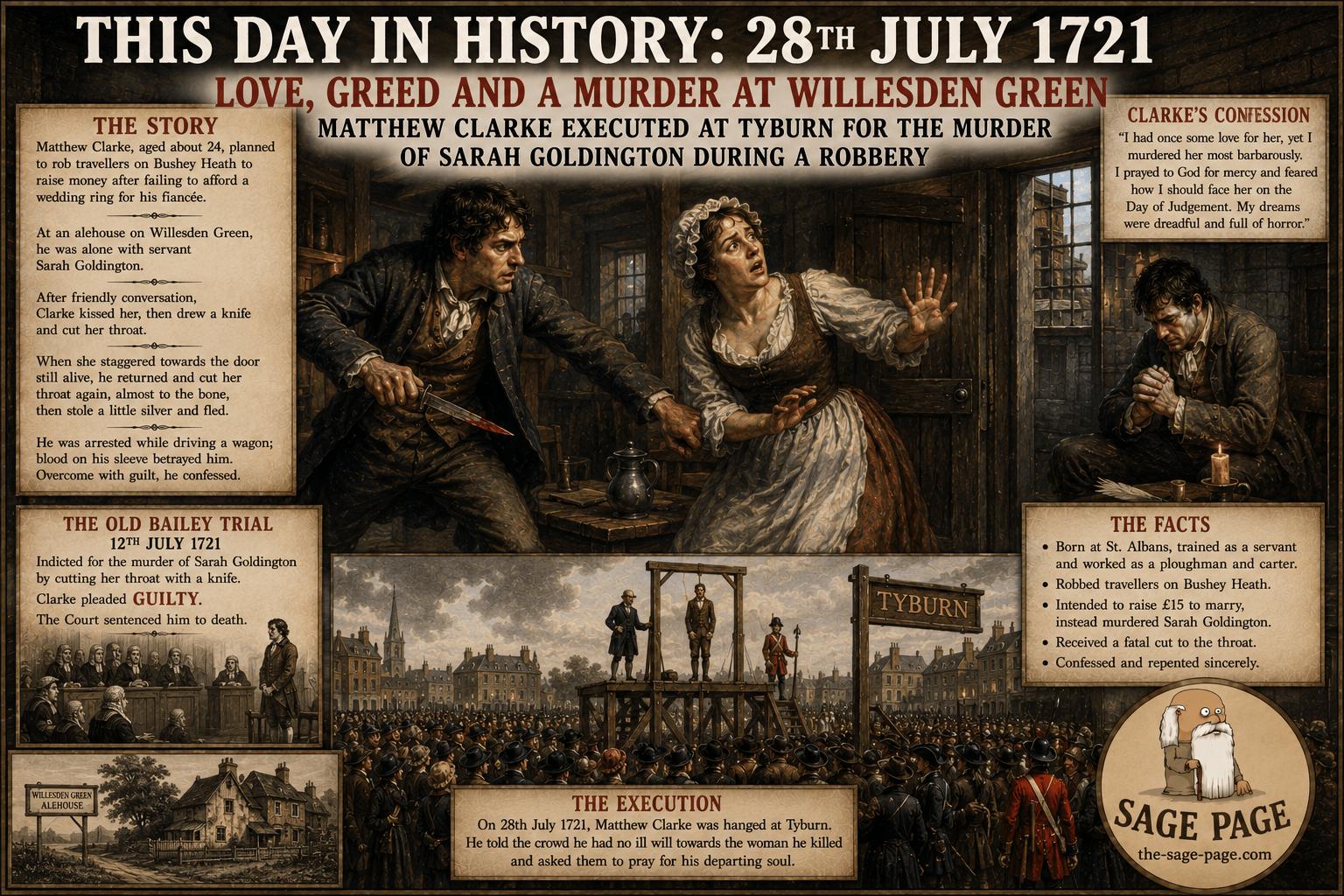
On 28th July 1721, Matthew Clarke was executed for murdering Sarah Goldington during a robbery at Willesden Green. His detailed confession reveals a failed marriage scheme, a robbery planned to raise money, overwhelming remorse, terrifying dreams, and a final plea for others to learn from his tragic and violent downfall.
This Day in History: 5 May 1736
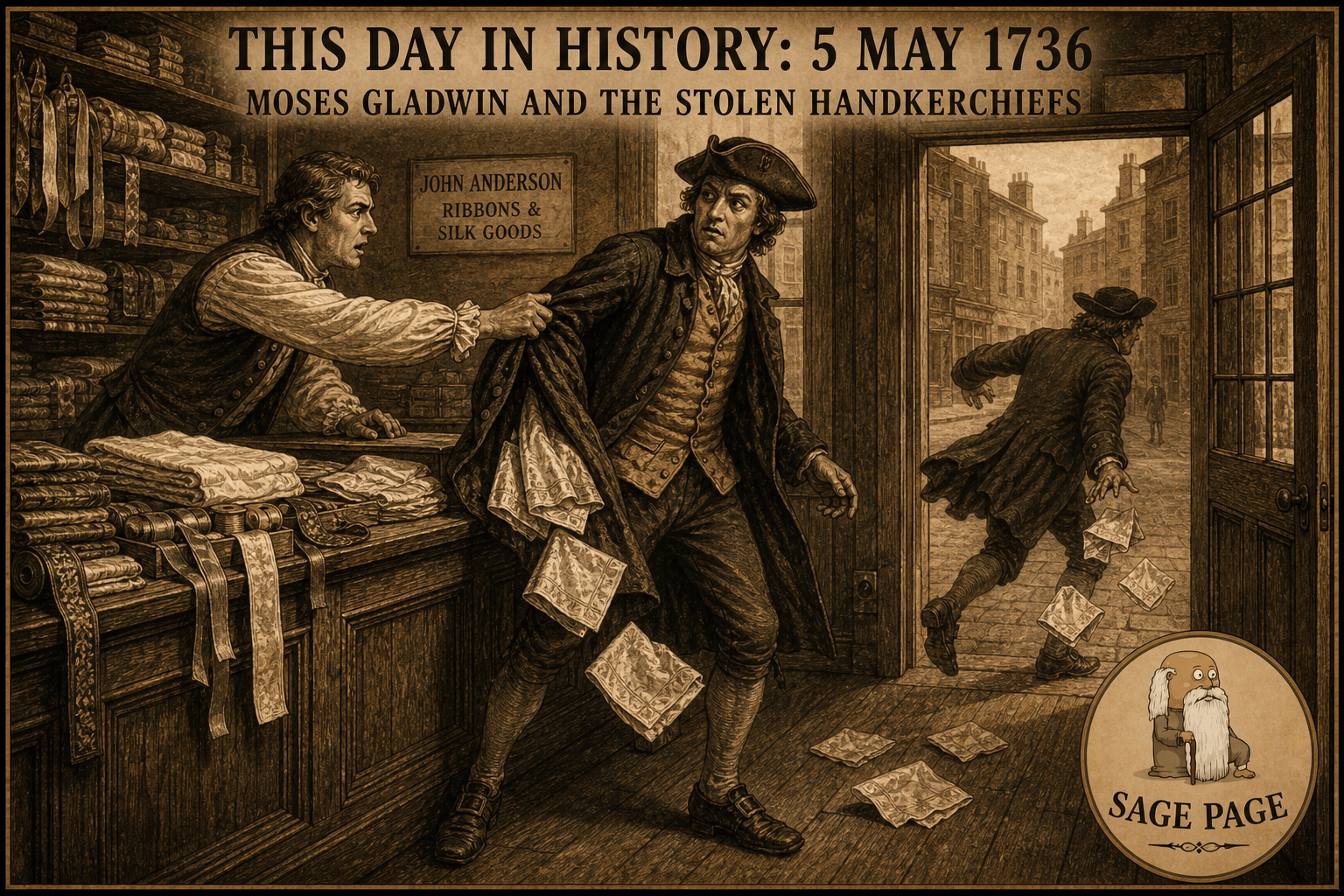
On 5 May 1736, Moses Gladwin was sentenced to death for shoplifting silk handkerchiefs worth 40 shillings. Caught hiding the goods under layered coats, his defiant defence failed, and the Old Bailey jury convicted him under England’s harsh “Bloody Code” laws.
This Day in History: 29 April 1724
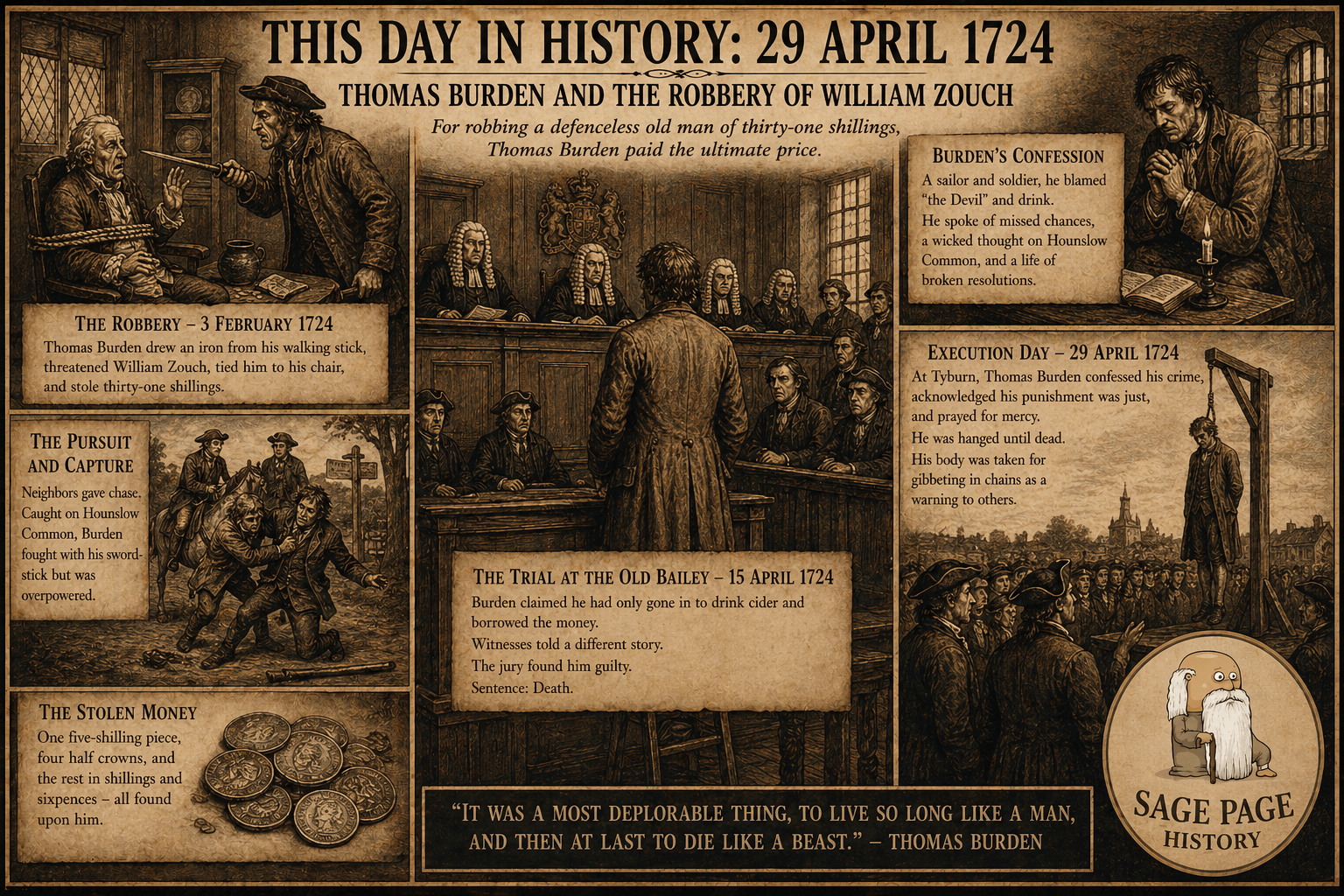
On 29 April 1724, Thomas Burden was executed for robbing elderly William Zouch at swordpoint. After tying the old man to a chair and stealing 31 shillings, Burden was quickly captured and sentenced to death, later blaming the Devil and drink for his downfall.
This Day in History: 25 April 1746
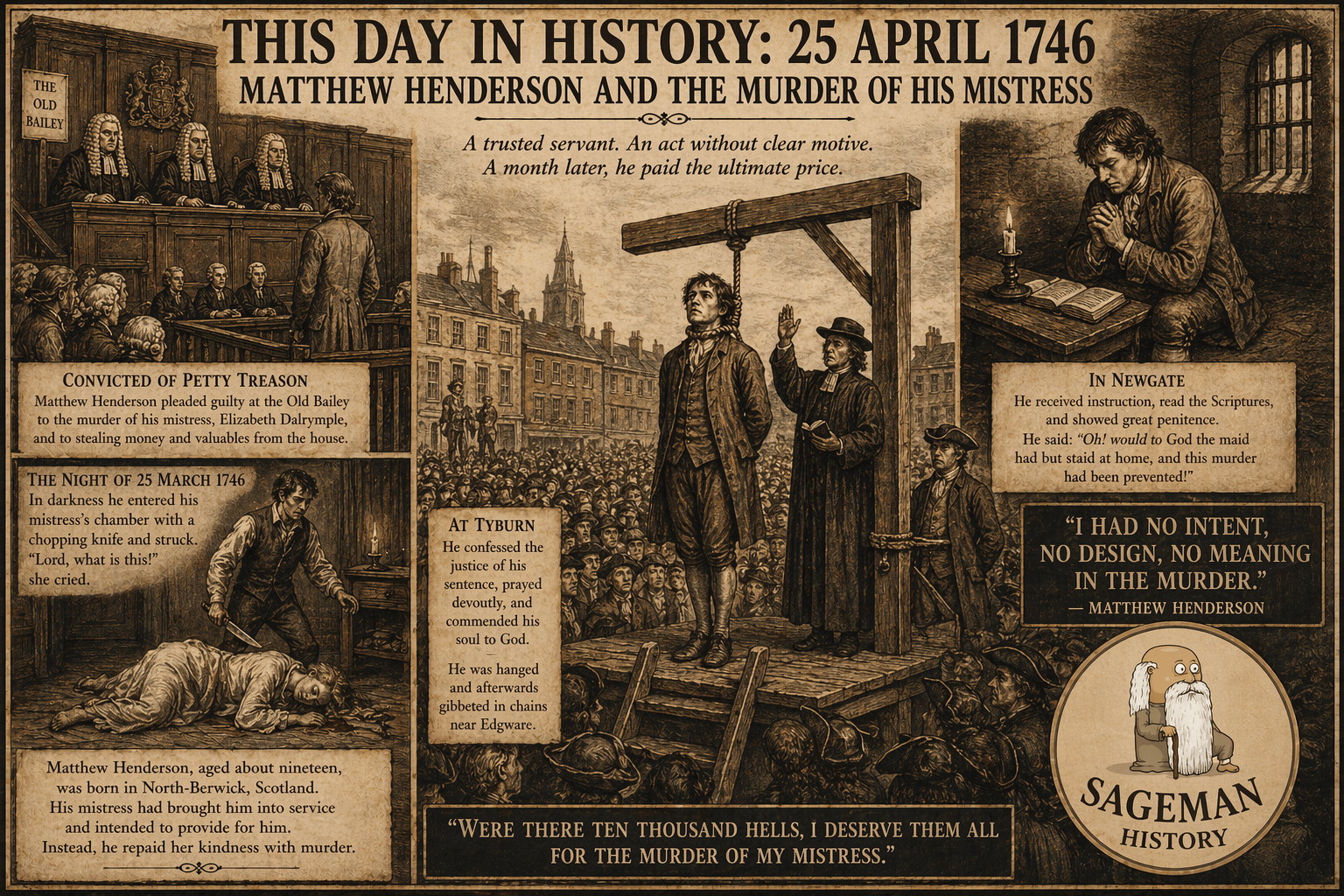
On 25 April 1746, nineteen-year-old servant Matthew Henderson was executed for murdering his mistress, Elizabeth Dalrymple. His confession shocked London: he claimed he had no clear motive, only a sudden temptation that led to one of the Old Bailey’s most disturbing domestic murders.
This Day in History: 24 April 1723
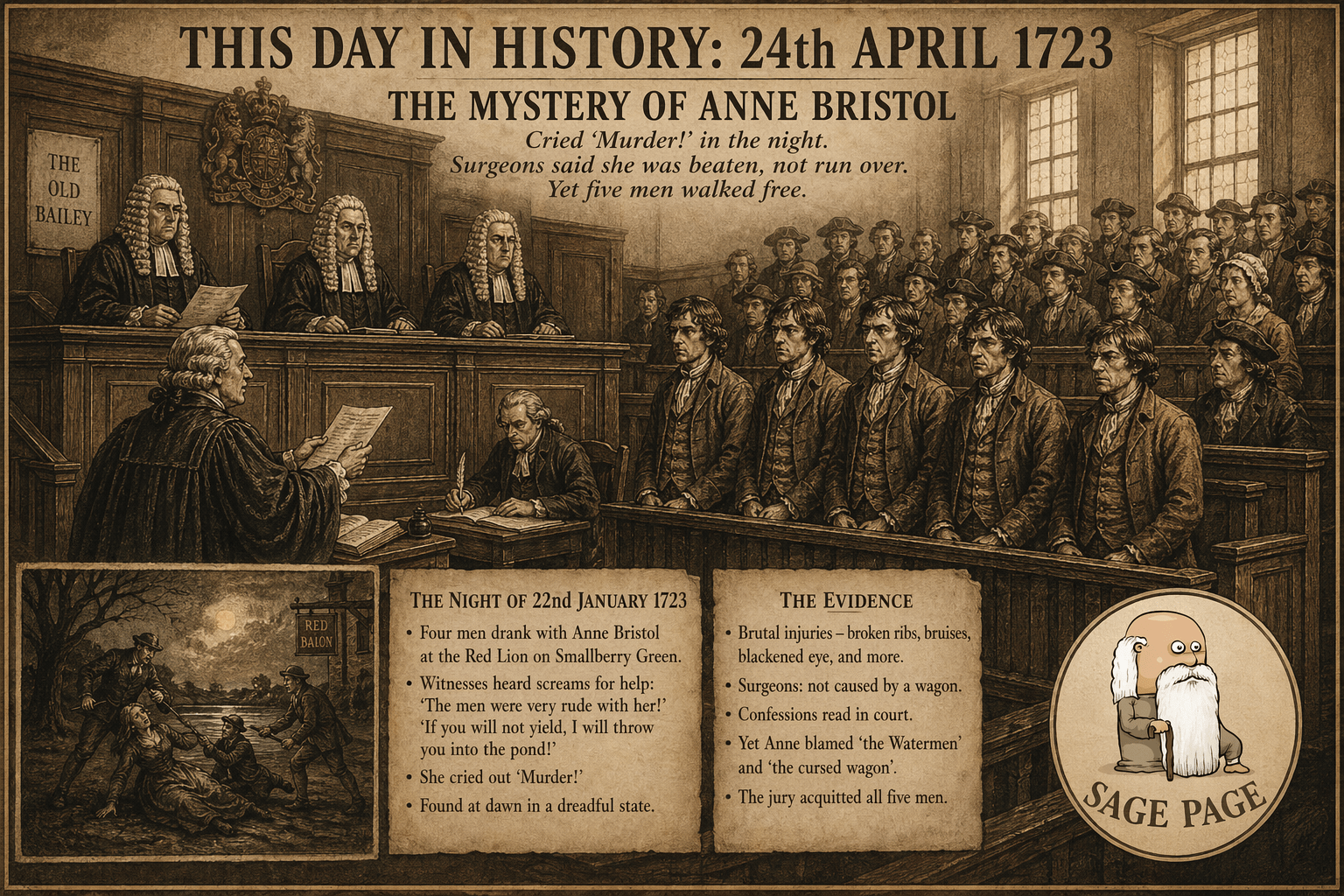
On 24 April 1723, five men were tried for the murder of Anne Bristol after she was found dying on Smallberry Green. Witnesses heard screams, surgeons found brutal injuries, and confessions were read—yet every accused man was acquitted.
This Day in History – 22 April 1789
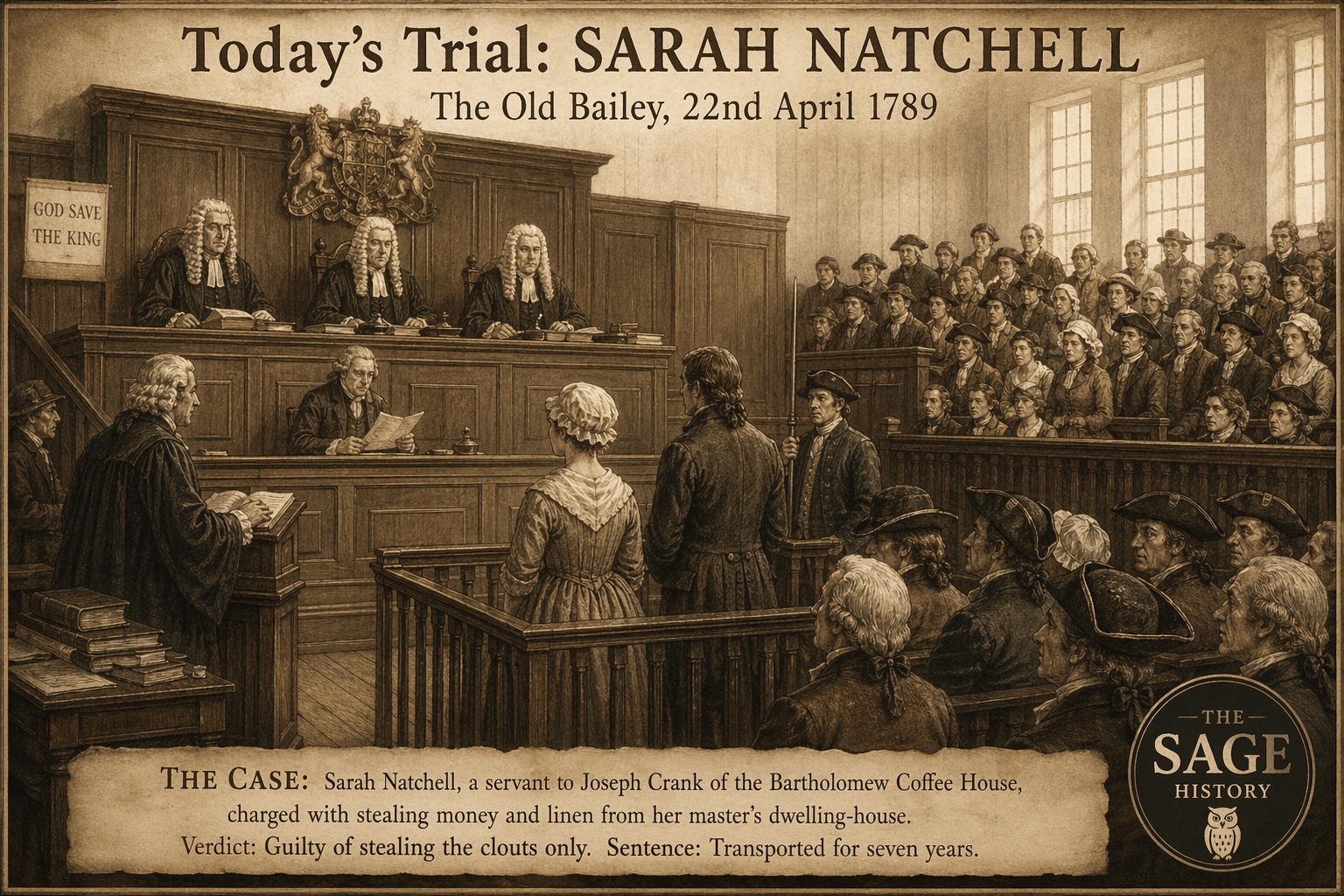
In 1789, servant Sarah Natchell was accused of stealing over £45 from Bartholomew Coffee House in West Smithfield. Though only convicted of stealing tea-cloths, the betrayal of household trust earned her a harsh sentence: seven years’ transportation to New South Wales aboard the Lady Juliana.
This Day in History: 20 February 1771 — Richard Mortis and the Moonlight Ambush

On 20 February 1771, Richard Mortis was tried at the Old Bailey for shooting Thomas Parkinson in a moonlit field after a dispute over poaching. Found guilty of willful and malicious shooting, Mortis was sentenced to death and executed on 27 March 1771, reflecting the harsh capital laws of Georgian England.

