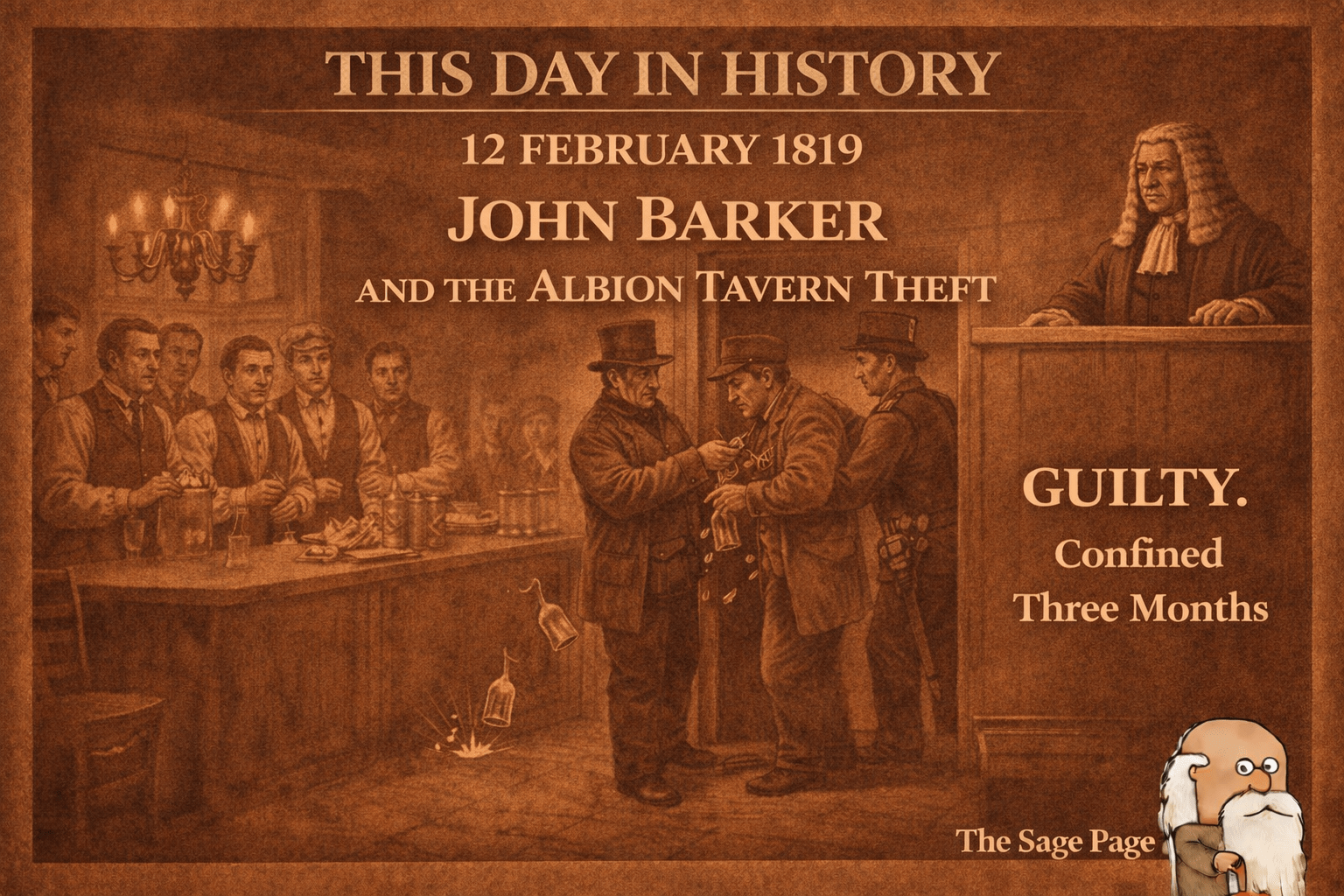
On 12 February 1819, the commencement of a case of tavern dishonesty which was to come before the Old Bailey. The accused was John Barker, aged forty-six, charged with stealing wine-glasses and other items from the Albion Tavern in Aldersgate Street.
The setting was convivial. The outcome was not.
The Setting: The Albion Tavern
The prosecutor, Daniel Kay, kept the Albion Tavern, Aldersgate Street, in partnership with John Frederick Kay. Barker was employed there as an occasional waiter — a position that required trust, particularly in a busy late-night tavern.
On the night of 12 February, shortly before one o’clock in the morning, the waiters who had worked that day were gathered together to be paid.
Then came the sound that altered the evening:
“A wine-glass fell on the floor from among them.”
According to testimony, the other waiters declared it had fallen from Barker.
The Discovery
Daniel Kay acted immediately.
“I gave him in charge.”
As Barker stepped outside the tavern door, Kay searched him. He felt additional objects in the prisoner’s pockets.
The search revealed:
- Four wine-glasses in his coat pocket
- Two more wine-glasses in his breeches
- One pepper-box
- One d’oyley
- Sugar and wax-candles concealed with the cloth
The goods were later produced in court and sworn to as property of the tavern.
The concealment was deliberate and methodical.
Arrest and Testimony
Constable John William Branch confirmed the arrest:
“I took the prisoner in charge, found the property on him, and a silk handkerchief, which he said was not his own.”
The inclusion of an additional silk handkerchief — disclaimed by the prisoner — did little to improve his position before the jury.
The Defence
When called upon to explain himself, Barker offered a brief and familiar defence:
“I was in liquor.”
Drunkenness was commonly cited in Georgian and Regency courtrooms. It might explain behaviour — but it rarely excused theft.
The Verdict
The London Jury, sitting before Mr Recorder, returned their finding:
GUILTY.
Barker was recorded as being aged 46.
Sentence
For stealing goods valued at 11 shillings, John Barker was sentenced to:
- Three months’ confinement
Three months was a significant term for a working man. Beyond imprisonment itself, the conviction would have damaged his prospects for future employment in taverns or similar establishments where trust was essential.
Why This Case Matters
The case of John Barker illustrates:
- The vulnerability of taverns to internal theft
- The swift action taken by employers in suspected dishonesty
- The limited tolerance courts showed toward intoxication as a defence
- The graduated nature of sentencing for petty larceny
Wine-glasses and table items may seem trivial, but in a commercial tavern they represented loss, breach of trust, and reputational damage.
In early nineteenth-century London, that was more than enough to send a man to prison.
Sources
- Old Bailey Proceedings Online, trial of John Barker, 12 February 1819.
Thank you for reading my writings. If you’d like to, you can buy me a coffee for just £1 and I will think of you while writing my next post! Just hit the link below…. (thanks in advance)

 The Sage Page