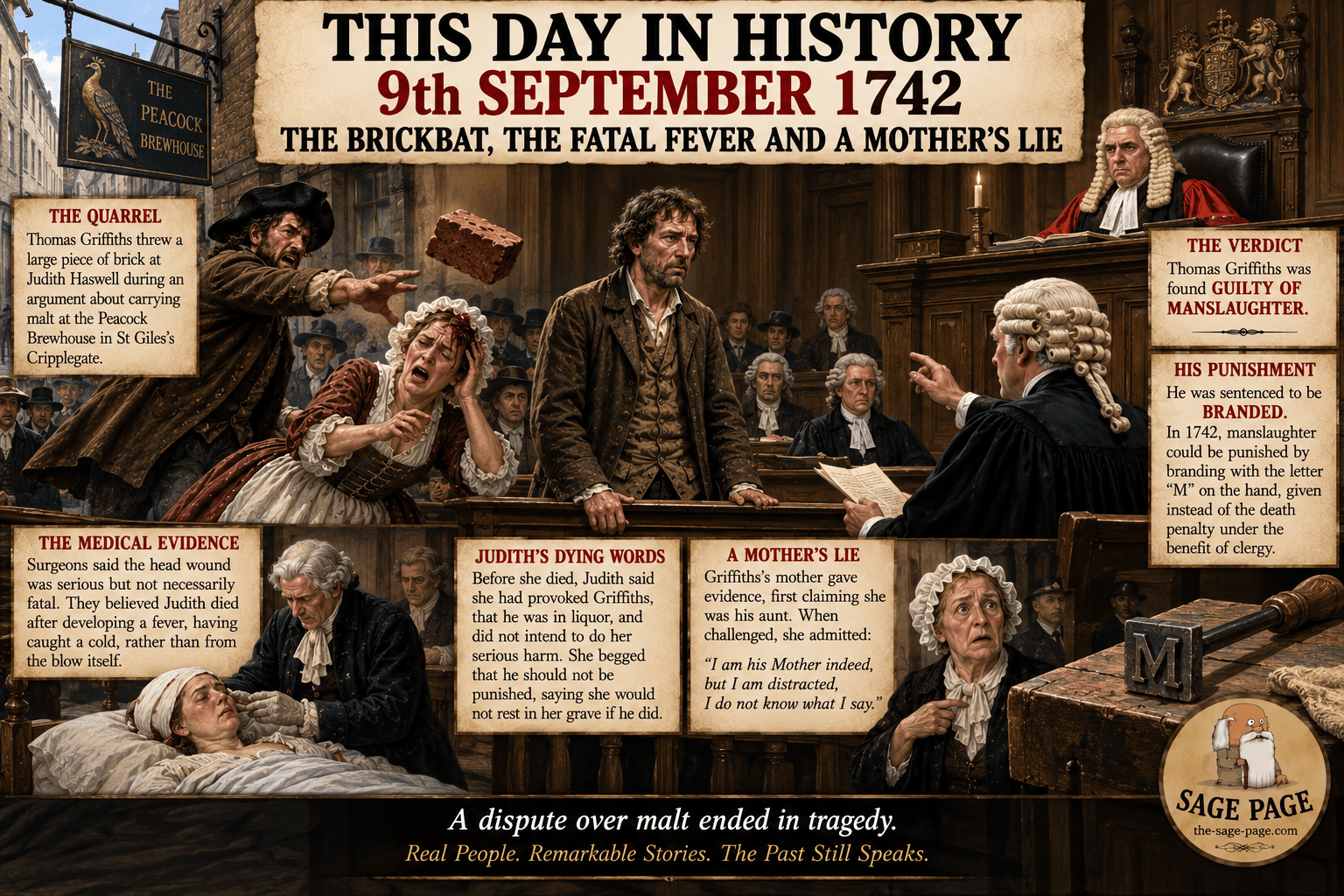
A quarrel over carrying malt ended in tragedy when Thomas Griffiths threw a brickbat at Judith Haswell in 1742. She survived for days before dying after developing a fever. With disputed medical evidence, Judith’s plea for mercy and even a courtroom lie from Griffiths’s mother, the jury chose manslaughter over murder.
Tag Archives: London history
This Day in History – 18th August 1856
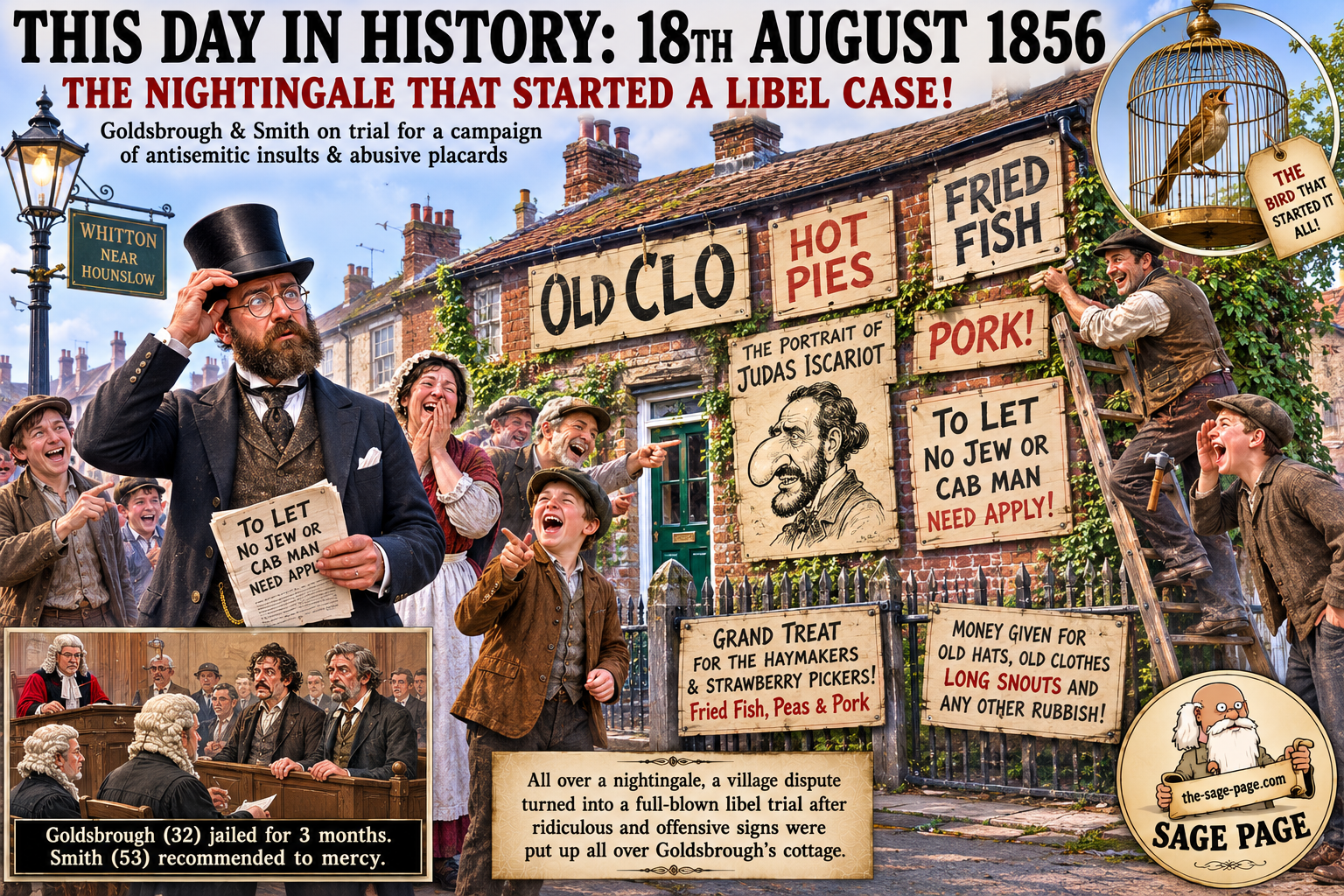
A dispute over a nightingale became something far uglier in August 1856 when Joseph George was targeted by insulting placards, caricatures and antisemitic abuse. The campaign became so severe that George considered leaving his home. Frederick Henry Goldsbrough and Henry Smith eventually found themselves facing an Old Bailey jury.
This Day in History – 5th August 1723

On 5th August 1723, highwaymen William Duce and James Butler were executed at Tyburn. Their remarkable final confessions reveal the workings of organised robbery gangs, betrayals by informers, violent attacks across London and Hampshire, and the personal reflections of two men who knew their criminal lives had reached a fatal end.
This Day in History – 28th July 1721
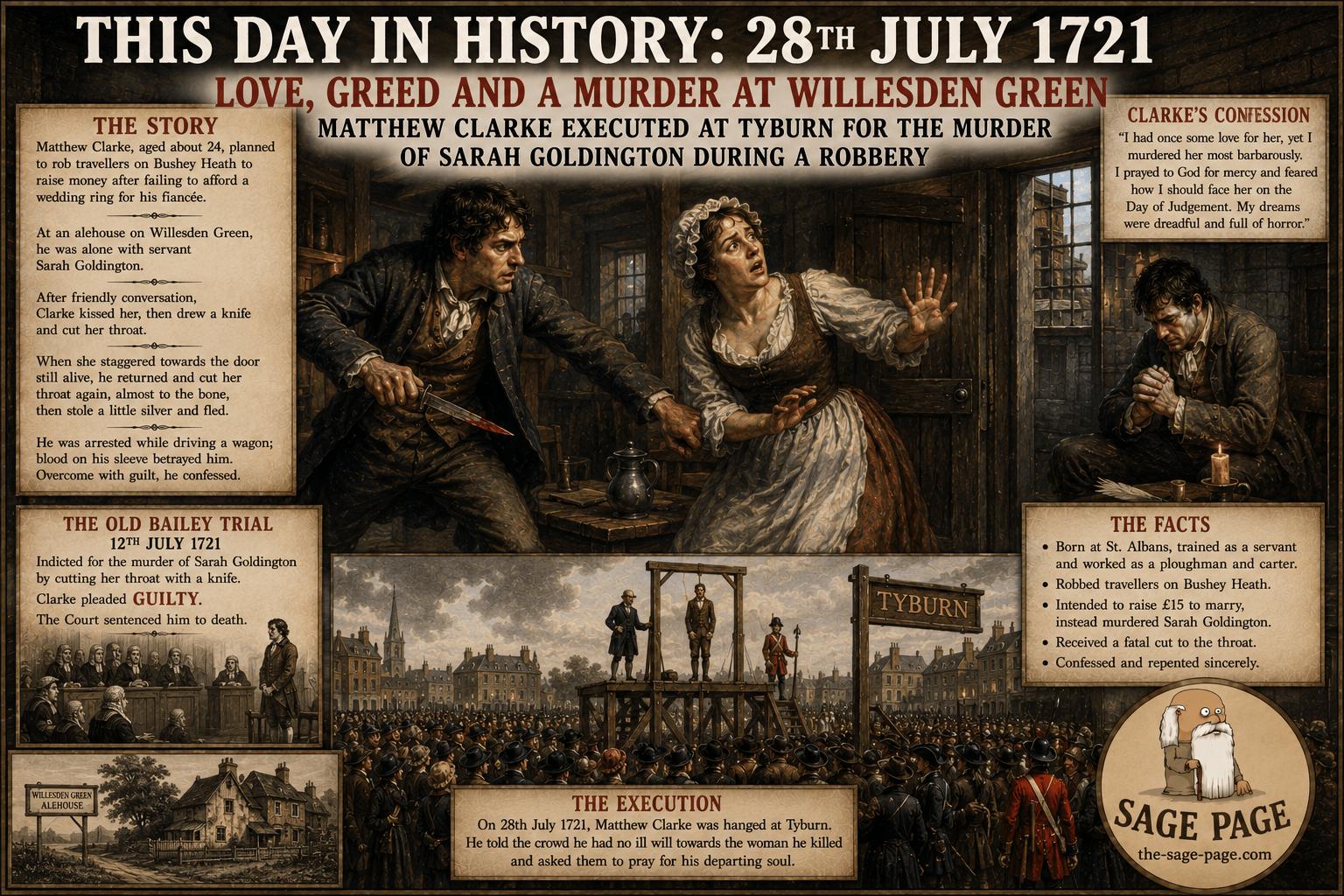
On 28th July 1721, Matthew Clarke was executed for murdering Sarah Goldington during a robbery at Willesden Green. His detailed confession reveals a failed marriage scheme, a robbery planned to raise money, overwhelming remorse, terrifying dreams, and a final plea for others to learn from his tragic and violent downfall.
This Day in History – 22nd July 1895
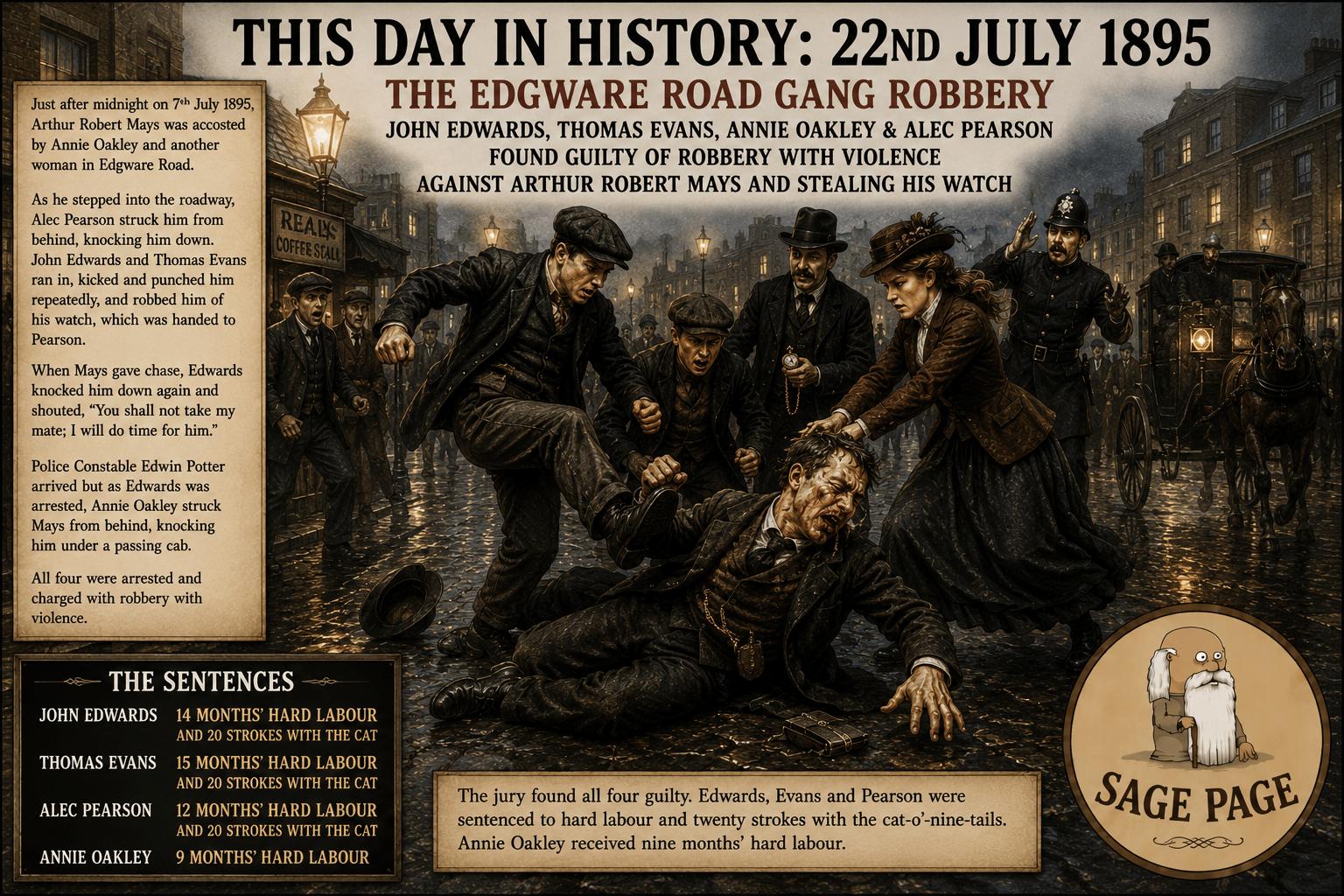
A late-night walk along Edgware Road turned into a brutal gang robbery when Arthur Robert Mays was attacked by four young offenders and robbed of his watch. Witnesses quickly identified the assailants, leading to convictions that ended with hard labour—and the brutal punishment of the cat-o’-nine-tails.
This Day in History – 21 May 1722
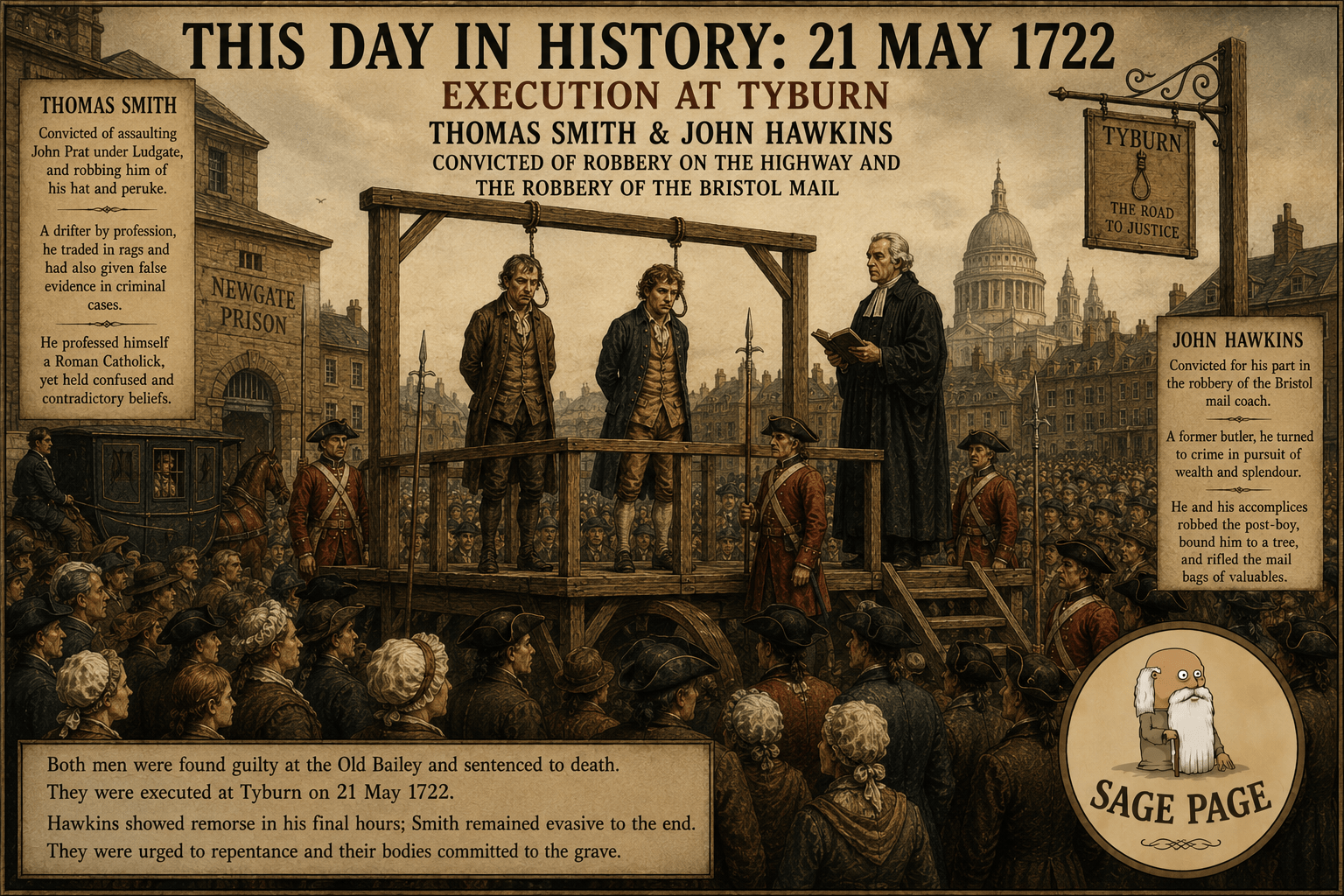
On 21 May 1722, Thomas Smith and John Hawkins were executed at Tyburn for highway robbery. Smith committed a petty theft under Ludgate, while Hawkins took part in a major mail coach robbery. Their cases highlight both opportunistic crime and organised theft in early 18th-century London.
This Day in History: 7 May 1740
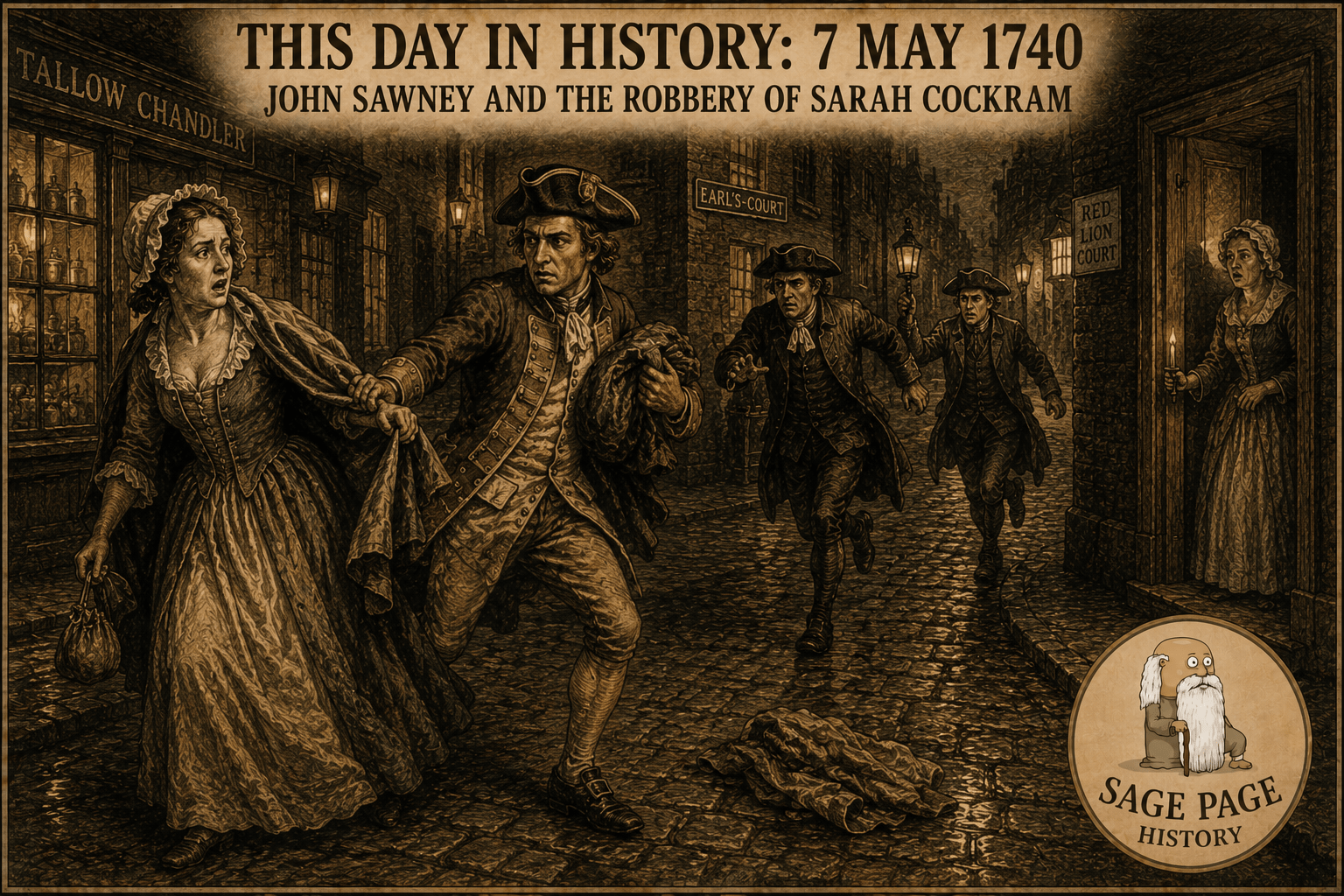
John Sawney was executed on 7 May 1740 for robbing Sarah Cockram of her cloak in Drury Lane. A former sailor turned soldier, his life spiralled into crime and drink. Captured moments after the theft, he was convicted and sentenced to death in a stark example of 18th-century justice
This Day in History: 6 May 1685
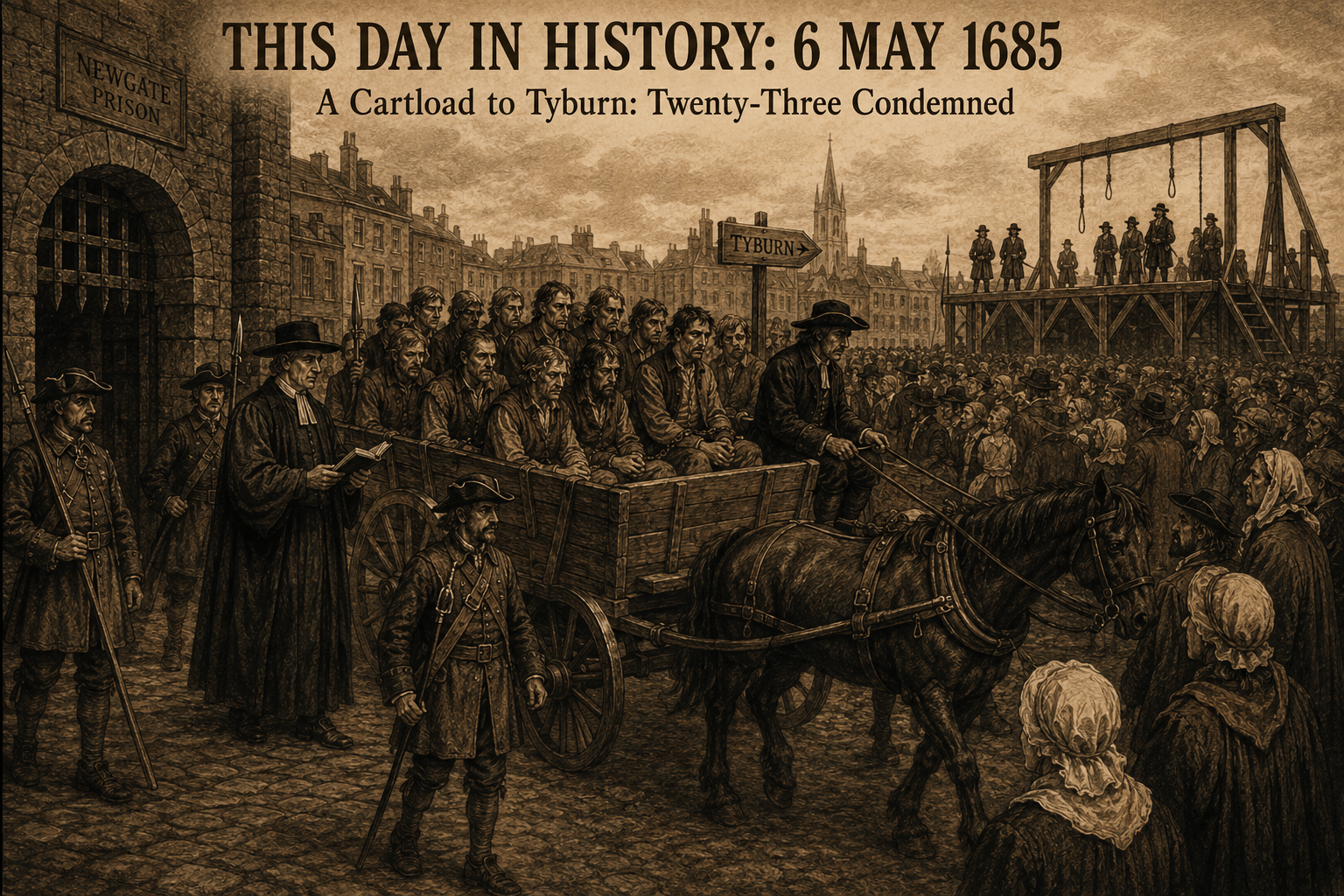
On 6 May 1685, twenty-three prisoners were executed at Tyburn following an Old Bailey session. Despite the Ordinary’s efforts, many remained unrepentant, hoping for pardon until the end. The account reveals a sombre mass execution marked by silence, resignation, and the harsh realities of early modern justice.
This Day in History: 5 May 1736
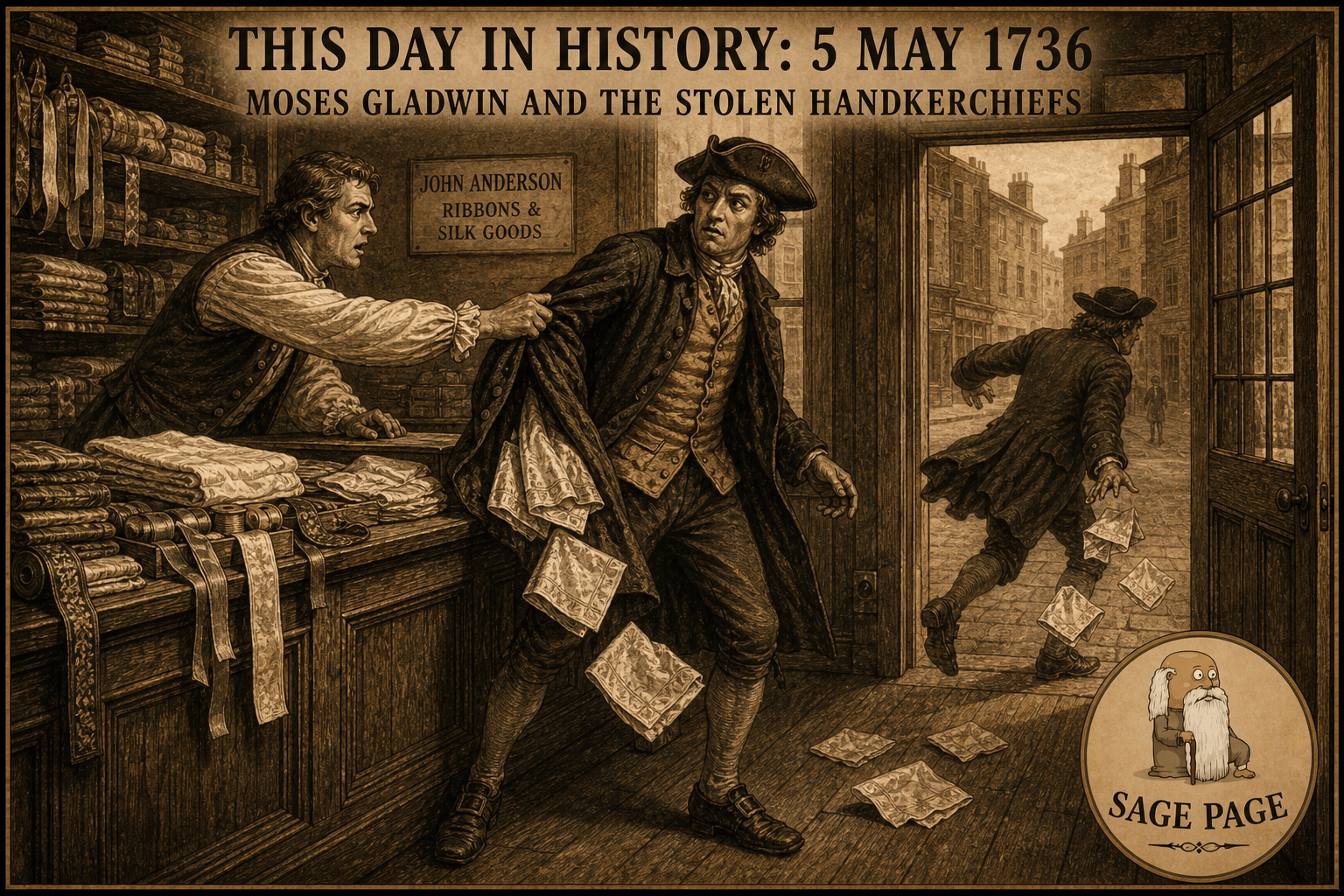
On 5 May 1736, Moses Gladwin was sentenced to death for shoplifting silk handkerchiefs worth 40 shillings. Caught hiding the goods under layered coats, his defiant defence failed, and the Old Bailey jury convicted him under England’s harsh “Bloody Code” laws.
This Day in History: 29 April 1724
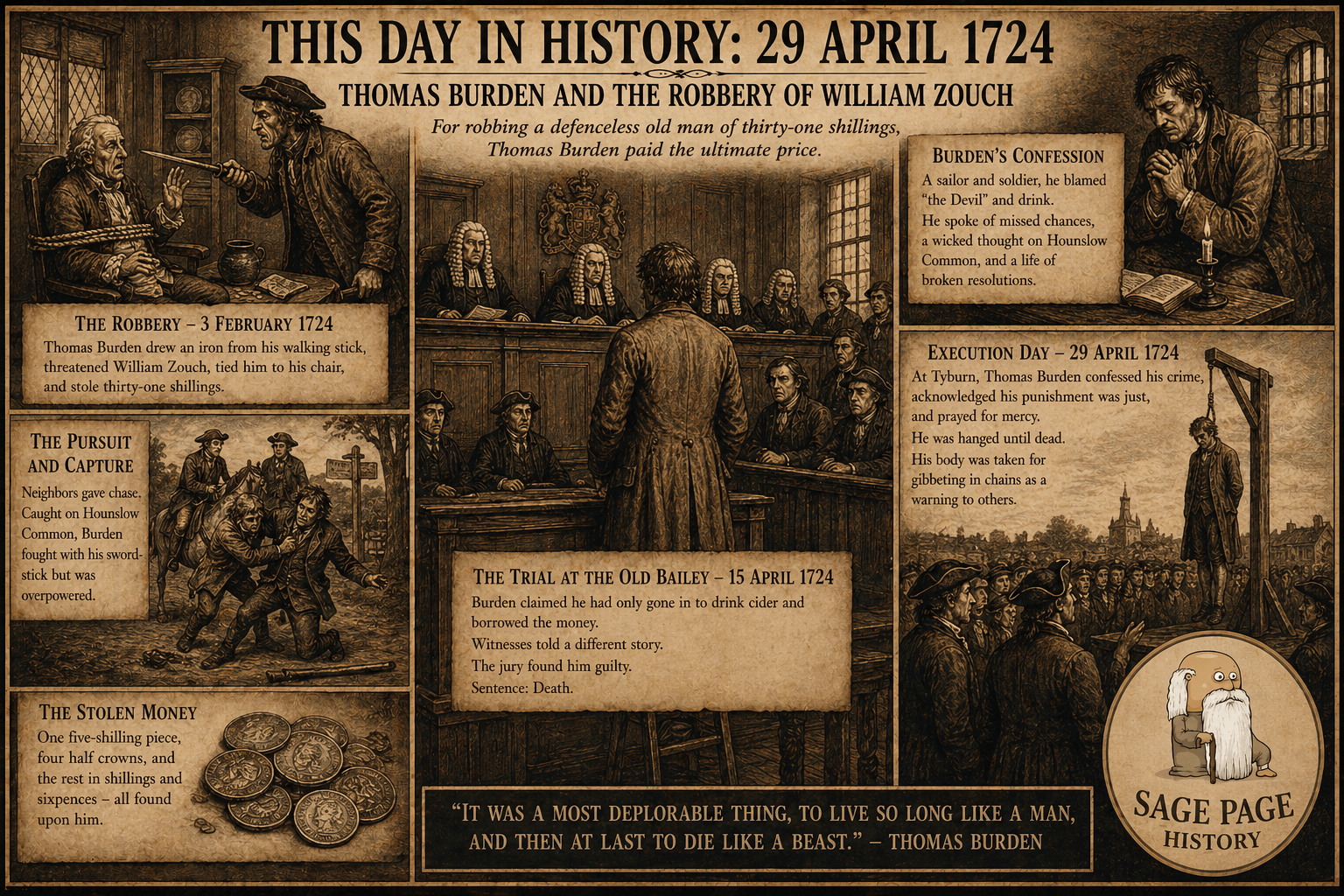
On 29 April 1724, Thomas Burden was executed for robbing elderly William Zouch at swordpoint. After tying the old man to a chair and stealing 31 shillings, Burden was quickly captured and sentenced to death, later blaming the Devil and drink for his downfall.
 The Sage Page