THE ST PATRICK’S NIGHT STABBING
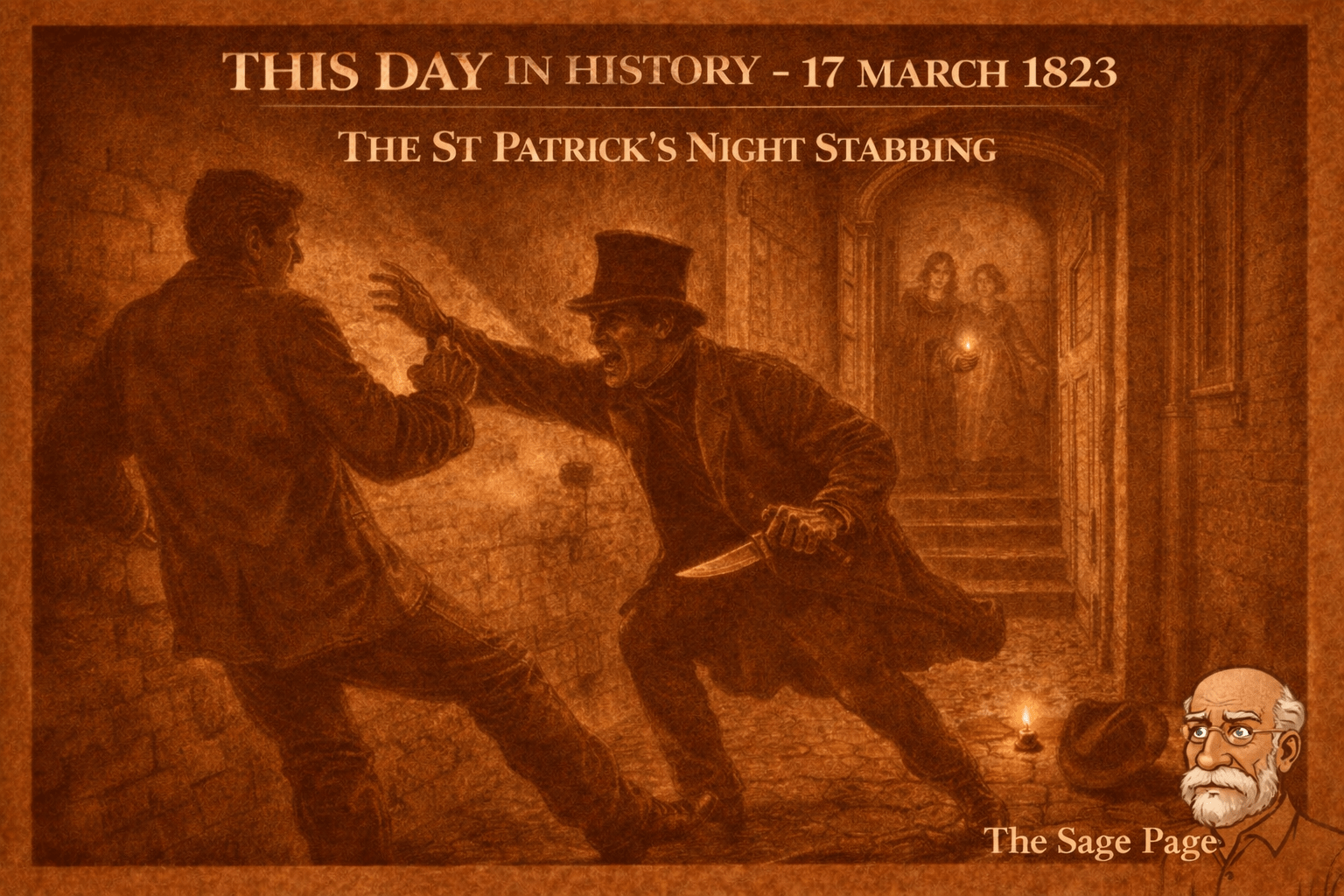
On the night of 17th March 1823, as Londoners marked St Patrick’s Day with drink and merriment, a far darker scene unfolded in a narrow passage off Manchester Square.
John Leacy, a smith, returned to his lodgings after stepping out to buy a candle. The hallway was dark. As he entered, a voice emerged from the shadows:
“Is that Mr. Leacy?”
It was his uncle, Maurice Houlihan.
Moments later, the encounter turned violent.
Houlihan accused Leacy of intending to prosecute him for theft. Before Leacy could respond, a knife flashed in the darkness. In the struggle that followed:
- Leacy’s hands were cut as he tried to seize the blade
- A thrust struck his chest, piercing his clothes and skin
- The two men grappled in near-total darkness
Leacy staggered back toward the stairs as two women, alerted by the commotion, rushed down with a light. By then, Houlihan had fled into the night.
The Evidence
Witnesses confirmed the aftermath:
- Blood running from Leacy’s chest and hands
- His hat and newly bought candle lying in the passage
- A violent struggle that had shaken the house
A constable later examined Leacy’s clothing, where the knife had clearly pierced through shirt, jacket, and apron.
The Defence
Houlihan’s defence painted a very different picture — one of betrayal, jealousy, and conspiracy.
He claimed:
- Leacy had run away from Ireland
- Had formed an improper relationship with Houlihan’s wife
- Had previously threatened him with a spring bayonet
According to Houlihan, the accusation was nothing more than a plot between Leacy and his wife.
Most striking of all was his alibi.
A witness testified that on that very night — St Patrick’s Day — Houlihan was:
- Drinking part of a gallon of beer
- In a nearby room with his wife, child, and friends
- Engaged in festive “merry making” until around 10:30 or 11pm
The Verdict
Despite the alibi and good character witnesses, the jury found Houlihan:
GUILTY
(of wounding with intent to cause grievous bodily harm)
He was sentenced to death.
However, in a familiar twist of early 19th-century justice, he was:
- Recommended to mercy by the prosecutor
- Spared execution
- Transported for life to Van Diemen’s Land
He later sailed aboard the Chapman, beginning a new life at the far edge of the British Empire.
Epilogue: From London Passage to Penal Colony
Houlihan’s story reflects a common pattern of the time:
A moment of violence in London could result not in the gallows, but in exile across the world.
Transportation served as both punishment and opportunity:
- A sentence of life, yet often a path to eventual freedom
- A severing of old ties — family, conflict, and reputation
- A forced beginning in a harsh and unfamiliar land
For Houlihan, the dark passage in Marylebone was not the end of his story — merely the point at which it was forcibly redirected to the other side of the globe.
Historical Note from The Sage
Some quarrels burn briefly and fade. Others travel thousands of miles and linger for a lifetime.
Thank you for reading my writings. If you’d like to, you can buy me a coffee for just £1 and I will think of you while writing my next post! Just hit the link below…. (thanks in advance)

 The Sage Page