Thought of the Day: Waiting

If you’re waiting for the waiter, aren’t you the waiter?

The statement “If you’re waiting for the waiter, aren’t you the waiter?” is a play on words that creates a humorous paradox. It’s a linguistic pun based on the double meaning of the word “waiter.”

In the conventional sense, a “waiter” refers to a person who serves food in a restaurant. However, in the context of the wordplay, “waiting for the waiter” suggests waiting for the server to attend to you in a restaurant. The twist comes when it’s suggested that, if you are waiting for the waiter, you are, in fact, the one who is “waiting” and, by extension, becomes the “waiter.”

This play on words is a light-hearted way of highlighting the ambiguity and wordplay that can occur in the English language. It’s a classic example of linguistic humor that relies on the multiple meanings of a single word to create a clever and amusing paradox.

Thank you for reading my writings. If you’d like to, you can buy me a coffee for just £1 and I will think of you while writing my next post! Just hit the link below…. (thanks in advance)

This Day in History: January 27th

Here are 10 historical events that took place on January 27th, listed in chronological order:

  1. 1606: The trial of Guy Fawkes and his fellow conspirators begins in the Gunpowder Plot against Parliament and King James I.
  2. 1880: Thomas Edison receives a patent for his electric incandescent lamp.
  3. 1944: The Siege of Leningrad is lifted during World War II as Soviet forces open a narrow land corridor.
  4. 1967: The United States, the United Kingdom, and the Soviet Union sign the Outer Space Treaty, prohibiting the deployment of nuclear weapons in space.
  5. 1973: The Paris Peace Accords officially end the Vietnam War.
  6. 1984: Singer Michael Jackson suffers second and third degree burns to his scalp during the filming of a Pepsi commercial.
  7. 1996: Germany first observes International Holocaust Remembrance Day.
  8. 2002: A series of earthquakes in the Indian state of Gujarat result in over 20,000 deaths.
  9. 2010: The first iPad is announced by Apple Inc.’s co-founder Steve Jobs.
  10. 2017: The Bulletin of the Atomic Scientists moves the Doomsday Clock to 2.5 minutes to midnight, signaling a high level of global threat.

These events span various centuries and cover a range of historical, scientific, and cultural milestones.

Thank you for reading my writings. If you’d like to, you can buy me a coffee for just £1 and I will think of you while writing my next post! Just hit the link below…. (thanks in advance)
Quote of the Day: Live and Love

“Live in a moment, love for a lifetime”

Harry Curry

Harry Curry: Timeless Romantic and Philosopher

Harry Curry (born 1974) is celebrated as a modern-day romantic and philosopher, recognized for his profound insights into matters of the heart and the essence of living a fulfilling life. Born in Clacton, Curry’s life and work have been dedicated to unraveling the mysteries of love and the human experience.

Early Life and Formative Influences

From a young age, Harry Curry exhibited a keen sensitivity to the nuances of human relationships. Growing up in Bognor Regis, he was deeply influenced by the romantic literature of past centuries and the timeless tales of love that shaped his worldview. Curry’s early exposure to the complexities of the human heart laid the foundation for his later reflections on the enduring nature of love.

Literary Journey

Curry’s literary career commenced with the publication of his debut work, “Look At Her Legs” in 1997. This groundbreaking piece explored the intricacies of love, drawing inspiration from both classic romantic literature and his own experiences. Subsequent works, including “Woah, I’m Gonna Catch That Train” and “Damned If I Don’t” solidified Curry’s reputation as a revered philosopher of love, with his writings transcending cultural and generational boundaries.

The Man Behind the Quote: Live in a Moment, Love for a Lifetime

At the heart of Harry Curry’s philosophy is the timeless quote, “Live in a moment, love for a lifetime.” This poignant statement reflects Curry’s belief in the transformative power of living fully in the present while nurturing enduring love that transcends the fleeting nature of time.

The quote advocates for a harmonious balance between appreciating the beauty of the current moment and fostering a love that stands the test of time. Curry encourages individuals to savor the richness of each moment, finding joy and fulfillment in the simple pleasures of life. Simultaneously, the emphasis on “love for a lifetime” underscores the importance of cultivating deep, meaningful connections that endure beyond the transient nature of individual moments.

Curry’s philosophy invites individuals to embrace the present with open hearts, cherishing the experiences and relationships that define their lives. By living in the moment and nurturing lasting love, Curry suggests that individuals can create a tapestry of memories and connections that withstand the passage of time, ultimately leading to a life rich in love, fulfillment, and timeless joy.

Thank you for reading my writings. If you’d like to, you can buy me a coffee for just £1 and I will think of you while writing my next post! Just hit the link below…. (thanks in advance)

Quote of the Day: Know No Limits

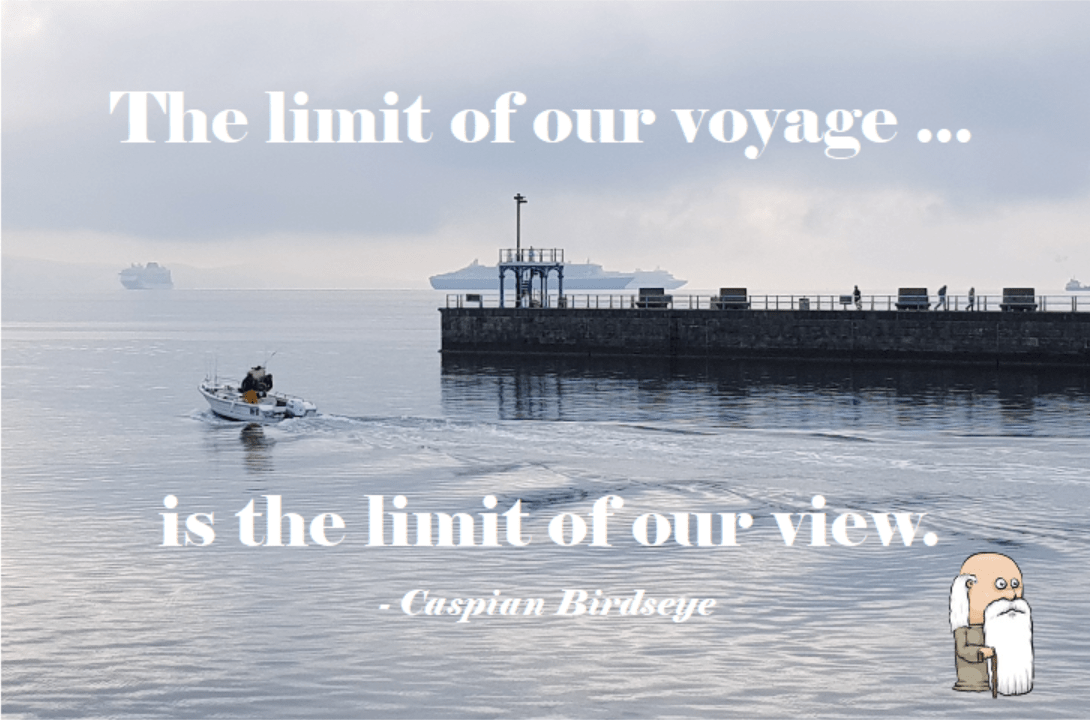
“The limit of our voyage is the limit of our view”

Caspian Birdseye


Caspian Birdseye: Visionary Explorer and Philosopher

Caspian Birdseye (born 1822) stands as a multifaceted figure known for his contributions to both exploration and philosophy. As an explorer, writer, and deep thinker, Birdseye has carved a niche for himself in the realms of adventure and intellectual discourse.

Early Life and Adventurous Spirit

Born in Lyme Regis, Birdseye exhibited an innate curiosity about the world from a young age. His upbringing, marked by tales of exploration and discovery, fueled his adventurous spirit. Birdseye’s insatiable desire to explore the unknown led him to embark on various journeys and expeditions, laying the foundation for a unique combination of practical experience and profound philosophical insights.

Explorer Extraordinaire

Birdseye’s exploration endeavors took him to the farthest corners of the globe. From traversing dense jungles to scaling towering peaks, his expeditions were characterized by a relentless pursuit of the unknown. Notably, his discovery of the statue of Mini Haha in 1877 captured the world’s attention, establishing Birdseye as a 19th-century explorer with a keen eye for the unexplored.

Philosophical Prowess

In tandem with his adventures, Birdseye developed a philosophical perspective that seamlessly intertwined with his exploration ethos. Influenced by existentialist philosophy and a deep appreciation for the beauty of the natural world, Birdseye’s intellectual pursuits sought to bridge the gap between the tangible and the abstract.

The Limit of Our Voyage is the Limit of Our View: Decoding the Quote

One of Caspian Birdseye’s most intriguing and reflective statements is, “The limit of our voyage is the limit of our view.” This profound observation encapsulates Birdseye’s belief in the interconnectedness of physical exploration and the expansiveness of one’s perception.

In positive terms, the quote serves as a rallying call to embrace a holistic approach to exploration – one that extends beyond geographical boundaries. Birdseye encourages individuals to recognize that the true limits of their journeys are defined not only by the physical distances covered but also by the breadth of their perspectives. The metaphorical “voyage” encompasses not only geographical exploration but also the exploration of ideas, cultures, and the depths of one’s own understanding.

Birdseye’s philosophy suggests that by broadening one’s view, individuals can transcend the limitations imposed by a narrow perspective, unlocking new realms of knowledge and experience. The quote underscores the idea that true exploration involves not only traversing external landscapes but also delving into the uncharted territories of the mind, fostering personal growth, and a richer, more profound understanding of the world.

Thank you for reading my writings. If you’d like to, you can buy me a coffee for just £1 and I will think of you while writing my next post! Just hit the link below…. (thanks in advance)
Thought of the Day: Yawning

When we yawn, do deaf people think we are screaming?

No, when people yawn, deaf individuals do not interpret it as screaming. Yawning is a universal physiological response and is not linked to vocalization or sound. Deaf people may not hear the sound associated with a yawn, but they can observe the physical act of yawning, which involves opening the mouth wide and taking a deep breath.

The idea that yawning may be perceived as screaming by deaf individuals is a misconception. Yawning is generally understood as a natural and involuntary behavior related to fatigue, boredom, or a need for increased oxygen intake. While it may produce a sound, it is not similar to the intentional vocalization associated with screaming. People, regardless of their hearing ability, are likely to recognize yawning as a non-verbal expression rather than an auditory signal.

Thank you for reading my writings. If you’d like to, you can buy me a coffee for just £1 and I will think of you while writing my next post! Just hit the link below…. (thanks in advance)
This Day in History: January 26th

Here are 10 historical events that took place on January 26th, listed in chronological order:

  1. 1788: The British First Fleet, led by Captain Arthur Phillip, arrives in Sydney, Australia, establishing the first European settlement.
  2. 1837: Michigan is admitted as the 26th U.S. state.
  3. 1841: The United Kingdom formally occupies Hong Kong.
  4. 1905: The world’s largest diamond, the Cullinan, is found in South Africa.
  5. 1926: John Logie Baird demonstrates the first working television system in London.
  6. 1945: The Auschwitz concentration camp is liberated by Soviet forces.
  7. 1950: India officially becomes a republic, adopting its constitution and marking Republic Day.
  8. 1962: The United States launches Ranger 3 to land scientific instruments on the Moon but misses the target.
  9. 1991: Mohamed Siad Barre, the president of Somalia, flees the capital city, Mogadishu, marking the collapse of his regime.
  10. 2004: A whale explodes in the Taiwanese city of Tainan, due to a build-up of gas while it was being transported for research.

These events cover a diverse range of historical, political, and scientific occurrences on January 26th throughout history.

Thank you for reading my writings. If you’d like to, you can buy me a coffee for just £1 and I will think of you while writing my next post! Just hit the link below…. (thanks in advance)

Thought of the Day: Technology

If Apple made a car, would it still have windows?

The term “windows” in the context of a car usually refers to the transparent openings in the vehicle that allow occupants to see outside. If Apple were to manufacture a car, it is highly likely that it would still have windows. The presence of windows is a fundamental aspect of automotive design, providing essential visibility for drivers and passengers.

While the design and technology of car windows may evolve, with advancements in materials, tinting, or smart glass technology, the basic concept of having transparent openings for visibility and safety purposes is unlikely to change. Car windows serve crucial functions such as enhancing situational awareness, allowing communication between the inside and outside of the vehicle, and ensuring compliance with safety regulations.

In the automotive industry, regardless of the manufacturer, the inclusion of windows remains a standard feature to meet safety, regulatory, and practical considerations. Therefore, if Apple were to enter the car manufacturing market, its vehicles would likely incorporate windows as an integral part of the design.

Of course, the question is a play on words, and the humor is derived from a double entendre involving the term “windows.” The question cleverly plays with the dual meanings of “windows” as both a trademarked operating system by Microsoft and the transparent openings in a car.

Thank you for reading my writings. If you’d like to, you can buy me a coffee for just £1 and I will think of you while writing my next post! Just hit the link below…. (thanks in advance)
This Day in History: January 25th

Here are 10 historical events that took place on January 25th, listed in chronological order:

  1. 1533: Henry VIII of England secretly marries Anne Boleyn.
  2. 1759: The British Museum opens to the public in London.
  3. 1787: Shays’ Rebellion, an armed uprising of Massachusetts farmers against high debt and tax burdens, is crushed.
  4. 1890: Nellie Bly completes her round-the-world journey in 72 days.
  5. 1915: Alexander Graham Bell inaugurates U.S. transcontinental telephone service, speaking from New York to Thomas Watson in San Francisco.
  6. 1945: The Battle of the Bulge concludes with the capture of the Belgian town of St. Vith by American forces.
  7. 1949: The first Emmy Awards are presented.
  8. 1995: The Norwegian Rocket Incident: Russia almost launches a nuclear attack after detecting a Black Brant XII Norwegian research rocket.
  9. 2004: Opportunity rover (MER-B) lands on Mars.
  10. 2011: The first wave of the Egyptian revolution begins, leading to the eventual resignation of President Hosni Mubarak.

These events span different centuries and encompass a variety of historical, cultural, and scientific milestones.

Thank you for reading my writings. If you’d like to, you can buy me a coffee for just £1 and I will think of you while writing my next post! Just hit the link below…. (thanks in advance)

Quote of the Day: Finding Contentment

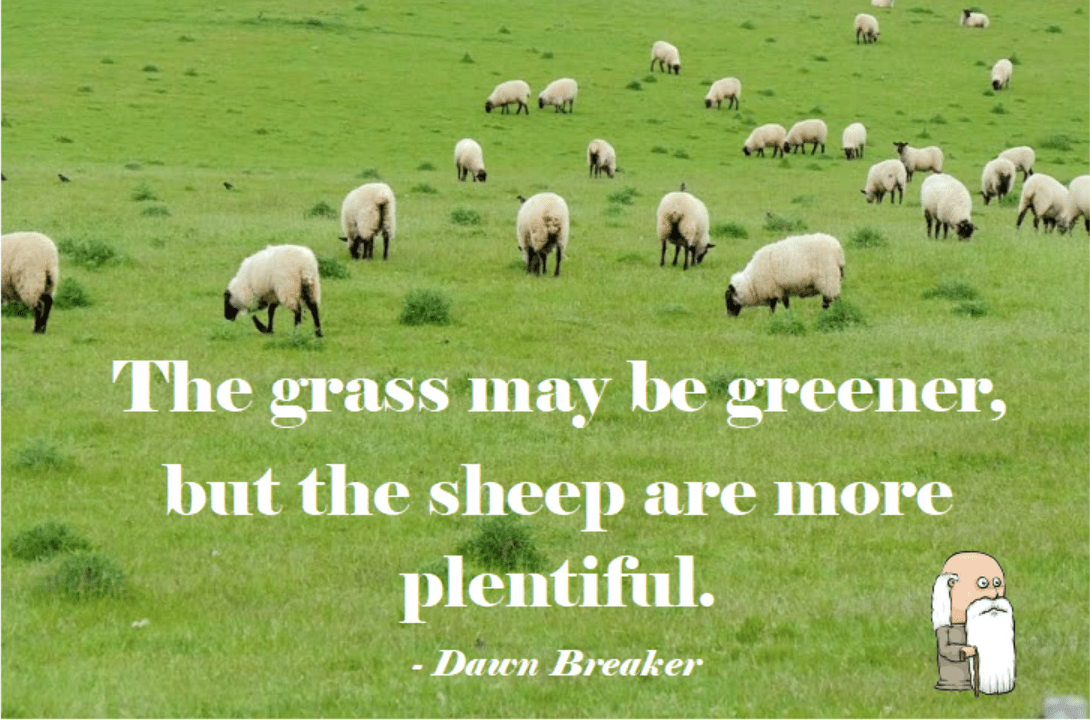
“The grass may be greener, but the sheep are more plentiful”

Dawn Breaker

Dawn Breaker: A Prolific Philosopher and Author

Dawn Breaker (born 1912) is a renowned contemporary philosopher, author, and cultural critic, celebrated for her insightful perspectives on human nature, society, and the intricacies of daily life. Hailing from Waterbury, Breaker’s intellectual journey has left an indelible mark on the landscape of modern thought.

Early Life and Education

Breaker’s early life was marked by a keen curiosity about the world and a voracious appetite for knowledge. Born into a family of intellectuals, she displayed a precocious intellect from a young age. After completing her early education in Sidmouth, Breaker pursued higher studies at Exeter Polytechnic, where she delved into philosophy, literature, and cultural studies.

Philosophical Influences

Throughout her academic journey, Breaker was heavily influenced by a diverse range of philosophical traditions, from existentialism to post-modernism. This eclectic mix of influences shaped her unique worldview, characterized by a blend of critical analysis and a deep appreciation for the human experience.

Literary Career

Dawn Breaker’s literary career took flight with the publication of her seminal work, “My First Book” in 1933. This groundbreaking piece of philosophical literature garnered widespread acclaim for its profound insights into the complexities of modern existence. Breaker’s subsequent works, including “The Second Book” and “You Can Keep Counting” further solidified her reputation as a thought leader of unparalleled depth and intellectual rigor.

The Grass May Be Greener, but the Sheep Are More Plentiful: Unraveling the Quote

One of Breaker’s most intriguing and often-quoted statements is, “The grass may be greener, but the sheep are more plentiful.” This seemingly enigmatic phrase encapsulates Breaker’s nuanced perspective on the human tendency to pursue perceived ideals at the expense of practical realities.

In positive terms, the quote encourages individuals to appreciate the abundance of opportunities and resources available within their current circumstances. While the allure of greener pastures may be enticing, Breaker suggests that the true richness lies in recognizing and maximizing the potential within one’s immediate environment. The metaphorical “sheep” represents the myriad possibilities and untapped potential that exist when one chooses to focus on cultivating the present, rather than constantly seeking external validation.

Breaker’s philosophy challenges individuals to find contentment and fulfillment in their current surroundings, advocating for a mindful appreciation of the inherent value within one’s own “pasture.” In essence, the quote serves as a reminder to embrace the abundance within reach, fostering gratitude and a sense of purpose in the pursuit of a meaningful life.

Thank you for reading my writings. If you’d like to, you can buy me a coffee for just £1 and I will think of you while writing my next post! Just hit the link below…. (thanks in advance)

Quote of the Day: Love

“A poppy for remembrance, a rose for Valentine, a lilly for that farewell, and a bouquet to say you are mine.”

Emmanuel Forlife

Emmanuel Forlife: Poet and Florist Extraordinaire

Emmanuel Forlife, born on July 8, 1885, was a prolific poet and florist renowned for his enchanting verses that beautifully intertwined the language of flowers with the sentiments of the human heart. Hailing from a small town in France, Forlife’s life was marked by a passion for literature and a profound connection with the artistry of floral arrangements.

Early Life and Influences:

Growing up in the late 19th century, Emmanuel Forlife was immersed in the rich cultural ambiance of France. His early exposure to the symbolism of flowers, inspired by the Romantic movement of the time, laid the foundation for his unique fusion of poetry and floristry. The beauty of the natural world and the elegance of expression became his guiding inspirations.

Floral Expertise:

Forlife’s botanical expertise emerged as he apprenticed in his family’s floristry business. He soon became recognized for his imaginative arrangements and the meticulous selection of flowers that conveyed deeper emotions and meanings. His floral compositions became sought after, gracing significant events and moments in the lives of the townspeople.

Literary Pursuits:

Emmanuel Forlife’s love for literature found a perfect companion in his passion for floristry. He began composing verses that seamlessly blended the language of flowers with the profound emotions associated with various occasions. His poetry became known for its ability to evoke sentiments through the carefully chosen symbolism of blossoms.

Quote: “A poppy for remembrance, a rose for Valentine, a lily for that farewell, and a bouquet to say you are mine.”

One of Emmanuel Forlife’s most cherished quotes, “A poppy for remembrance, a rose for Valentine, a lily for that farewell, and a bouquet to say you are mine,” exemplifies his poetic genius. In this eloquent statement, Forlife encapsulates the power of floral symbolism, assigning specific flowers to distinct emotional contexts. Each flower becomes a poetic vessel, expressing sentiments ranging from remembrance to love and farewell.

Artistic Legacy:

Emmanuel Forlife’s contributions to both poetry and floristry left an indelible mark on the cultural landscape of his time. His floral arrangements, often accompanied by his poetic verses, became synonymous with nuanced expression and refined sentiments. His artistic legacy is celebrated for its ability to elevate ordinary moments into extraordinary experiences through the language of flowers.

Cultural Impact:

Forlife’s approach to the interplay of flowers and emotions had a lasting impact on the language of flowers, influencing subsequent generations of florists and poets. The idea of selecting blooms with deliberate intent to convey specific emotions became a cherished tradition, merging aesthetics with the profound language of the heart.

Thank you for reading my writings. If you’d like to, you can buy me a coffee for just £1 and I will think of you while writing my next post! Just hit the link below…. (thanks in advance)