Here are 10 historical events that took place on January 31st, listed in chronological order:
1606: Guy Fawkes, one of the Gunpowder Plot conspirators, is executed in London.
1865: The United States Congress passes the 13th Amendment to the Constitution, abolishing slavery.
1917: Germany announces unrestricted submarine warfare during World War I, leading to the resumption of unrestricted submarine warfare by the German navy.
1943: The Battle of Stalingrad ends with the surrender of the German 6th Army to the Soviet Union during World War II.
1950: President Harry S. Truman announces the development of the hydrogen bomb.
1958: Explorer 1, the first successful U.S. satellite, is launched into orbit.
1971: Astronauts Alan Shepard, Edgar Mitchell, and Stuart Roosa launch on Apollo 14, the eighth crewed mission in the Apollo program and the third to land on the Moon.
1990: The first McDonald’s restaurant in the Soviet Union opens in Moscow.
2001: A Scottish court in the Netherlands convicts Abdelbaset al-Megrahi and acquits Lamin Khalifah Fhimah for their roles in the bombing of Pan Am Flight 103 over Lockerbie, Scotland.
2010: Avatar becomes the first film to gross over $2 billion worldwide.
These events span a wide range of historical periods and have had significant impacts on various aspects of history.
Thank you for reading my writings. If you’d like to, you can buy me a coffee for just £1 and I will think of you while writing my next post! Just hit the link below…. (thanks in advance)
Curtis Sea, born on March 12, 1970, in the quaint town of Serenityville, is a renowned inspirational guru and author celebrated for his profound insights into personal growth and standing tall in the face of life’s challenges. Raised in a community that valued resilience and optimism, Sea developed an early fascination with the power of positive thinking.
Educational Pursuits in Positivity
After completing his studies in psychology and philosophy at Tranquil University, Sea embarked on a journey of self-discovery, immersing himself in ancient wisdom and modern psychological principles. His relentless pursuit of understanding the human spirit led him to delve into the realms of motivational literature and personal development.
Literary Contributions
In 1995, Curtis Sea published his groundbreaking book, “Rising Above: A Guide to Elevating Your Life.” This influential work garnered widespread acclaim for its pragmatic approach to overcoming obstacles and embracing personal empowerment. Sea continued to pen numerous bestsellers, each resonating with readers seeking inspiration and practical guidance.
The Man Behind the Quote: “Stand Tall, and They Will Stand Tall Around You”
One of Curtis Sea’s most quoted and impactful phrases is, “Stand tall, and they will stand tall around you.” Rooted in the belief that personal strength and resilience can uplift not only the individual but also those in their sphere of influence, this quote has become a mantra for many seeking positive change.
Positive Interpretation of the Quote
The quote encourages individuals to embody strength, confidence, and integrity in their actions and demeanor. Curtis Sea suggests that when individuals stand tall—both figuratively and literally—they exude a sense of self-assuredness and resilience that has a ripple effect on those around them.
The metaphorical “stand tall” extends beyond physical stature; it encompasses the mental and emotional fortitude to face challenges with grace and determination. Sea implies that by cultivating inner strength, individuals inspire others to rise to the occasion, fostering a collective atmosphere of empowerment and support.
In essence, the quote serves as a call to embrace personal growth and resilience as a means of positively influencing the environment. Curtis Sea’s philosophy suggests that by standing tall in the face of adversity, individuals not only elevate themselves but also create a powerful catalyst for the growth and upliftment of those in their social and professional circles.
Legacy and Continuing Influence
Curtis Sea’s legacy as an inspirational guru and author endures, with his books and quotes continuing to inspire individuals worldwide. The timeless wisdom encapsulated in the quote serves as a reminder that personal empowerment is not only an individual journey but a shared experience that has the potential to elevate entire communities. As admirers of Sea’s work continue to embrace the philosophy of standing tall, they contribute to a world where positivity, resilience, and mutual support thrive.
Thank you for reading my writings. If you’d like to, you can buy me a coffee for just £1 and I will think of you while writing my next post! Just hit the link below…. (thanks in advance)
My wife claims I’m the cheapest person she’s ever met.
I’m not buying it.
My wife’s leaving me because she thinks I’m obsessed with astronomy.
What planet is she on?
My wife woke up with a huge smile on her face this morning.
I love felt tips.
My wife threw some Omega 3 capsules at me today.
It’s okay though, I only have super fish oil injuries.
My wife told me she was leaving me because she couldn’t live with me always making stupid Star Wars puns.
I said, “Divorce is strong with this one…”
My wife and I often laugh about how competitive we are…
But I laugh more.
My wife left a note on the fridge. It said, “It’s not working. I can’t take it anymore. I’m going to my mom’s.”
I opened the fridge door, the light came on, and the beer was cold.
What the hell did she mean?
Just at the airport with my wife, I said “I wish I’d brought the coffee table with us.”
“Why is that?” she asked…
“The passports are on it…”
My wife asked, “Do you know any tennis puns?”
I said, “No, they’re not really my forte love”.
My wife said she is leaving me because I’m too arrogant.
I told her to close the door on the way back in.
My wife still hasn’t told me what my New Year’s resolutions are.
I invited my wife to go to the gym with me and then I didn’t show.
I hope she gets the message that we’re not working out.
My wife told me I was immature and needed to grow up.
Guess who’s not allowed in my tree house anymore…
My wife and I met on a website for dolphin impersonators.
We clicked straight away.
I said to my friend, “My wife keeps asking me if I’m an Alice in Wonderland character, and it’s getting really annoying!”
He said, “Are you mad at her?”
I said, “Geez! Don’t you start too!”
My wife accused me of being self-important.
I nearly fell off my throne.
My wife accused me of being a transvestite.
So I packed her things and left.
My wife just asked me when I was going to stop quoting Elton John song lyrics.
I said “I think it’s gonna be a long, long time…”
I told my wife she drew her eyebrows too high.
She seemed surprised.
My wife just left me because of my obsession with cricket.
It’s really hit me for 6.
My wife has kicked me out of the house because of my bad Arnold Schwarzenegger impressions.
But don’t worry…I’ll return.
Wife: “I’m sick of you pretending you’re a detective!, I think we should split up”.
Me: “Good idea. We can cover more ground that way”
Throughout our marriage, my wife has always stood by my side.
She had to.
We’ve only got one chair.
My wife said to me “There’s 14 reasons why I’m leaving you, and don’t even get me started on your tennis obsession!”
I said “Well that’s 15, love…”
My wife is leaving me because I don’t believe in her tarot readings…
To be fair it’s been on the cards for a while.
I was having an argument with my wife last night and she accused me of being childish.
What does she know?
She’s just a stinky poo face…
I gave my French wife a pendant with “le monde” carved in.
It means the world to her.
My wife said she was fed up with me always getting my directions mixed up.
So I packed my bags and right.
I haven’t spoken to my wife in 3 weeks.
I didn’t want to interrupt her.
I relabeled all the jars in my wife’s spice rack.
I’m not in trouble yet but the thyme is cumin…
My wife is on a tropical fruit diet, the house is full of the stuff!
It’s enough to make a mango crazy.
I was going to go to a fancy dress party as Harry Potters godfather.
But my wife said “You can’t be Sirius”
I asked my wife to rate my listening skills and she said, “You’re an 8 on a scale of 10”
I still don’t get why she wanted me to urinate on the skeleton.
My wife just said to me “What rhymes with orange”
I said “No it doesn’t”
My wife is saying she’ll divorce me because I was obsessed with television dramas.
But will she leave me?
Find out next week…
My wife’s a terrible cook, she can never get her sauces right!
I’ve stuck with her though, through thick and thin.
Why did my wife cross the road?
To get back to the first shoe shop we went in three hours ago!
My wife said she’s leaving me because of my obsession with ‘Who wants to be a millionaire’
I said ‘Is that your final answer?’
My wife said she will leave me.
She said I was too passive, and didn’t stand up for myself enough.
I can’t really argue with that.
My wife broke up with me recently because I’m a compulsive gambler.
All I can think about is how to win her back.
My wife just texted me to say she’s made a Voodoo doll of me.
I think she’s pulling my leg.
My wife dumped me because of my obsession with plants.
I asked “Where’s this stemming from petal?”
My wife just called me lazy!!
Really unfair, it took me over an hour to take the Christmas tree down this morning…
My wife says the salads I make tend to be a bit on the dry side.
It’s definitely something that needs addressing.
My wife said I was annoying him with all my puns about trees.
I said; “Ah, that old chestnut…”
I told my wife I was opening a theatre.
She said, ‘Are you having me on?’
I said, ‘I’ll give you an audition but I’m not promising anything.’
The wife just threw six cricket balls at me…
“What’s up ?” I asked.
“It’s over” she replied.
My wife asked me to stop singing Oasis songs in public.
I said maybe!
I was arguing with my wife in Nandos when my best mate ran off with the garlic bread & coleslaw.
I wish he would stop taking sides!
My wife gets annoyed if I mess with her red wine, so I’ve added fruit and lemonade to it and now she’s sangria than ever.
Last night I asked my wife to dress up as a Playboy waitress.
She’s not a happy bunny!
My wife asked me, “Did you eat my chocolate in the cupboard last night?”
“No, don’t be silly” I replied, “I ate it on the sofa.”
When my wife told me to stop impersonating a flamingo, I had to put my foot down.
My wife asked me to put ketchup on the shopping list…
Now I can’t read anything.
My wife got mad at me for kicking the dropped ice cubes under the refrigerator.
But now it’s all water under the fridge.
The dog is barking at the backdoor and the wife is yelling at the front door.
Who do you let in first?..
The dog, because he’ll shut up when he comes in.
My wife said she’s leaving me because I’m over-competitive.”
Not if I leave you first!” I shouted as I raced her to the front door.
My wife kept going on and on about what we should use the empty drawer for.
Eventually, I told her to put a sock in it.
My wife has said she’s leaving me because I’ve put CCTV all around the flat.
I can see where she’s coming from.
My wife told me she’ll slam my head on the keyboard if I don’t get off the computer.
I’m not too worried, I think she’s jokinlkjhfakljn m,.nbziyoao78yv87dfaoyuofaytdf
I asked my wife “So, do you think the cup is half full or half empty?”
And you know what she said?
“Please for the love of god could you stop wearing my bras!”
My wife is throwing me out because of my Only Fools and Horses obsession.
I’d better fetch the suitcase from the van.
When I told my wife I was looking at flights on the internet, she got very excited!
Which was odd as she’s never shown an interest in darts before.
Since the snow came all my wife has done is look through the window.
If it gets any worse, I’ll have to let her in.
My wife said to me “I bet you can’t make a pun about a flower?”
But I rose to the challenge…
My wife asked me if I could have a threesome, which of her friends I would choose.
Apparently, I was only supposed to name one, not two.
My wife kept saying I should treat her like a princess.
So I forced her to marry an old guy she’d never met to secure an alliance with the French.
I told my wife that I want to be a millionaire like my Dad.
She said, “Wow, your Dad’s a millionaire?”
I said, “No, but he wants to be.”
My wife left me because I’m too insecure.
No wait, she’s back.
She just went to make a cup of tea.
I married my wife for her looks …
Just not the ones she’s been giving me lately
My wife left me for an electrician.
He promised her the earth…
My deaf wife just told me, “We need to talk.”
That’s not a good sign.
My wife text messaged me with one word: “Earth.”
It meant the world to me.
My wife keeps empty margarine tubs and just leaves them lying around…
I can’t believe it’s not clutter.
My wife has just left me due to my love of horse racing.
She’s at the gate….and she’s off!
My wife said, “There was someone knocking on the door, with a beard earlier!”
I said, “No wonder I couldn’t hear him!”
My wife asked if she could have a little peace and quiet while she cooked dinner…
So I took the battery out of the smoke detector!
My wife told me she thought we’d have less arguments if I wasn’t so pedantic.
I told her “I think you mean fewer”
I told my wife that I’ve always fancied Beyoncé.
She said; “Whatever floats your boat”
I replied “No – that’s buoyancy”
My wife just told me to grow up.
I’m speechless!!
To be fair though, it’s pretty hard to say anything with 37 gummy bears in your mouth
My wife has just fell over and dropped a basket full of freshly ironed clothes.
I just sat back and watched it all unfold!
I left my last wife because she wouldn’t stop counting.
I wonder what she’s up to now…
My wife says she’ll leave me if I keep making marine animal puns…
I said “I don’t do it on porpoise.”
My new wife told me I’m terrible in bed.
I told her it’s unfair to make a judgement in less than a minute.
My wife has accused me of not having any empathy.
I don’t understand why she feels that way.
My wife and I are both tightrope walkers.
We met online…
My wife insists she could see the face of Jesus in our tub of margarine…
I said “I can’t believe it’s not Buddha…”
At first my wife hated the revolving chair I bought, but then she sat on it….
Eventually she came around.
My wife left me because she couldn’t handle my OCD…
I told her to close the door five times on her way out!
My wife asked me if I would change our 1 month old son.
I told her I liked the one we have.
I’ve just bought a house with period features…
My wife really hates that nickname.
My wife has started her own business reading Tarot cards.
She’s making a fortune.
My wife said she wanted to be treated for her birthday.
So I painted her with Cuprinol.
I usually meet my wife at 12:59 because I like that one-to-one time
My wife is a hoarder and refuses to throw out her old magazine collection.
She has a lot of issues.
Wife: What do think you’re playing at coming home half drunk??!
Husband: I ran out of money.
I had a vasectomy so my wife didn’t get pregnant.
All it did though was change the colour of the baby….
The first time I had sex it was in my parent’s bedroom.
My wife said, “This is a bit awkward.”
I said, “Just ignore them.”
I said to my wife, “I need to call the doctor today.”
She said, “Which doctor?”
I said, “No, the regular kind.”
My wife left me because of my obsession with astrology.
I guess I should have seen the signs..
My wife is still mad at me because I accidentally put superglue on her pen a few days ago.
She just can’t seem to let it go.
My wife told me that I’m “not cut out to be a mime”.
“Was it something I said?” I asked.
“Yes,” she replied.
My wife said last night she was leaving me this morning because of my obsession with Wham!
I said ‘OK, wake me up before you go go’.
I asked my wife if I was the only one she had ever been with.
She said yes, all the others were nines and tens.
My wife has decided to transform herself into a giant bumblebee.
At first I told myself it wouldn’t make any difference and I would stay.
Then I saw her face…
My wife said if I didn’t do page 7 of the Kama sutra she would leave me.
It put me in a very difficult position
I thought my wife was happy to fully repair my jeans.
Or at least sew its seams.
The wife has just come home from the shops in a Gloria Gaynor face mask…
At first, I was afraid…
My wife was making fun of me because I always order the worst drink.
It was a cheap shot.
I gave my wife a length of yellow and green shrouded wire for her birthday.
Well, I did promise her the earth…
My wife borrowed £100 from me.
When we separated 3 years later, she returned exactly £100.
I lost interest in that relationship.
My wife is kicking me out because she’s fed up with my South American animal puns…
‘OK,’ I said, ‘Alpaca my bags.’
My wife likes it when I blow cold air on her when she’s too hot.
Personally I’m not a fan…
My wife’s dog died, so to cheer her up I got her an identical one.
She was livid, “What am I going to do with two dead dogs?”
“You haven’t listened to a word I’ve said, have you?”
Always seems like a strange way for my wife to start a conversation with me.
I met my wife at an Arthritis support meeting.
You know when two people just click.
My wife just hit me with musical instruments.
I didn’t know she had a history of violins.
I asked my wife to pick 6 stems of asparagus from the garden.
She came back with 7.
The last one is just a spare I guess.
My doctor wrote me a prescription for dailysex.
But my wife insists it says dyslexia.
Sometimes I hide my wife’s inhaler…
The neighbours think I’m a stud when they hear her panting heavily “Give it to me!”
Me and the wife bought a waterbed to spice up our love life.
It doesn’t work though!
We’ve drifted further apart.
When I told my wife I had been seeing her sister you could hear a pin drop.
Then I saw the grenade in her hand!
My wife told me she wanted a spa day for her birthday…
I’ll tell her it’s pronounced ‘spade’ when I give it to her later…
My wife is always nagging me about my obsession with Lulu songs…
She makes me want to shout…
My wife told me that she used to be Christian.
“That’s not a problem,” I told her.
“Thanks, I’m much happier being a Christine now,” she replied.
For her birthday, I took my wife to an orchard and we stood there looking at the trees for half an hour.
Not the Apple Watch she was expecting apparently…
I was buying my wife some underwear, I asked the shop assistant; “Are these knickers satin?”
“No” she said, “They’re brand new…”
I took my wife to the hall of mirrors at the funfair last night.
“Look at your funny-shaped face and big bum!!” she laughed.
I’m glad she enjoyed it but we were still in the car at this point…
After a call from the hospital, I hurried there and asked the receptionist; “My wife has been rushed here with severe buttock spasms, where is she?”
She said “ICU baby, shakin’ that ass”.
My wife accused me of having OCD.. I soon put her in her place.
My wife asked me, “Can you have a talk with the kids on drugs?”
I said, “Fine, but I don’t make any sense when I’m high.”
My wife said she’s leaving me because of my obsession with goats.
Meh.
At first, my wife didn’t want to get a brain transplant.
Then I changed her mind.
I was really struggling to get my wife’s attention….
So, I sat down on the sofa and looked comfortable.
That did the trick.
I think my wife is putting glue on my antique weapons collection…
She denies it but I’m sticking to my guns!
My wife bet me I couldn’t do a butterfly impression.
I thought to myself, that’s got to be worth a little flutter!
My wife asked me ‘What are the chances I will get accepted into a convent if I lose weight?’
I said ‘slim to nun’
My wife bought a new oven glove in a bright yellow colour.
I kept making puns about it, and now she’s not talking to me.
I probably did take it too far, I mustard mitt…
My wife was dancing on a table.
“Good legs”
“Do you really think so?”
“Yes, most other tables would’ve collapsed under that weight.”
“I bought my wife an electric guitar yesterday”
“A Fender ?”
“No, she loved it…”
My wife threatened to divorce me when I said I was going to give our daughter a silly name…
So I called her Bluff…
So my wife told me to choose between our relationship and my career as a reporter.
Well, I’ve got some news for her.
My wife is threatening to leave me because of my constant puns about Africa.
Kenya believe that?
Ghana miss her if she goes…
My wife said she’d only marry me if I overcame my ambulance obsession.
I can’t wait to get down on one knee nor knee nor knee nor!
My wife said she would leave me because of my obsession with algebra.
Now she is my X.
My wife said I’m addicted to football stadiums, and that she’s going to divorce me.
I said, “On what grounds?”
My wife said she’s leaving me because of my addiction to anti-depressants. Guess I won’t be needing those anymore.
My wife just accused me of looking like someone who doesn’t know how to shave properly…
Bloody cheek!
Woke up this morning and found I’d swallowed some feathers from my pillow.
My wife said I looked a bit down in the mouth…
My wife asked, “Would you still love me if I was ugly and fat?”
Turns out “Yes I do” was not the right answer.
I met my wife on Tinder.
That was awkward.
My wife asked me why I was doing the dishes while sitting down.
I told her it was because I couldn’t stand doing it.
My wife has begged me to stop making police-related puns…
I said, “O.K…..I’ll give it arrest.“
I surprised my wife by getting romantic last night…
Best Scrabble score I’ve ever had…
My wife asked for me to bring her something hard to write on.
I don’t know why she got so mad at me.
It’s pretty hard to write on sand.
My wife was upset because she thinks I don’t like her cooking…
So to prove her wrong I had another slice of gravy…
All my friends keep saying that my new wife is imaginary…
Joke’s on them, so are they!
My wife is leaving me because of the way I treat her friends.
“You’re not even a qualified Gynaecologist,” she said.
For her birthday, I got my wife an alarm clock that swears at her instead of beeping.
She’s in for a rude awakening…
My wife is leaving me because I keep forgetting to take the old coffee filter out of the machine…
She claims it’s grounds for divorce.
My wife hates it when I sneak up on her.
Also the police say I should stop referring to her as my wife.
My wife has just dumped me as she says I am obsessed with chess.
So far I have managed to keep my emotions in check.
My wife suggested I get a telescope, since I was so interested in astronomy.
I told her I’d look into it.
I’m going out covered in meaty chunks, gravy and biscuits.
My wife just said, “Where are you off to dressed up like a dog’s dinner?”.
I asked my wife how she avoids click-bait…
Her answer may shock you!
My wife said: ‘Did you know butterflies only live for one day?’
I said: ‘That’s a myth.’
She said: ‘No, it’s definitely a butterfly.’
I didn’t understand what my wife meant when she told me I was holding the bag of pasta upside down…
And then the penne dropped.
I asked my new wife when her birthday was.
She said March 1st.
So I walked around the room and asked again.
Just been to B&Q with my wife and she got a ladder in her tights…
She’s an amazing shoplifter.
I’ve just found out my wife is really a ghost.
To be honest, I had my suspicions from the moment she walked through the door…
My wife asked me if I could clear the kitchen table…
I had to get a running start but I made it!
My ex-wife is standing at the opposite end of the museum from me!
I want to say hello but there’s just too much history between us.
My wife and I had a big argument last night.
She called me gullible and financially irresponsible!
Wait until she hears I’ve won the Nigerian lottery…
I used to like to sleep with the bedside lamp on.
My wife would say, “Take it off, you look ridiculous!”.
My wife won’t let me get a tattoo of a grizzly on each bicep.
She is infringing on my right to bear arms.
My wife told me to stop making camera puns.
I said she should stop focusing on the negatives and develop a sense of humour!
She left me in a flash…
My wife told me, “Don’t get upset if people call you fat…You’re much bigger than that”.
My wife is making me a burger for dinner.
I’m relishing it.
Told the wife that Mum is deaf so speak loud and slow.
Told Mum that the wife has something wrong with her.
My wife just asked me if I’d finished making puns about small onions.
I said, “Yes, that shallot”.
I met my wife at the glue factory where we both worked.
We bonded immediately.
We’ve just bought a Lord of the Rings themed kitchen.
My wife loves the hob bit.
My wife has insisted that I cease making puns about classic Motown hits or she will leave me.
I agreed to stop, in the name of love.
My wife says I’m too sceptical… but I just don’t believe her.
I told my wife: There’s only one thing that scares me during Halloween…
My wife: “Which is?”
Me: “Exactly“
My wife walked out on me for being too old-fashioned.
I thought we had good alchemy.
And that’s not all ….
Thank you for reading my writings. If you’d like to, you can buy me a coffee for just £1 and I will think of you while writing my next post! Just hit the link below…. (thanks in advance)
Juan Channelo (born July 15, 1975) is a contemporary philosopher and writer renowned for his avant-garde perspectives on minimalism and the intricacies of modern living. Born in the vibrant city of Barcelona, Channelo’s intellectual journey has been marked by a commitment to unraveling the profound truths hidden within the simplicity of existence.
Early Life and Artistic Influences
Growing up in the culturally rich atmosphere of Barcelona, Juan Channelo developed a deep appreciation for the arts and philosophy. His early exposure to avant-garde movements and minimalist aesthetics laid the groundwork for his later exploration of these themes in his philosophical writings.
Education and Intellectual Pursuits
Channelo pursued higher education at the University of Barcelona, where he delved into philosophy, literature, and the emerging field of minimalism. Inspired by the works of minimalist artists and thinkers, he began to synthesize these influences, weaving them into his unique philosophical tapestry.
Literary Career and Notable Works
Juan Channelo’s literary career took flight with the publication of his debut book, “Simplicity Unveiled,” in 2003. This groundbreaking work explored the profound beauty and wisdom inherent in a minimalist lifestyle. Channelo’s subsequent titles, including “Essence of Less” (2007) and “Bare Reality” (2012), further solidified his reputation as a maverick philosopher of minimalism.
The Man Behind the Quote: Less of the Same, Can Be More of the Same
At the heart of Juan Channelo’s philosophy lies the intriguing statement, “Less of the same, can be more of the same.” This enigmatic phrase encapsulates Channelo’s belief in the transformative power of embracing simplicity and breaking away from the monotony of routine.
The quote encourages individuals to reassess their adherence to repetitive patterns and habits. Channelo suggests that by intentionally reducing the elements of sameness in one’s life, whether it be in material possessions, daily routines, or thought patterns, one opens the door to a more enriching and fulfilling existence.
The philosophy underlying the quote invites individuals to declutter their lives from unnecessary redundancies and embrace the liberating potential of simplicity. Channelo posits that by shedding the excess, individuals can create space for new experiences, fresh perspectives, and a deeper connection to the essence of life.
In essence, “Less of the same, can be more of the same” serves as a guiding principle for those seeking a path of mindful living, where the intentional pursuit of simplicity leads to a heightened sense of clarity, purpose, and an enriched quality of life. Juan Channelo’s philosophy continues to inspire a global audience to reconsider the value of minimalism as a transformative force in the pursuit of a more meaningful existence.
Thank you for reading my writings. If you’d like to, you can buy me a coffee for just £1 and I will think of you while writing my next post! Just hit the link below…. (thanks in advance)
Here are 10 historical events that took place on January 30th, listed in chronological order:
1649: King Charles I of England is executed by beheading, marking the end of the monarchy and the beginning of the Commonwealth of England.
1889: Archduke Crown Prince Rudolf of Austria, his mistress Baroness Mary Vetsera, and others are found dead at Mayerling in a murder-suicide pact.
1933: Adolf Hitler is appointed Chancellor of Germany by President Paul von Hindenburg, marking a key turning point in German history.
1948: Indian political and spiritual leader Mahatma Gandhi is assassinated in New Delhi by a Hindu nationalist.
1969: The Beatles’ last public performance, often referred to as the “rooftop concert,” takes place on top of the Apple Corps building in London.
1972: Bloody Sunday: British paratroopers open fire on a civil rights march in Derry, Northern Ireland, killing 14 protesters.
1982: Richard Skrenta writes the first PC virus code, which spreads through Apple II systems via infected floppy disks.
1989: The “Glasnost” policy is introduced in the Soviet Union by Mikhail Gorbachev, promoting openness and transparency in government and society.
2003: The Space Shuttle Columbia disintegrates upon reentry into Earth’s atmosphere, leading to the deaths of all seven crew members.
2011: A revolution begins in Egypt, leading to the ousting of President Hosni Mubarak in February, as part of the broader Arab Spring uprisings.
These events cover a range of historical and geopolitical significance across different centuries.
Thank you for reading my writings. If you’d like to, you can buy me a coffee for just £1 and I will think of you while writing my next post! Just hit the link below…. (thanks in advance)
Richard Strongpole: Naturalist and Wordsmith of the 17th Century
Richard Strongpole (born 1654) stands as a prominent figure in the annals of 17th-century naturalism and literature. Hailing from the bucolic landscapes of rural England, Strongpole’s contributions to both the scientific and poetic realms have left an indelible mark on the cultural tapestry of his time.
Early Life and Rural Upbringing
Born into a family of modest means in Dorchester, Richard Strongpole spent his formative years immersed in the rustic beauty of the English countryside. His childhood, shaped by the sights and sounds of nature, instilled in him a deep appreciation for the natural world that would later become a central theme in his life’s work.
Education and Exploration
In pursuit of knowledge, Strongpole embarked on a scholarly journey, delving into the burgeoning fields of natural history and botany. His travels across England and Europe allowed him to witness the diverse flora and fauna, fueling his passion for understanding the interconnectedness of life.
Literary Legacy
Richard Strongpole’s literary endeavors took flight with the publication of his seminal work, “Flora Britannica,” in 1685. This comprehensive botanical exploration garnered acclaim for its meticulous observations and eloquent prose, establishing Strongpole as a respected naturalist and wordsmith of his era.
The Man Behind the Quote: When You Doth Slow, Nature Doth Grow
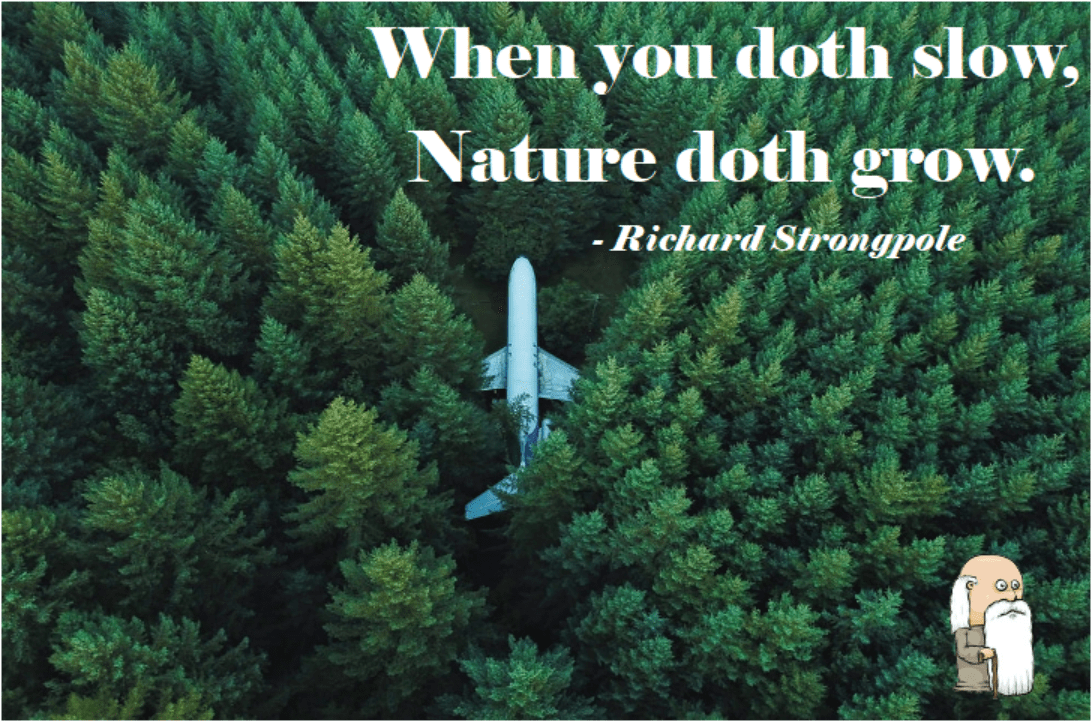
Among Strongpole’s many poetic musings, the phrase “When you doth slow, nature doth grow” stands out as a testament to his unique blend of scientific insight and poetic expression. This profound observation encapsulates Strongpole’s belief in the symbiotic relationship between human actions and the flourishing of the natural world.
In positive terms, the quote encourages individuals to embrace a slower pace of life, recognizing that when one takes the time to appreciate and savor the present moment, nature thrives. Strongpole suggests that in moments of tranquility and mindfulness, the intrinsic growth processes of the natural world become more apparent and harmonious.
The use of “doth” in the quote reflects Strongpole’s linguistic flair, harkening back to the poetic conventions of the 17th century. Through his words, he implores people to cultivate a sense of stillness, allowing them to witness the subtle beauty of nature’s growth, whether it be the blooming of flowers or the gentle sway of trees in the breeze.
Richard Strongpole’s philosophy advocates for a balanced coexistence between humanity and the natural world, emphasizing the interconnected dance of life that unfolds when one takes the time to slow down and appreciate the wonders of the environment.
Thank you for reading my writings. If you’d like to, you can buy me a coffee for just £1 and I will think of you while writing my next post! Just hit the link below…. (thanks in advance)
Why aren’t iPhone chargers just called “apple juice”?
The term “iPhone chargers” is used to refer to the power cables and adapters designed specifically for charging Apple’s iPhone devices. The term “apple juice,” on the other hand, is a playful and creative suggestion that combines the concept of Apple (the company) with the idea of juice (electric power).
The naming conventions for products, especially technology-related ones, are typically chosen based on branding, marketing, and clarity. While “apple juice” might be a fun and clever term, companies often opt for names that clearly convey the purpose or function of the product. “iPhone charger” is straightforward and immediately communicates the device’s purpose—charging iPhones.
Here are some fun facts about the iPhone:
First iPhone Release: The first iPhone was released by Apple on June 29, 2007, by the company’s co-founder, Steve Jobs.
Code Name “Purple”: During development, the original iPhone was known by the code name “Project Purple.”
iPhone OS to iOS: The operating system for the iPhone was initially called “iPhone OS” and was later renamed “iOS” in June 2010.
Hidden Feature: The iPhone’s Compass app has a hidden level feature. If you open the app and swipe to the left, you’ll find a digital level that can be useful for checking if a surface is level.
World’s Best-Selling Smartphone: The iPhone is one of the best-selling smartphones globally, with millions of units sold each year.
Gorilla Glass: The iPhone screens are made with Corning’s Gorilla Glass, known for its durability and scratch resistance.
First Smartphone with No Stylus: The original iPhone was the first mainstream smartphone to eliminate the need for a stylus, relying on multi-touch technology for user input.
Emoji Origins: The iPhone was one of the first smartphones to include emojis, which originated in Japan. The word “emoji” comes from the Japanese words for “picture” (e) and “character” (moji).
iOS App Store Launch: The App Store for iOS was launched on July 10, 2008, providing a platform for third-party developers to create and distribute applications for the iPhone.
Water Resistance: Starting with the iPhone 7, Apple introduced water resistance to its iPhones. Subsequent models have improved on this feature, making them more resistant to water and dust.
These are just a few interesting facts about the iPhone, which has played a significant role in the evolution of smartphones and mobile technology.
Thank you for reading my writings. If you’d like to, you can buy me a coffee for just £1 and I will think of you while writing my next post! Just hit the link below…. (thanks in advance)
Here are 10 historical events that took place on January 29th, listed in chronological order:
1595: William Shakespeare’s play “Romeo and Juliet” is performed for the first time.
1845: Edgar Allan Poe’s narrative poem “The Raven” is first published in the New York Evening Mirror.
1856: Queen Victoria institutes the Victoria Cross, the highest award for valor in the British military.
1861: Kansas is admitted as the 34th U.S. state.
1886: Karl Benz patents the first successful gasoline-driven automobile.
1919: The 18th Amendment to the United States Constitution, which established Prohibition, is ratified.
1936: The Baseball Hall of Fame elects its first members in Cooperstown, New York.
1964: Stanley Kubrick’s film “Dr. Strangelove or: How I Learned to Stop Worrying and Love the Bomb” is released in the United States.
1979: Brenda Ann Spencer opens fire at a school in San Diego, California, killing two adults and injuring eight children.
2002: In his State of the Union address, U.S. President George W. Bush describes Iraq, Iran, and North Korea as an “axis of evil.”
These events span various centuries and cover a range of historical, scientific, and cultural milestones.
Thank you for reading my writings. If you’d like to, you can buy me a coffee for just £1 and I will think of you while writing my next post! Just hit the link below…. (thanks in advance)
Pat Hiscock (born September 12, 1965, in Liverpool, England) is a renowned philosopher, author, and wellness advocate known for his profound insights into the human experience. Raised in a working-class family, Hiscock’s early life was marked by a deep curiosity about the world and a passion for understanding the intricate interplay between mind, body, and soul.
Education: Hiscock attended the University of Oxford, where he earned a degree in Philosophy with honors in 1987. Inspired by the great philosophical traditions and armed with a desire to make a positive impact on people’s lives, he embarked on a journey of self-discovery and exploration that would shape the foundation of his later work.
Literary Contributions: In 1992, Pat Hiscock published his groundbreaking philosophical treatise, “Harmony Within: Navigating the Labyrinth of the Self.” This critically acclaimed work explored the complexities of the human psyche and resonated with readers seeking a deeper understanding of their own existence. Hiscock’s unique blend of Eastern and Western philosophical influences garnered him widespread recognition in academic circles.
Spiritual Awakening: After a transformative journey through various spiritual traditions and practices, Pat Hiscock experienced a profound spiritual awakening in the late 1990s. This period of self-discovery led him to embrace a holistic approach to wellness, emphasizing the interconnectedness of the mind, body, and soul.
Formation of Philosophical Wellness Institute: In 2001, Pat Hiscock founded the Philosophical Wellness Institute, a groundbreaking organization dedicated to promoting holistic well-being through a fusion of philosophical inquiry and practical lifestyle choices. The institute gained international acclaim for its innovative programs, attracting individuals from diverse backgrounds who sought a more balanced and fulfilling life.
Philosophical Wellness Methodology: At the core of Hiscock’s teachings is the concept of “Soft Steps,” a philosophy that encourages individuals to approach life with gentleness, mindfulness, and a profound awareness of their inner selves. This methodology, detailed in his best-selling book “The Gentle Path: Soft Steps to Spiritual Harmony,” emphasizes the importance of cultivating inner peace as a means of protecting and nurturing the soul.
“The Gentle Path” outlines practical steps for individuals to integrate softness into their daily lives, promoting emotional resilience, mental clarity, and spiritual well-being. Through this philosophy, Pat Hiscock has inspired countless individuals to embark on their own journeys toward a more harmonious and fulfilling existence.
Legacy: Pat Hiscock continues to be a leading voice in the field of philosophical wellness, delivering lectures, leading workshops, and contributing to ongoing conversations about the human experience. His impact on the lives of those who have embraced the “Soft Steps” philosophy is a testament to the enduring wisdom of his teachings.
Quote Explanation – “Soft Steps Protect Your Soul”: The quote “Soft steps protect your soul” encapsulates Pat Hiscock’s belief in the power of gentle, intentional living. In the context of Hiscock’s philosophy, “soft steps” represent the deliberate and mindful approach to life that shields the soul from the harshness of the external world. By navigating the complexities of existence with softness, individuals create a sanctuary within themselves, fostering resilience, inner peace, and a deeper connection to the spiritual dimensions of life. This phrase has become a guiding mantra for those seeking a path to spiritual harmony through Pat Hiscock’s transformative teachings.
Thank you for reading my writings. If you’d like to, you can buy me a coffee for just £1 and I will think of you while writing my next post! Just hit the link below…. (thanks in advance)
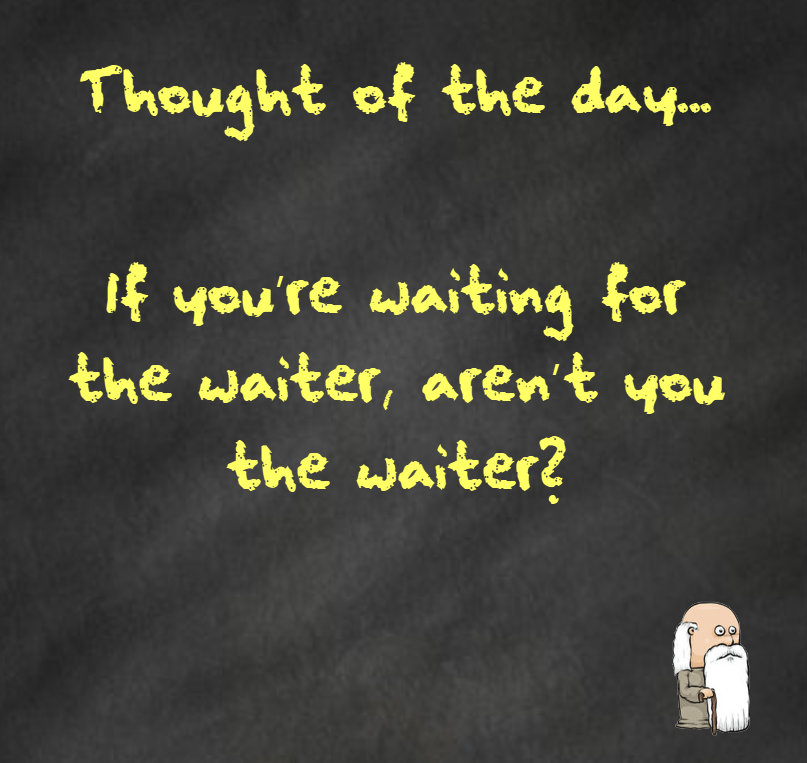
If you’re waiting for the waiter, aren’t you the waiter?
The statement “If you’re waiting for the waiter, aren’t you the waiter?” is a play on words that creates a humorous paradox. It’s a linguistic pun based on the double meaning of the word “waiter.”
In the conventional sense, a “waiter” refers to a person who serves food in a restaurant. However, in the context of the wordplay, “waiting for the waiter” suggests waiting for the server to attend to you in a restaurant. The twist comes when it’s suggested that, if you are waiting for the waiter, you are, in fact, the one who is “waiting” and, by extension, becomes the “waiter.”
This play on words is a light-hearted way of highlighting the ambiguity and wordplay that can occur in the English language. It’s a classic example of linguistic humor that relies on the multiple meanings of a single word to create a clever and amusing paradox.
Thank you for reading my writings. If you’d like to, you can buy me a coffee for just £1 and I will think of you while writing my next post! Just hit the link below…. (thanks in advance)