Thought of the Day: Is life fair?

If life is unfair to everyone, does that mean that life is actually fair?

The statement “life is unfair to everyone” implies a certain level of shared difficulty or adversity that all individuals face in different ways. However, whether this makes life inherently fair is a matter of perspective. Life’s challenges may be distributed unevenly among people, with some facing more difficulties than others due to factors beyond their control, such as socioeconomic conditions, health issues, or other circumstances.

From one perspective, the shared experience of facing challenges might be considered a form of fairness. On the other hand, the extent and nature of these challenges can vary greatly, and factors like privilege, opportunities, and systemic inequalities can still result in disparities in how individuals experience life’s fairness.

Ultimately, the concept of fairness in life is complex and subjective. People may perceive and interpret life’s challenges and opportunities differently based on their individual circumstances and perspectives. Whether life is considered fair or unfair often depends on one’s values, beliefs, and experiences.

Thank you for reading my writings. If you’d like to, you can buy me a coffee for just £1 and I will think of you while writing my next post! Just hit the link below…. (thanks in advance)


This Day in History: February 3rd

Here are 10 historical events that took place on February 3rd, listed in chronological order:

  1. 1637: Tulipmania reaches its peak in the Netherlands, leading to an economic bubble and subsequent crash.
  2. 1783: Spain recognizes the independence of the United States.
  3. 1870: The 15th Amendment to the United States Constitution is ratified, granting African American men the right to vote.
  4. 1913: The 16th Amendment to the United States Constitution is ratified, allowing Congress to impose income taxes.
  5. 1924: Woodrow Wilson, the 28th President of the United States, dies in Washington, D.C.
  6. 1959: The “Day the Music Died” – Rock and roll musicians Buddy Holly, Ritchie Valens, and J.P. “The Big Bopper” Richardson die in a plane crash in Iowa.
  7. 1966: The Soviet Luna 9 spacecraft becomes the first to make a soft landing on the Moon and send back photographs.
  8. 1984: Space Shuttle Challenger breaks a record for the shortest turnaround time between launches, taking only 54 days to go from landing to launch.
  9. 1995: Astronaut Eileen Collins becomes the first woman to pilot the Space Shuttle as mission STS-63 gets underway.
  10. 2013: The northeastern United States experiences a massive winter storm known as Winter Storm Nemo, bringing heavy snowfall and causing widespread disruptions.

These events span a wide range of historical and cultural significance across different eras and regions.

Thank you for reading my writings. If you’d like to, you can buy me a coffee for just £1 and I will think of you while writing my next post! Just hit the link below…. (thanks in advance)

Quote of the Day: Mystery

“You need mist to make mystery”

Sue Ridge

Sue Ridge (born September 12, 1958, in San Francisco, California) is an acclaimed American author and philosopher known for her profound contributions to the realms of literature and metaphysical thought. Born into a family of artists, Ridge exhibited a keen interest in the written word from a young age, foreshadowing her future career as a distinguished author.

Early Life and Education:

Growing up amidst the cultural vibrancy of San Francisco, Ridge developed a unique perspective on life and art. She pursued her academic endeavors at Stanford University, where she earned a Bachelor’s degree in English Literature with honors in 1980. During her time at Stanford, Ridge delved into the works of various literary giants, laying the foundation for her own literary pursuits.

Literary Career:

Sue Ridge embarked on her literary journey in the early 1980s, captivating readers with her evocative prose and innovative philosophical ideas. Her debut novel, “Whispers of the Mist” (1985), garnered critical acclaim for its lyrical beauty and exploration of existential themes. This marked the beginning of Ridge’s reputation as a visionary author, paving the way for a series of intellectually stimulating works that would shape her legacy.

Notable Works:

  • “Ephemeral Echoes” (1991): Ridge’s second novel further established her as a leading voice in contemporary literature, delving into the transient nature of human existence.
  • “The Alchemy of Silence” (1998): This philosophical treatise became a seminal work in Ridge’s career, exploring the profound impact of silence on human understanding and spiritual awakening.

Philosophical Contributions:

Sue Ridge’s philosophy blends elements of existentialism, mysticism, and metaphysics. She has been a keynote speaker at numerous international conferences, captivating audiences with her eloquent discussions on the interconnectedness of life and the importance of embracing mystery.

The Quote and Its Meaning:

In 2010, Sue Ridge coined the phrase, “You need mist to make mystery,” encapsulating her profound belief in the transformative power of ambiguity and the unknown. Ridge suggests that, much like mist veils the landscape, mystery cloaks the truths of existence, inviting individuals to explore and unravel the enigmatic aspects of life. The quote has since become a mantra for those seeking deeper understanding and embracing the beauty found within life’s uncertainties.

Legacy:

Sue Ridge continues to inspire readers and thinkers alike with her literary contributions and philosophical insights. Her impact on the intersection of literature and metaphysics remains enduring, solidifying her place as a luminary in the world of letters.

Thank you for reading my writings. If you’d like to, you can buy me a coffee for just £1 and I will think of you while writing my next post! Just hit the link below…. (thanks in advance)

Thought of the Day: Fire

Nothing is ever really on fire, but rather fire is on things.

The statement “nothing is ever really on fire, but rather fire is on things” reflects a perspective on the nature of fire. In a sense, fire is a process of combustion that occurs when a substance combines with oxygen, releasing heat and light. From this viewpoint, it is accurate to say that objects are undergoing combustion and producing fire rather than the fire itself being a tangible entity.

In scientific terms, fire is a chemical reaction known as combustion. It involves the rapid oxidation of a material in the presence of oxygen, typically accompanied by the release of heat and light. The material that is burning undergoes a chemical transformation, and what we perceive as “fire” is the visible result of this process.

So, while it might be a matter of perspective, the statement aligns with the scientific understanding of combustion and the role of materials in the fire-making process.

Thank you for reading my writings. If you’d like to, you can buy me a coffee for just £1 and I will think of you while writing my next post! Just hit the link below…. (thanks in advance)

This Day in History: February 2nd

Here are 10 historical events that took place on February 2nd, listed in chronological order:

  1. 1653: New Amsterdam (later renamed New York City) is incorporated.
  2. 1848: The Treaty of Guadalupe Hidalgo is signed, ending the Mexican-American War and ceding California, Nevada, Utah, Arizona, New Mexico, Texas, and parts of Colorado, Wyoming, Kansas, and Oklahoma to the United States.
  3. 1887: In Punxsutawney, Pennsylvania, the first Groundhog Day is celebrated.
  4. 1920: The Tartu Peace Treaty is signed between Estonia and Soviet Russia.
  5. 1935: Leonard Keeler administers the first polygraph test, also known as a lie detector, in Portage, Wisconsin.
  6. 1971: Idi Amin ousts Milton Obote in a military coup in Uganda.
  7. 1980: Reports surface that the FBI is investigating Abscam, a sting operation involving bribery of U.S. Congress members.
  8. 1990: South African President F.W. de Klerk announces plans to end apartheid and open negotiations to end racial discrimination.
  9. 2004: Swiss tennis player Roger Federer becomes the world No. 1 in the ATP rankings for the first time.
  10. 2012: The ferry MV Rabaul Queen sinks off the coast of Papua New Guinea, resulting in the deaths of at least 162 people.

These events span a variety of historical contexts and geographical locations.

Thank you for reading my writings. If you’d like to, you can buy me a coffee for just £1 and I will think of you while writing my next post! Just hit the link below…. (thanks in advance)
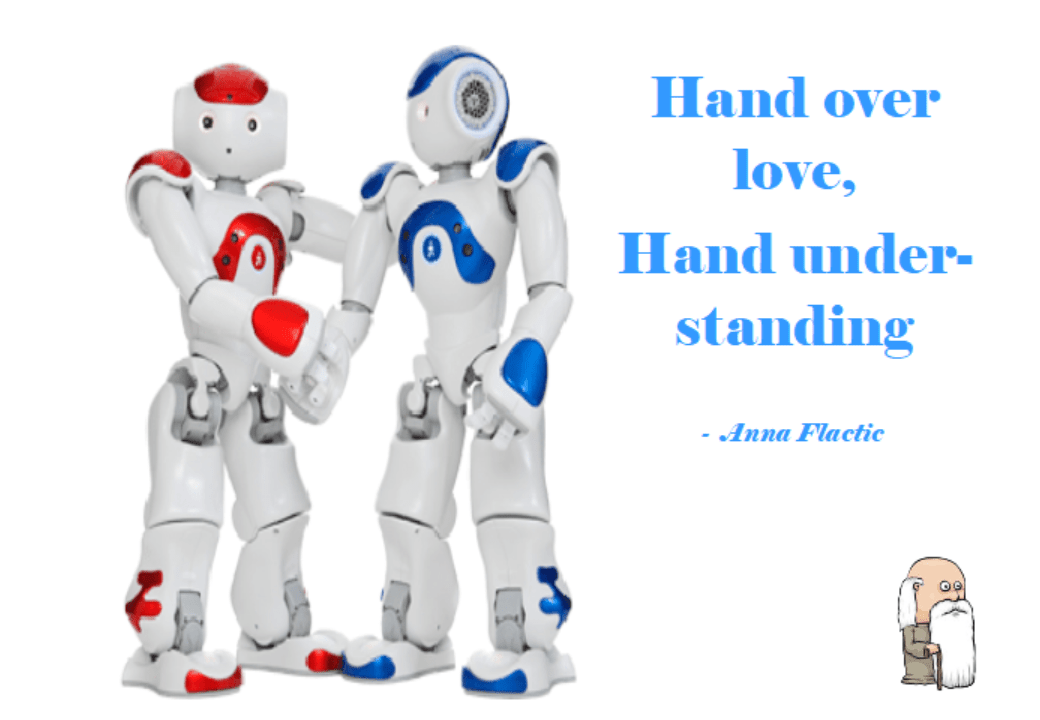
Quote of the Day: Love and Understanding

“Hand over love, hand understanding”

Anna Flactic

Anna Flactic: Harmony Advocate and Philosopher of Human Connection

Early Life and Compassionate Roots

Anna Flactic, born on December 15, 1980, in the nurturing town of Empathy Springs, is a distinguished advocate for harmony and the author of profound philosophies on human connection. Growing up in a community known for its empathetic values, Flactic developed an early appreciation for the importance of understanding and love in fostering positive relationships.

Educational Journey in Compassionate Studies

Anna Flactic’s intellectual journey led her to pursue degrees in Compassionate Studies and Emotional Intelligence at Harmony University. Her academic pursuits focused on unraveling the intricacies of human connection and the profound impact of empathy on personal and societal well-being.

Literary Contributions to Compassionate Philosophy

In 2005, Flactic published her debut book, “Heartstrings: A Symphony of Compassion,” where she explored the profound power of love and understanding in shaping meaningful connections. This seminal work laid the foundation for Flactic’s subsequent writings, including “The Compassionate Confluence” (2008) and “Embrace: A Guide to Cultivating Connection” (2013).

The Woman Behind the Quote: “Hand Over Love, Hand Understanding”

Central to Anna Flactic’s philosophy is the eloquent quote, “Hand over love, hand understanding.” This insightful statement reflects Flactic’s belief in the reciprocal nature of love and understanding in nurturing harmonious relationships.

Interpretation of the Quote

The quote encourages individuals to approach relationships with an open heart and a willingness to understand one another. Anna Flactic suggests that by extending a metaphorical hand filled with love, individuals create a foundation of warmth and kindness. Simultaneously, the act of “handing understanding” emphasizes the importance of actively seeking to comprehend the perspectives, feelings, and experiences of others.

The phrase “hand over love” implies a generous and giving approach to relationships, where love becomes a shared experience that binds individuals together. “Hand understanding” underscores the importance of offering empathy and compassion, ensuring that connections are built on a solid understanding of each other’s unique journeys.

Legacy of Compassionate Wisdom

Anna Flactic’s legacy as a harmony advocate and philosopher of human connection continues to influence individuals seeking a more empathetic and compassionate approach to life. Her timeless wisdom resonates with those who aspire to create environments where love and understanding are the cornerstones of meaningful relationships.

As admirers of Anna Flactic’s work adopt the philosophy of “hand over love, hand understanding,” they contribute to a cultural shift towards more compassionate and harmonious interactions. In a world that often faces challenges rooted in misunderstanding and lack of empathy, Flactic’s teachings stand as a beacon of hope, guiding individuals toward a path of deeper connection and mutual understanding.

Thank you for reading my writings. If you’d like to, you can buy me a coffee for just £1 and I will think of you while writing my next post! Just hit the link below…. (thanks in advance)

Thought of the Day: Vacuum Cleaners

When you clean a vacuum cleaner, aren’t you the vacuum cleaner?

Yes, when you clean a vacuum cleaner, you can humorously consider yourself the “vacuum cleaner” at that moment, as you are involved in the cleaning process of the cleaning device. It’s a playful way to highlight the recursive nature of the task.

Thank you for reading my writings. If you’d like to, you can buy me a coffee for just £1 and I will think of you while writing my next post! Just hit the link below…. (thanks in advance)

This Day in History: February 1st

Here are 10 historical events that took place on February 1st, listed in chronological order:

  1. 1662: The Chinese Ming dynasty’s capital, Nanjing, falls to forces of the Qing dynasty.
  2. 1790: The U.S. Supreme Court convenes for the first time in New York City.
  3. 1861: Texas becomes the seventh state to secede from the United States.
  4. 1893: Thomas A. Edison completes construction of the world’s first motion picture studio, the Black Maria, in West Orange, New Jersey.
  5. 1960: Four African American college students begin a sit-in at a segregated Woolworth’s lunch counter in Greensboro, North Carolina, sparking a wave of similar protests across the Southern United States.
  6. 1968: The New York Central and Pennsylvania Railroads merge to form Penn Central Transportation.
  7. 1971: A bomb explodes in the U.S. Capitol building, causing extensive damage but no injuries; the Weather Underground claims responsibility.
  8. 2003: The Space Shuttle Columbia disintegrates upon re-entry into Earth’s atmosphere, leading to the deaths of all seven crew members.
  9. 2004: Janet Jackson’s infamous “wardrobe malfunction” occurs during the halftime show of Super Bowl XXXVIII.
  10. 2013: A suicide bombing at the U.S. Embassy in Ankara, Turkey, kills a Turkish security guard and injures several others.

These events cover a range of historical periods and highlight different aspects of political, social, and cultural history.

Thank you for reading my writings. If you’d like to, you can buy me a coffee for just £1 and I will think of you while writing my next post! Just hit the link below…. (thanks in advance)

Quote of the Day: Unwinding

“People winding you up move you forward”

Manuel Robert

Manuel Robert: Philosopher of Provocation

Early Life and Intellectual Awakening

Manuel Robert, born on September 8, 1975, in the vibrant city of Stimulopolis, is a distinctive philosopher celebrated for his unconventional perspectives on personal growth and motivation. Raised in an environment that encouraged questioning societal norms, Robert developed an early inclination toward exploring the untrodden paths of human behavior and motivation.

Academic Pursuits in Unconventionality

After earning his degree in Philosophy and Behavioral Dynamics from Progressive University, Manuel Robert embarked on a quest to challenge conventional wisdom. His academic pursuits focused on the intricate dance between provocation and progress, setting the stage for a career that would redefine motivational philosophy.

Literary Contributions and Trailblazing Works

In 2002, Robert published his seminal work, “Provocation as Catalyst: A Paradigm Shift in Personal Development.” This groundbreaking book explored the idea that individuals who challenge or “wind up” others inadvertently become agents of progress and self-improvement. His subsequent works, including “Beyond the Norm: Embracing the Uncomfortable” (2006) and “Pushed to Progress” (2010), solidified his reputation as a thought leader in the realm of unconventional motivation.

The Man Behind the Quote: “People Winding You Up Move You Forward”

Central to Manuel Robert’s philosophy is the thought-provoking quote, “People winding you up move you forward.” This succinct yet impactful statement encapsulates his belief that provocateurs, intentionally or not, play a vital role in propelling individuals toward personal and professional growth.

Interpretation of the Quote

The quote encourages individuals to view moments of irritation or provocation as catalysts for positive change. Manuel Robert suggests that those who challenge us, intentionally or not, serve as unwitting motivators, pushing us to reevaluate our perspectives, beliefs, and capabilities.

The phrase “move you forward” is emblematic of progress and personal development. Robert’s philosophy implies that moments of discomfort or irritation, often caused by those “winding you up,” can serve as stepping stones to self-discovery and advancement. By embracing these challenges, individuals have the opportunity to harness the energy of provocation and channel it into constructive momentum.

Legacy and Continuing Influence

Manuel Robert’s legacy as a philosopher of provocation continues to resonate with those seeking unconventional pathways to personal growth. His books, lectures, and quotes inspire individuals to view challenges and provocations not as obstacles but as integral components of a transformative journey.

As admirers of Manuel Robert’s work adopt the philosophy that people winding them up can move them forward, they contribute to a paradigm shift in how challenges are perceived. In a world that often craves comfort and conformity, Robert’s unconventional wisdom stands as a reminder that embracing discomfort can be the key to unlocking untapped potential and achieving profound personal evolution.

Thank you for reading my writings. If you’d like to, you can buy me a coffee for just £1 and I will think of you while writing my next post! Just hit the link below…. (thanks in advance)

Thought of the Day: Guardians of the Galaxy

If you work as security at a Samsung Store, does that make you a Guardian of the Galaxy?

Of course, this is a humorous play on words! Working as security at a Samsung Store and being referred to as a “Guardian of the Galaxy” is a clever and punny connection, playing on the popular movie title “Guardians of the Galaxy.” It adds a lighthearted touch to the job role.

Thank you for reading my writings. If you’d like to, you can buy me a coffee for just £1 and I will think of you while writing my next post! Just hit the link below…. (thanks in advance)