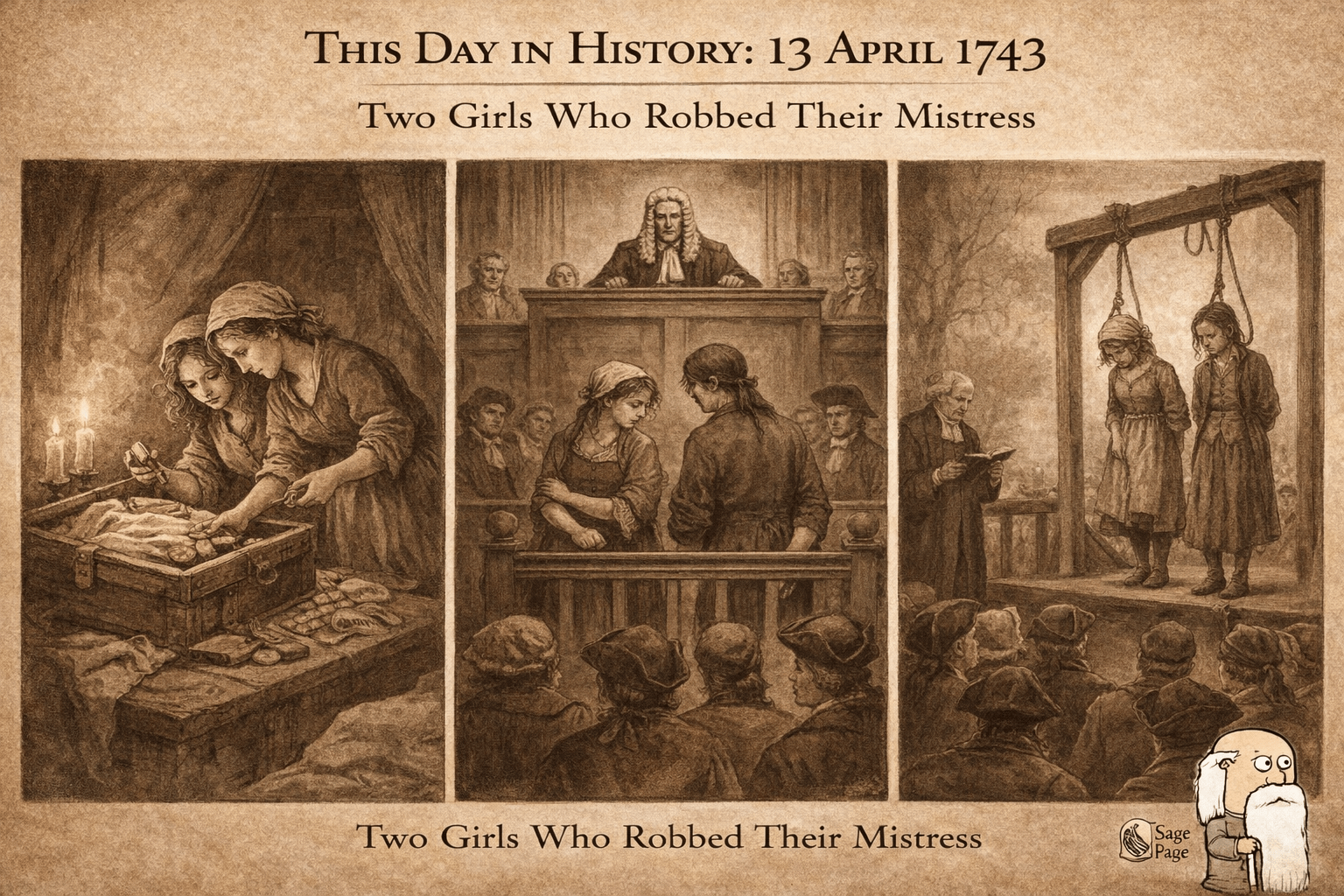
The Fatal Scheme of Cannon and Ellard
In the early hours of a Sunday morning in April 1743, a quiet house in Gravel Lane, Houndsditch, became the scene of a crime as foolish as it was tragic. By midday, the culprits were discovered; within weeks, they would be dead.
At the centre of the affair were two women: Elizabeth Cannon, a 15-year-old apprentice, and Ann Ellard, a 36-year-old stocking worker. One young, impressionable, and restless; the other older, experienced, and already acquainted with hardship. Together, they formed a partnership that would prove fatal.
A Crime Conceived in Drink
Elizabeth Cannon had, by all accounts, begun her apprenticeship honestly. She lived under the roof of her mistress, Mary Bates, a bedridden woman who relied heavily on those around her. Cannon knew the house intimately — including where her mistress kept her money.
For some time, she had entertained the idea of robbing her.
Enter Ann Ellard.
Ellard, a lodger in the same house, quickly became Cannon’s confidante — and, fatally, her accomplice. Whether through persuasion, encouragement, or simple shared recklessness, the two women began to entertain a plan: to rob the very woman who housed them.
But there was a problem. Sobriety.
Cannon herself later admitted she lacked the nerve to carry out the theft while clear-headed. The solution, as so often in these cases, was gin.
On the Saturday night, the pair made themselves thoroughly drunk. They even ensured the nurse attending Mrs Bates was equally incapacitated. With the household subdued, Cannon seized her opportunity.
The Theft
Cannon crept to her mistress’s bedside and took the keys from beneath her pillow — a detail as chilling as it is telling. Unlocking a box, she removed a considerable sum: over £16 in gold and silver coin — a small fortune at the time.
Not content with this, she broke open a fellow apprentice’s trunk and helped herself to linen and clothing.
The stolen goods were handed to Ellard. Their plan complete, the pair fled into the night sometime between eleven and midnight — heading, rather ambitiously, for Enfield.
They did not get far.
The Swiftest of Downfalls
Drunk, disorganised, and flushed with stolen gold, the pair made it only as far as Tottenham High Cross, where they took a room at the Bull Inn.
By morning, their fate was sealed.
Back in Houndsditch, the open door and missing goods quickly raised the alarm. A messenger was sent, and in a remarkable twist of timing, news had already reached Ellard’s employer that she had been seen at the Bull — openly displaying gold coins.
Within hours, they were found.
Still in bed. Still drunk. Still in possession of the stolen money.
When confronted, they broke down immediately — returning what they had and confessing in floods of tears. The linen, less fortunately, had already been reduced to a sodden and filthy state, having been dropped in a ditch.
Trial and Sentence
At trial, the evidence was overwhelming. They had been caught with the stolen goods, had confessed, and had no credible defence.
Both were found Guilty.
Both were sentenced to Death.
The Lives Behind the Crime
The Ordinary’s Account paints a deeply human — and deeply sobering — picture of both women.
Elizabeth Cannon, only fifteen, came from a fractured home. Her parents had separated, her mother reduced to the workhouse, and her father largely absent. Though given an education and an honest start, she drifted into bad company — and, ultimately, into crime.
She later admitted that the idea had been hers, and that she had drawn Ellard into it.
Ann Ellard, by contrast, had lived a fuller and more complex life. Raised respectably, trained in a trade, and once considered honest, she had gradually fallen into instability. A failed relationship, an illegitimate child, and a growing reliance on drink marked her decline.
She herself would later say that drunkenness paved the way to her crime.
The Final Scene
In the days before their execution, both women displayed repentance.
They attended chapel. They prayed. They reflected.
Cannon confessed herself “a very wicked girl” and acknowledged the justice of her fate. Ellard expressed sorrow not only for the crime, but for the life that had led her there.
At the gallows, they wept.
They prayed.
And as the cart was drawn away, both cried out:
“God be merciful to us! Lord Jesus receive our spirits!”
Why This Case Matters
This case is a stark illustration of how quickly lives could unravel in 18th-century London — and how unforgiving the justice system could be, even to a child.
A single night of drink, a poorly conceived plan, and a moment of opportunity were enough to turn two lives into a cautionary tale ending at the gallows.
It is also a reminder of the recurring themes that echo through the Old Bailey records:
poverty, drink, bad company, and the fatal consequences of impulsive crime.
Thank you for reading my writings. If you’d like to, you can buy me a coffee for just £1 and I will think of you while writing my next post! Just hit the link below…. (thanks in advance)

 The Sage Page