This Day in History: January 30th

Here are 10 historical events that took place on January 30th, listed in chronological order:

  1. 1649: King Charles I of England is executed by beheading, marking the end of the monarchy and the beginning of the Commonwealth of England.
  2. 1889: Archduke Crown Prince Rudolf of Austria, his mistress Baroness Mary Vetsera, and others are found dead at Mayerling in a murder-suicide pact.
  3. 1933: Adolf Hitler is appointed Chancellor of Germany by President Paul von Hindenburg, marking a key turning point in German history.
  4. 1948: Indian political and spiritual leader Mahatma Gandhi is assassinated in New Delhi by a Hindu nationalist.
  5. 1969: The Beatles’ last public performance, often referred to as the “rooftop concert,” takes place on top of the Apple Corps building in London.
  6. 1972: Bloody Sunday: British paratroopers open fire on a civil rights march in Derry, Northern Ireland, killing 14 protesters.
  7. 1982: Richard Skrenta writes the first PC virus code, which spreads through Apple II systems via infected floppy disks.
  8. 1989: The “Glasnost” policy is introduced in the Soviet Union by Mikhail Gorbachev, promoting openness and transparency in government and society.
  9. 2003: The Space Shuttle Columbia disintegrates upon reentry into Earth’s atmosphere, leading to the deaths of all seven crew members.
  10. 2011: A revolution begins in Egypt, leading to the ousting of President Hosni Mubarak in February, as part of the broader Arab Spring uprisings.

These events cover a range of historical and geopolitical significance across different centuries.

Thank you for reading my writings. If you’d like to, you can buy me a coffee for just £1 and I will think of you while writing my next post! Just hit the link below…. (thanks in advance)


Quote of the Day: Nature

“When you doth slow, nature doth grow”

Richard Strongpole

Richard Strongpole: Naturalist and Wordsmith of the 17th Century

Richard Strongpole (born 1654) stands as a prominent figure in the annals of 17th-century naturalism and literature. Hailing from the bucolic landscapes of rural England, Strongpole’s contributions to both the scientific and poetic realms have left an indelible mark on the cultural tapestry of his time.

Early Life and Rural Upbringing

Born into a family of modest means in Dorchester, Richard Strongpole spent his formative years immersed in the rustic beauty of the English countryside. His childhood, shaped by the sights and sounds of nature, instilled in him a deep appreciation for the natural world that would later become a central theme in his life’s work.

Education and Exploration

In pursuit of knowledge, Strongpole embarked on a scholarly journey, delving into the burgeoning fields of natural history and botany. His travels across England and Europe allowed him to witness the diverse flora and fauna, fueling his passion for understanding the interconnectedness of life.

Literary Legacy

Richard Strongpole’s literary endeavors took flight with the publication of his seminal work, “Flora Britannica,” in 1685. This comprehensive botanical exploration garnered acclaim for its meticulous observations and eloquent prose, establishing Strongpole as a respected naturalist and wordsmith of his era.

The Man Behind the Quote: When You Doth Slow, Nature Doth Grow

Among Strongpole’s many poetic musings, the phrase “When you doth slow, nature doth grow” stands out as a testament to his unique blend of scientific insight and poetic expression. This profound observation encapsulates Strongpole’s belief in the symbiotic relationship between human actions and the flourishing of the natural world.

In positive terms, the quote encourages individuals to embrace a slower pace of life, recognizing that when one takes the time to appreciate and savor the present moment, nature thrives. Strongpole suggests that in moments of tranquility and mindfulness, the intrinsic growth processes of the natural world become more apparent and harmonious.

The use of “doth” in the quote reflects Strongpole’s linguistic flair, harkening back to the poetic conventions of the 17th century. Through his words, he implores people to cultivate a sense of stillness, allowing them to witness the subtle beauty of nature’s growth, whether it be the blooming of flowers or the gentle sway of trees in the breeze.

Richard Strongpole’s philosophy advocates for a balanced coexistence between humanity and the natural world, emphasizing the interconnected dance of life that unfolds when one takes the time to slow down and appreciate the wonders of the environment.

Thank you for reading my writings. If you’d like to, you can buy me a coffee for just £1 and I will think of you while writing my next post! Just hit the link below…. (thanks in advance)

Thought of the Day: iPhone Chargers

Why aren’t iPhone chargers just called “apple juice”?


The term “iPhone chargers” is used to refer to the power cables and adapters designed specifically for charging Apple’s iPhone devices. The term “apple juice,” on the other hand, is a playful and creative suggestion that combines the concept of Apple (the company) with the idea of juice (electric power).

The naming conventions for products, especially technology-related ones, are typically chosen based on branding, marketing, and clarity. While “apple juice” might be a fun and clever term, companies often opt for names that clearly convey the purpose or function of the product. “iPhone charger” is straightforward and immediately communicates the device’s purpose—charging iPhones.

Here are some fun facts about the iPhone:

  1. First iPhone Release: The first iPhone was released by Apple on June 29, 2007, by the company’s co-founder, Steve Jobs.
  2. Code Name “Purple”: During development, the original iPhone was known by the code name “Project Purple.”
  3. iPhone OS to iOS: The operating system for the iPhone was initially called “iPhone OS” and was later renamed “iOS” in June 2010.
  4. Hidden Feature: The iPhone’s Compass app has a hidden level feature. If you open the app and swipe to the left, you’ll find a digital level that can be useful for checking if a surface is level.
  5. World’s Best-Selling Smartphone: The iPhone is one of the best-selling smartphones globally, with millions of units sold each year.
  6. Gorilla Glass: The iPhone screens are made with Corning’s Gorilla Glass, known for its durability and scratch resistance.
  7. First Smartphone with No Stylus: The original iPhone was the first mainstream smartphone to eliminate the need for a stylus, relying on multi-touch technology for user input.
  8. Emoji Origins: The iPhone was one of the first smartphones to include emojis, which originated in Japan. The word “emoji” comes from the Japanese words for “picture” (e) and “character” (moji).
  9. iOS App Store Launch: The App Store for iOS was launched on July 10, 2008, providing a platform for third-party developers to create and distribute applications for the iPhone.
  10. Water Resistance: Starting with the iPhone 7, Apple introduced water resistance to its iPhones. Subsequent models have improved on this feature, making them more resistant to water and dust.

These are just a few interesting facts about the iPhone, which has played a significant role in the evolution of smartphones and mobile technology.

Thank you for reading my writings. If you’d like to, you can buy me a coffee for just £1 and I will think of you while writing my next post! Just hit the link below…. (thanks in advance)

This Day in History: January 29th

Here are 10 historical events that took place on January 29th, listed in chronological order:

  1. 1595: William Shakespeare’s play “Romeo and Juliet” is performed for the first time.
  2. 1845: Edgar Allan Poe’s narrative poem “The Raven” is first published in the New York Evening Mirror.
  3. 1856: Queen Victoria institutes the Victoria Cross, the highest award for valor in the British military.
  4. 1861: Kansas is admitted as the 34th U.S. state.
  5. 1886: Karl Benz patents the first successful gasoline-driven automobile.
  6. 1919: The 18th Amendment to the United States Constitution, which established Prohibition, is ratified.
  7. 1936: The Baseball Hall of Fame elects its first members in Cooperstown, New York.
  8. 1964: Stanley Kubrick’s film “Dr. Strangelove or: How I Learned to Stop Worrying and Love the Bomb” is released in the United States.
  9. 1979: Brenda Ann Spencer opens fire at a school in San Diego, California, killing two adults and injuring eight children.
  10. 2002: In his State of the Union address, U.S. President George W. Bush describes Iraq, Iran, and North Korea as an “axis of evil.”

These events span various centuries and cover a range of historical, scientific, and cultural milestones.

Thank you for reading my writings. If you’d like to, you can buy me a coffee for just £1 and I will think of you while writing my next post! Just hit the link below…. (thanks in advance)

Quote of the Day: Soft Steps

“Soft steps protect your soul”

Pat Hiscock

Pat Hiscock (born September 12, 1965, in Liverpool, England) is a renowned philosopher, author, and wellness advocate known for his profound insights into the human experience. Raised in a working-class family, Hiscock’s early life was marked by a deep curiosity about the world and a passion for understanding the intricate interplay between mind, body, and soul.

Education: Hiscock attended the University of Oxford, where he earned a degree in Philosophy with honors in 1987. Inspired by the great philosophical traditions and armed with a desire to make a positive impact on people’s lives, he embarked on a journey of self-discovery and exploration that would shape the foundation of his later work.

Literary Contributions: In 1992, Pat Hiscock published his groundbreaking philosophical treatise, “Harmony Within: Navigating the Labyrinth of the Self.” This critically acclaimed work explored the complexities of the human psyche and resonated with readers seeking a deeper understanding of their own existence. Hiscock’s unique blend of Eastern and Western philosophical influences garnered him widespread recognition in academic circles.

Spiritual Awakening: After a transformative journey through various spiritual traditions and practices, Pat Hiscock experienced a profound spiritual awakening in the late 1990s. This period of self-discovery led him to embrace a holistic approach to wellness, emphasizing the interconnectedness of the mind, body, and soul.

Formation of Philosophical Wellness Institute: In 2001, Pat Hiscock founded the Philosophical Wellness Institute, a groundbreaking organization dedicated to promoting holistic well-being through a fusion of philosophical inquiry and practical lifestyle choices. The institute gained international acclaim for its innovative programs, attracting individuals from diverse backgrounds who sought a more balanced and fulfilling life.

Philosophical Wellness Methodology: At the core of Hiscock’s teachings is the concept of “Soft Steps,” a philosophy that encourages individuals to approach life with gentleness, mindfulness, and a profound awareness of their inner selves. This methodology, detailed in his best-selling book “The Gentle Path: Soft Steps to Spiritual Harmony,” emphasizes the importance of cultivating inner peace as a means of protecting and nurturing the soul.

“The Gentle Path” outlines practical steps for individuals to integrate softness into their daily lives, promoting emotional resilience, mental clarity, and spiritual well-being. Through this philosophy, Pat Hiscock has inspired countless individuals to embark on their own journeys toward a more harmonious and fulfilling existence.

Legacy: Pat Hiscock continues to be a leading voice in the field of philosophical wellness, delivering lectures, leading workshops, and contributing to ongoing conversations about the human experience. His impact on the lives of those who have embraced the “Soft Steps” philosophy is a testament to the enduring wisdom of his teachings.

Quote Explanation – “Soft Steps Protect Your Soul”: The quote “Soft steps protect your soul” encapsulates Pat Hiscock’s belief in the power of gentle, intentional living. In the context of Hiscock’s philosophy, “soft steps” represent the deliberate and mindful approach to life that shields the soul from the harshness of the external world. By navigating the complexities of existence with softness, individuals create a sanctuary within themselves, fostering resilience, inner peace, and a deeper connection to the spiritual dimensions of life. This phrase has become a guiding mantra for those seeking a path to spiritual harmony through Pat Hiscock’s transformative teachings.

Thank you for reading my writings. If you’d like to, you can buy me a coffee for just £1 and I will think of you while writing my next post! Just hit the link below…. (thanks in advance)

Thought of the Day: Waiting

If you’re waiting for the waiter, aren’t you the waiter?

The statement “If you’re waiting for the waiter, aren’t you the waiter?” is a play on words that creates a humorous paradox. It’s a linguistic pun based on the double meaning of the word “waiter.”

In the conventional sense, a “waiter” refers to a person who serves food in a restaurant. However, in the context of the wordplay, “waiting for the waiter” suggests waiting for the server to attend to you in a restaurant. The twist comes when it’s suggested that, if you are waiting for the waiter, you are, in fact, the one who is “waiting” and, by extension, becomes the “waiter.”

This play on words is a light-hearted way of highlighting the ambiguity and wordplay that can occur in the English language. It’s a classic example of linguistic humor that relies on the multiple meanings of a single word to create a clever and amusing paradox.

Thank you for reading my writings. If you’d like to, you can buy me a coffee for just £1 and I will think of you while writing my next post! Just hit the link below…. (thanks in advance)

This Day in History: January 27th

Here are 10 historical events that took place on January 27th, listed in chronological order:

  1. 1606: The trial of Guy Fawkes and his fellow conspirators begins in the Gunpowder Plot against Parliament and King James I.
  2. 1880: Thomas Edison receives a patent for his electric incandescent lamp.
  3. 1944: The Siege of Leningrad is lifted during World War II as Soviet forces open a narrow land corridor.
  4. 1967: The United States, the United Kingdom, and the Soviet Union sign the Outer Space Treaty, prohibiting the deployment of nuclear weapons in space.
  5. 1973: The Paris Peace Accords officially end the Vietnam War.
  6. 1984: Singer Michael Jackson suffers second and third degree burns to his scalp during the filming of a Pepsi commercial.
  7. 1996: Germany first observes International Holocaust Remembrance Day.
  8. 2002: A series of earthquakes in the Indian state of Gujarat result in over 20,000 deaths.
  9. 2010: The first iPad is announced by Apple Inc.’s co-founder Steve Jobs.
  10. 2017: The Bulletin of the Atomic Scientists moves the Doomsday Clock to 2.5 minutes to midnight, signaling a high level of global threat.

These events span various centuries and cover a range of historical, scientific, and cultural milestones.

Thank you for reading my writings. If you’d like to, you can buy me a coffee for just £1 and I will think of you while writing my next post! Just hit the link below…. (thanks in advance)
Quote of the Day: Live and Love

“Live in a moment, love for a lifetime”

Harry Curry

Harry Curry: Timeless Romantic and Philosopher

Harry Curry (born 1974) is celebrated as a modern-day romantic and philosopher, recognized for his profound insights into matters of the heart and the essence of living a fulfilling life. Born in Clacton, Curry’s life and work have been dedicated to unraveling the mysteries of love and the human experience.

Early Life and Formative Influences

From a young age, Harry Curry exhibited a keen sensitivity to the nuances of human relationships. Growing up in Bognor Regis, he was deeply influenced by the romantic literature of past centuries and the timeless tales of love that shaped his worldview. Curry’s early exposure to the complexities of the human heart laid the foundation for his later reflections on the enduring nature of love.

Literary Journey

Curry’s literary career commenced with the publication of his debut work, “Look At Her Legs” in 1997. This groundbreaking piece explored the intricacies of love, drawing inspiration from both classic romantic literature and his own experiences. Subsequent works, including “Woah, I’m Gonna Catch That Train” and “Damned If I Don’t” solidified Curry’s reputation as a revered philosopher of love, with his writings transcending cultural and generational boundaries.

The Man Behind the Quote: Live in a Moment, Love for a Lifetime

At the heart of Harry Curry’s philosophy is the timeless quote, “Live in a moment, love for a lifetime.” This poignant statement reflects Curry’s belief in the transformative power of living fully in the present while nurturing enduring love that transcends the fleeting nature of time.

The quote advocates for a harmonious balance between appreciating the beauty of the current moment and fostering a love that stands the test of time. Curry encourages individuals to savor the richness of each moment, finding joy and fulfillment in the simple pleasures of life. Simultaneously, the emphasis on “love for a lifetime” underscores the importance of cultivating deep, meaningful connections that endure beyond the transient nature of individual moments.

Curry’s philosophy invites individuals to embrace the present with open hearts, cherishing the experiences and relationships that define their lives. By living in the moment and nurturing lasting love, Curry suggests that individuals can create a tapestry of memories and connections that withstand the passage of time, ultimately leading to a life rich in love, fulfillment, and timeless joy.

Thank you for reading my writings. If you’d like to, you can buy me a coffee for just £1 and I will think of you while writing my next post! Just hit the link below…. (thanks in advance)
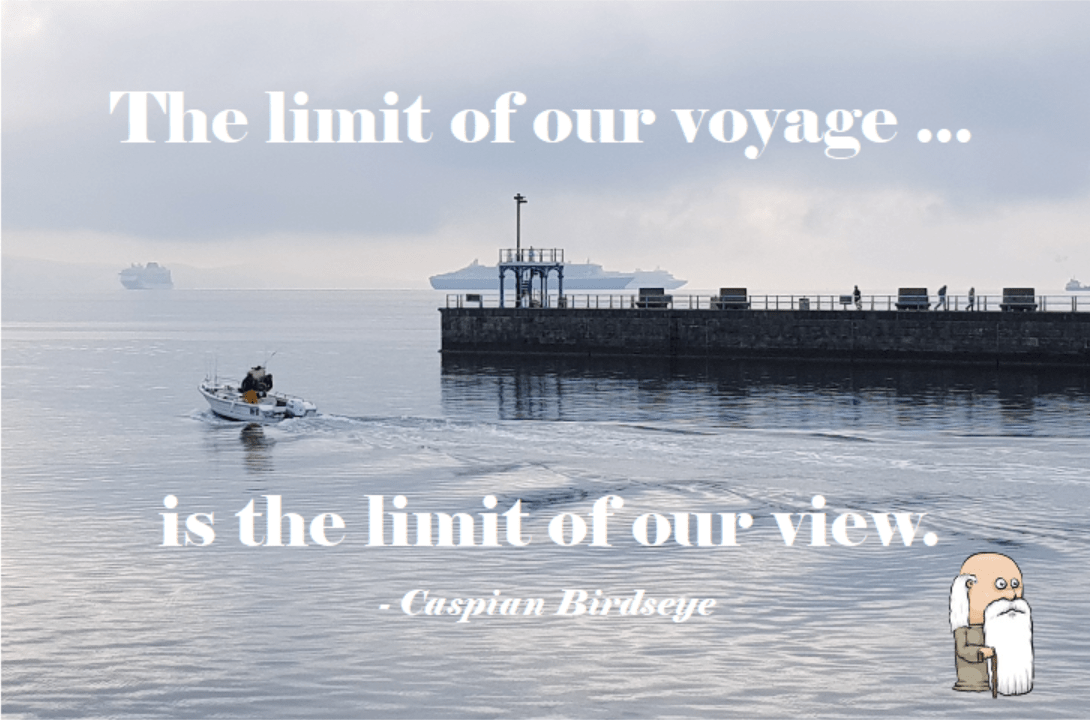
Quote of the Day: Know No Limits

“The limit of our voyage is the limit of our view”

Caspian Birdseye


Caspian Birdseye: Visionary Explorer and Philosopher

Caspian Birdseye (born 1822) stands as a multifaceted figure known for his contributions to both exploration and philosophy. As an explorer, writer, and deep thinker, Birdseye has carved a niche for himself in the realms of adventure and intellectual discourse.

Early Life and Adventurous Spirit

Born in Lyme Regis, Birdseye exhibited an innate curiosity about the world from a young age. His upbringing, marked by tales of exploration and discovery, fueled his adventurous spirit. Birdseye’s insatiable desire to explore the unknown led him to embark on various journeys and expeditions, laying the foundation for a unique combination of practical experience and profound philosophical insights.

Explorer Extraordinaire

Birdseye’s exploration endeavors took him to the farthest corners of the globe. From traversing dense jungles to scaling towering peaks, his expeditions were characterized by a relentless pursuit of the unknown. Notably, his discovery of the statue of Mini Haha in 1877 captured the world’s attention, establishing Birdseye as a 19th-century explorer with a keen eye for the unexplored.

Philosophical Prowess

In tandem with his adventures, Birdseye developed a philosophical perspective that seamlessly intertwined with his exploration ethos. Influenced by existentialist philosophy and a deep appreciation for the beauty of the natural world, Birdseye’s intellectual pursuits sought to bridge the gap between the tangible and the abstract.

The Limit of Our Voyage is the Limit of Our View: Decoding the Quote

One of Caspian Birdseye’s most intriguing and reflective statements is, “The limit of our voyage is the limit of our view.” This profound observation encapsulates Birdseye’s belief in the interconnectedness of physical exploration and the expansiveness of one’s perception.

In positive terms, the quote serves as a rallying call to embrace a holistic approach to exploration – one that extends beyond geographical boundaries. Birdseye encourages individuals to recognize that the true limits of their journeys are defined not only by the physical distances covered but also by the breadth of their perspectives. The metaphorical “voyage” encompasses not only geographical exploration but also the exploration of ideas, cultures, and the depths of one’s own understanding.

Birdseye’s philosophy suggests that by broadening one’s view, individuals can transcend the limitations imposed by a narrow perspective, unlocking new realms of knowledge and experience. The quote underscores the idea that true exploration involves not only traversing external landscapes but also delving into the uncharted territories of the mind, fostering personal growth, and a richer, more profound understanding of the world.

Thank you for reading my writings. If you’d like to, you can buy me a coffee for just £1 and I will think of you while writing my next post! Just hit the link below…. (thanks in advance)

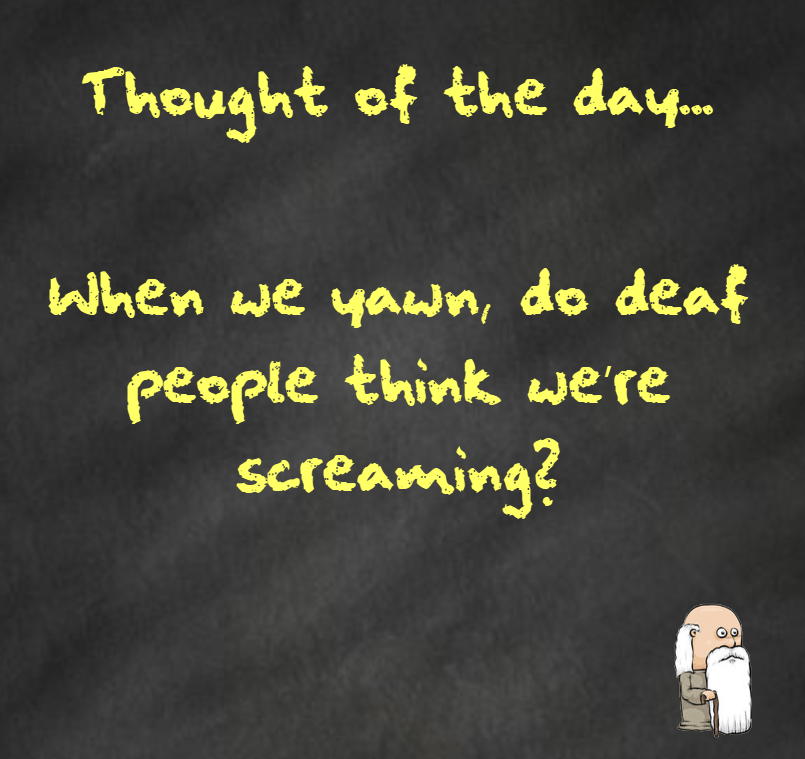
Thought of the Day: Yawning

When we yawn, do deaf people think we are screaming?

No, when people yawn, deaf individuals do not interpret it as screaming. Yawning is a universal physiological response and is not linked to vocalization or sound. Deaf people may not hear the sound associated with a yawn, but they can observe the physical act of yawning, which involves opening the mouth wide and taking a deep breath.

The idea that yawning may be perceived as screaming by deaf individuals is a misconception. Yawning is generally understood as a natural and involuntary behavior related to fatigue, boredom, or a need for increased oxygen intake. While it may produce a sound, it is not similar to the intentional vocalization associated with screaming. People, regardless of their hearing ability, are likely to recognize yawning as a non-verbal expression rather than an auditory signal.

Thank you for reading my writings. If you’d like to, you can buy me a coffee for just £1 and I will think of you while writing my next post! Just hit the link below…. (thanks in advance)