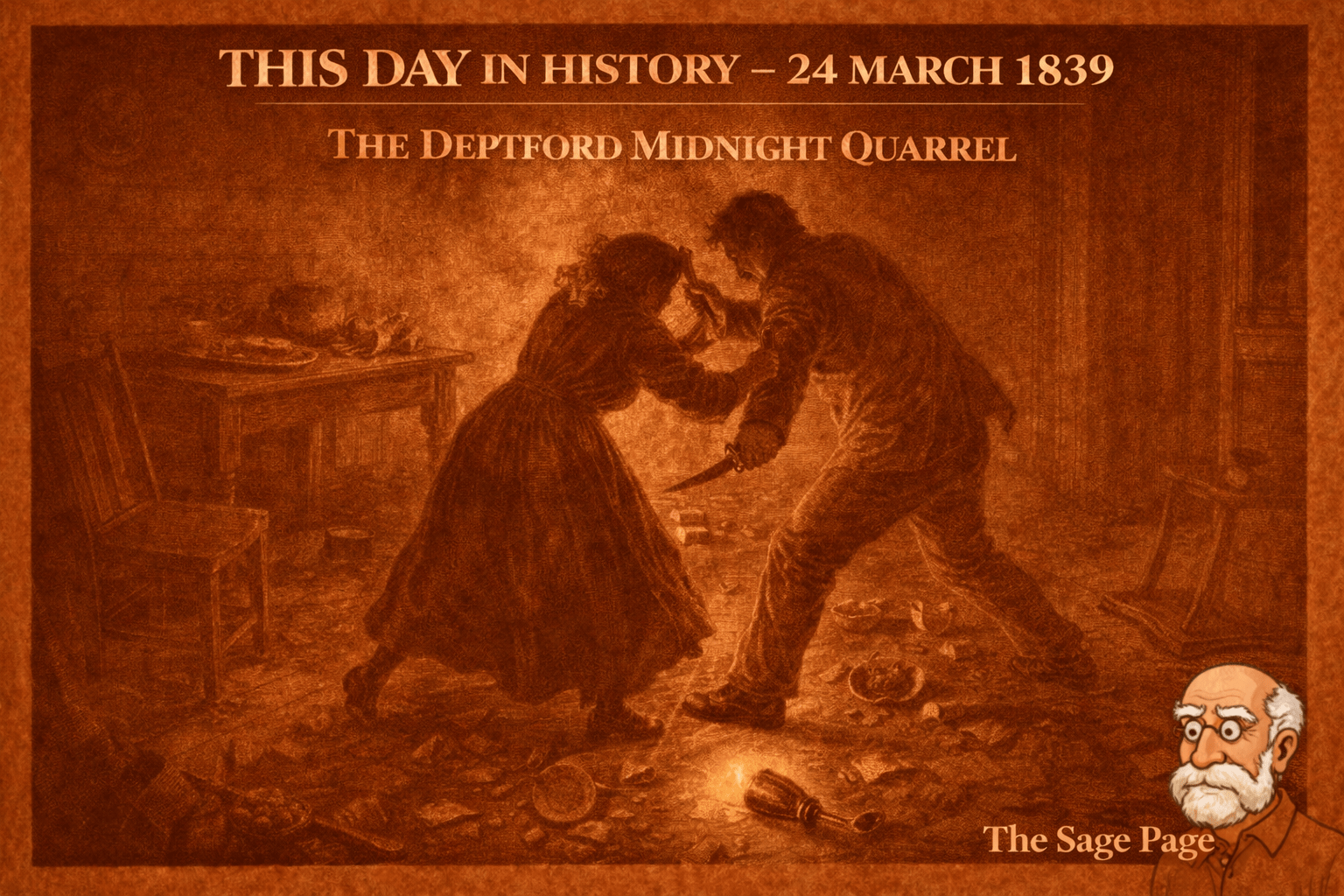
A drunken quarrel in Deptford in 1839 led to a brutal knife injury and a courtroom drama revealing mutual violence and desperation. This Old Bailey case explores the blurred line between assault and self-defence in Victorian London, where candlelight, jealousy, and alcohol combined with devastating consequences.
Tag Archives: family-history
This Day in History – 6 March 1905
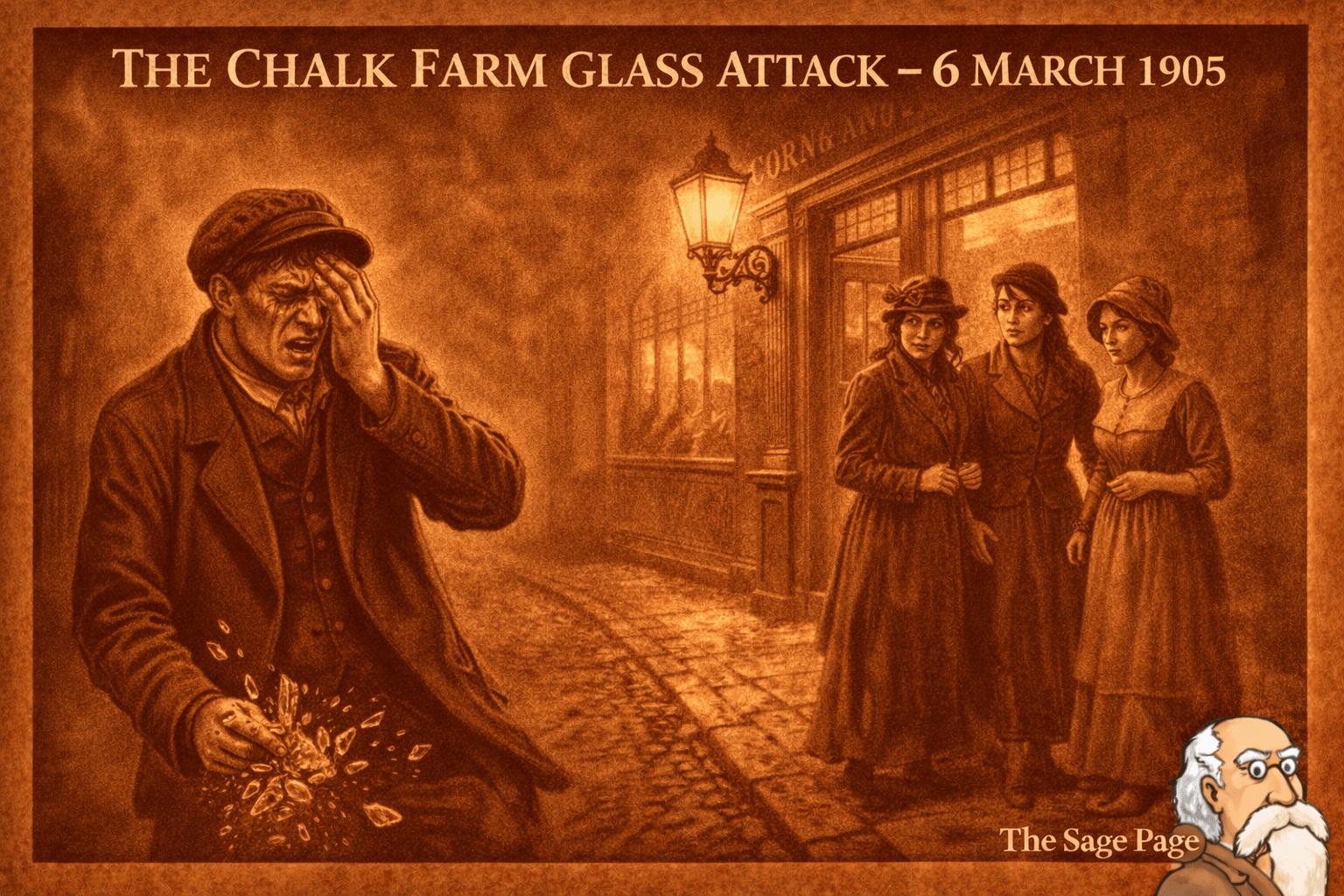
On 6 March 1905 Elizabeth Cove stood trial at the Old Bailey for wounding John Rubbins during a violent pub quarrel in Chalk Farm Road. The attack left the seventeen-year-old labourer permanently blinded in one eye. Despite the injury, the jury accepted the defence of self-protection and acquitted Cove.
This Day in History – 5 March 1839
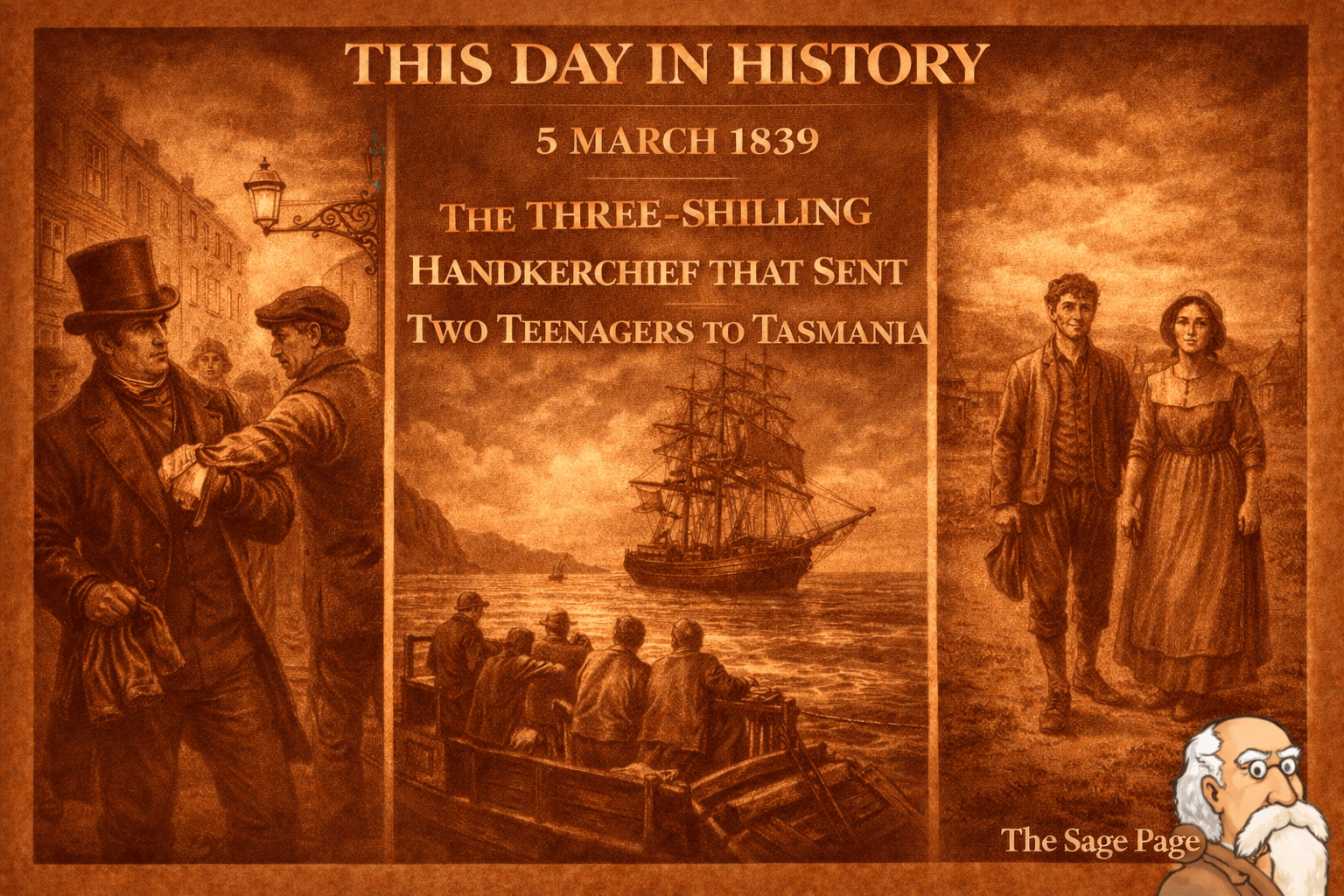
On 5 March 1839 two teenagers, Charles Chapman and Eliza Clements, were convicted at the Old Bailey for stealing a handkerchief in Fenchurch Street. Sentenced to ten years’ transportation, they were shipped to Van Diemen’s Land, where absconding, labour assignments, marriage and conditional pardons shaped their new colonial lives.
This Day in History – 27 February 1843
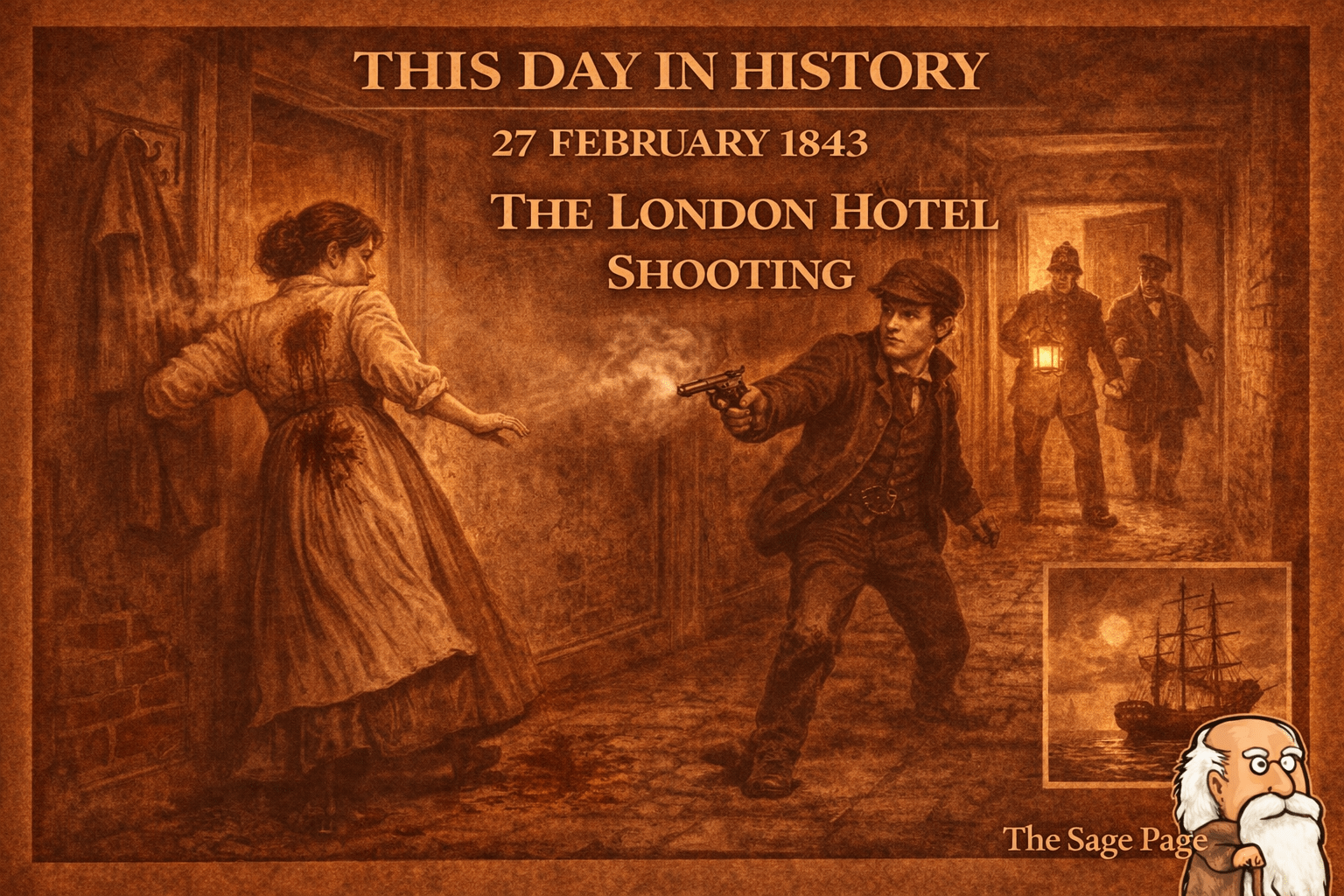
In 1843, William Cannell shot barmaid Elizabeth Sarah Magness at the Auction Mart Hotel in Bartholomew Lane. Surviving both the attack and his own suicide attempt, Cannell was transported to Tasmania for fifteen years, where he later married and received a conditional pardon
This Day in History: 18 February 1775 — John Smith and the Fatal Return
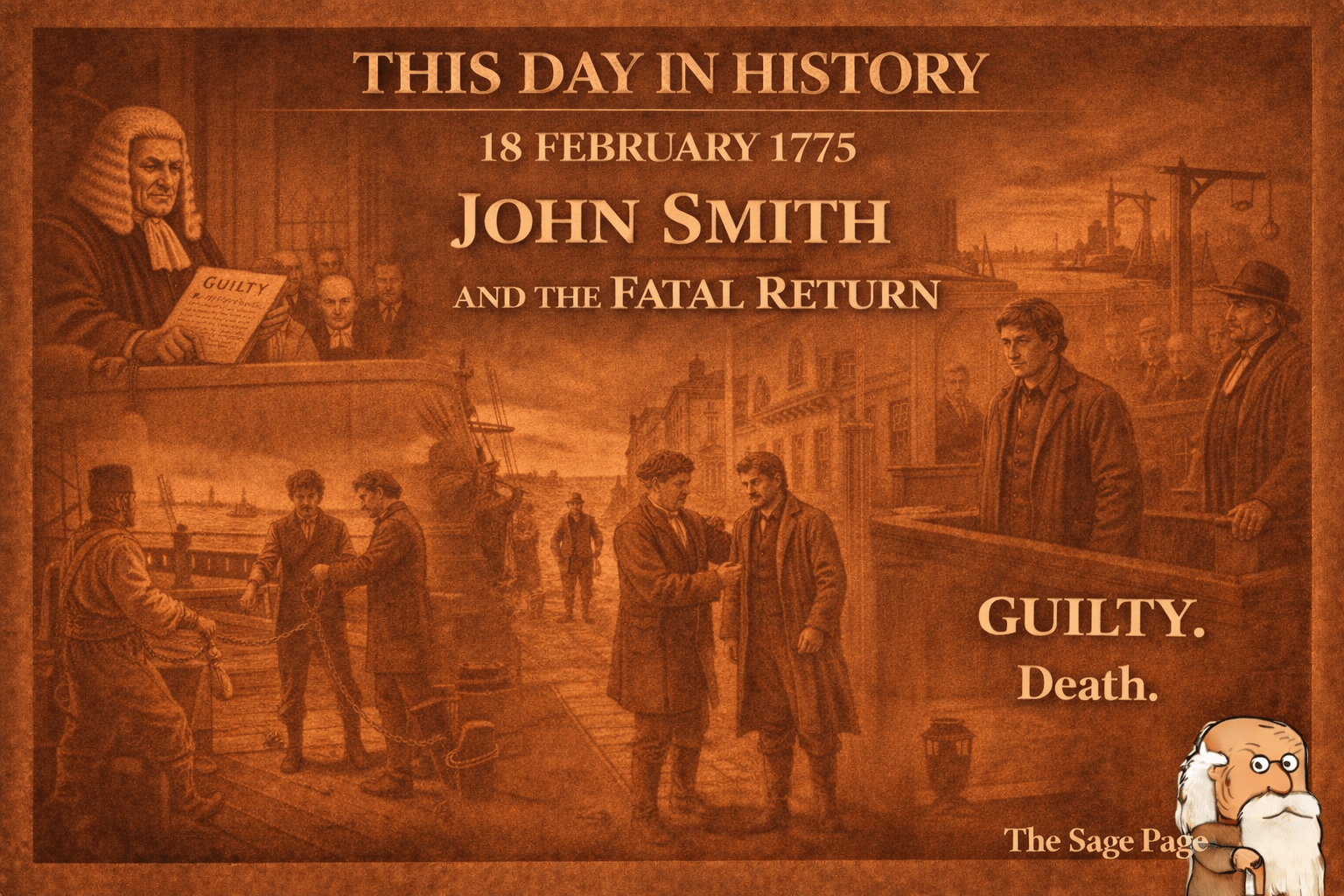
On 18 February 1775, John Smith was tried at the Old Bailey for returning from transportation before his fourteen-year term had expired. Originally sentenced to death for highway robbery and reprieved, he was again condemned to die before being transported once more, on the eve of the American Revolutionary War.
This Day in History: 27 January 1688 — Mary Aubry and the Dismembered Murder
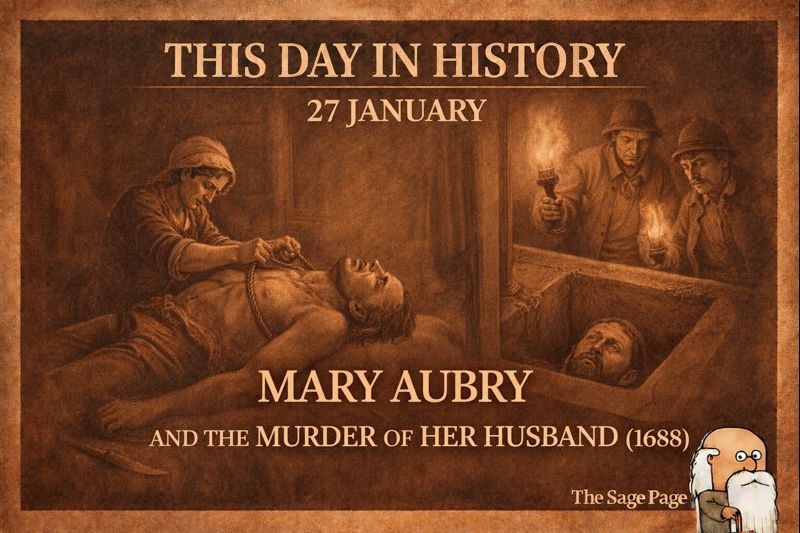
On 27 January 1688, French midwife Mary Aubry murdered her abusive husband in London and dismembered his body. Tried at the Old Bailey on 22 February, she pleaded guilty and was sentenced to burning at the stake, carried out at Leicester Fields on 2 March 1688. Her case became one of early modern England’s most notorious.
This Day in History: 17 January 1681 — Elizabeth Wigenton and the Murder of Her Apprentice
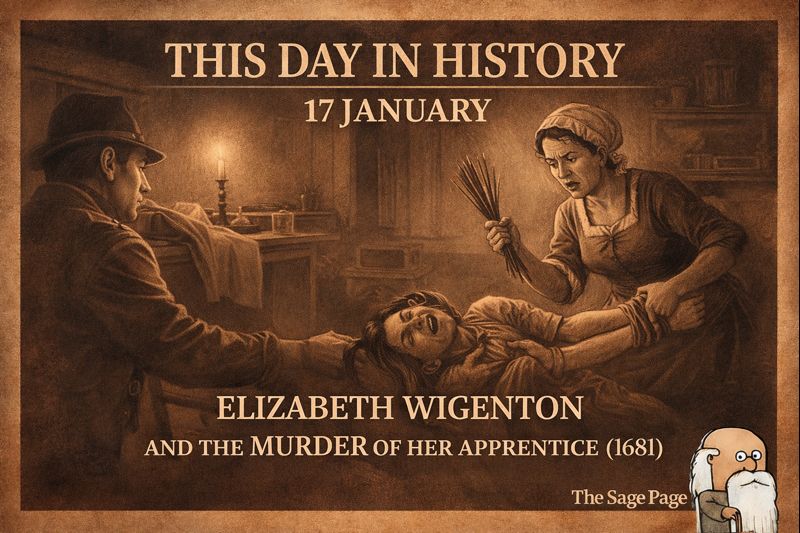
On 17 January 1681, Elizabeth Wigenton, a coat-maker of Ratcliff Parish, was tried at the Old Bailey for the wilful murder of her thirteen-year-old apprentice. After binding and beating the girl so violently that she died, Wigenton was found guilty of murder. This case reveals the brutal realities of apprenticeship and justice in seventeenth-century London.
This Day in History: 18 December 1865 — George Wheeler and the Long Sentence

On 18 December 1865, London clerk George Wheeler pleaded guilty to embezzlement at the Old Bailey. Sentenced to penal servitude, he passed through Newgate, Pentonville and Portland prisons before his release in 1869. His story reveals the realities of Victorian imprisonment beyond the courtroom.
This Day in History: 9 December 1789 — The Case of the Missing Goods

On 9 December 1789, Thomas Davis was tried at the Old Bailey for simple larceny. The evidence failed to convince the jury, and he was found Not Guilty. This retelling highlights how even in Georgian London’s strict justice system, doubt could still outweigh suspicion.
This Day in History: 20 November 1782 — The Watch in the Moonlight

On 20 November 1782, John Reynolds stood trial for stealing a silver watch from a passer-by in London. Caught within minutes and tried at the Old Bailey, he was convicted and sentenced to seven years’ transportation. This retelling explores the danger, drama and consequences of petty theft in Georgian London.
 The Sage Page