Here are 10 historical events that took place on March 12th, listed in chronological order:
538 – Vitiges, the king of the Ostrogoths, ends his siege of Rome, and the city is spared from destruction.
1550 – Several hundred Spanish and indigenous allies under the command of Pedro de Valdivia defeat an army of 60,000 Mapuche at the Battle of Penco during the Arauco War in present-day Chile.
1864 – The Red River Campaign begins as a series of battles during the American Civil War.
1912 – The Girl Guides (later known as the Girl Scouts) is founded in the United States by Juliette Gordon Low.
1928 – In California, the St. Francis Dam fails, leading to a massive flood that kills over 600 people.
1938 – Anschluss: German troops enter Austria, completing the annexation of the country into Nazi Germany.
1940 – Winter War: Finland signs the Moscow Peace Treaty with the Soviet Union, ceding a significant portion of its territory.
1967 – The body of U.S. President John F. Kennedy is moved to a permanent burial place at Arlington National Cemetery.
1993 – Several bombs explode in Mumbai, India, killing over 250 people and injuring more than 700 in what becomes known as the 1993 Bombay bombings.
2003 – Elizabeth Smart, a teenager who had been abducted from her home in Utah, is found alive in Sandy, Utah, nine months after her disappearance.
Thank you for reading my writings. If you’d like to, you can buy me a coffee for just £1 and I will think of you while writing my next post! Just hit the link below…. (thanks in advance)
My wife bet me I couldn’t do a butterfly impression.
I thought to myself, that’s got to be worth a little flutter!
They say one in every seven friends has a gambling addiction.
My money’s on Dave.
Sat next to a fruit machine addict at a Gamblers Anonymous meeting last night, It was awful!..
He kept nudging me.
A gambling gardener usually hedges his bets.
“I once visited a bookmakers in the Himalayas.”
“Tibet?”
“Why else would I go?”
Got asked to leave the casino the other night.
They said I had a chip on my shoulder.
A gambler walks into the butcher shop and says to the assistant behind the counter, “I bet you $100 you can’t get that meat down from the top shelf without a ladder.”
The assistant looks up, turns to the gambler, and replies: “I’m afraid I can’t take that bet, sir. The steaks are too high.”
Gambling is really like eating pistachios.
If you get a good pistachio, you want another good one.
If you get a bad one, you want a good one even more.
And that is gambling for you, in a nutshell.
My wife challenged me to a game of strip poker, but then I realized she just wanted to do laundry.
So I folded.
My friend’s poker game is getting out of hand.
Last night he bet his new-born son in a tense moment.
I thought to myself, “I’ve got aces; I might have to raise him.”
I put a bet on a horse because I was told it had excellent breeding.
After the horse left the starting gate, he stopped and closed it behind him.
A friend of mine keeps insisting on skipping through flower meadows.
I think he has a gamboling problem.
Do you know what would make gambling hotlines better?
Make every 5th call a winner.
What do you call a professional poker player who broke up with his girlfriend?
Homeless.
I was walking down the road earlier and I tripped over a sign from the local betting shop.
What are the odds on that?
Why is gambling illegal in China?
Because they hate Tibet.
What did the gambling addicts name their daughter?
Betty.
I’m going to an ABBA-themed poker night.
The winner takes it all.
Gambling has really helped me get back on my feet.
Because I lost my car in poker last night.
A small man admitted himself to rehab with a gambling addiction.
It’s okay.
He’s a little better.
I sold all my body parts to feed my gambling addiction.
Maybe I should quit while I’m a head.
A queen was caught gambling.
She had a royal flush.
What do you call someone greater at gambling than you?
A better better.
I gambled on a giraffe race the other day.
Mine came second.
Lost by a neck.
It was nowhere near.
People say gambling ruins lives, but it brought our family closer.
We now live in a one-bedroom flat.
Why don’t vampires like gambling?
They get nervous when the stakes are raised.
What does a gambling addict call heaven?
Pair-a-dice.
I took a gamble and bought a small boat without seeing it first.
It was a punt.
Why is there no gambling in Africa?
Too many cheetahs.
What did the dealer say to the deck of cards?
I can’t deal with you anymore.
Why are large maps rubbish at playing poker?
They always fold.
And there’s more…
Thank you for reading my writings. If you’d like to, you can buy me a coffee for just £1 and I will think of you while writing my next post! Just hit the link below…. (thanks in advance)
The term “water skiing” is conventionally used to refer specifically to a water sport where a person is pulled behind a boat while wearing skis and skimming on the water’s surface. When people talk about “skiing” without any specific context, they usually refer to activities on snow-covered surfaces.
While it’s true that snow is made of water, the distinction lies in the medium and context. When people refer to skiing on snow, they are typically talking about activities such as alpine skiing, cross-country skiing, or other snow sports where skis are used on snow-covered terrain. The term “water skiing” is specific to the water sport context.
In casual conversation, saying “skiing” without specifying the context usually implies snow skiing. The use of the term “water skiing” helps distinguish the water sport from snow skiing.
Thank you for reading my writings. If you’d like to, you can buy me a coffee for just £1 and I will think of you while writing my next post! Just hit the link below…. (thanks in advance)
Here are 10 historical events that took place on March 9th, listed in chronological order:
1454: Amerigo Vespucci, Italian explorer after whom America was named, was born in Florence, Italy.
1841: The U.S. Supreme Court ruled in the United States v. The Amistad case, stating that the African slaves who had seized control of the ship had been illegally forced into slavery and were free.
1862: The ironclad CSS Virginia and the USS Monitor fought to a draw in the first battle between ironclad warships during the American Civil War, known as the Battle of Hampton Roads.
1916: Pancho Villa led a raid on the U.S. border town of Columbus, New Mexico, during the Mexican Revolution.
1933: The U.S. Congress called a special session to repeal Prohibition, leading to the passage of the 21st Amendment later that year, ending the nationwide prohibition of alcohol.
1954: CBS broadcasts the first color television show using the NTSC color television standard.
1964: The first Ford Mustang was officially unveiled at the New York World’s Fair.
1997: Rapper Christopher Wallace, also known as The Notorious B.I.G., was shot and killed in a drive-by shooting in Los Angeles.
2011: A magnitude 9.0 earthquake struck off the east coast of Japan, triggering a devastating tsunami and leading to the Fukushima Daiichi nuclear disaster.
2015: The New Horizons space probe made its closest approach to Pluto, providing detailed images and information about the distant dwarf planet.
Thank you for reading my writings. If you’d like to, you can buy me a coffee for just £1 and I will think of you while writing my next post! Just hit the link below…. (thanks in advance)
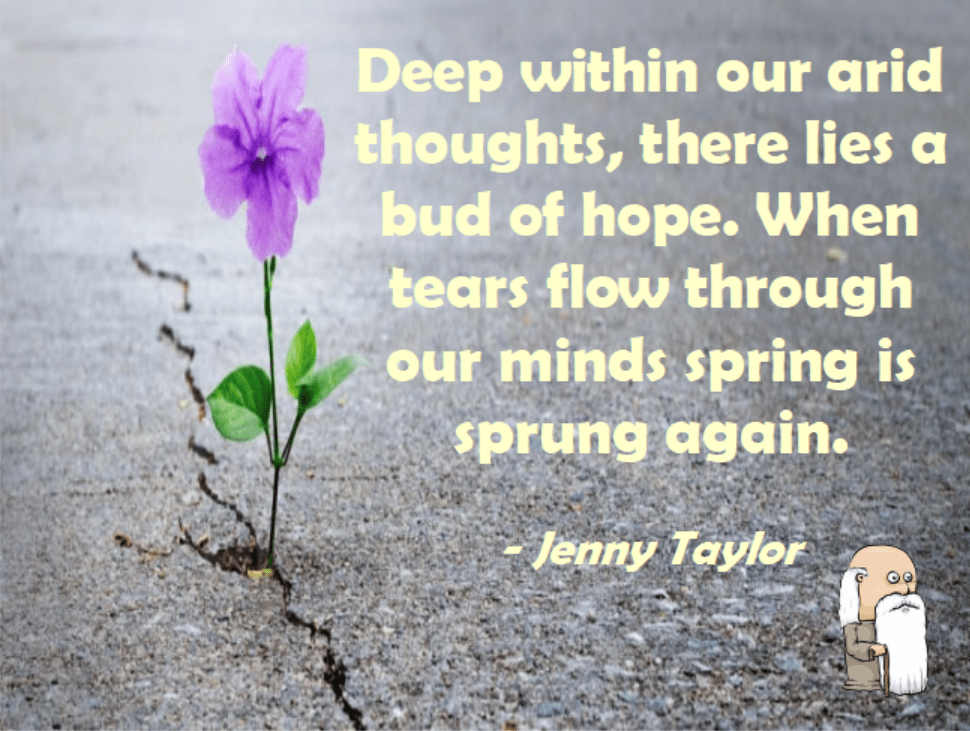
“Deep within our arid thoughts there lies a bud of hope, when tears flow through our minds spring is sprung again”
Jenny Taylor
Jenny Taylor (Born March 15, 1822, in Bath, England – Died October 8, 1898) was a 19th-century English poet and philosopher, celebrated for her evocative verses and profound reflections on the human experience.
Early Life:
Jenny Taylor’s upbringing in the historic city of Bath was steeped in the cultural and intellectual milieu of the 19th century. Born into a family with a deep appreciation for literature and philosophy, she exhibited a natural inclination towards the arts from a young age.
Literary Pursuits:
In the mid-1800s, Taylor emerged as a poetic voice, contributing to the rich tapestry of Victorian literature. Her debut collection, “Whispers of the Soul,” published in 1850, garnered attention for its introspective themes and lyrical craftsmanship.
Philosophical Explorations:
As Taylor’s literary career progressed, she expanded her focus to include philosophical reflections on the human condition. Her treatise, “Contours of the Mind: A Philosophical Journey,” published in 1865, delved into the intricacies of emotions, resilience, and the innate human capacity for hope.
The Quote and Its Meaning:
“Deep within our arid thoughts there lies a bud of hope, when tears flow through our minds spring is sprung again” stands as one of Jenny Taylor’s most poignant and often-cited verses. The quote encapsulates Taylor’s profound belief in the regenerative power of hope during moments of emotional hardship. It suggests that, even in the arid landscapes of our thoughts, the nourishing tears that flow can herald a renewal akin to the arrival of spring.
Legacy:
Jenny Taylor’s contributions to Victorian literature and philosophy have left an enduring legacy. Her ability to intertwine poetic expression with profound philosophical insights has earned her recognition as a distinctive voice of her era.
Continued Influence:
In the contemporary landscape of literary and philosophical discourse, Jenny Taylor’s works continue to resonate with readers. Her exploration of hope as a transformative force serves as a timeless reminder of the human capacity to find renewal even in the most challenging circumstances.
Jenny Taylor’s life and writings remain a testament to the enduring power of literature and philosophy to illuminate the human experience. Her legacy persists through the pages of her works, inspiring generations to seek hope and renewal in the arid landscapes of their own thoughts.
Thank you for reading my writings. If you’d like to, you can buy me a coffee for just £1 and I will think of you while writing my next post! Just hit the link below…. (thanks in advance)
No, it’s not true that lobsters are mermaids to scorpions. This statement seems to be a playful or imaginative comparison rather than a factual one.
Lobsters and scorpions are both arthropods, belonging to the class Arachnida, but they are in different orders. Lobsters are crustaceans, while scorpions are arachnids. Mermaids, on the other hand, are mythical creatures often depicted as having the upper body of a human and the lower body of a fish.
The comparison might be a whimsical way of highlighting the diversity of arthropods and their various forms, but it doesn’t reflect a scientific or biological relationship between lobsters and scorpions.
Thank you for reading my writings. If you’d like to, you can buy me a coffee for just £1 and I will think of you while writing my next post! Just hit the link below…. (thanks in advance)
February 29th occurs only in leap years, which are divisible by 4, with the exception of years divisible by 100 but not by 400. As a result, February 29th is relatively rare. Here are historical events that happened on February 29th:
Leap Day Origin (5th Century): February 29th is added to the calendar in the Julian calendar reform.
Birth of Gioachino Rossini (1792): The Italian composer of operas, including “The Barber of Seville,” was born on a Leap Day.
St. Oswald’s Day (303): St. Oswald’s Day is traditionally celebrated on Leap Day in some Christian traditions.
Establishment of the Knights of Pythias (1864): The fraternal organization was founded on February 29th in Washington, D.C.
Birth of Jessie T. Usher (1992): The American actor known for his role in the TV series “Survivor’s Remorse” was born on a Leap Day.
Formation of Davy Jones’ Locker (1720): The term “Davy Jones’ Locker” was first mentioned in a letter on February 29th.
Hattie McDaniel’s Oscar Win (1940): Hattie McDaniel became the first African American to win an Academy Award for her role in “Gone with the Wind” on a Leap Day.
First Official Leap Year in the Gregorian Calendar (1752): The Gregorian calendar, which included the Leap Year system, was adopted in some countries.
Peace of Rueil (1649): The Peace of Rueil, ending the Fronde civil wars in France, was signed on February 29th.
First Legal Leap Day (1288): According to a Scottish law, February 29th was defined as the day when a woman could propose to a man.
Thank you for reading my writings. If you’d like to, you can buy me a coffee for just £1 and I will think of you while writing my next post! Just hit the link below…. (thanks in advance)
“Not all our rewards will look like carrots, not all our penalties will look like sticks”
Marion Haste
Marion Haste (Born September 28, 1955, in Dublin, Ireland) is a highly regarded Irish author and philosopher, celebrated for her keen insights into human behavior, motivation, and the intricacies of reward and punishment.
Early Life:
Marion Haste’s formative years in Dublin were shaped by a rich cultural tapestry and a family deeply invested in the arts. Her early exposure to literature, philosophy, and psychology laid the groundwork for her future intellectual pursuits.
Educational Background:
Haste pursued her academic journey at Trinity College Dublin, where she delved into the realms of philosophy and behavioral psychology. Her academic endeavors equipped her with the tools to analyze and interpret the complexities of human motivation.
Literary Career:
In the early 1980s, Marion Haste gained recognition with her debut book, “Mindful Choices: Navigating the Path of Motivation,” published in 1983. This work marked the beginning of her exploration into the factors influencing human decision-making and the consequences of rewards and penalties.
Philosophical Insights:
Haste’s seminal work, “Balancing Acts: The Dual Nature of Motivation,” published in 1990, delved into the intricate interplay between rewards and penalties in shaping human behavior. Her thought-provoking insight, “Not all our rewards will look like carrots, not all our penalties will look like sticks,” became a hallmark of her philosophy.
The Quote and Its Meaning:
“Not all our rewards will look like carrots, not all our penalties will look like sticks” encapsulates Haste’s nuanced perspective on motivation and consequences. The quote emphasizes the diversity of incentives and deterrents in life. Haste suggests that rewards and penalties can manifest in various forms, challenging individuals to recognize the multifaceted nature of motivation.
Legacy:
Marion Haste’s writings have left an enduring impact on the fields of philosophy and psychology. Her exploration of motivation and the complexities of human decision-making continues to influence scholars, educators, and individuals seeking a deeper understanding of their own behaviors.
Contemporary Relevance:
In the contemporary landscape of behavioral science and philosophy, Marion Haste’s work remains relevant. Her ideas have influenced ongoing discussions about the intricacies of motivation, encouraging a more nuanced understanding of the diverse ways in which rewards and penalties manifest in our lives.
Marion Haste’s legacy endures as a testament to her profound insights into human motivation, decision-making, and the dynamic interplay between rewards and penalties. Her continued impact on the intellectual landscape reinforces her status as a significant figure in the exploration of the human psyche.
Thank you for reading my writings. If you’d like to, you can buy me a coffee for just £1 and I will think of you while writing my next post! Just hit the link below…. (thanks in advance)
If there was an earthquake on another planet, is it still an earthquake?
The term “earthquake” is specifically used to describe seismic activity on Earth. If a similar phenomenon were to occur on another planet, it would be referred to by a different term. For example:
On Mars, seismic activity is termed “marsquakes.”
On the Moon, it would be referred to as “moonquakes.”
The naming convention is based on the celestial body where the seismic activity takes place. The term “earthquake” is Earth-centric and is not applied to seismic events on other planets or celestial bodies.
Thank you for reading my writings. If you’d like to, you can buy me a coffee for just £1 and I will think of you while writing my next post! Just hit the link below…. (thanks in advance)
Here are 10 historical events that took place on February 28th, listed in chronological order:
1784: John Wesley charters the Methodist Church.
1827: The Baltimore and Ohio Railroad is incorporated, becoming the first railroad in America offering commercial transportation of both people and freight.
1844: A gun on USS Princeton explodes while the ship is on a Potomac River cruise, killing eight people, including two United States Cabinet members.
1883: The first vaudeville theater opens in Boston, Massachusetts.
1953: James Watson and Francis Crick discover the structure of DNA, the double helix.
1983: The final episode of the TV series “MAS*H” airs, becoming the most-watched television episode in U.S. history at the time.
1993: A gun battle erupts between Branch Davidians and federal agents in Waco, Texas, leading to a 51-day standoff.
1997: The North Hollywood shootout occurs, as two heavily armed bank robbers engage in a firefight with the Los Angeles Police Department.
2013: Benedict XVI resigns as pope, becoming the first pope to resign since Gregory XII in 1415.
Thank you for reading my writings. If you’d like to, you can buy me a coffee for just £1 and I will think of you while writing my next post! Just hit the link below…. (thanks in advance)






 The Sage Page