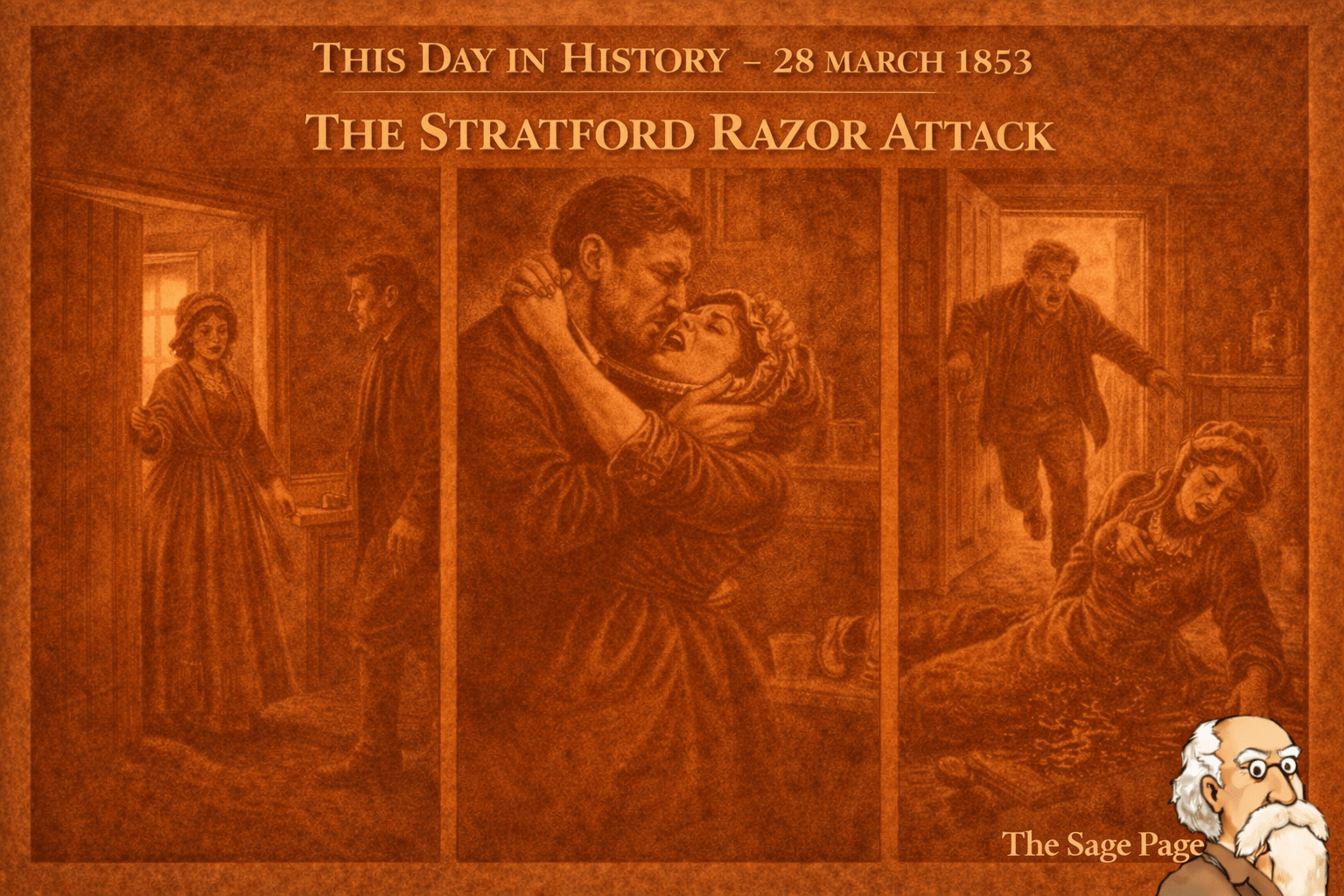
In 1853, Thomas Rolls attacked Charlotte Carter with a razor in Stratford after their relationship ended. This Old Bailey case reveals a brutal attempted murder, a desperate struggle for survival, and a narrow escape from death in Victorian London, where domestic violence turned suddenly and violently life-threatening.
Tag Archives: British legal history
This Day in History – 24 March 1839
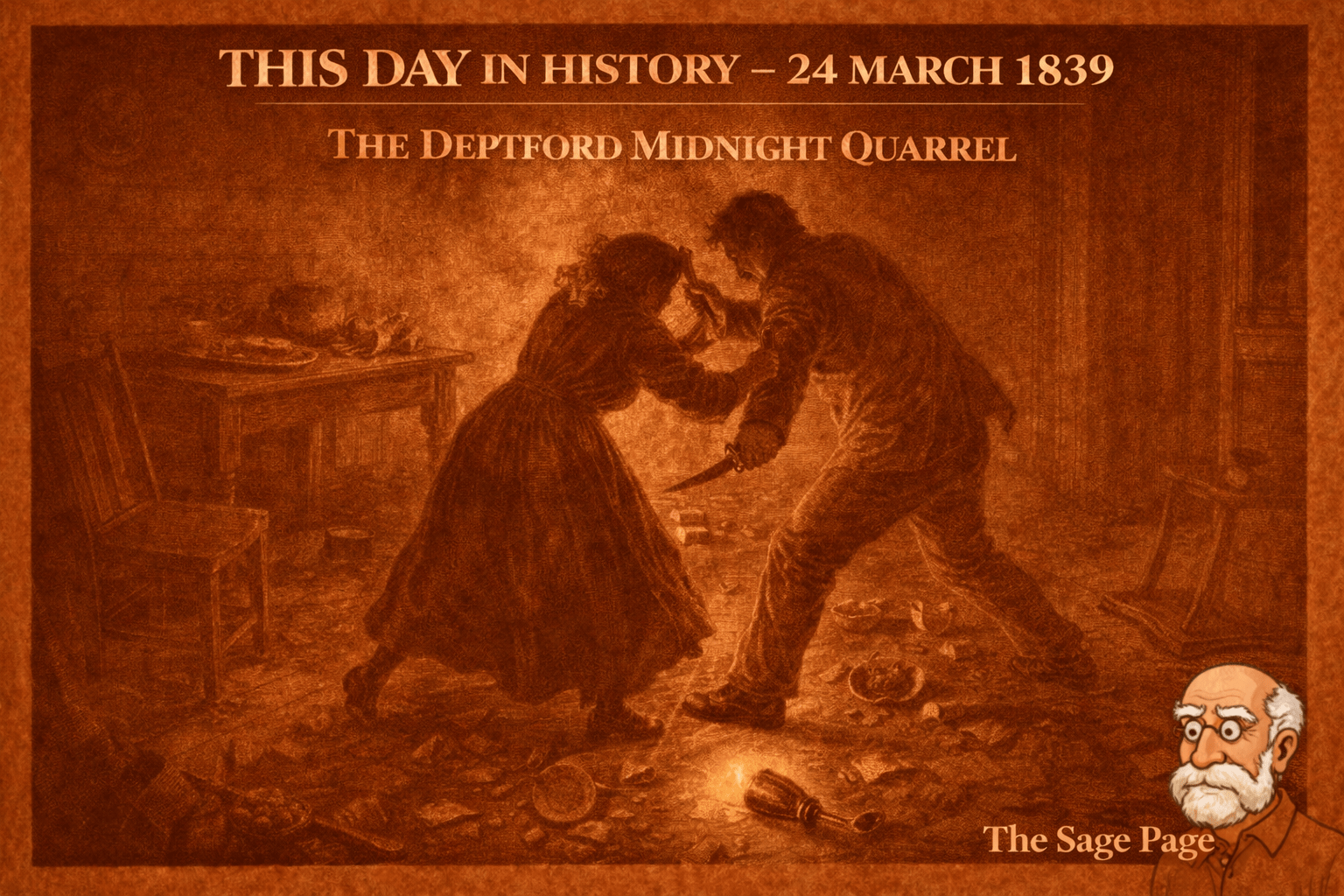
A drunken quarrel in Deptford in 1839 led to a brutal knife injury and a courtroom drama revealing mutual violence and desperation. This Old Bailey case explores the blurred line between assault and self-defence in Victorian London, where candlelight, jealousy, and alcohol combined with devastating consequences.
This Day in History: 18 February 1775 — John Smith and the Fatal Return
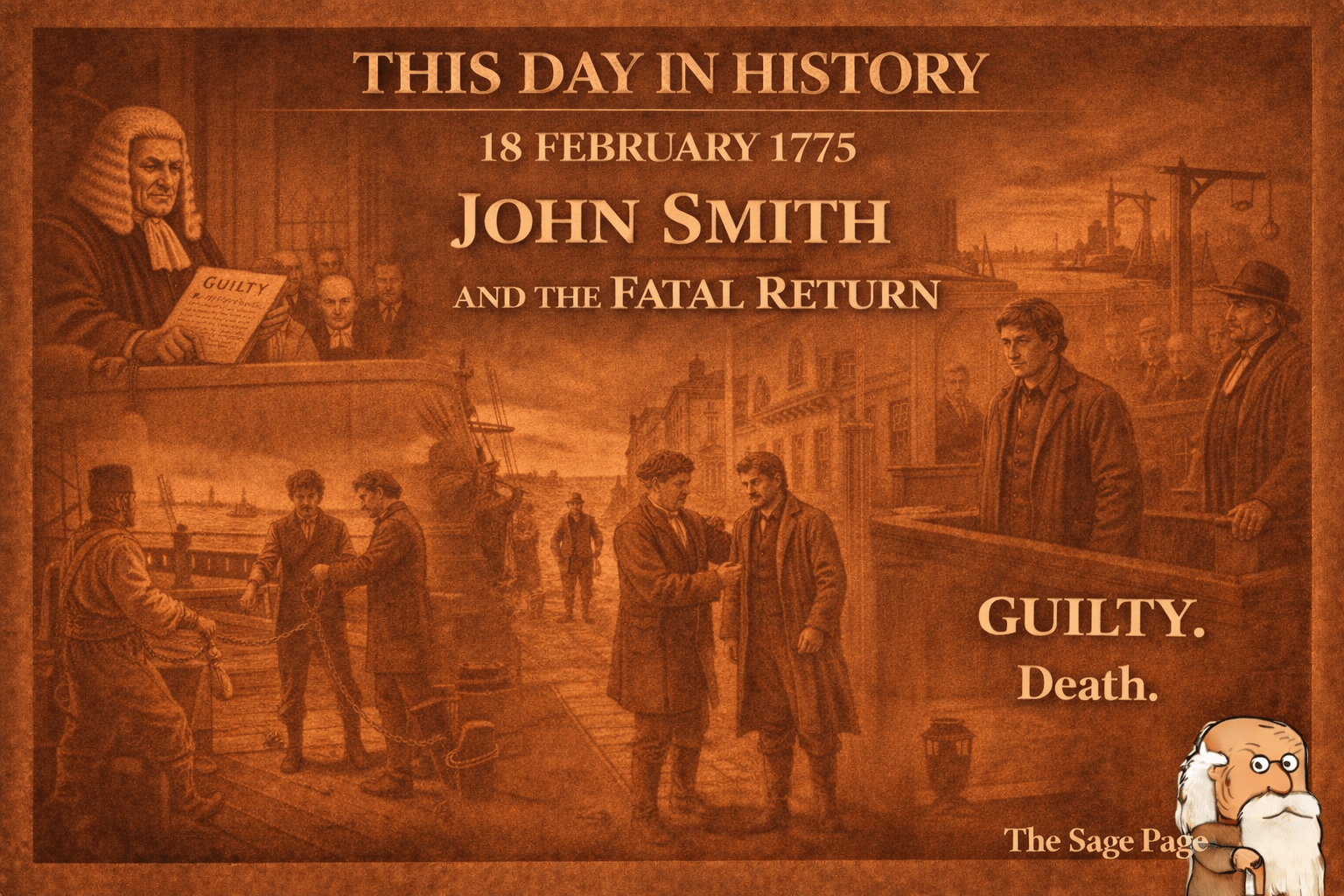
On 18 February 1775, John Smith was tried at the Old Bailey for returning from transportation before his fourteen-year term had expired. Originally sentenced to death for highway robbery and reprieved, he was again condemned to die before being transported once more, on the eve of the American Revolutionary War.
This Day in History: 12 February 1819 — John Barker and the Albion Tavern Theft
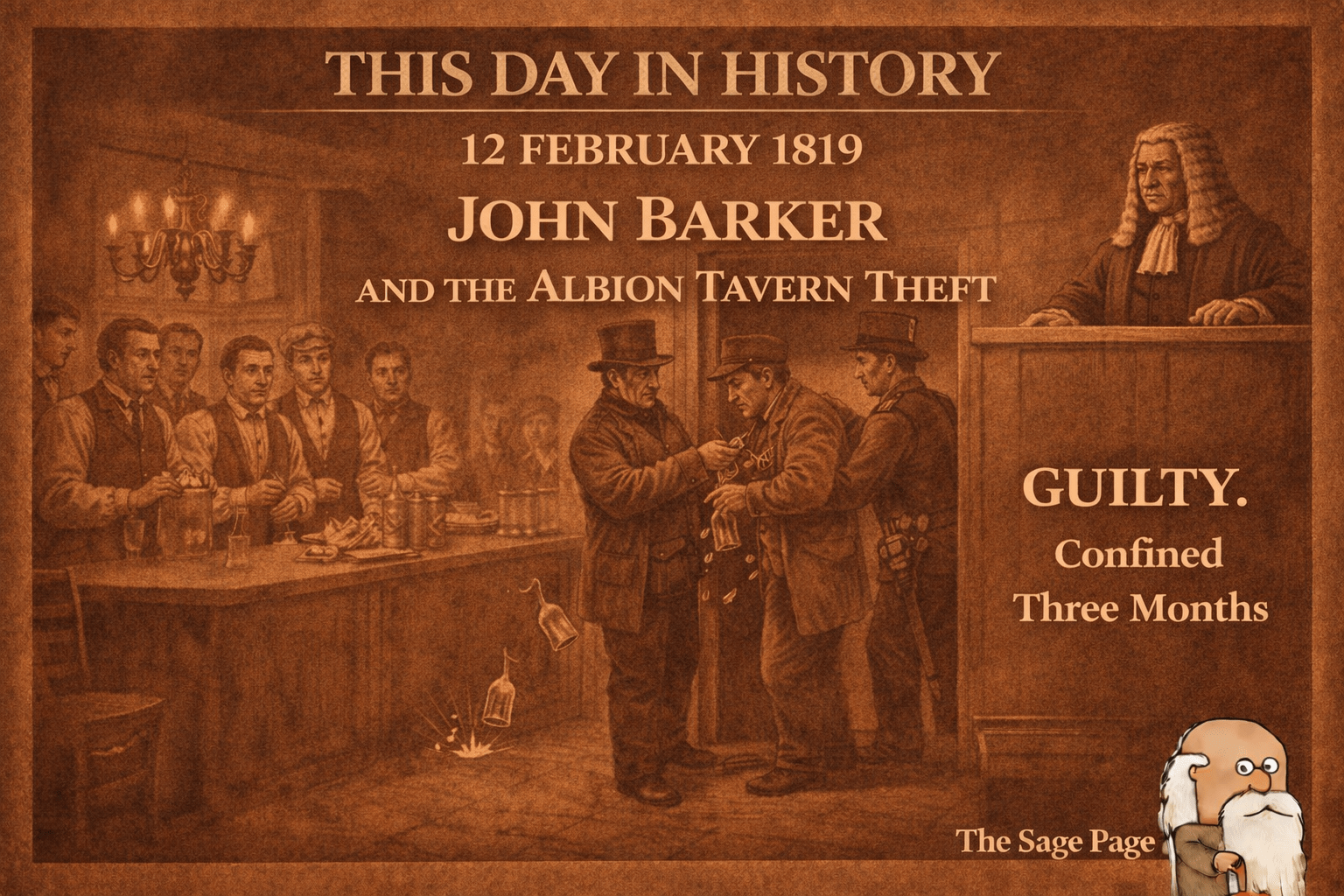
On 12 February 1819, John Barker was tried at the Old Bailey for stealing wine-glasses, a pepper-box and other items from the Albion Tavern in Aldersgate Street. Found guilty after the goods were discovered hidden on him, the 46-year-old waiter was sentenced to three months’ confinement.
This Day in History: 11 February 1818 — George Tomkins and the Three Sixpences
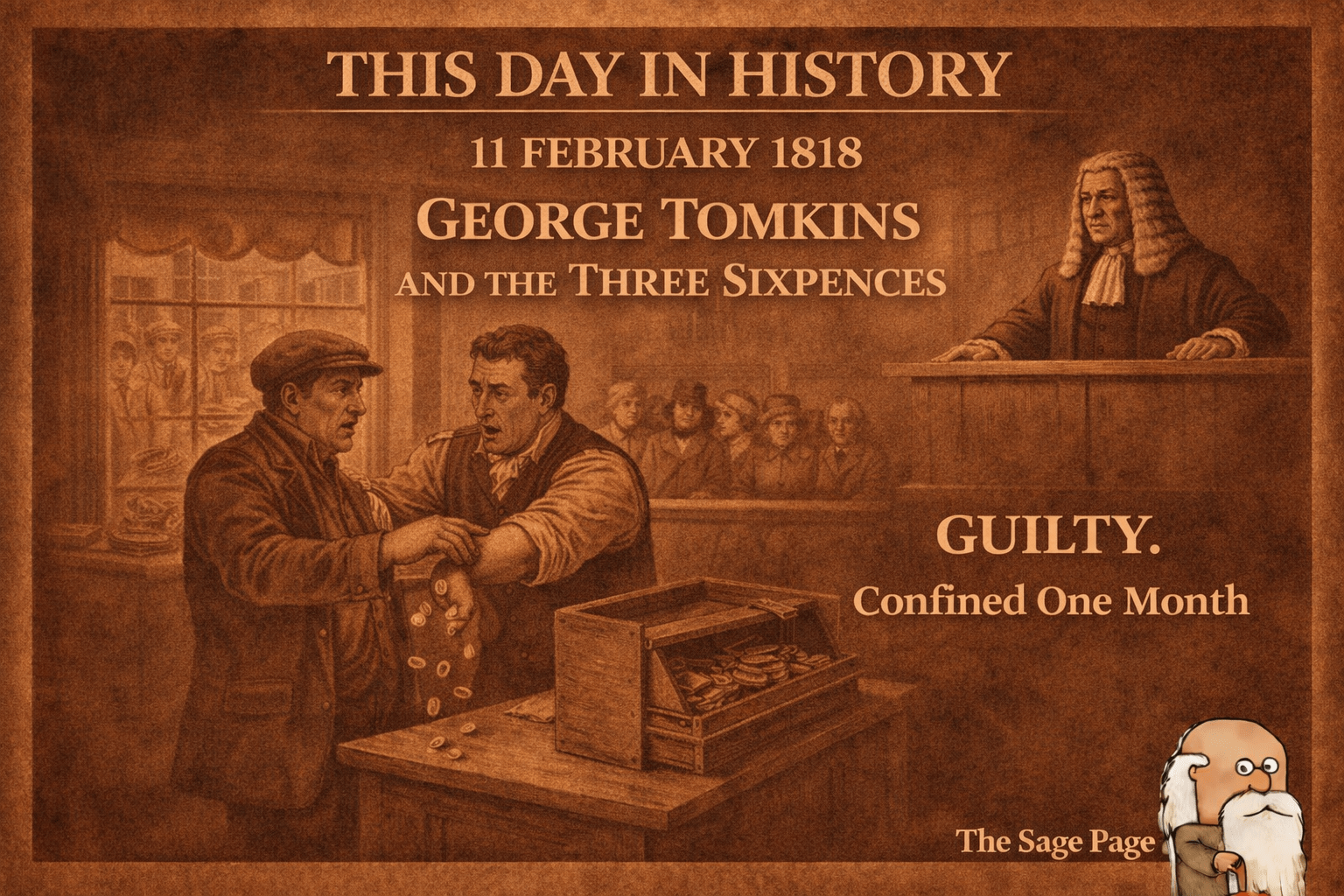
On 11 February 1818, George Tomkins was tried at the Old Bailey for stealing three sixpences from his employers on Holborn Hill. Caught in the act by a shopman and found guilty, the 36-year-old porter was sentenced to one month’s confinement, highlighting how even small thefts were prosecuted in Georgian London.
This Day in History: 6 February 1806 — Thomas Crumpton and the Stolen Copper
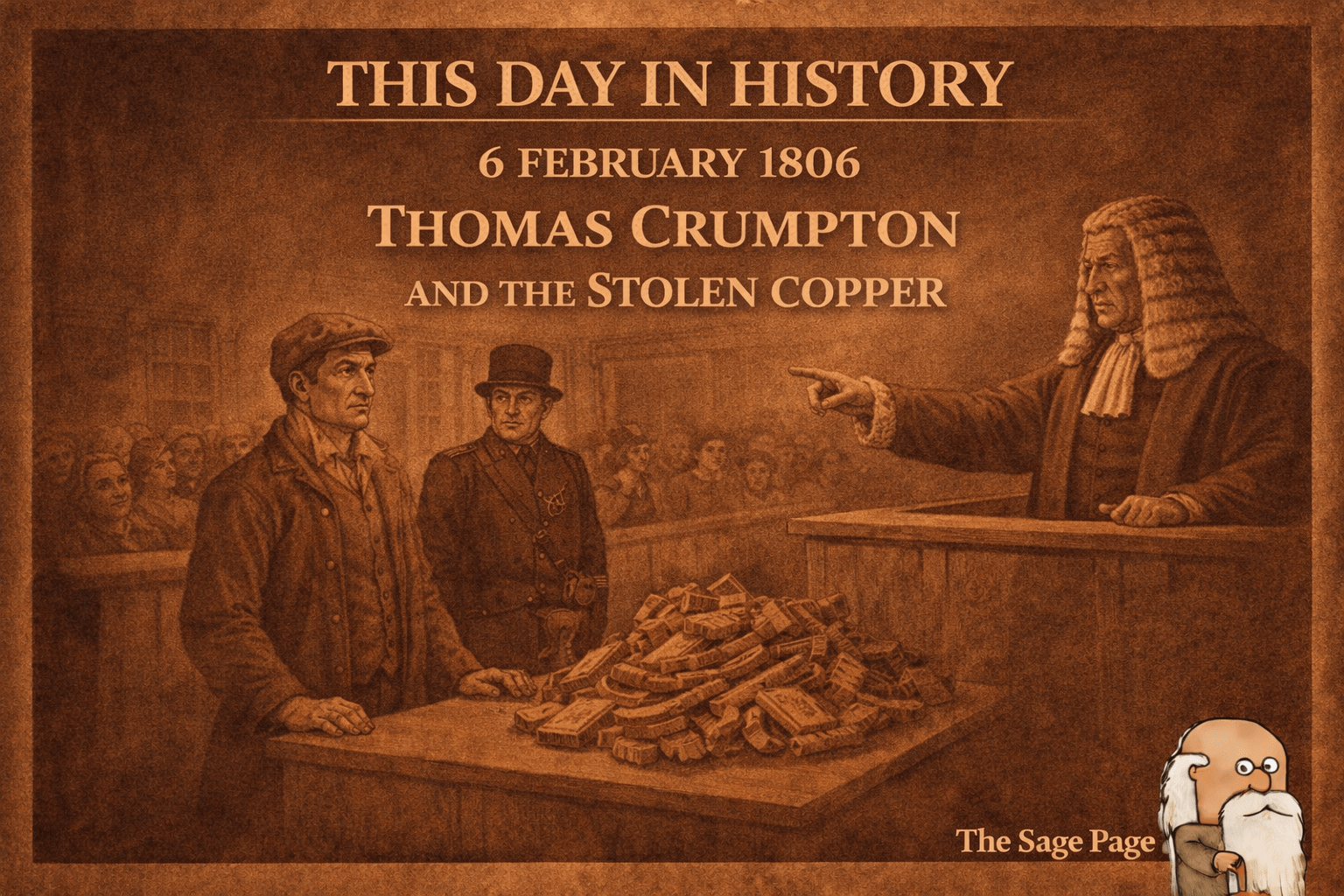
On 6 February 1806, Thomas Crumpton stood trial at the Old Bailey for stealing copper and metal goods worth just over a pound. Found guilty, he was sentenced to twelve months in the House of Correction and fined one shilling, highlighting how minor thefts were punished in Georgian London.
This Day in History: 5 February 1808 — Edward Westbrooke and the Stolen Cotton
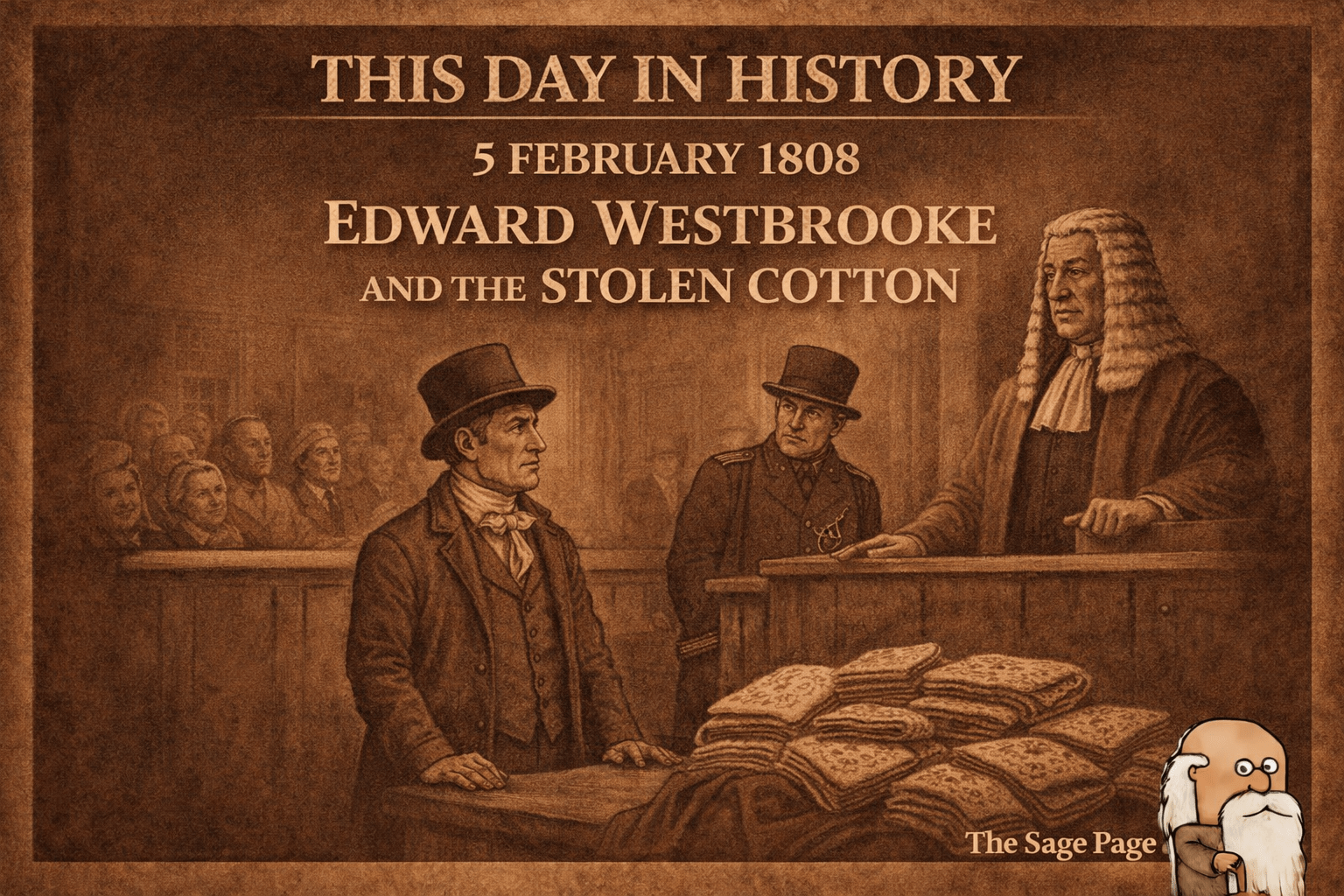
On 5 February 1808, London’s highest criminal court, the Old Bailey, heard the case of Edward Westbrooke, who stood accused of stealing hundreds of printed cotton handkerchiefs and other textiles — goods of considerable value in the commercial heart of Georgian England. His trial, conviction and ultimate fate reveal much about how property, punishment andContinue reading “This Day in History: 5 February 1808 — Edward Westbrooke and the Stolen Cotton”
 The Sage Page