
On 20 February 1771, Richard Mortis was tried at the Old Bailey for shooting Thomas Parkinson in a moonlit field after a dispute over poaching. Found guilty of willful and malicious shooting, Mortis was sentenced to death and executed on 27 March 1771, reflecting the harsh capital laws of Georgian England.
Tag Archives: Georgian crime
This Day in History: 12 February 1819 — John Barker and the Albion Tavern Theft
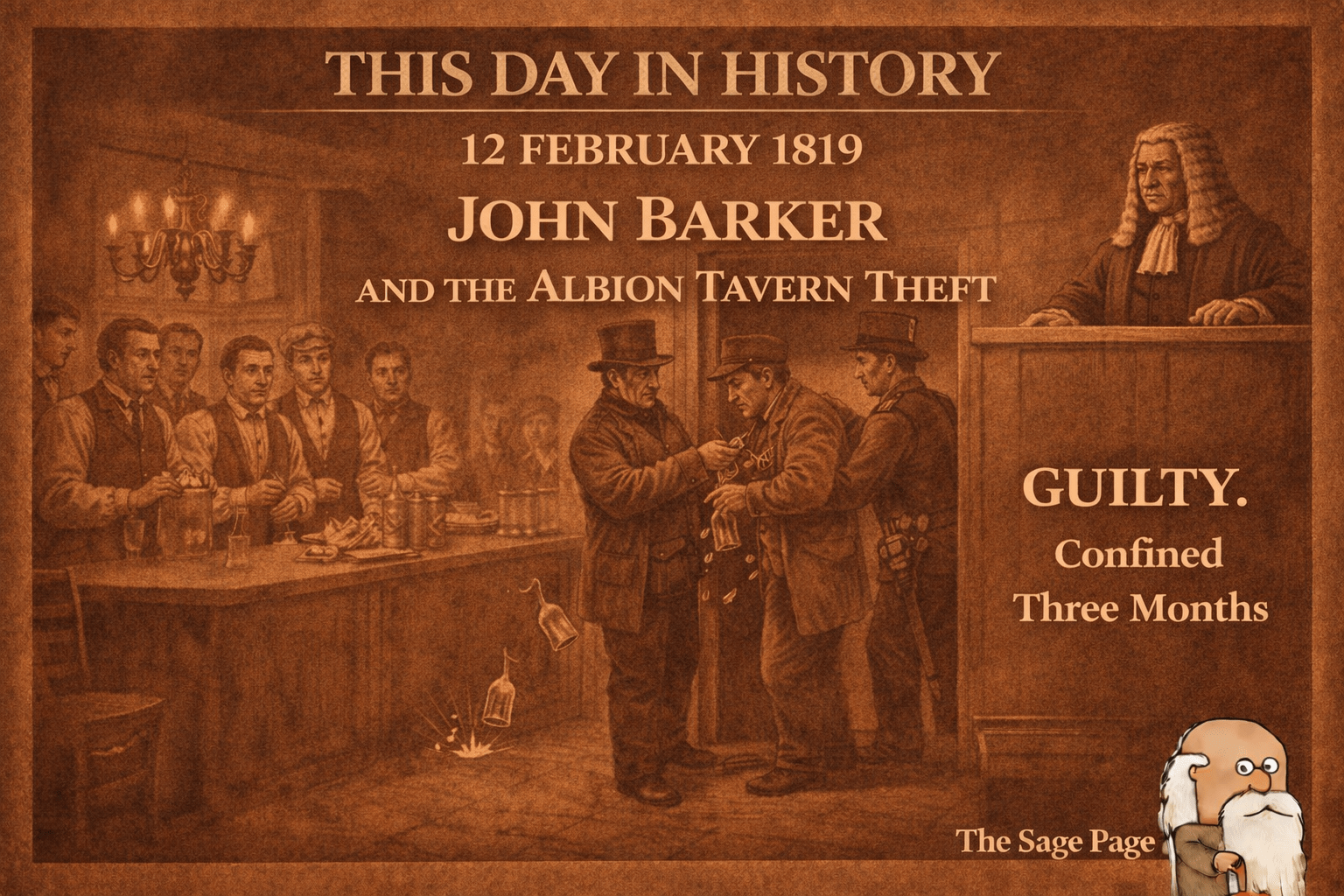
On 12 February 1819, John Barker was tried at the Old Bailey for stealing wine-glasses, a pepper-box and other items from the Albion Tavern in Aldersgate Street. Found guilty after the goods were discovered hidden on him, the 46-year-old waiter was sentenced to three months’ confinement.
This Day in History: 11 February 1818 — George Tomkins and the Three Sixpences
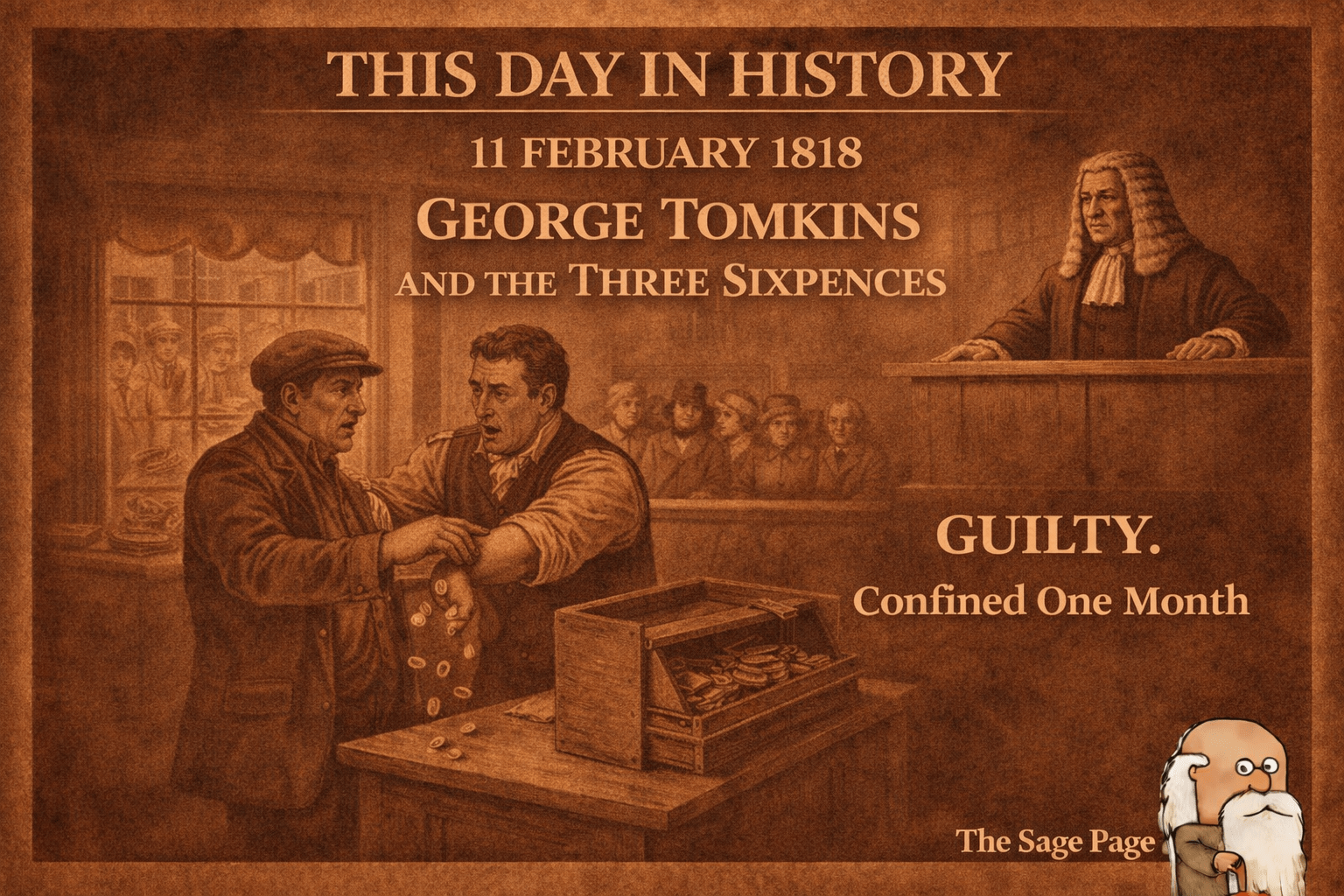
On 11 February 1818, George Tomkins was tried at the Old Bailey for stealing three sixpences from his employers on Holborn Hill. Caught in the act by a shopman and found guilty, the 36-year-old porter was sentenced to one month’s confinement, highlighting how even small thefts were prosecuted in Georgian London.
This Day in History: 6 February 1806 — Thomas Crumpton and the Stolen Copper
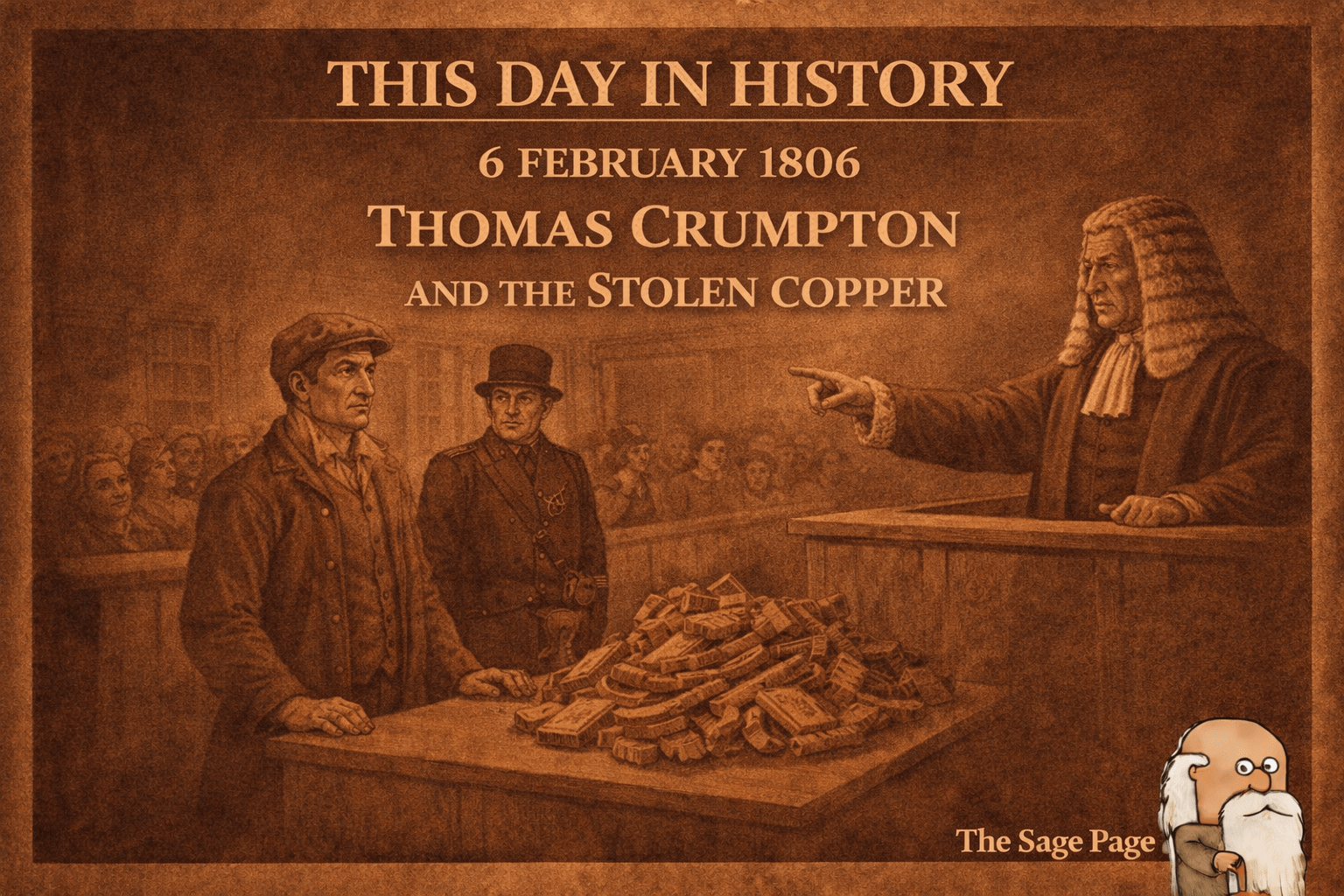
On 6 February 1806, Thomas Crumpton stood trial at the Old Bailey for stealing copper and metal goods worth just over a pound. Found guilty, he was sentenced to twelve months in the House of Correction and fined one shilling, highlighting how minor thefts were punished in Georgian London.
This Day in History: 11 December 1765 — Catherine Wilks and the Printed Cotton

On 11 December 1765, Catherine Wilks was tried at the Old Bailey for stealing printed cotton from a London shop. Found guilty of grand larceny, she faced transportation, the common punishment for such thefts. Her case reveals the risks and realities of women navigating 18th-century London’s commercial world.
This Day in History: 9 December 1789 — The Case of the Missing Goods

On 9 December 1789, Thomas Davis was tried at the Old Bailey for simple larceny. The evidence failed to convince the jury, and he was found Not Guilty. This retelling highlights how even in Georgian London’s strict justice system, doubt could still outweigh suspicion.
This Day in History – 13 August 1818
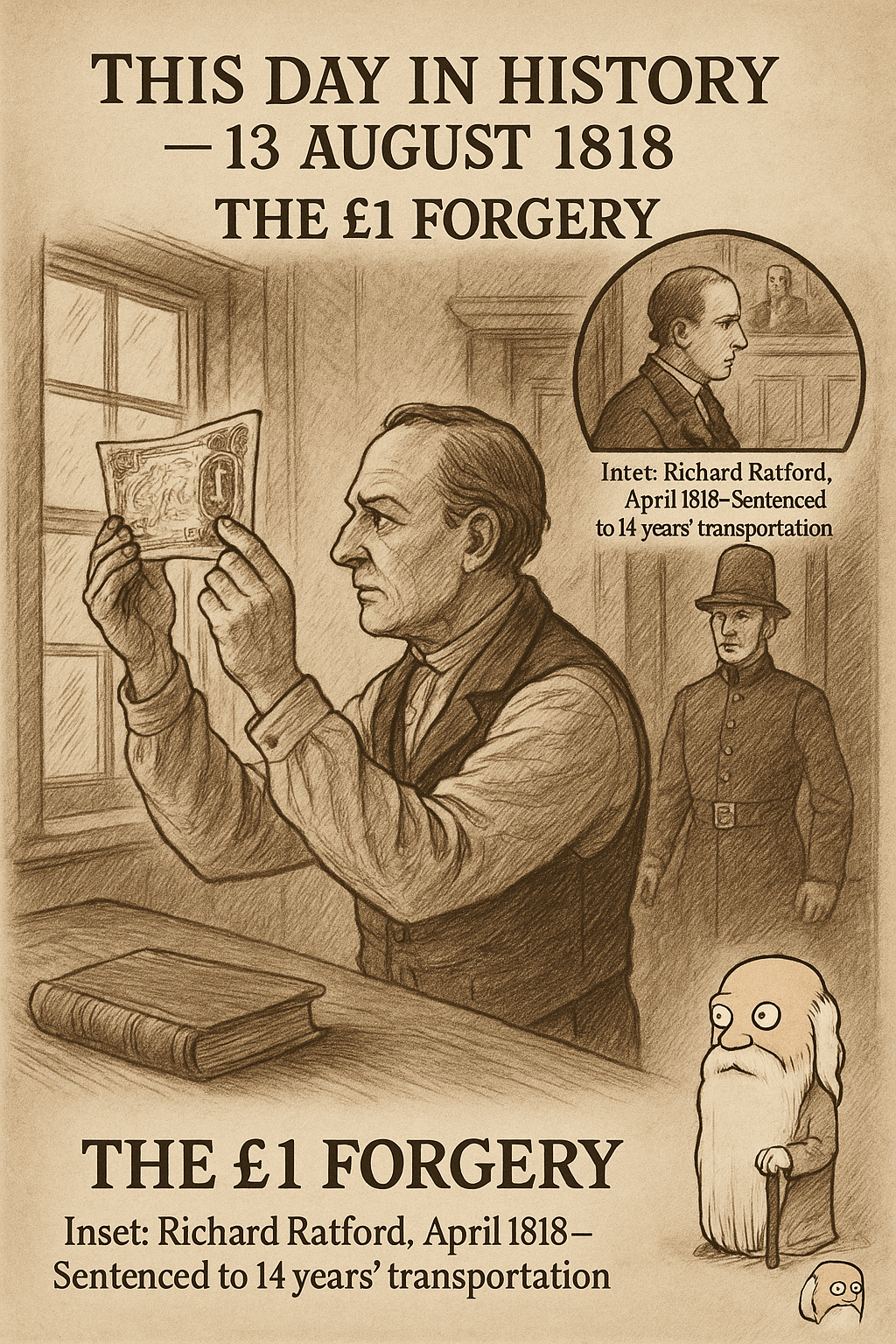
13 August 1818 — Old Bailey: A £1 Bank of England note dated today was passed and found to be forged, leading to a capital trial for uttering. In the same year, Richard Ratford was transported for 14 years for a similar offence.
This Day in History — 9 August 1726
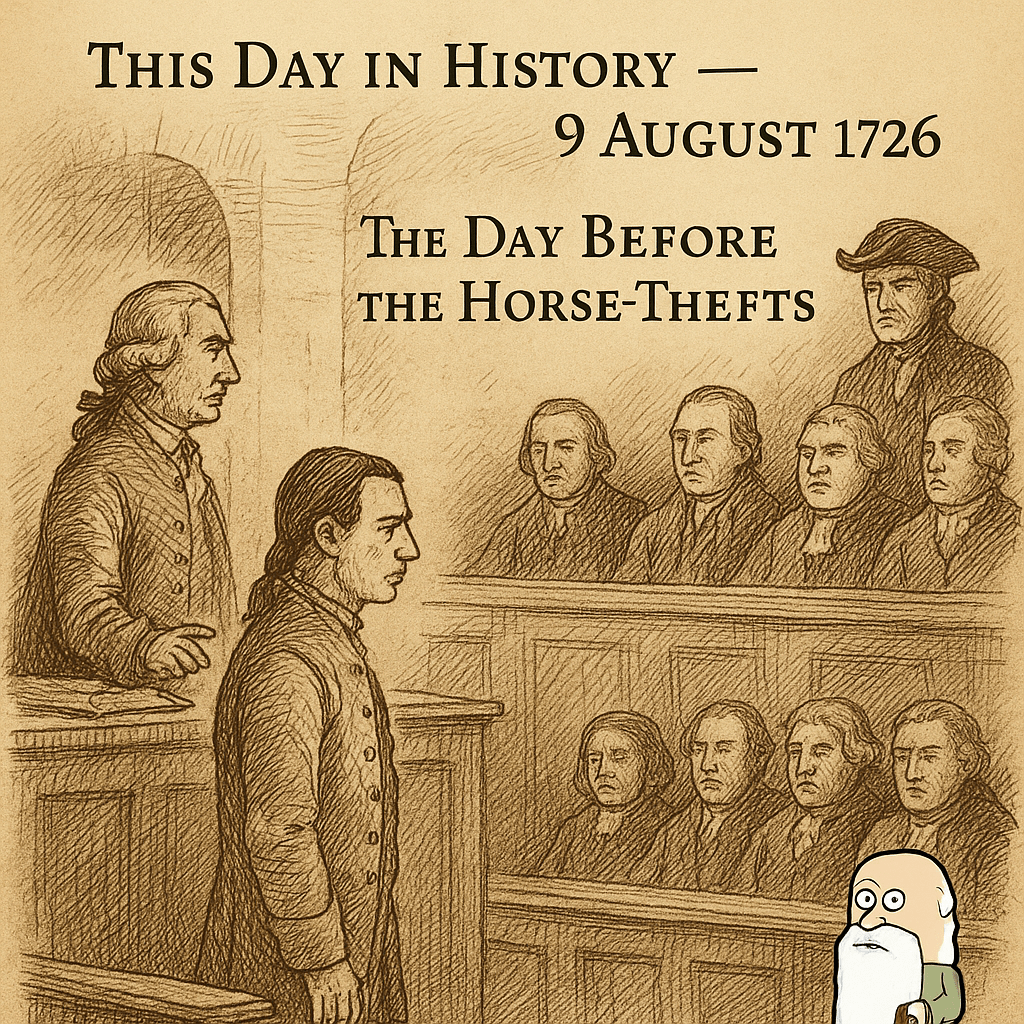
The Day Before the Horse-Thefts (9 August 1726) — On the eve of two geldings disappearing, George Prentice (alias Johnson) moves through Smithfield. The next day, 10 August, the thefts that send him to the Old Bailey will occur.
This Day in History – 23 July 1783

Ot en Batley – The Great Linen Heist (23 July 1783)
A servant’s bold theft of luxury damask linens led to public whipping and discharge—a rare mercy amid harsh Georgian justice.
 The Sage Page