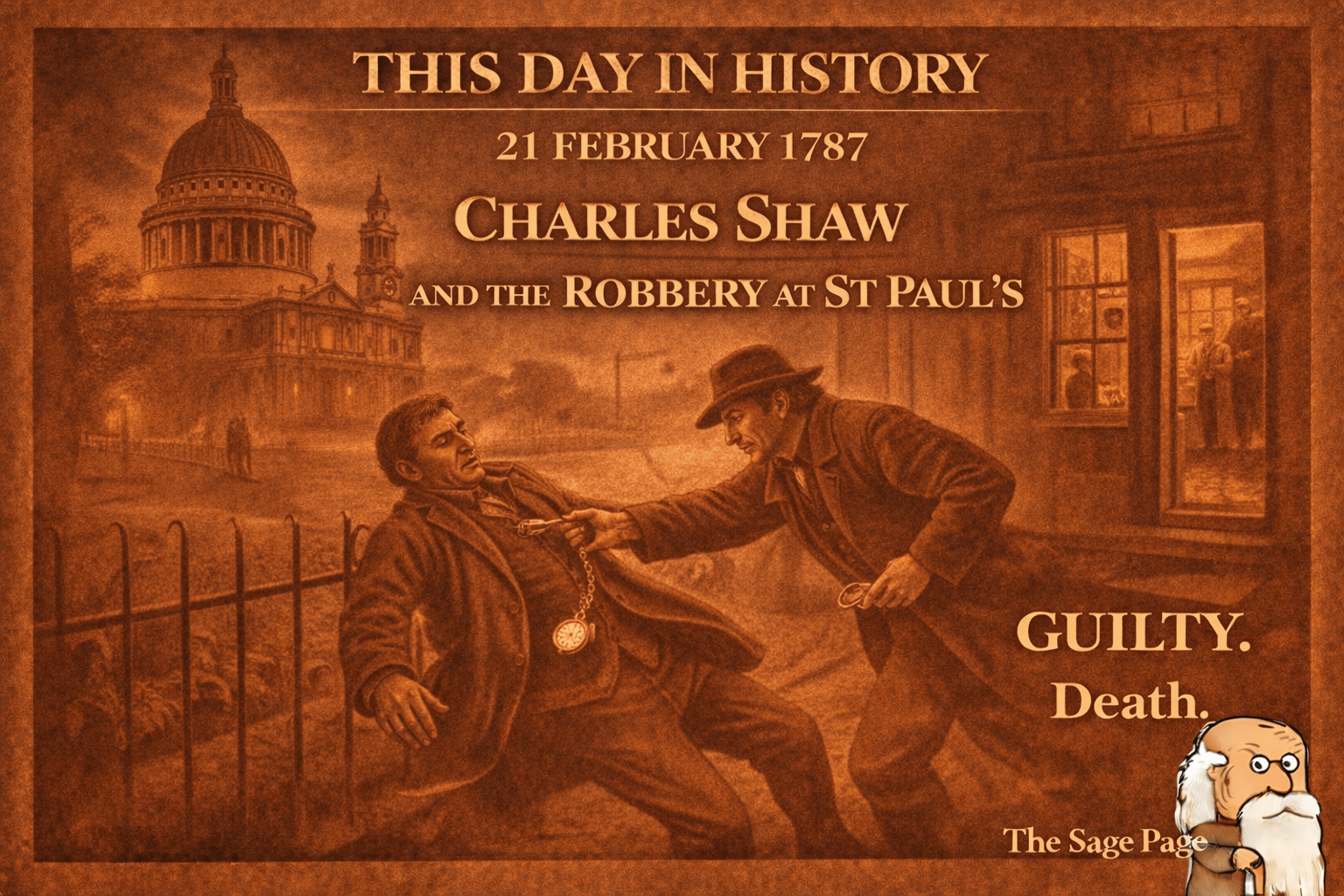
On 21 February 1787, Charles Shaw was tried at the Old Bailey for robbing John Hughes near St Paul’s Churchyard. Accused of tripping him and stealing a silver watch worth forty shillings, Shaw was found guilty of highway robbery and executed at Newgate Prison on 26 April 1787.
Tag Archives: History
This Day in History: 20 February 1771 — Richard Mortis and the Moonlight Ambush

On 20 February 1771, Richard Mortis was tried at the Old Bailey for shooting Thomas Parkinson in a moonlit field after a dispute over poaching. Found guilty of willful and malicious shooting, Mortis was sentenced to death and executed on 27 March 1771, reflecting the harsh capital laws of Georgian England.
This Day in History: 18 February 1775 — John Smith and the Fatal Return
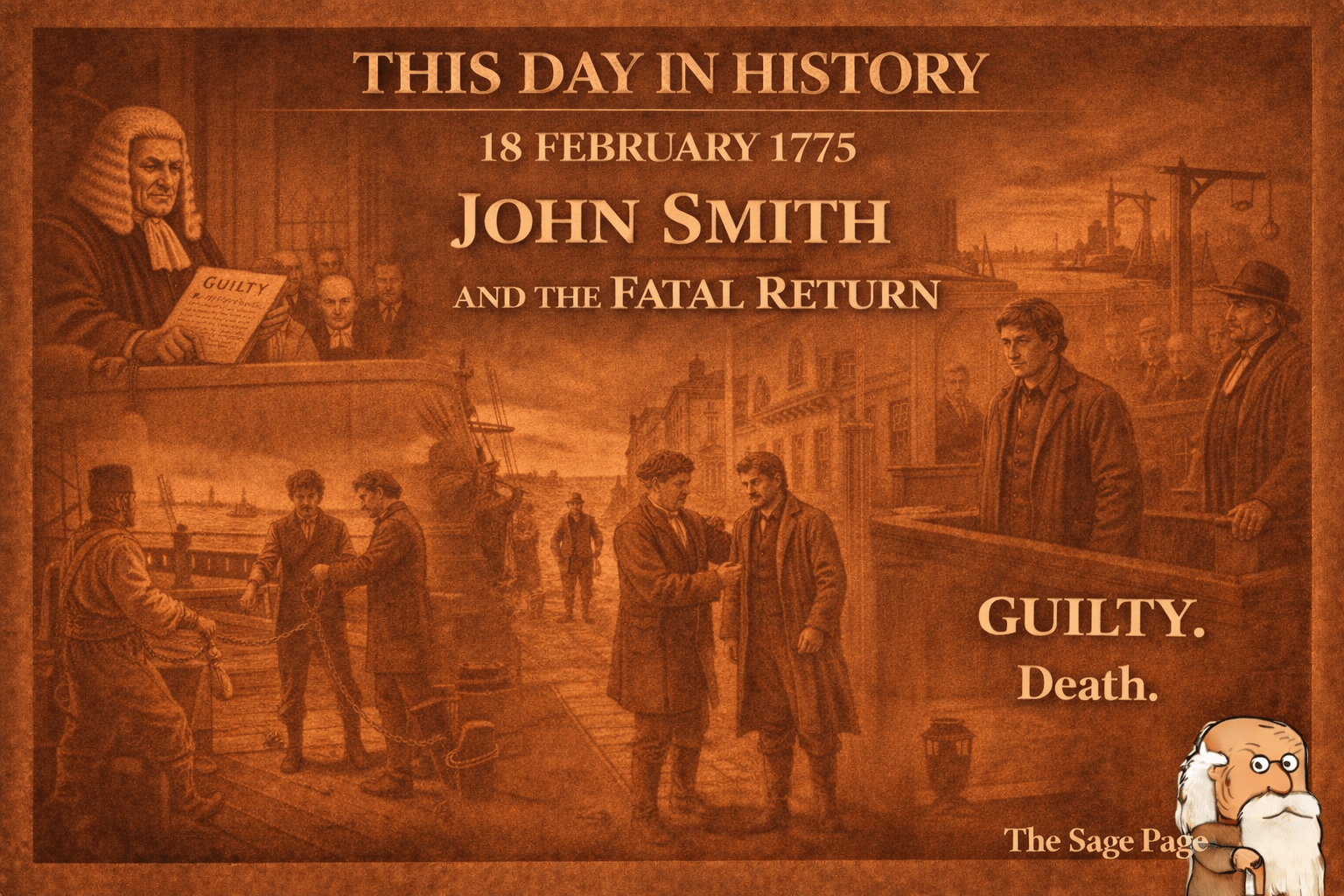
On 18 February 1775, John Smith was tried at the Old Bailey for returning from transportation before his fourteen-year term had expired. Originally sentenced to death for highway robbery and reprieved, he was again condemned to die before being transported once more, on the eve of the American Revolutionary War.
This Day in History: 6 February 1806 — Thomas Crumpton and the Stolen Copper
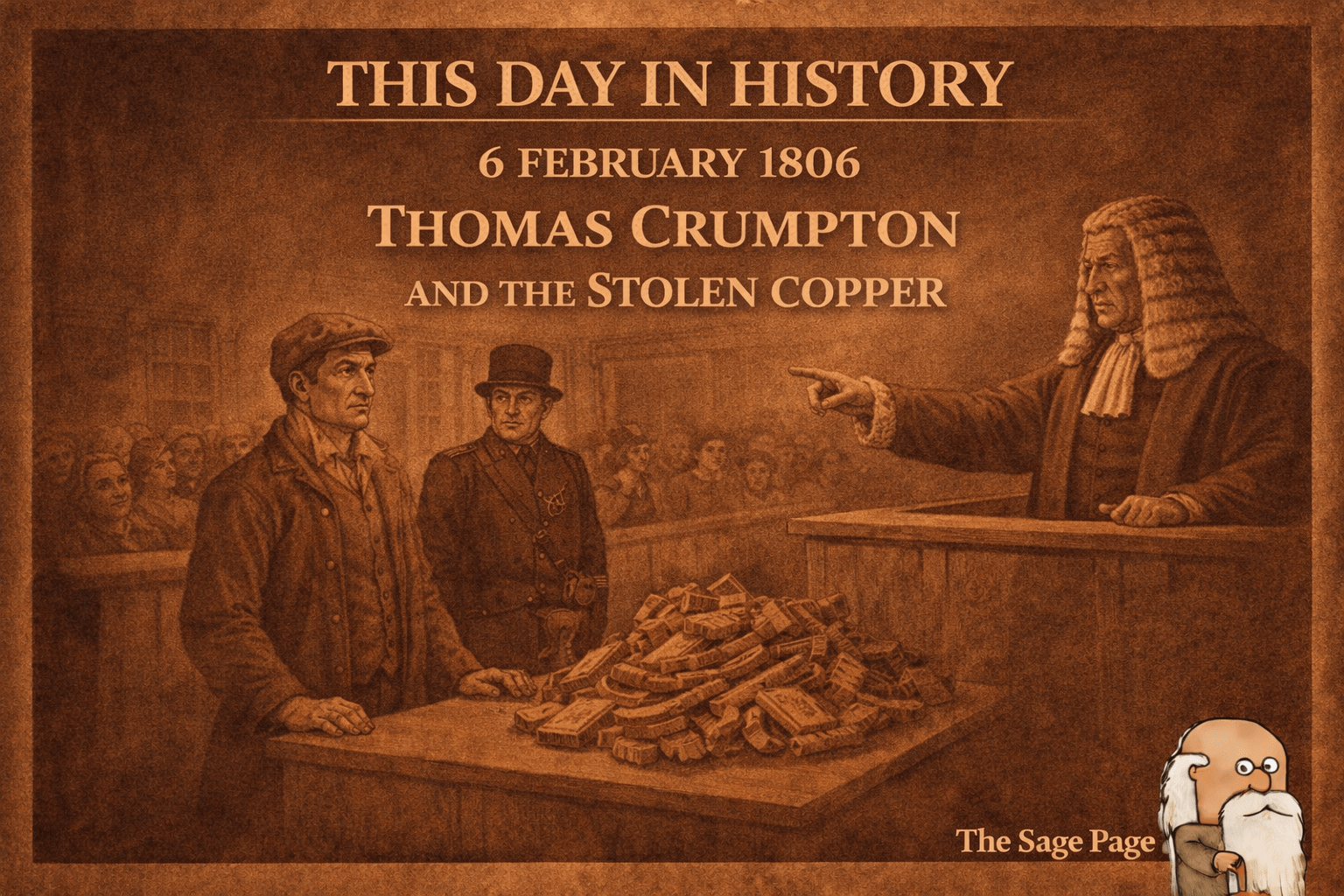
On 6 February 1806, Thomas Crumpton stood trial at the Old Bailey for stealing copper and metal goods worth just over a pound. Found guilty, he was sentenced to twelve months in the House of Correction and fined one shilling, highlighting how minor thefts were punished in Georgian London.
This Day in History: 27 January 1688 — Mary Aubry and the Dismembered Murder
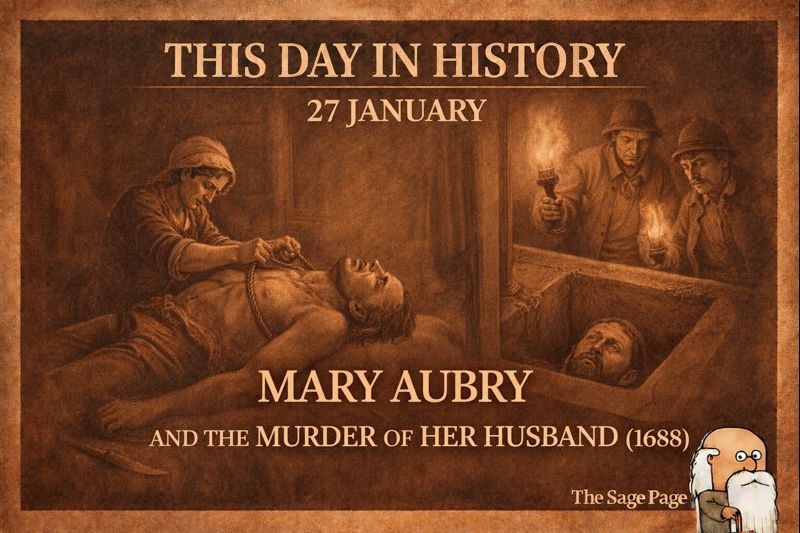
On 27 January 1688, French midwife Mary Aubry murdered her abusive husband in London and dismembered his body. Tried at the Old Bailey on 22 February, she pleaded guilty and was sentenced to burning at the stake, carried out at Leicester Fields on 2 March 1688. Her case became one of early modern England’s most notorious.
This Day in History: 17 January 1681 — Elizabeth Wigenton and the Murder of Her Apprentice
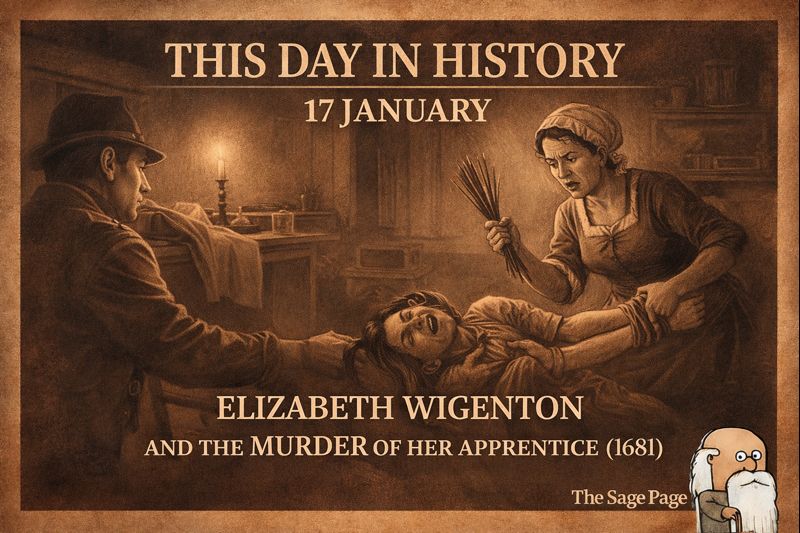
On 17 January 1681, Elizabeth Wigenton, a coat-maker of Ratcliff Parish, was tried at the Old Bailey for the wilful murder of her thirteen-year-old apprentice. After binding and beating the girl so violently that she died, Wigenton was found guilty of murder. This case reveals the brutal realities of apprenticeship and justice in seventeenth-century London.
This Day in History: 18 December 1865 — George Wheeler and the Long Sentence

On 18 December 1865, London clerk George Wheeler pleaded guilty to embezzlement at the Old Bailey. Sentenced to penal servitude, he passed through Newgate, Pentonville and Portland prisons before his release in 1869. His story reveals the realities of Victorian imprisonment beyond the courtroom.
This Day in History: 11 December 1765 — Catherine Wilks and the Printed Cotton

On 11 December 1765, Catherine Wilks was tried at the Old Bailey for stealing printed cotton from a London shop. Found guilty of grand larceny, she faced transportation, the common punishment for such thefts. Her case reveals the risks and realities of women navigating 18th-century London’s commercial world.
This Day in History: 9 December 1789 — The Case of the Missing Goods

On 9 December 1789, Thomas Davis was tried at the Old Bailey for simple larceny. The evidence failed to convince the jury, and he was found Not Guilty. This retelling highlights how even in Georgian London’s strict justice system, doubt could still outweigh suspicion.
This Day in History: 20 November 1782 — The Watch in the Moonlight

On 20 November 1782, John Reynolds stood trial for stealing a silver watch from a passer-by in London. Caught within minutes and tried at the Old Bailey, he was convicted and sentenced to seven years’ transportation. This retelling explores the danger, drama and consequences of petty theft in Georgian London.
 The Sage Page