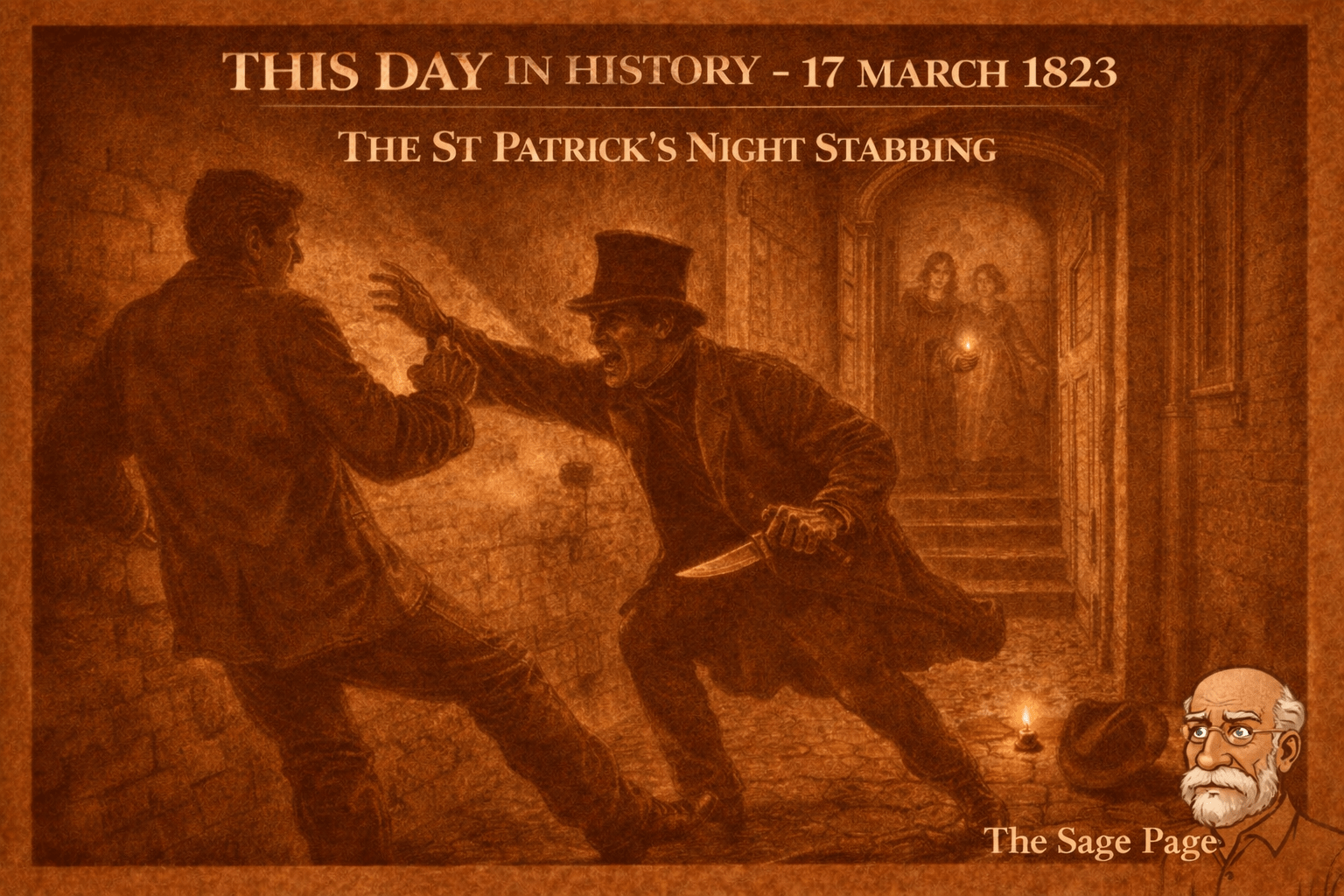
THE ST PATRICK’S NIGHT STABBING On the night of 17th March 1823, as Londoners marked St Patrick’s Day with drink and merriment, a far darker scene unfolded in a narrow passage off Manchester Square. John Leacy, a smith, returned to his lodgings after stepping out to buy a candle. The hallway was dark. As heContinue reading “THIS DAY IN HISTORY – 17 MARCH 1823”
Tag Archives: Old Bailey
This Day in History: 26 February 1872 — The Urinal Robbery of Old Street
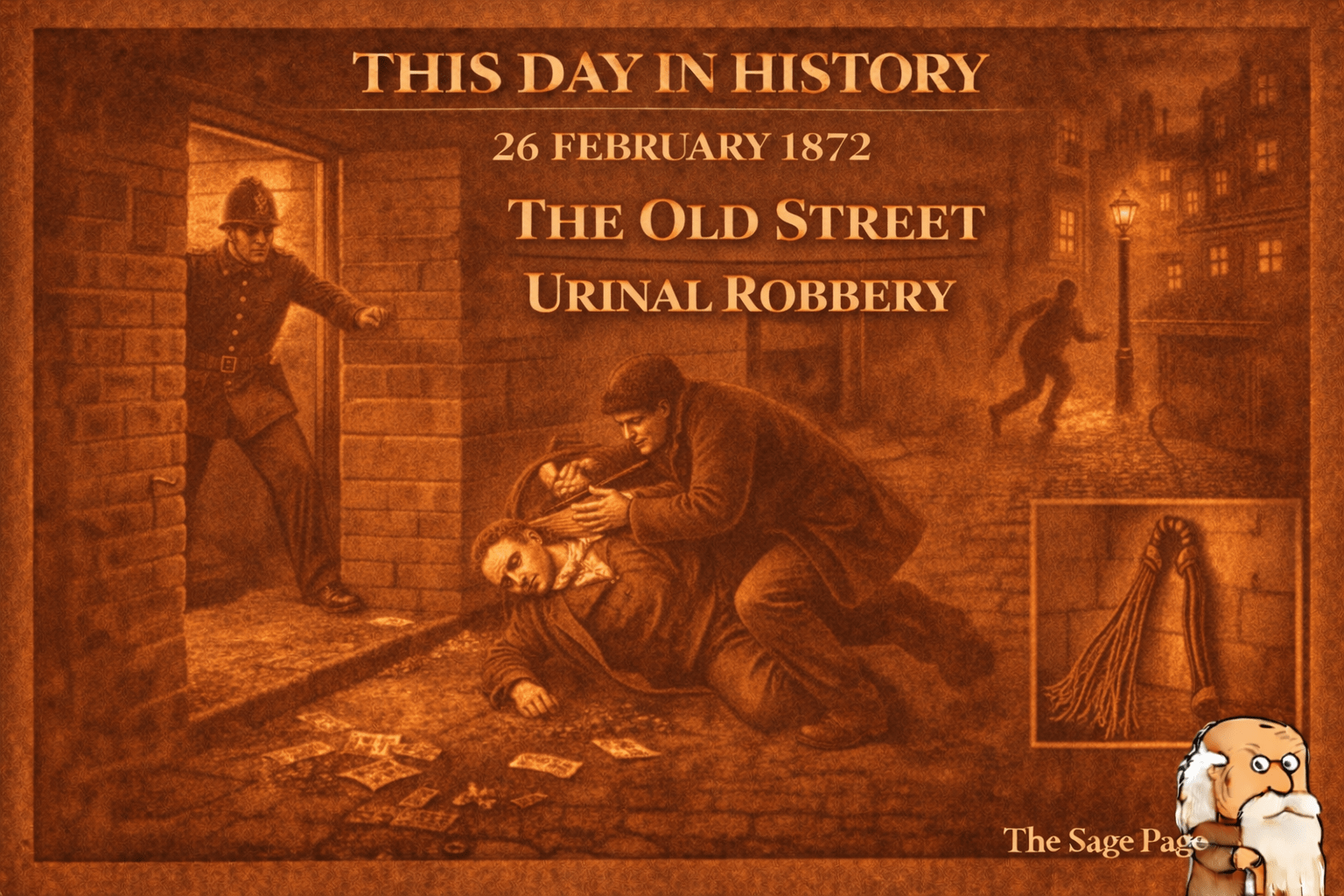
On 26 February 1872, Horace Crosby and George Dowling were convicted at the Central Criminal Court for violently robbing a wicker-worker in an Old Street urinal. Though they stole only three postcards and papers, the assault led to a sentence of eighteen months’ imprisonment and twenty lashes with the cat.
This Day in History: 25 February 1784 — John Smith and the Harley Street Robbery
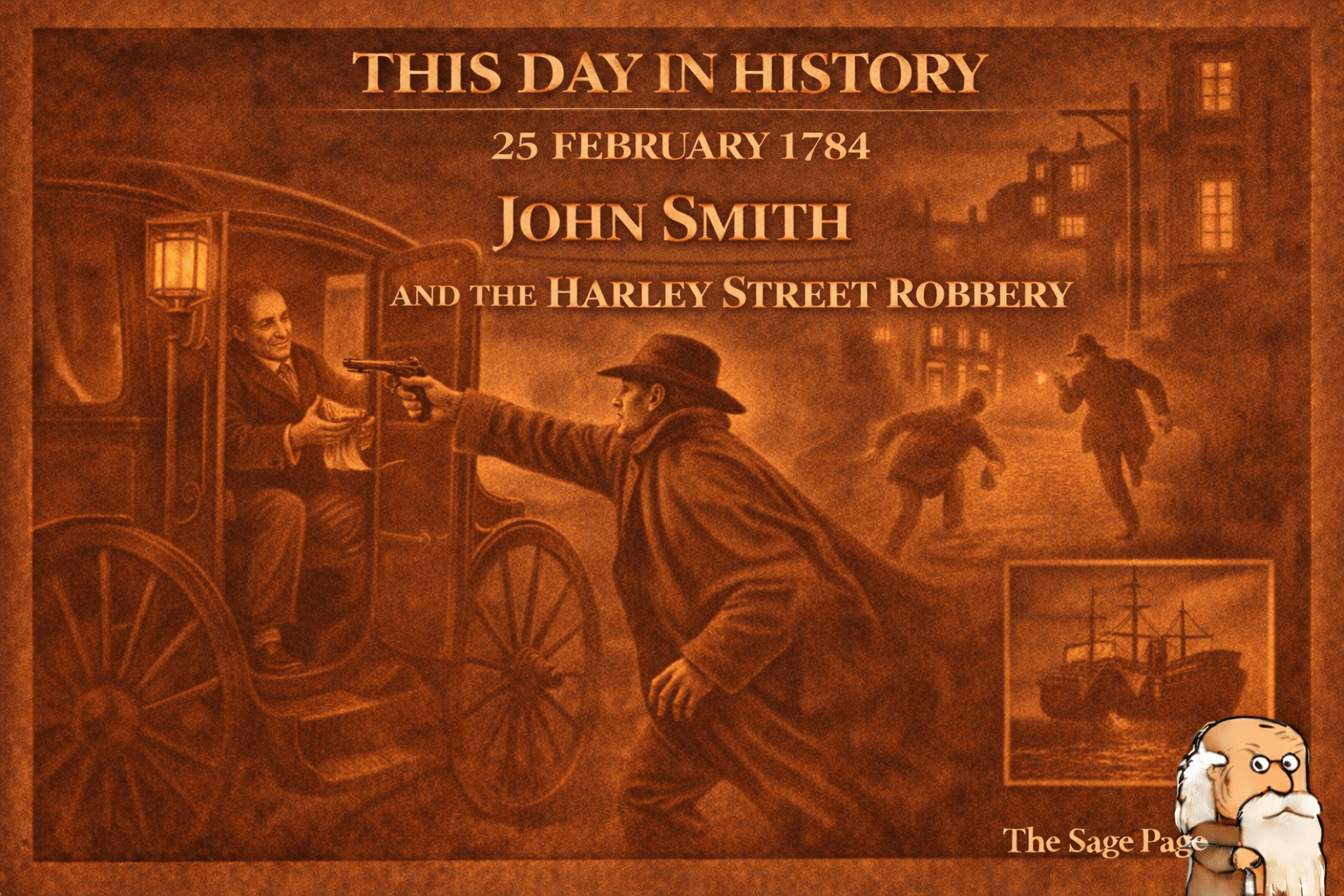
On 25 February 1784, John Smith was convicted at the Old Bailey for robbing Francis Franco at pistol-point in Harley Street. Though sentenced to death for stealing over sixty pounds in gold and a watch, his sentence was commuted, and he was transported to America for seven years.
This Day in History: 24 February 1790 — James East, William Wilson, and the Black Horse Burglary
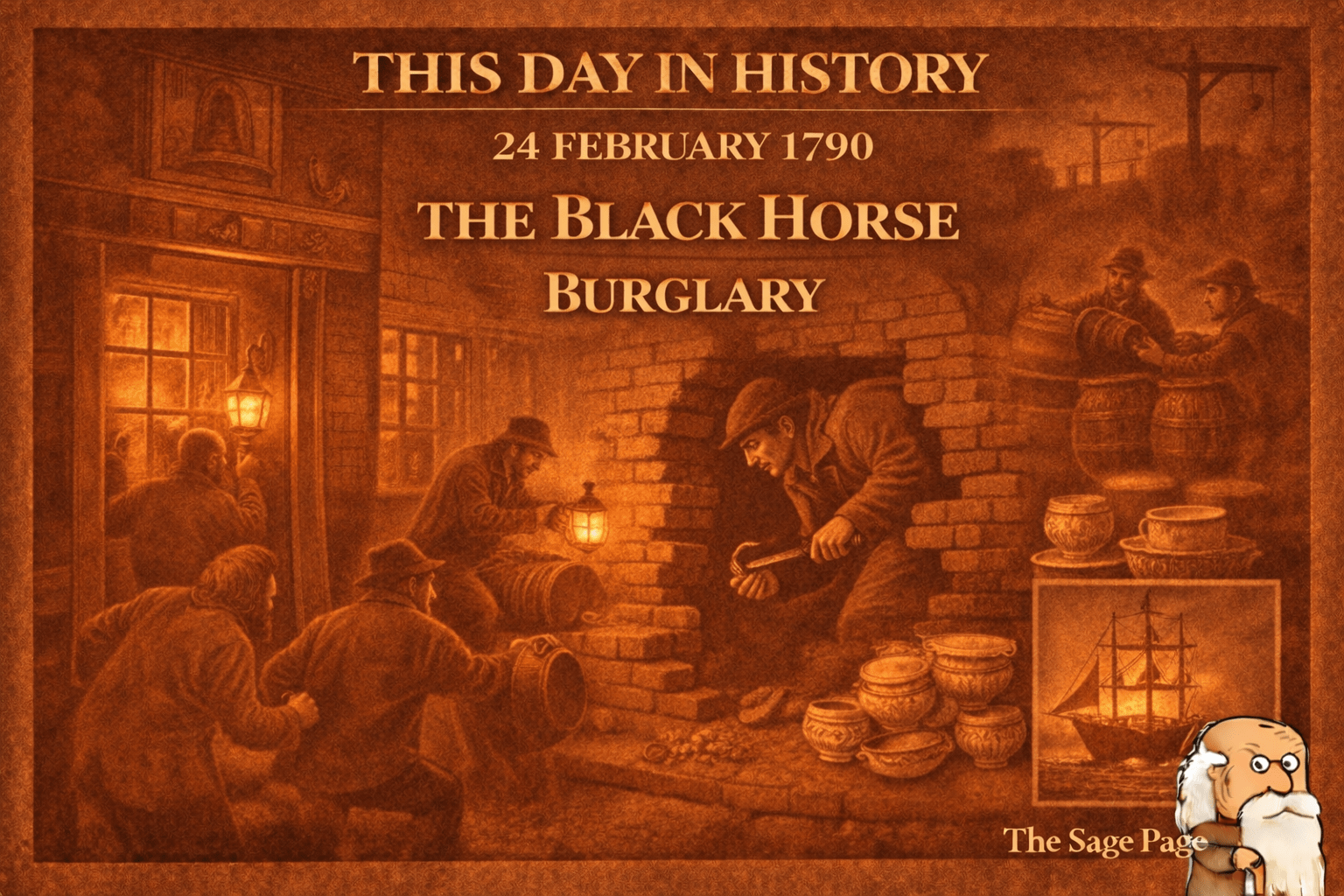
On 24 February 1790, James East and William Wilson were tried at the Old Bailey for a night burglary at the Black Horse in Kingsland Road. After breaking through a wall and stealing casks of spirits and china bowls, both men were sentenced to death, while two young women were transported to New South Wales.
This Day in History: 21 February 1787 — Charles Shaw and the Robbery at St Paul’s
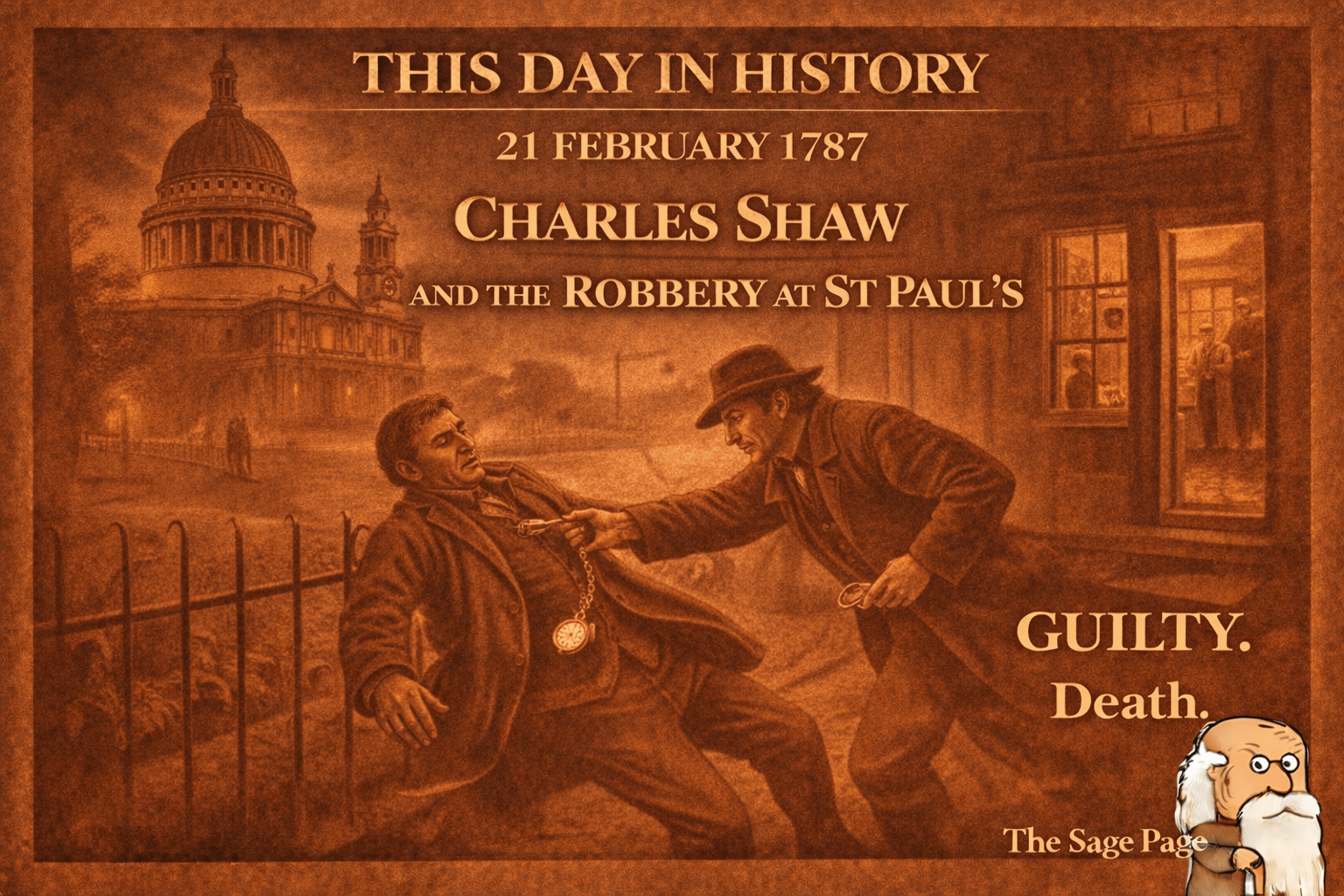
On 21 February 1787, Charles Shaw was tried at the Old Bailey for robbing John Hughes near St Paul’s Churchyard. Accused of tripping him and stealing a silver watch worth forty shillings, Shaw was found guilty of highway robbery and executed at Newgate Prison on 26 April 1787.
This Day in History: 20 February 1771 — Richard Mortis and the Moonlight Ambush

On 20 February 1771, Richard Mortis was tried at the Old Bailey for shooting Thomas Parkinson in a moonlit field after a dispute over poaching. Found guilty of willful and malicious shooting, Mortis was sentenced to death and executed on 27 March 1771, reflecting the harsh capital laws of Georgian England.
This Day in History: 18 February 1775 — John Smith and the Fatal Return
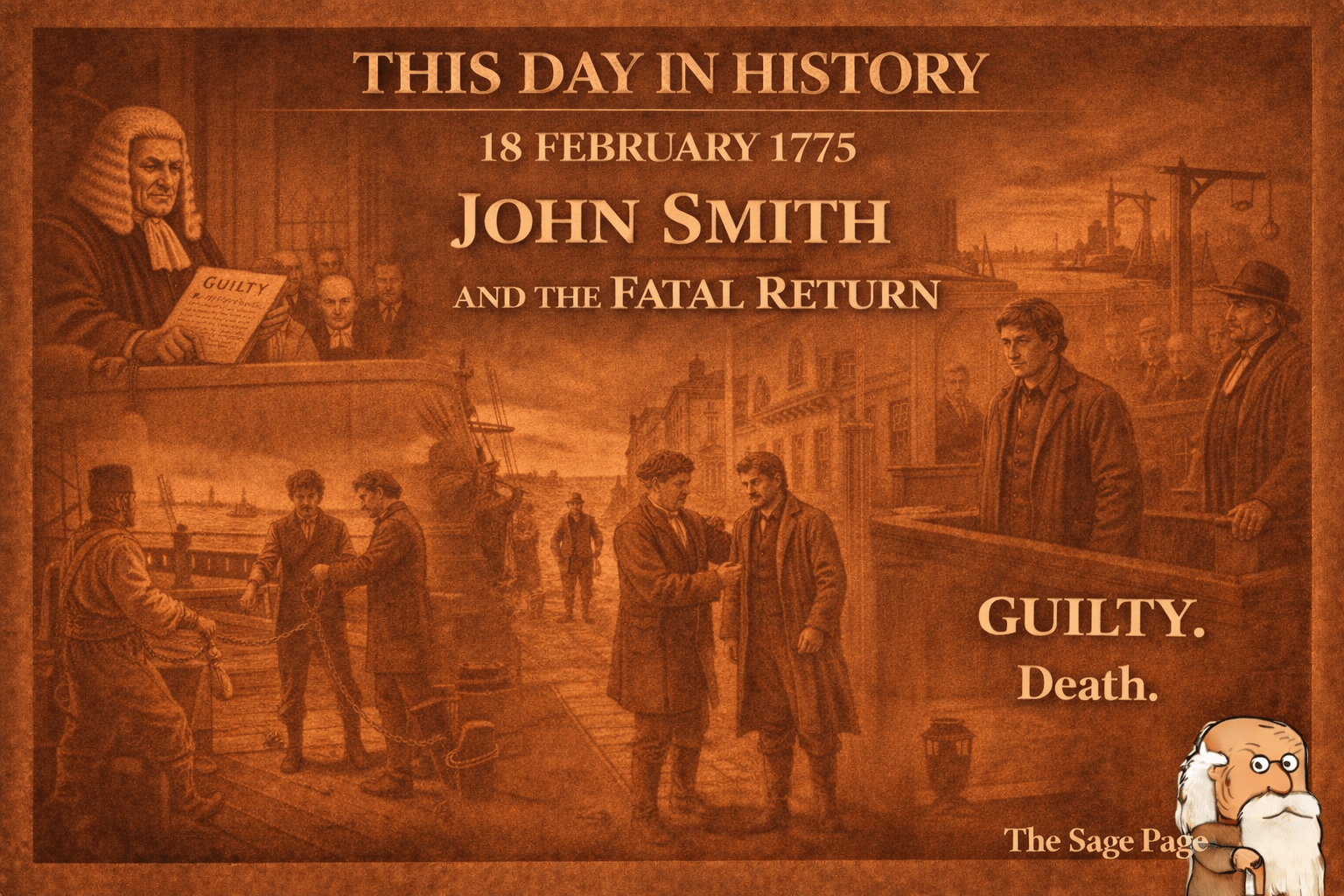
On 18 February 1775, John Smith was tried at the Old Bailey for returning from transportation before his fourteen-year term had expired. Originally sentenced to death for highway robbery and reprieved, he was again condemned to die before being transported once more, on the eve of the American Revolutionary War.
This Day in History: 13 February 1706 — Peter Blake and the Crime of Bigamy
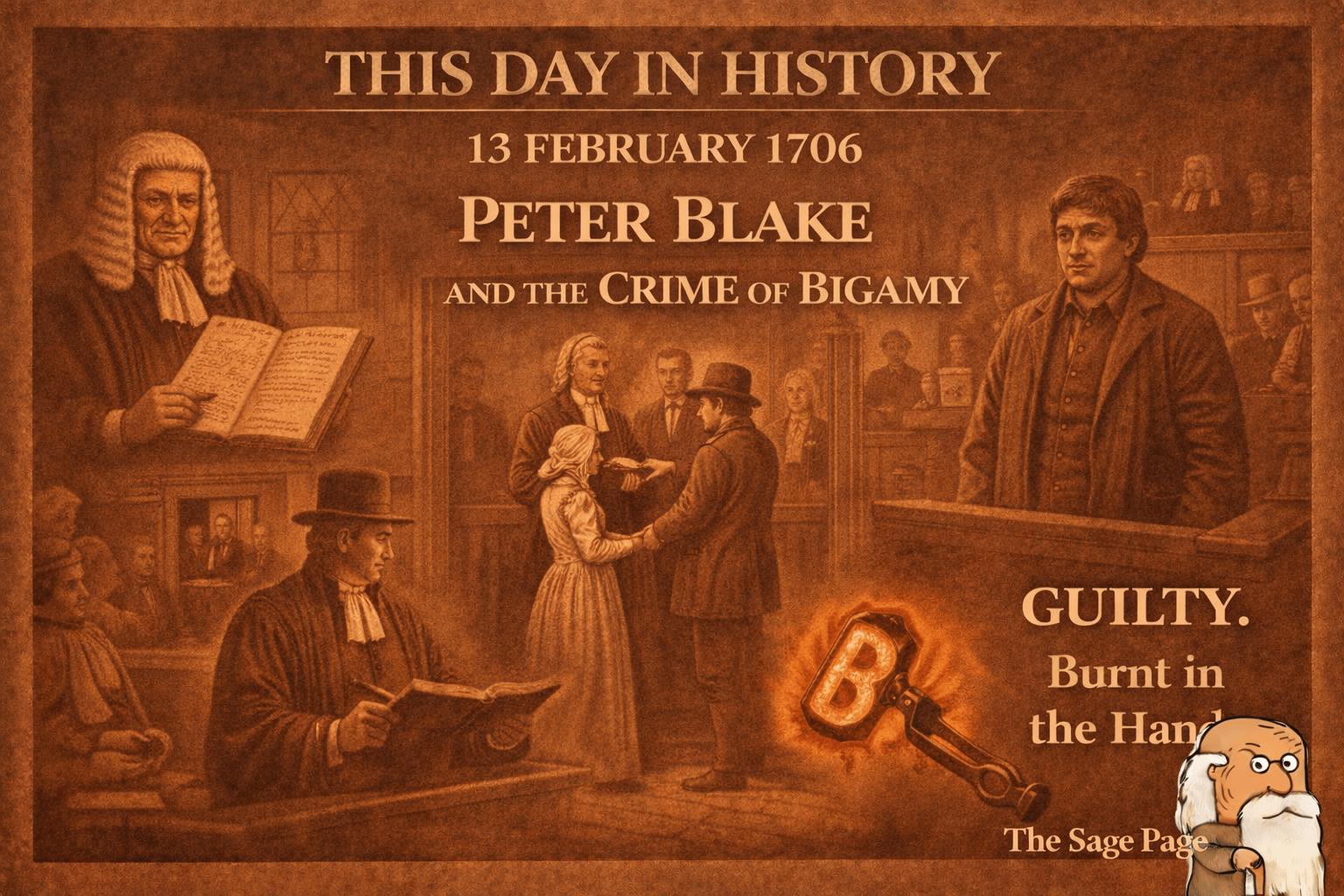
On 13 February 1706, Peter Blake married his first wife in Salisbury. Sixteen years later, he was tried at the Old Bailey for bigamy after marrying again while she was still alive. Found guilty in 1722, he was sentenced to be burnt in the hand, a common branding punishment of the era.
This Day in History: 12 February 1819 — John Barker and the Albion Tavern Theft
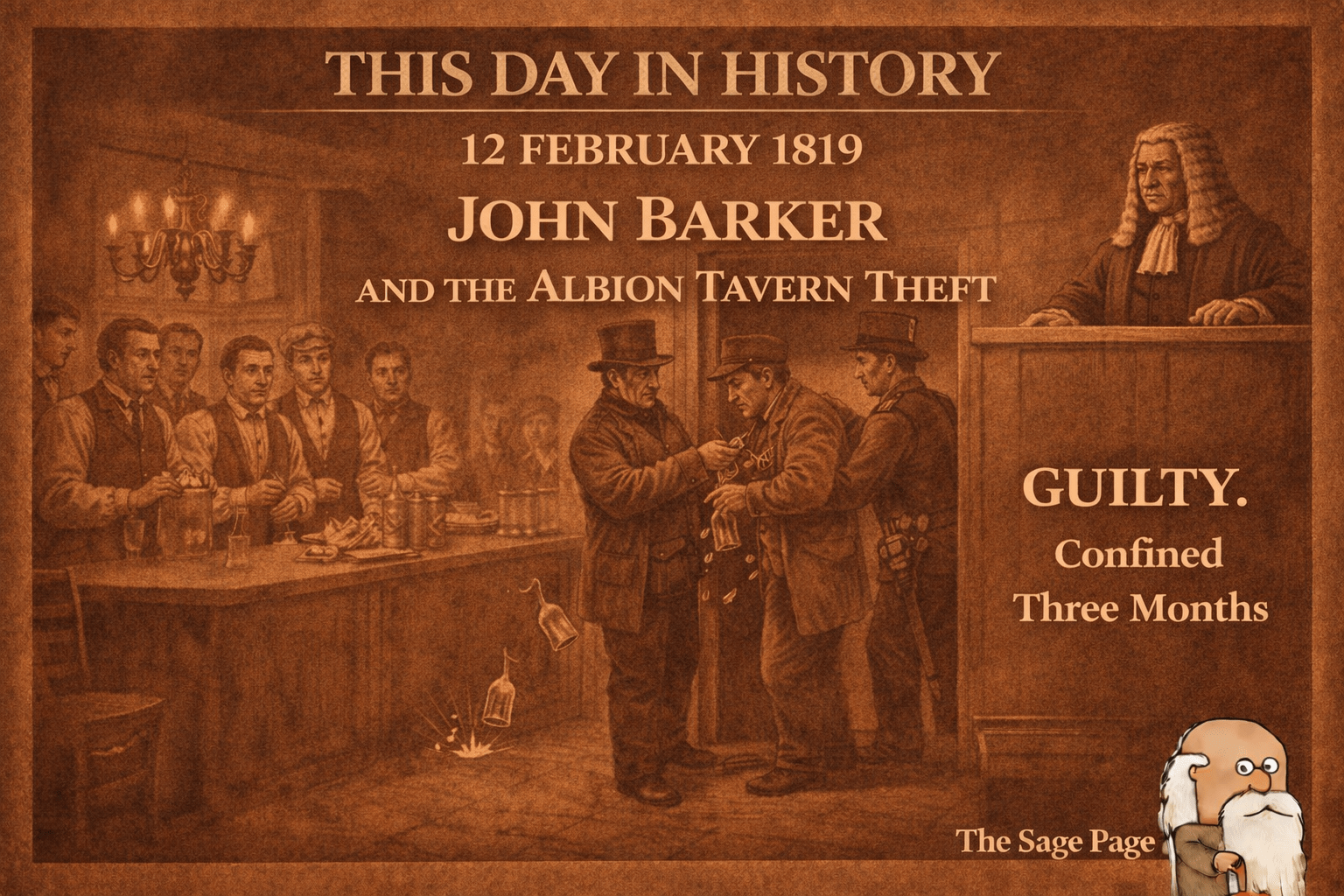
On 12 February 1819, John Barker was tried at the Old Bailey for stealing wine-glasses, a pepper-box and other items from the Albion Tavern in Aldersgate Street. Found guilty after the goods were discovered hidden on him, the 46-year-old waiter was sentenced to three months’ confinement.
This Day in History: 11 February 1818 — George Tomkins and the Three Sixpences
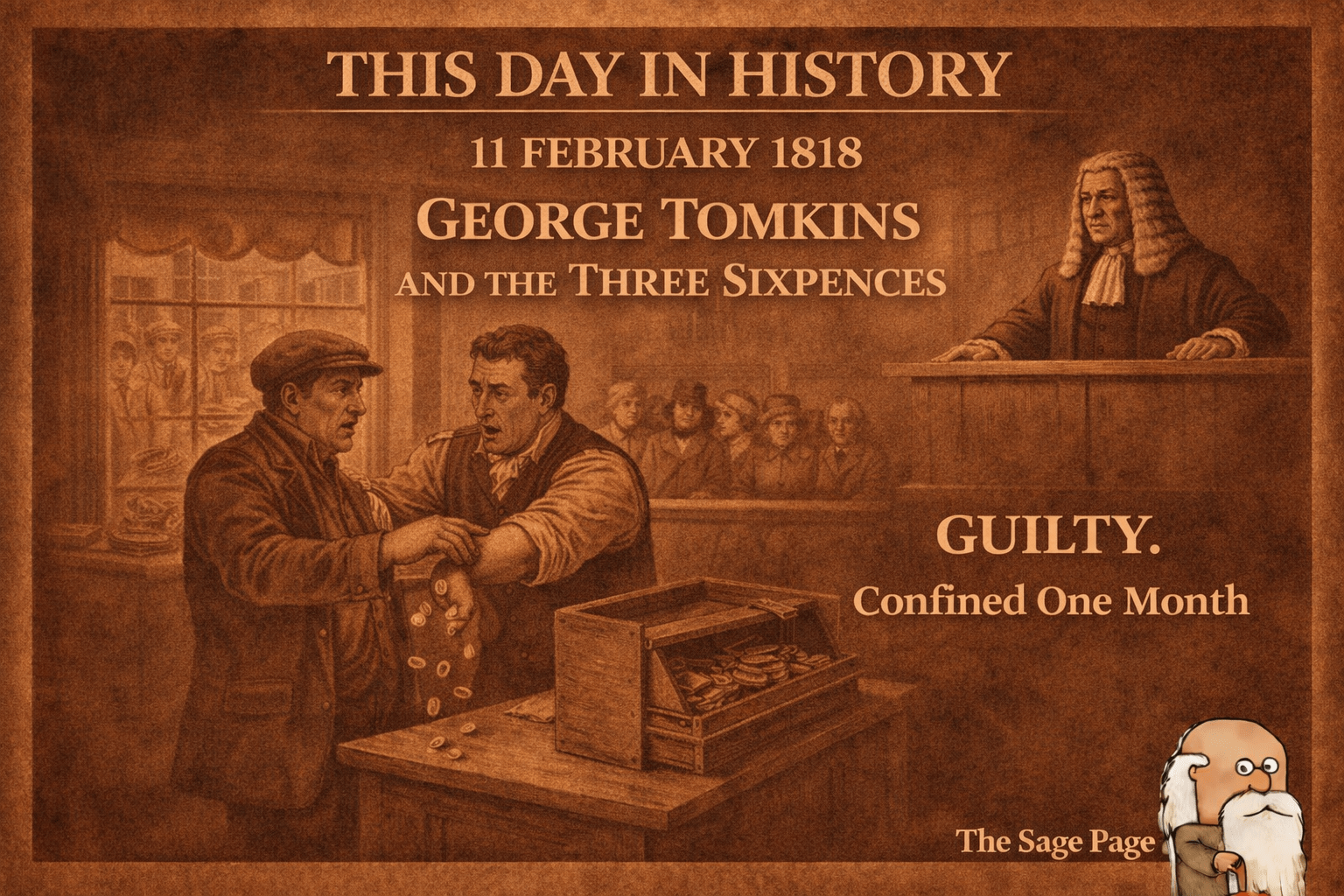
On 11 February 1818, George Tomkins was tried at the Old Bailey for stealing three sixpences from his employers on Holborn Hill. Caught in the act by a shopman and found guilty, the 36-year-old porter was sentenced to one month’s confinement, highlighting how even small thefts were prosecuted in Georgian London.
 The Sage Page