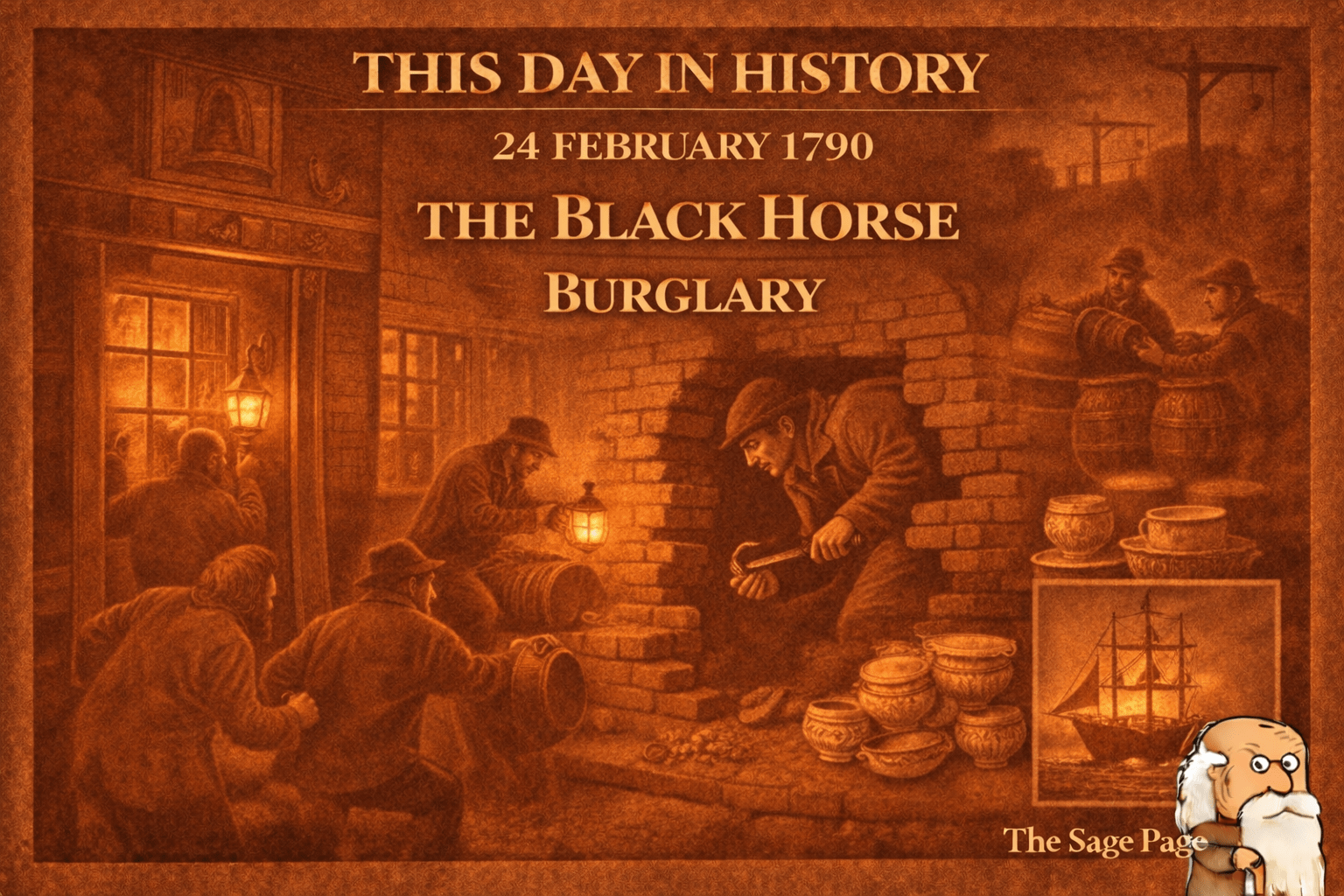
On 24 February 1790, James East and William Wilson were tried at the Old Bailey for a night burglary at the Black Horse in Kingsland Road. After breaking through a wall and stealing casks of spirits and china bowls, both men were sentenced to death, while two young women were transported to New South Wales.
Tag Archives: capital punishment
This Day in History: 20 February 1771 — Richard Mortis and the Moonlight Ambush

On 20 February 1771, Richard Mortis was tried at the Old Bailey for shooting Thomas Parkinson in a moonlit field after a dispute over poaching. Found guilty of willful and malicious shooting, Mortis was sentenced to death and executed on 27 March 1771, reflecting the harsh capital laws of Georgian England.
This Day in History: 18 February 1775 — John Smith and the Fatal Return
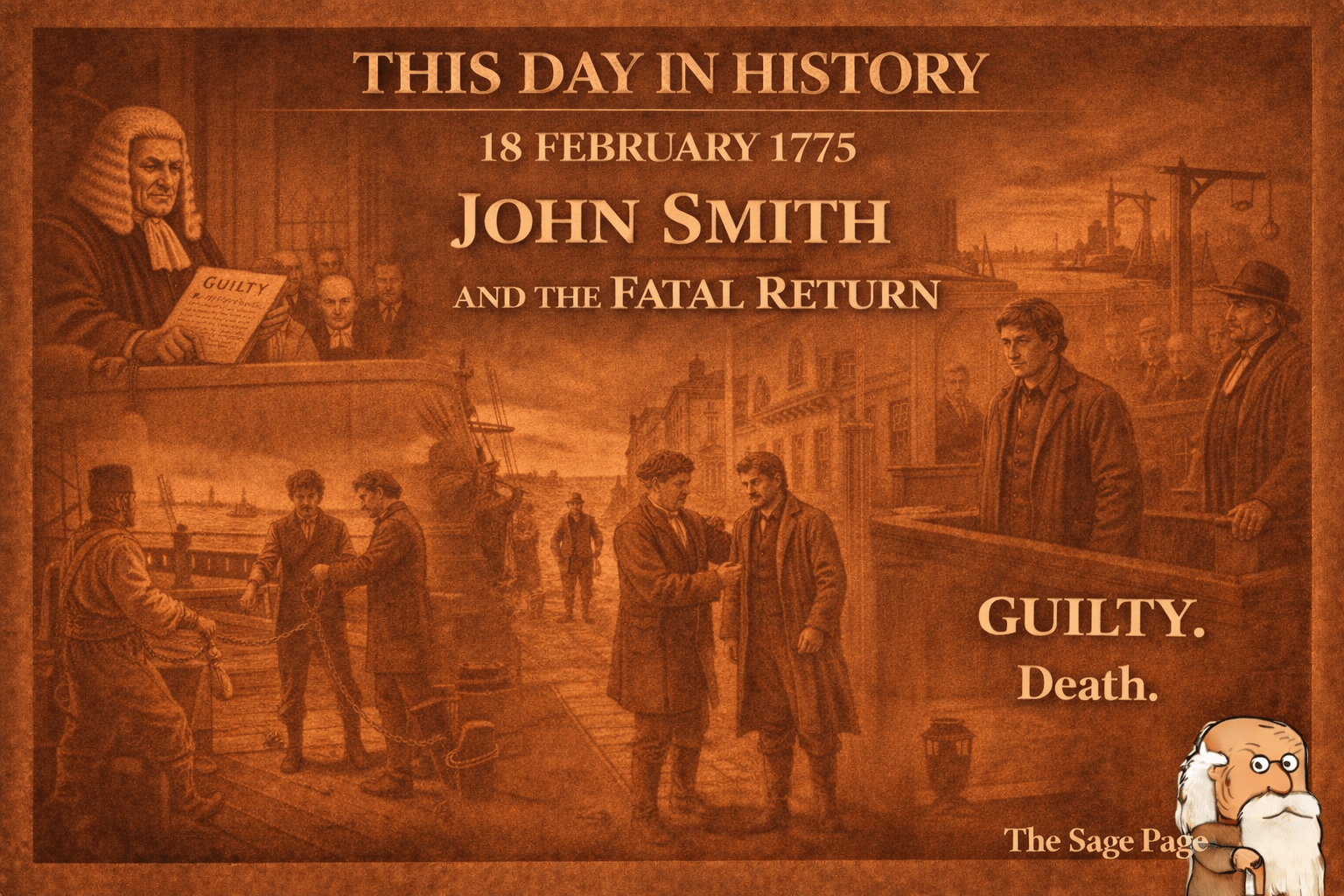
On 18 February 1775, John Smith was tried at the Old Bailey for returning from transportation before his fourteen-year term had expired. Originally sentenced to death for highway robbery and reprieved, he was again condemned to die before being transported once more, on the eve of the American Revolutionary War.
This Day in History: 18 January 1694 — John Edwards and the Broad Cloth Theft
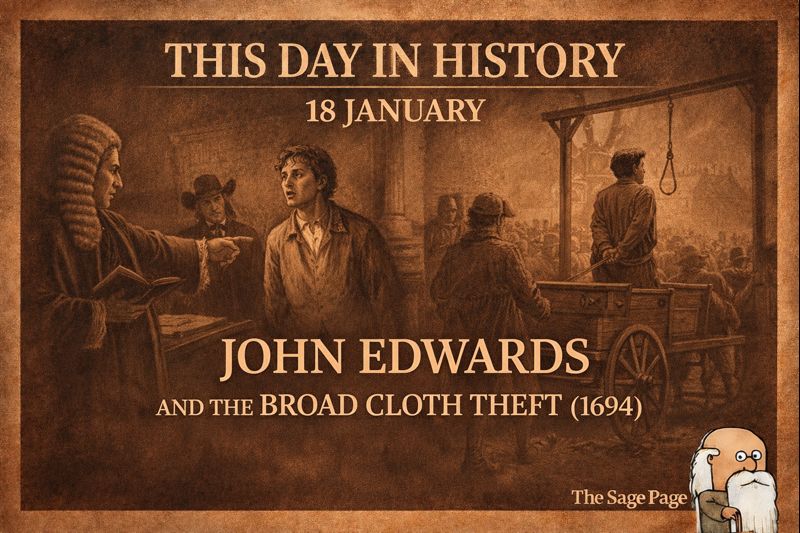
On 18 January 1694, John Edwards, a plasterer of Aldgate, was implicated in the theft of forty yards of white broad cloth. Found guilty of felony, he was sentenced to death. His repentance and execution at Tyburn weeks later are recorded in the Ordinary of Newgate’s account, revealing the harsh realities of seventeenth-century justice.
This Day in History: 20 October — The Highwayman and the Flintlock (1779)
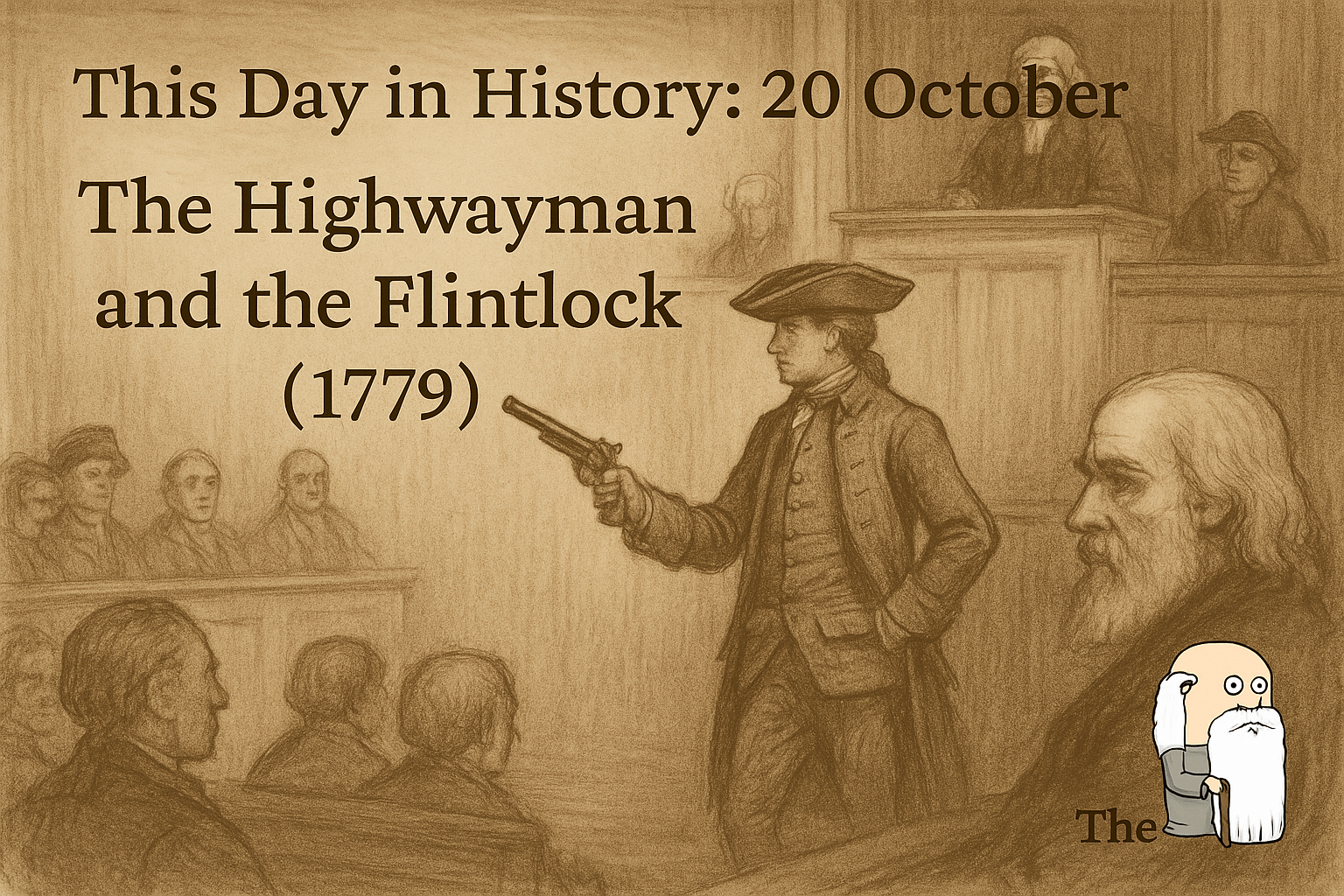
On 20 October 1779, highwayman John Staples robbed a traveller at pistol-point on a London road. Captured soon after and tried at the Old Bailey, he was sentenced to death for highway robbery. His case captures the fading days of England’s flintlock outlaws and the end of the highwayman era.
This Day in History – 13 August 1818
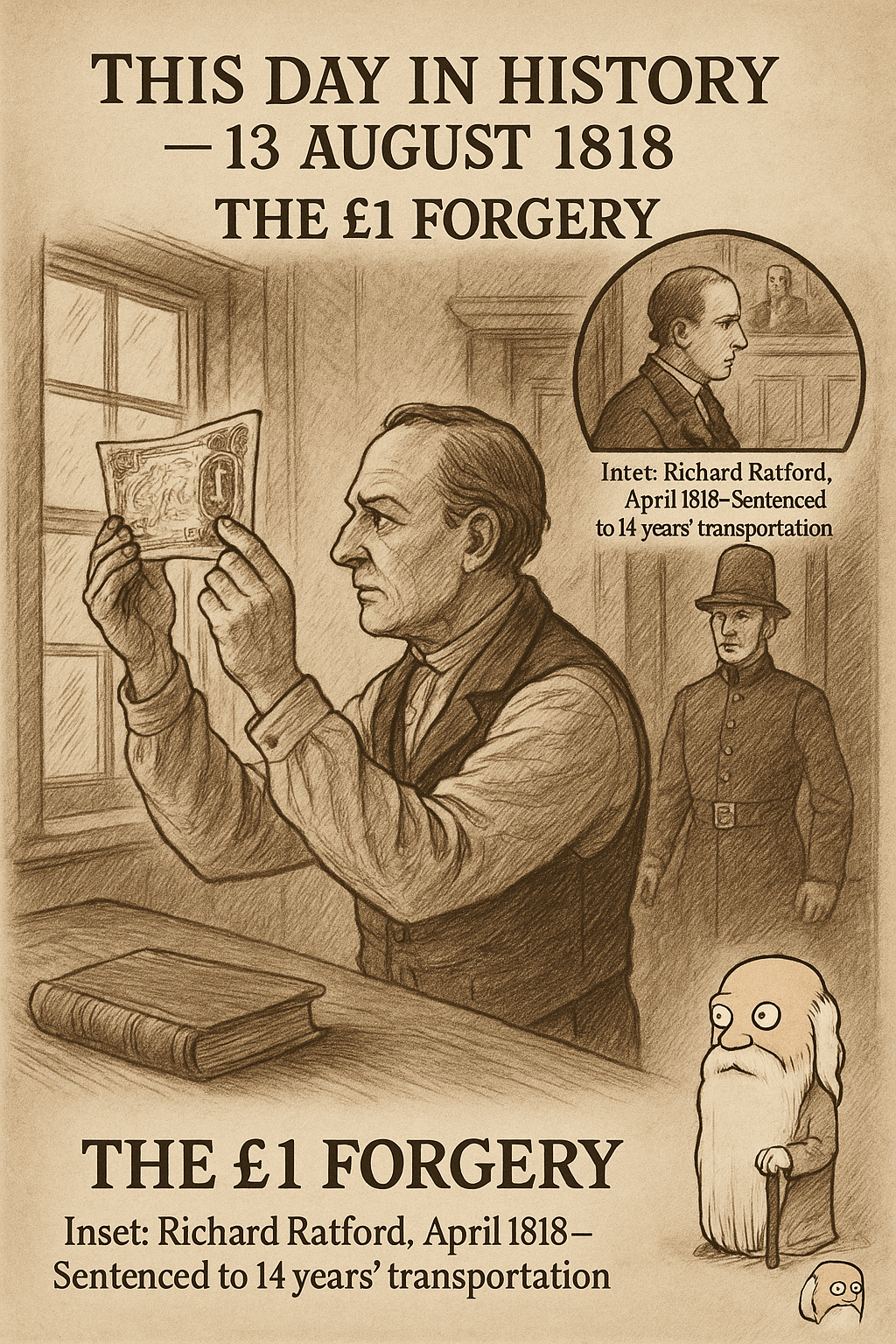
13 August 1818 — Old Bailey: A £1 Bank of England note dated today was passed and found to be forged, leading to a capital trial for uttering. In the same year, Richard Ratford was transported for 14 years for a similar offence.
This Day in History – 5 August 1879
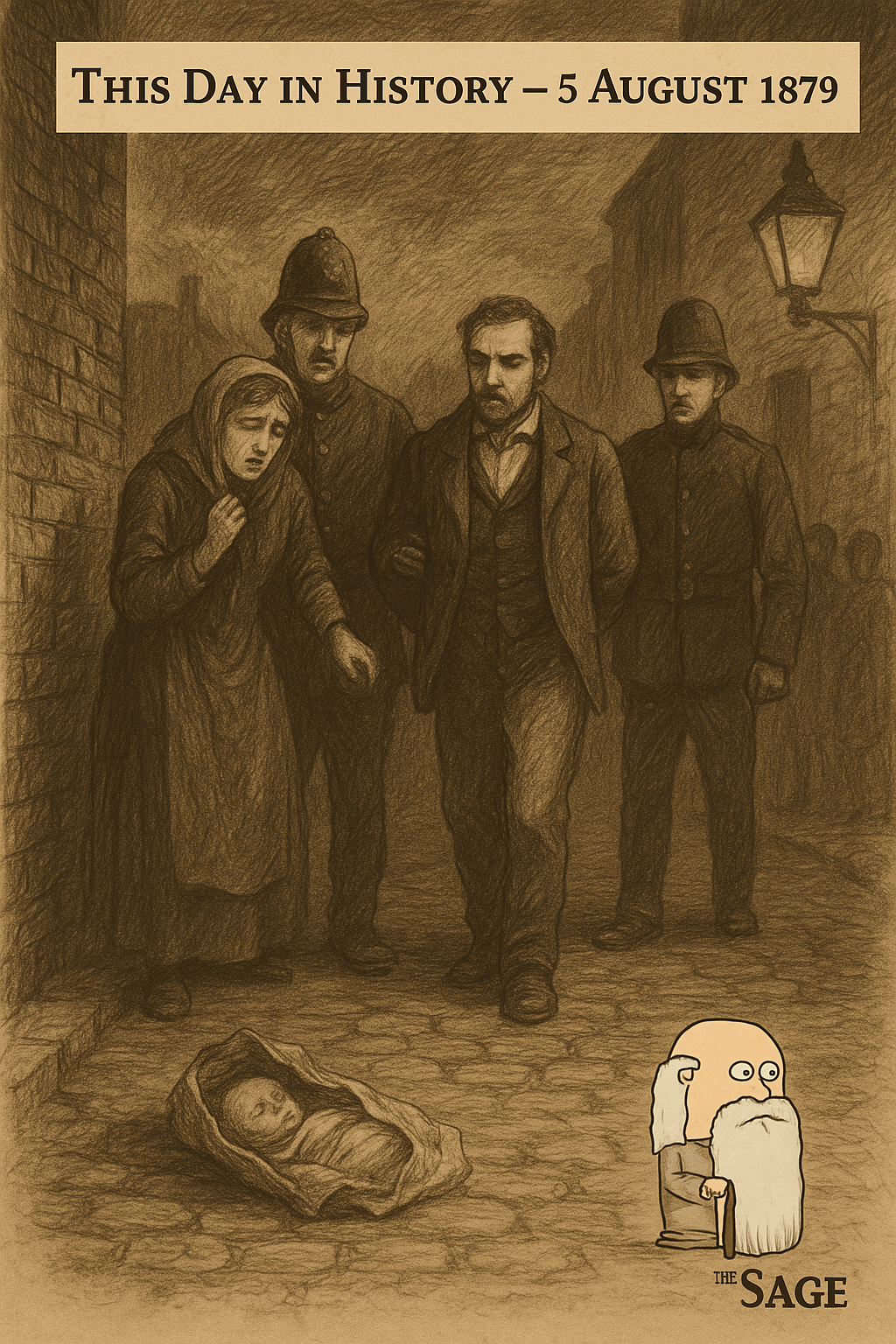
James Dilley & Mary Rainbow — The Tragedy of an Infant, Hidden in Paper (5 August 1879)
Charged with the murder of their unnamed newborn, Rainbow and Dilley were swiftly convicted. The child’s body was found wrapped in paper—the crime and secrecy both haunting in Victorian London.
 The Sage Page