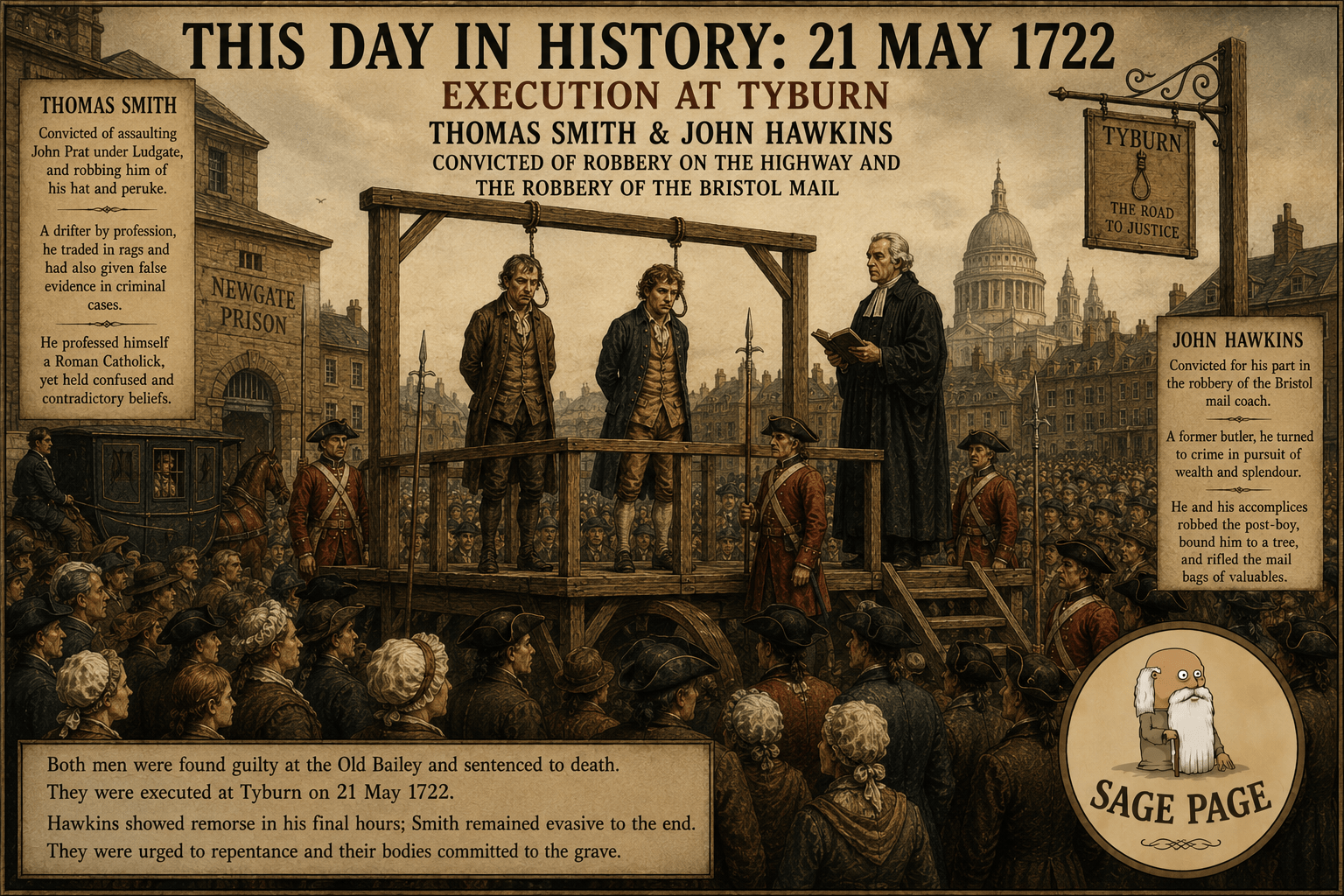
On 21 May 1722, Thomas Smith and John Hawkins were executed at Tyburn for highway robbery. Smith committed a petty theft under Ludgate, while Hawkins took part in a major mail coach robbery. Their cases highlight both opportunistic crime and organised theft in early 18th-century London.
Tag Archives: Tyburn execution
This Day in History – 20 May 1728
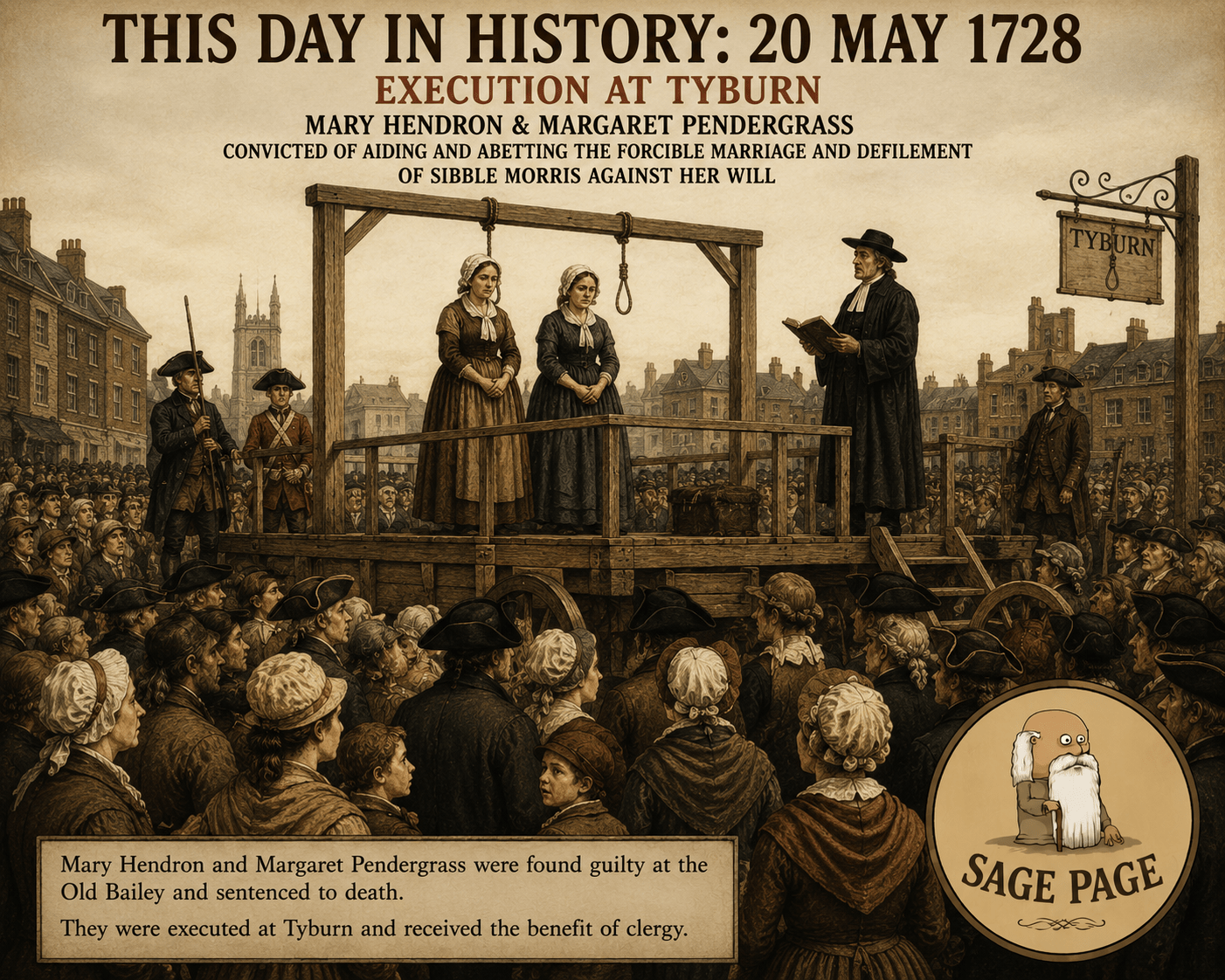
On 20 May 1728, Mary Hendron and Margaret Pendergrass were executed at Tyburn for their role in coercing Sibble Morris into a criminal scheme. While a male accomplice was acquitted, the two women were convicted and hanged, highlighting the harsh and uneven justice of 18th-century England.
This Day in History: 7 May 1740
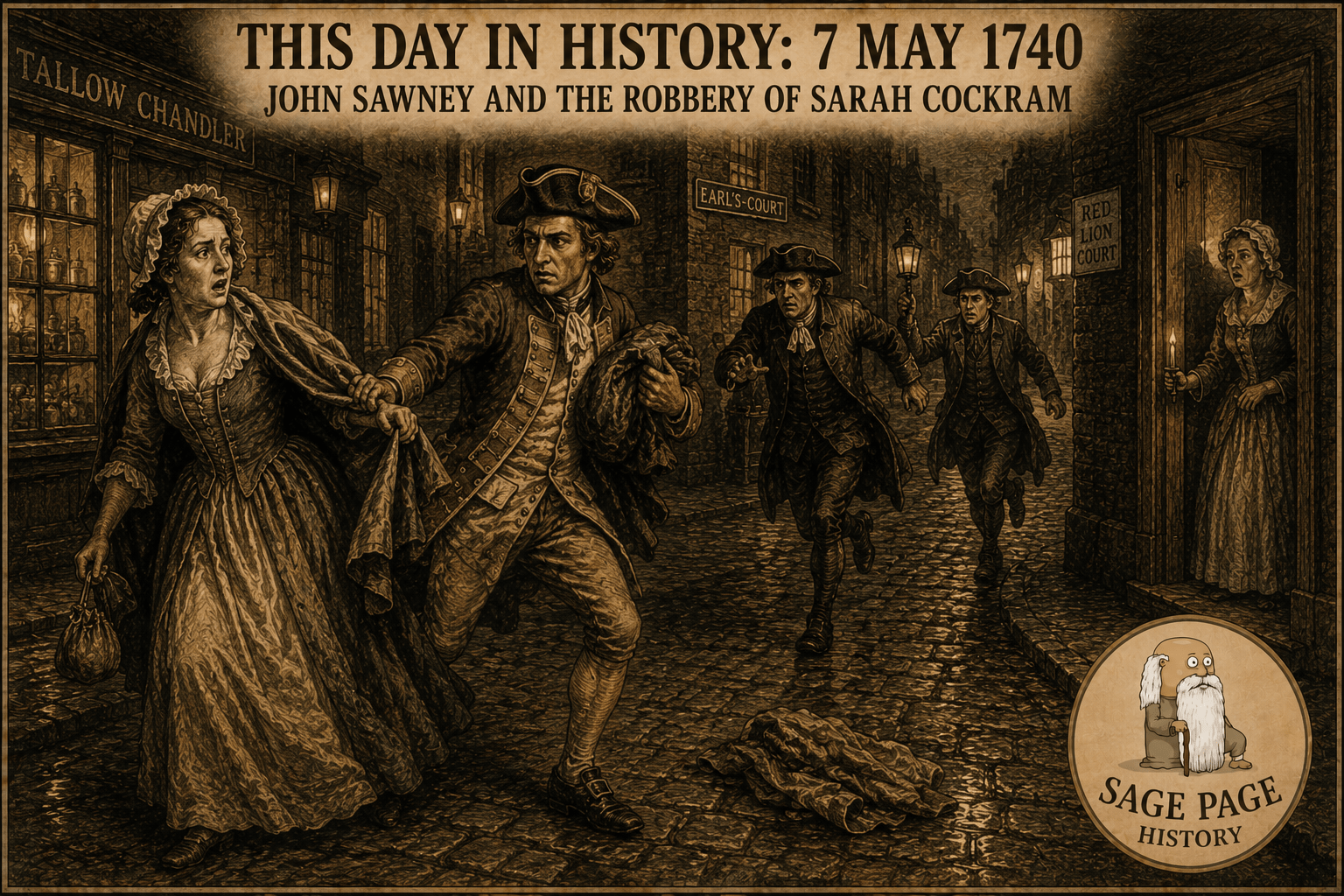
John Sawney was executed on 7 May 1740 for robbing Sarah Cockram of her cloak in Drury Lane. A former sailor turned soldier, his life spiralled into crime and drink. Captured moments after the theft, he was convicted and sentenced to death in a stark example of 18th-century justice
This Day in History: 25 April 1746
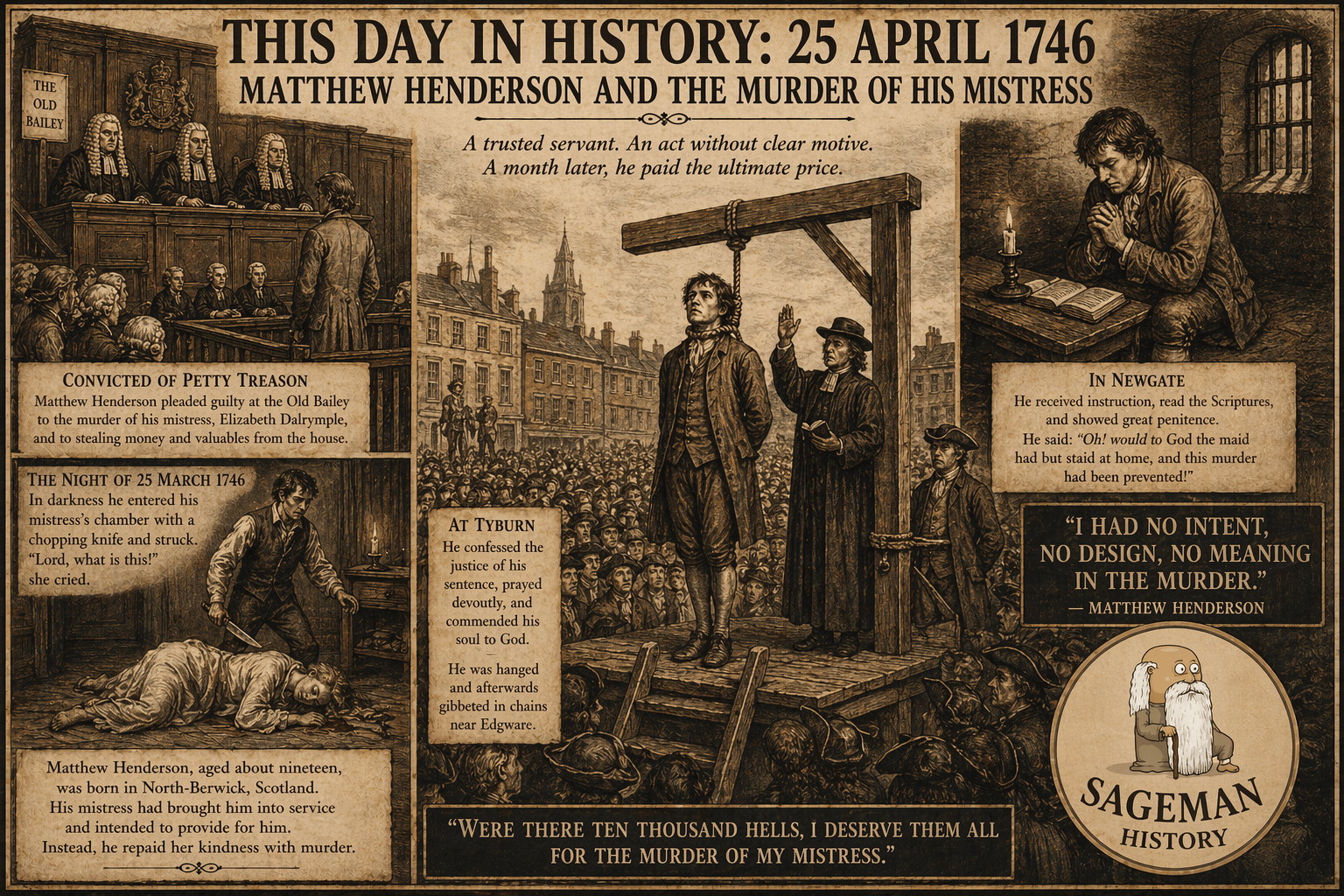
On 25 April 1746, nineteen-year-old servant Matthew Henderson was executed for murdering his mistress, Elizabeth Dalrymple. His confession shocked London: he claimed he had no clear motive, only a sudden temptation that led to one of the Old Bailey’s most disturbing domestic murders.
This Day in History – 28 February 1750
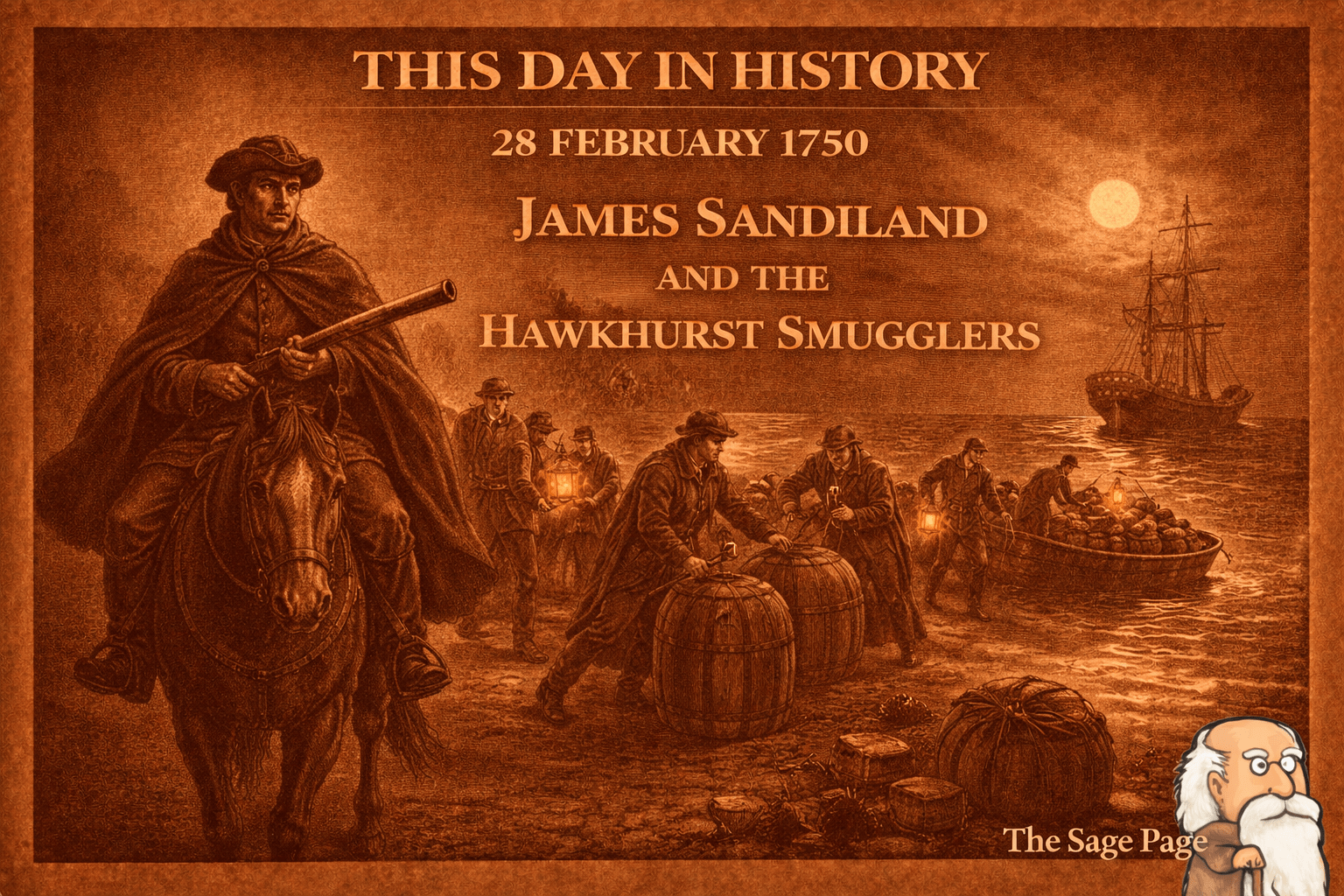
On 28 February 1750, James Sandiland was convicted at the Old Bailey for aiding armed smugglers of the Hawkhurst Gang in Kent. Despite claiming to be a respectable butcher, he was sentenced to death and executed at Tyburn for his role in landing untaxed tea and brandy.
This Day in History: 29 January 1695 — Jeane Bates and the Stolen Plate
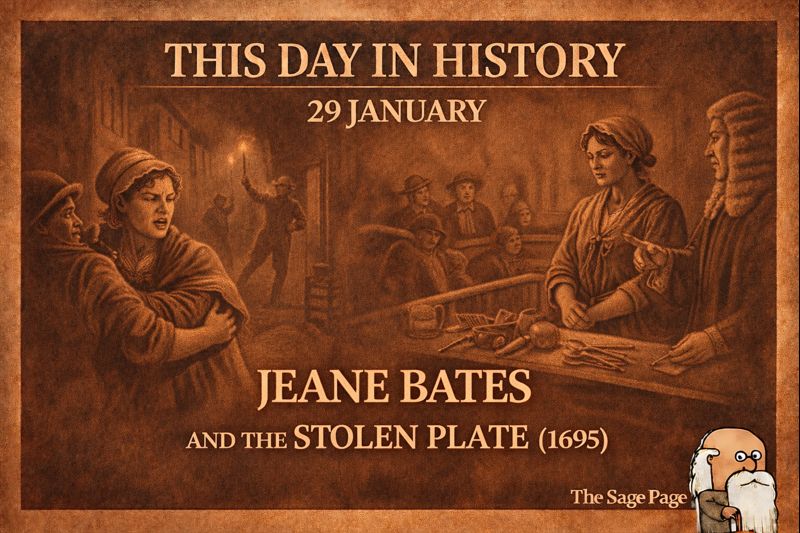
On 29 January 1695, Jeane Bates, using a false name, stole silver plate and household goods from her employer Peter Courtney. Tried at the Old Bailey, she was identified as a repeat offender, found guilty of felony, falsely claimed pregnancy, and was executed at Tyburn. Her case reveals the harsh punishment for servant theft in seventeenth-century London.
This Day in History: 18 January 1694 — John Edwards and the Broad Cloth Theft
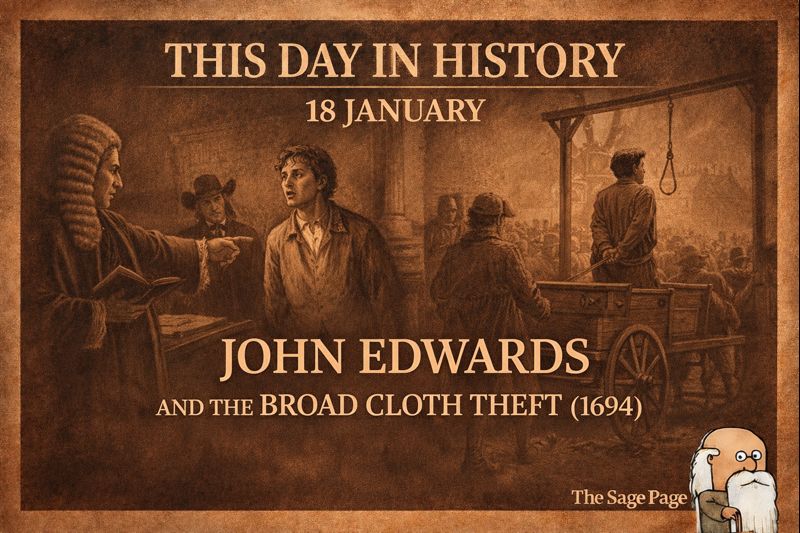
On 18 January 1694, John Edwards, a plasterer of Aldgate, was implicated in the theft of forty yards of white broad cloth. Found guilty of felony, he was sentenced to death. His repentance and execution at Tyburn weeks later are recorded in the Ordinary of Newgate’s account, revealing the harsh realities of seventeenth-century justice.
This Day in History: 21 October — The Gentleman of the Road (1772)

On 21 October 1772, highwayman Henry Duffill stood trial for robbing travellers on a London road with pistol and politeness. He was tried at the Old Bailey and was sentenced to death for highway robbery. His story captures the fading glamour of England’s “gentlemen of the road.”
This Day in History: 20 October — The Highwayman and the Flintlock (1779)
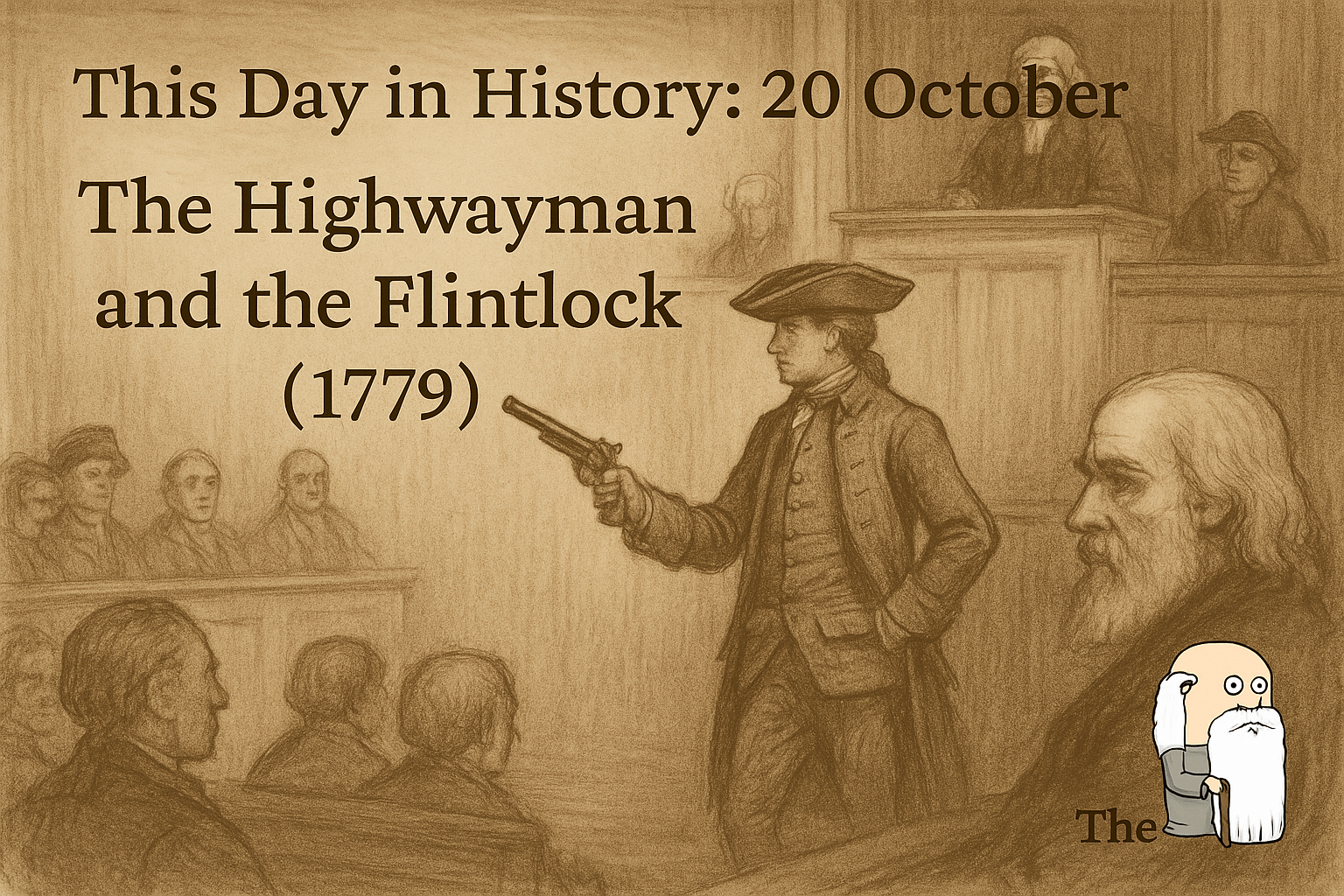
On 20 October 1779, highwayman John Staples robbed a traveller at pistol-point on a London road. Captured soon after and tried at the Old Bailey, he was sentenced to death for highway robbery. His case captures the fading days of England’s flintlock outlaws and the end of the highwayman era.

