
On 5th August 1723, highwaymen William Duce and James Butler were executed at Tyburn. Their remarkable final confessions reveal the workings of organised robbery gangs, betrayals by informers, violent attacks across London and Hampshire, and the personal reflections of two men who knew their criminal lives had reached a fatal end.
Tag Archives: Ordinary of Newgate
This Day in History – 4th August 1749

On 4th August 1749, smuggler Uriah Creed was executed after joining an armed gang landing contraband tea on the Kent coast. Once an honest labourer, he became an outlaw, lived under an alias in Essex, and was finally captured after calmly surrendering, admitting he was “already a dead man.”
This Day in History – 28th July 1721
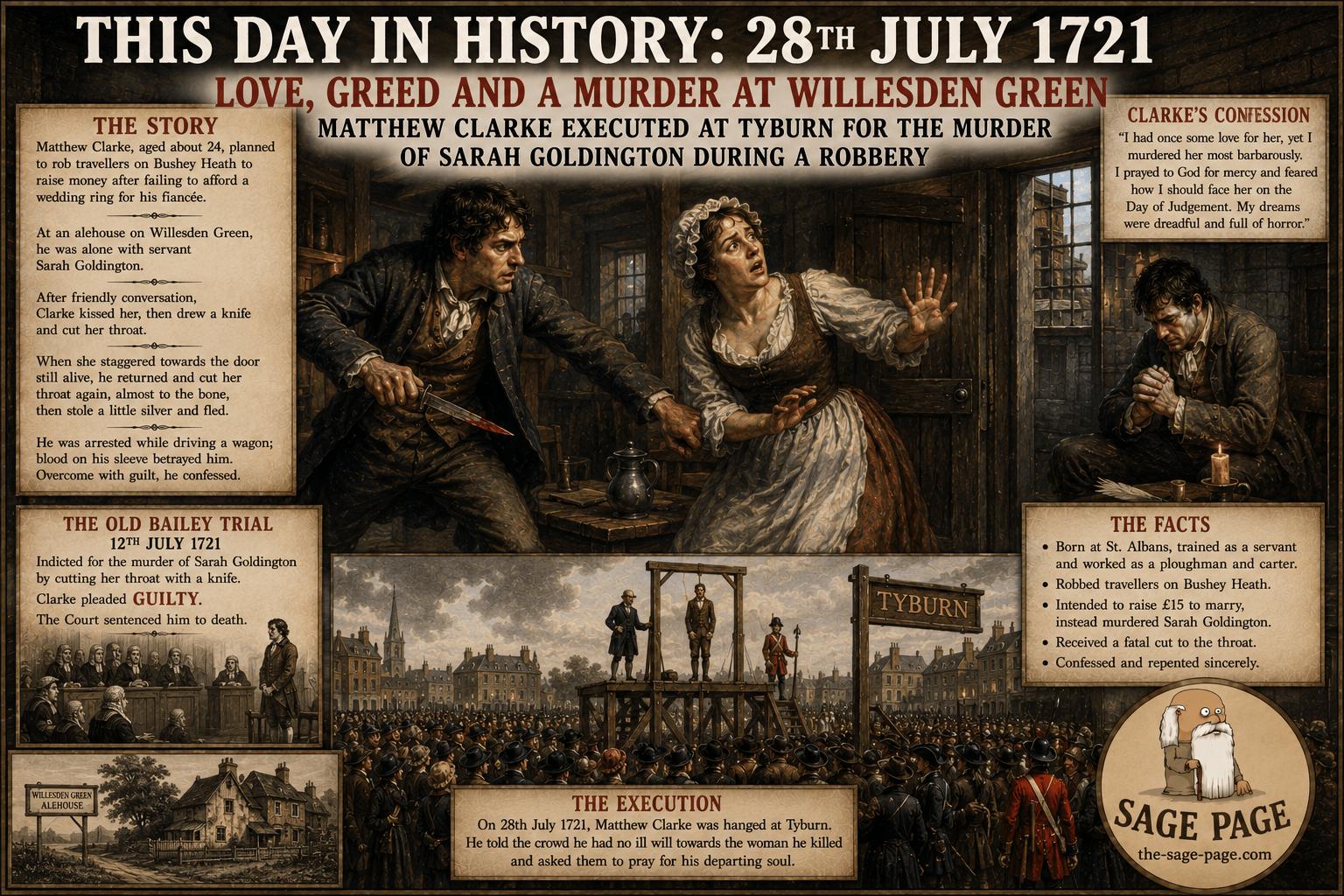
On 28th July 1721, Matthew Clarke was executed for murdering Sarah Goldington during a robbery at Willesden Green. His detailed confession reveals a failed marriage scheme, a robbery planned to raise money, overwhelming remorse, terrifying dreams, and a final plea for others to learn from his tragic and violent downfall.
This Day in History – 24th July 1685
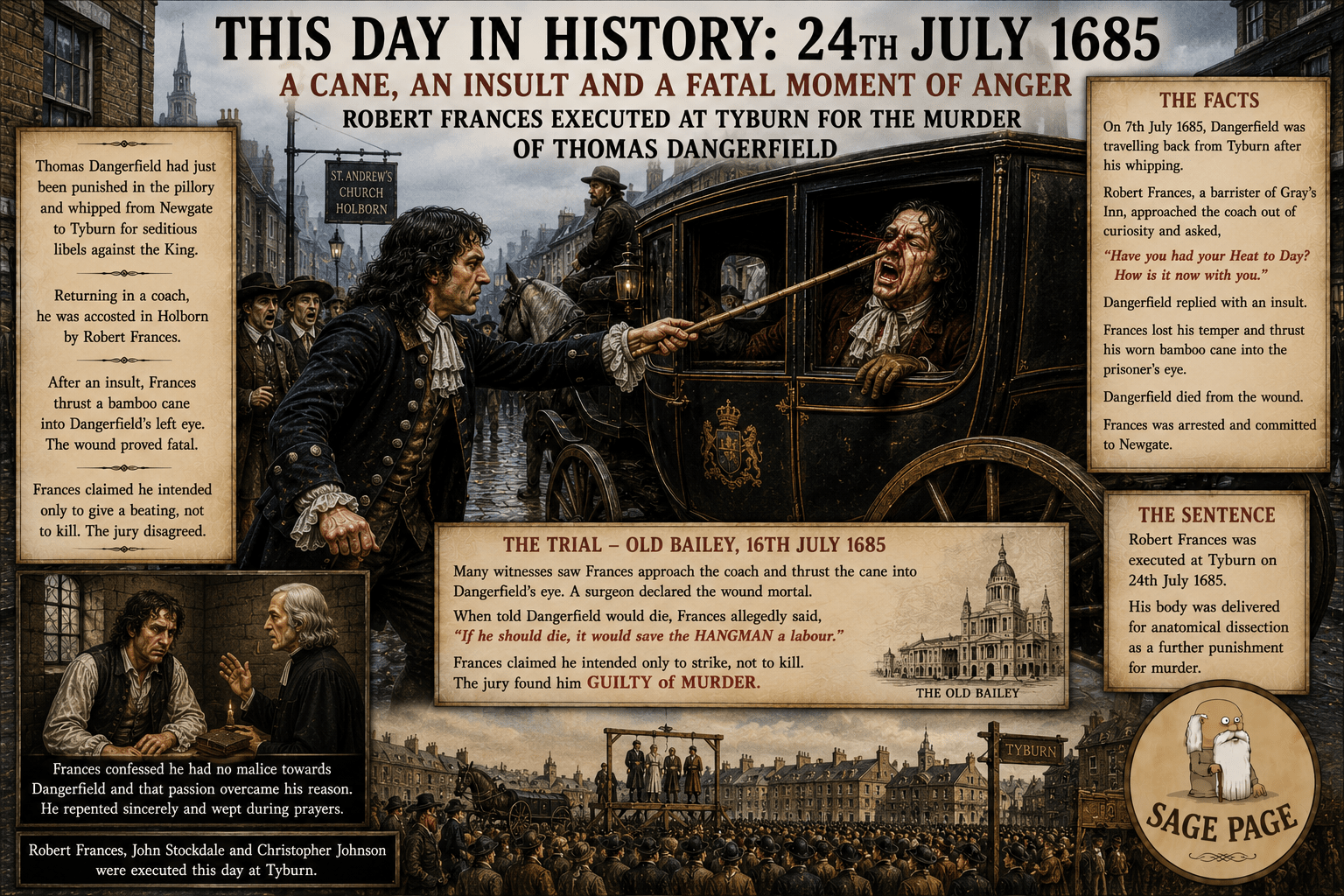
On 24th July 1685, barrister Robert Frances faced execution for killing the notorious Thomas Dangerfield. Frances claimed he merely intended to strike the recently whipped prisoner with his bamboo cane after being insulted. Instead, the cane entered Dangerfield’s eye, turning a fleeting burst of anger into a fatal encounter.
This Day in History – 23rd July 1753
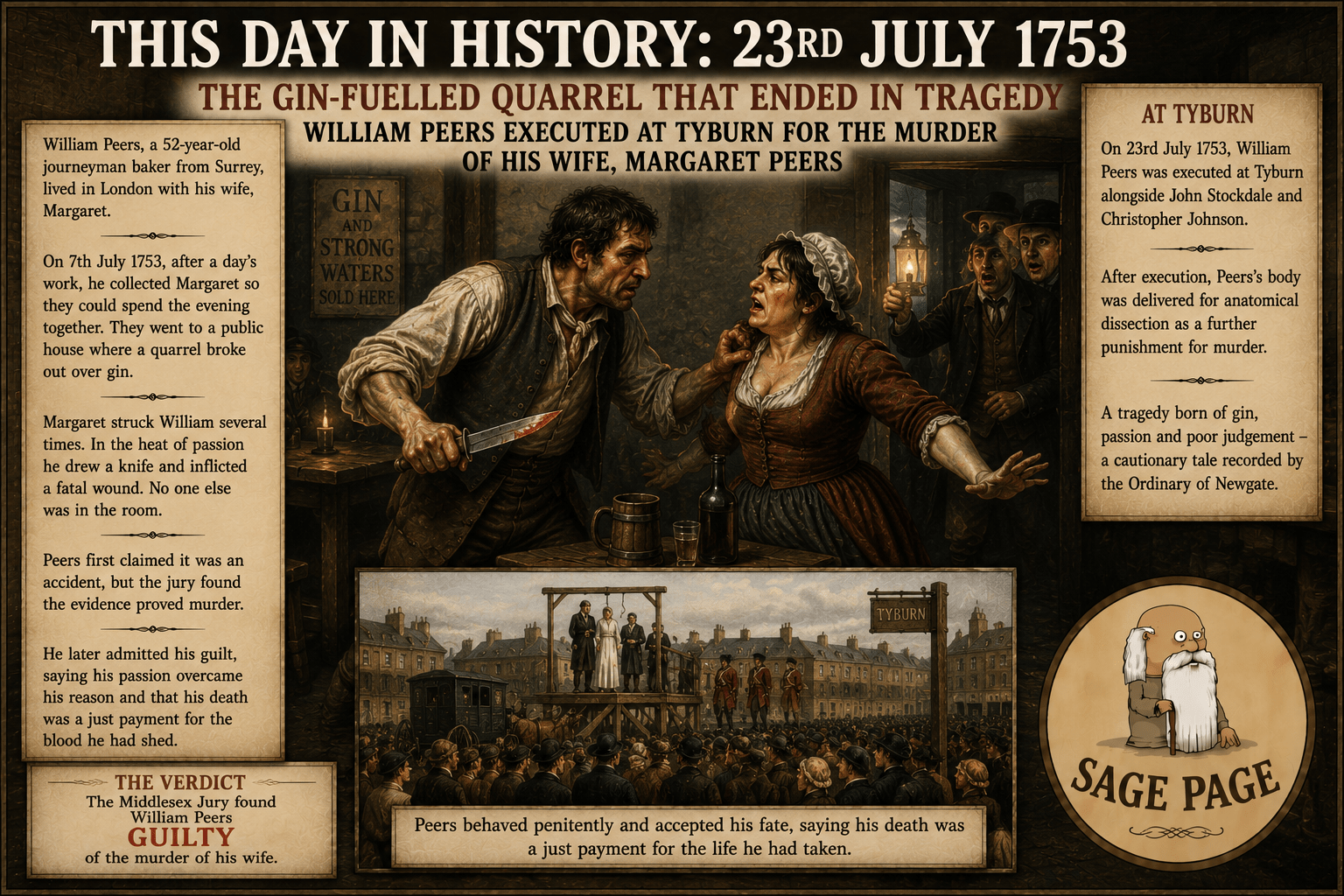
A quarrel over gin ended with one fatal knife wound and a journey to Tyburn. William Peers’ execution on 23rd July 1753 tells the tragic story of an ordinary London baker whose violent temper destroyed his wife, his own life, and left behind a cautionary tale recorded by the Ordinary of Newgate.
This Day in History – 21 May 1722
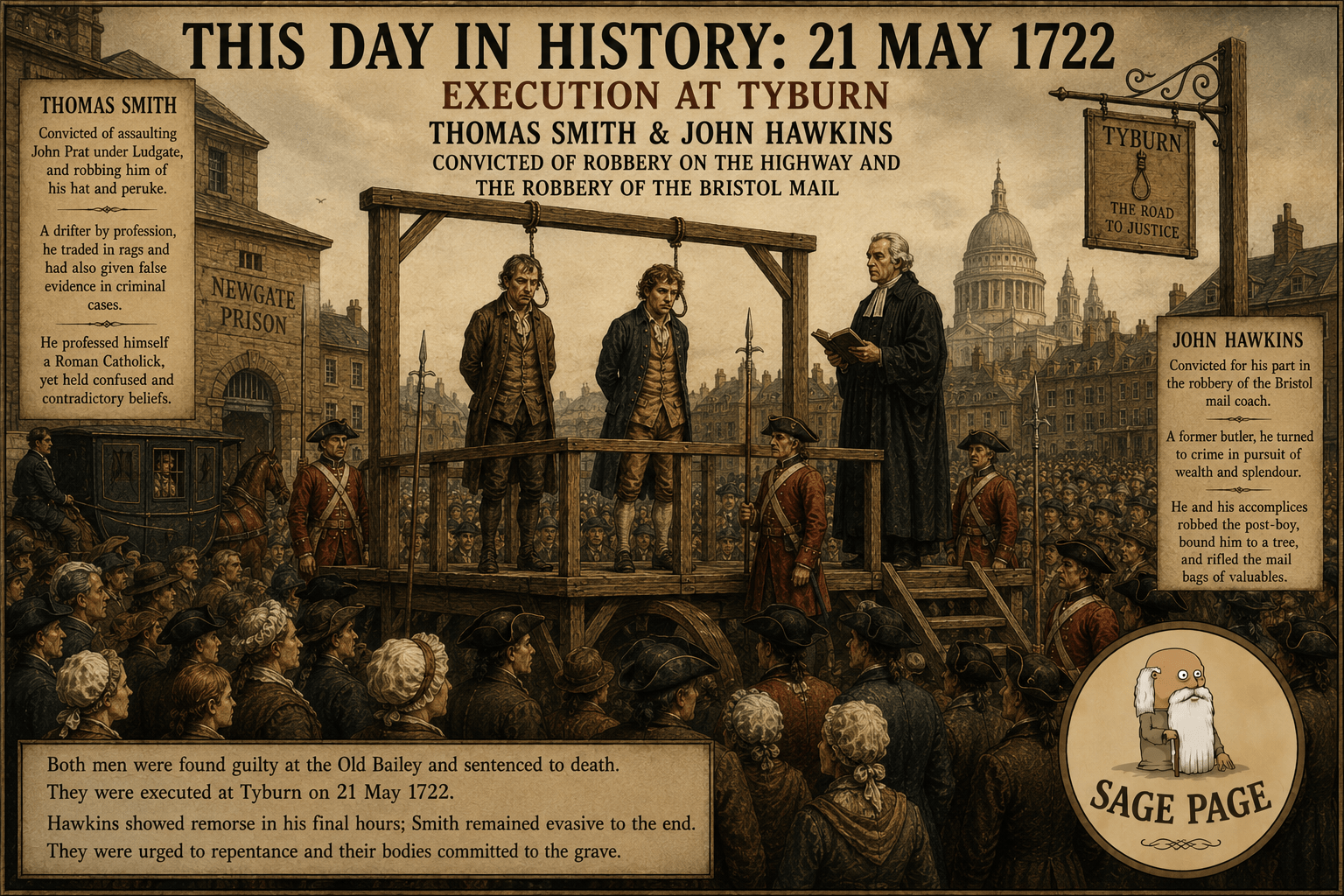
On 21 May 1722, Thomas Smith and John Hawkins were executed at Tyburn for highway robbery. Smith committed a petty theft under Ludgate, while Hawkins took part in a major mail coach robbery. Their cases highlight both opportunistic crime and organised theft in early 18th-century London.
This Day in History: 25 April 1746
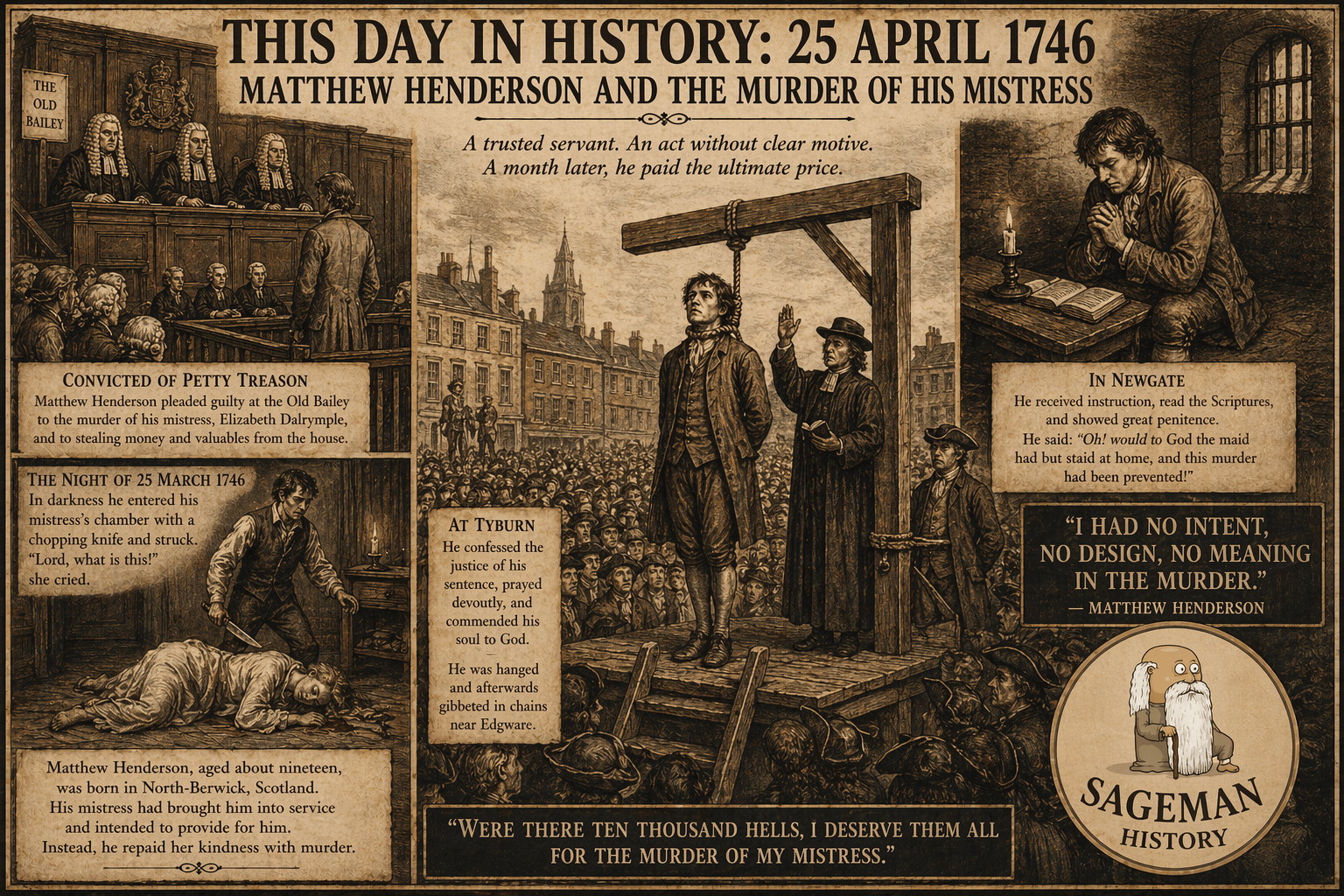
On 25 April 1746, nineteen-year-old servant Matthew Henderson was executed for murdering his mistress, Elizabeth Dalrymple. His confession shocked London: he claimed he had no clear motive, only a sudden temptation that led to one of the Old Bailey’s most disturbing domestic murders.
This Day in History – 28 February 1750
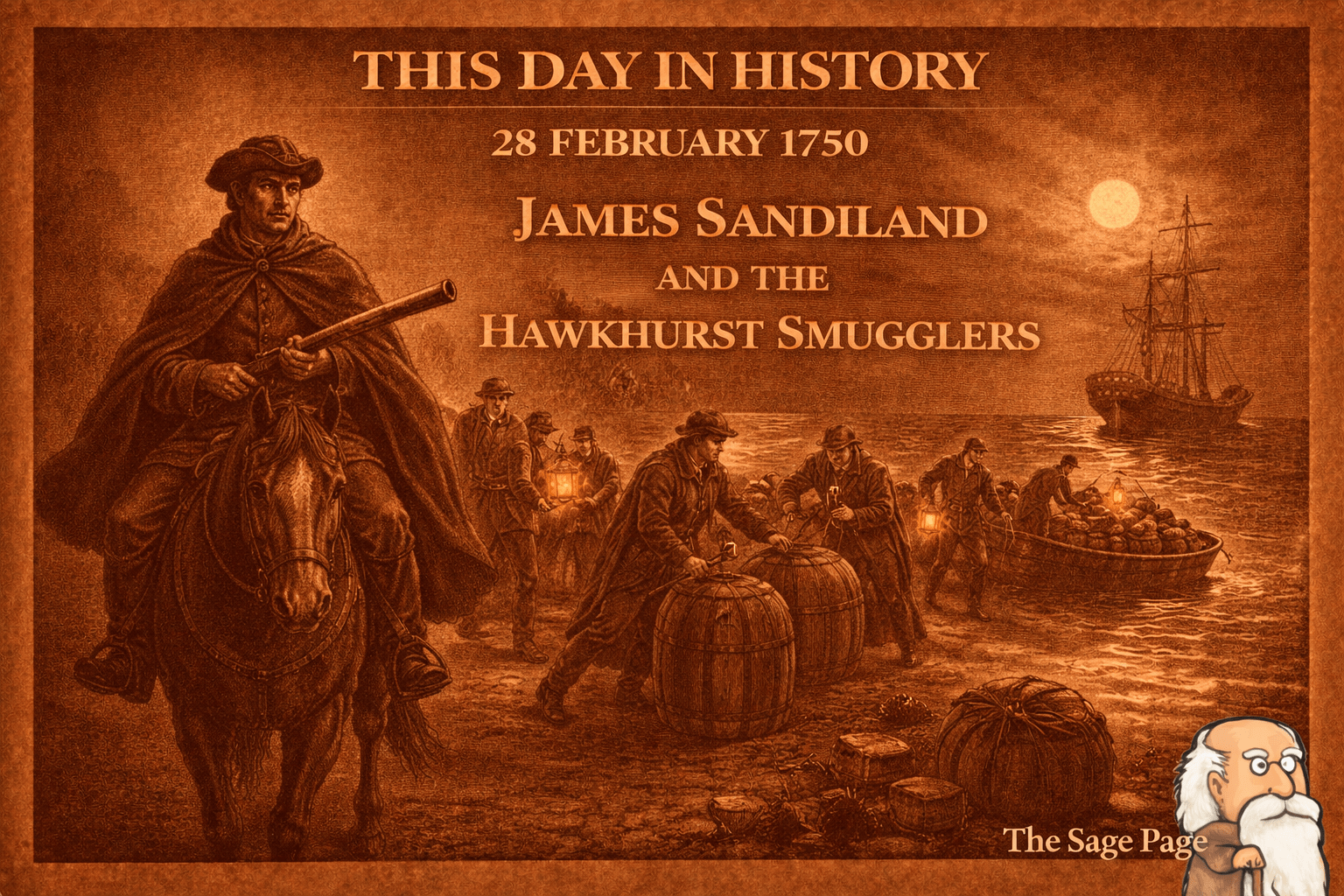
On 28 February 1750, James Sandiland was convicted at the Old Bailey for aiding armed smugglers of the Hawkhurst Gang in Kent. Despite claiming to be a respectable butcher, he was sentenced to death and executed at Tyburn for his role in landing untaxed tea and brandy.
This Day in History: 18 January 1694 — John Edwards and the Broad Cloth Theft
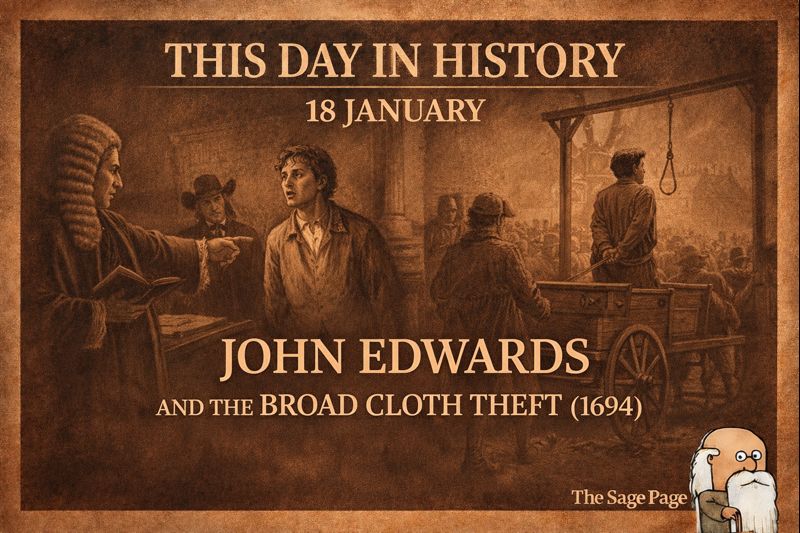
On 18 January 1694, John Edwards, a plasterer of Aldgate, was implicated in the theft of forty yards of white broad cloth. Found guilty of felony, he was sentenced to death. His repentance and execution at Tyburn weeks later are recorded in the Ordinary of Newgate’s account, revealing the harsh realities of seventeenth-century justice.

