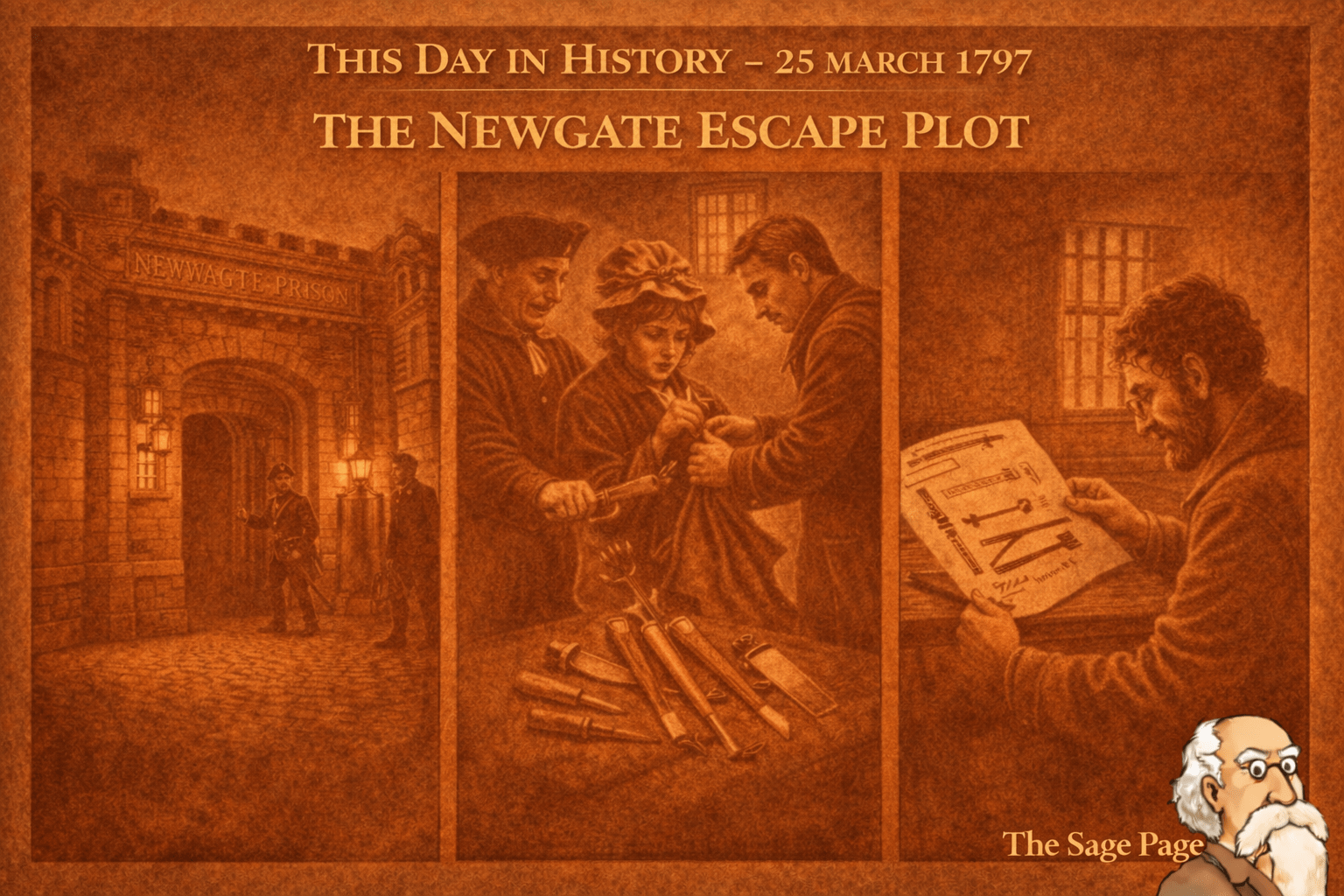
In 1797, Elizabeth Willoughby was caught smuggling escape tools into Newgate Prison for condemned prisoner William Harper. This Old Bailey case reveals a bold jailbreak plot involving saws, chisels, and deception—offering a vivid glimpse into crime, punishment, and prison life in Georgian London.
Tag Archives: History
This Day in History – 24 March 1839
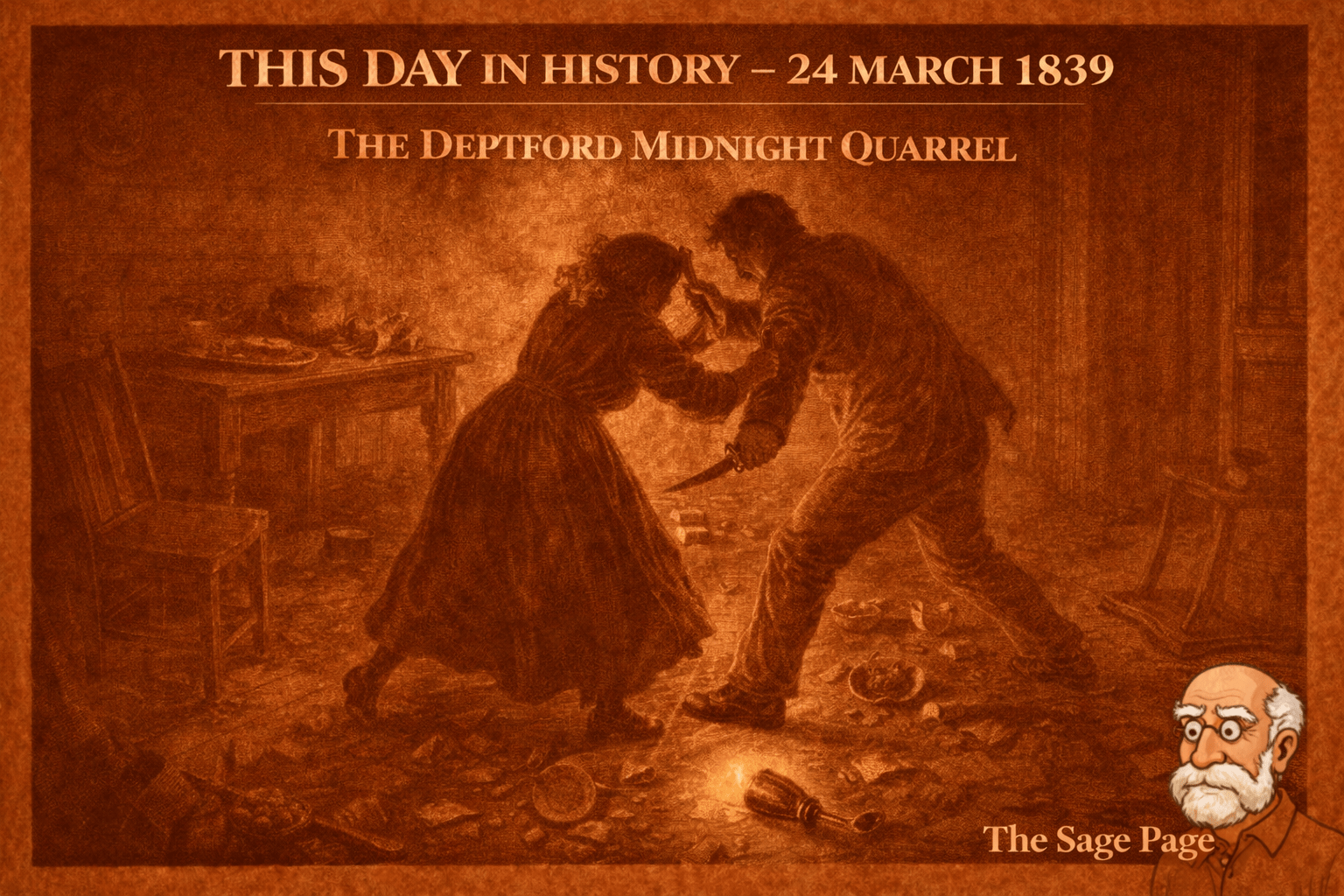
A drunken quarrel in Deptford in 1839 led to a brutal knife injury and a courtroom drama revealing mutual violence and desperation. This Old Bailey case explores the blurred line between assault and self-defence in Victorian London, where candlelight, jealousy, and alcohol combined with devastating consequences.
THIS DAY IN HISTORY – 17 MARCH 1823
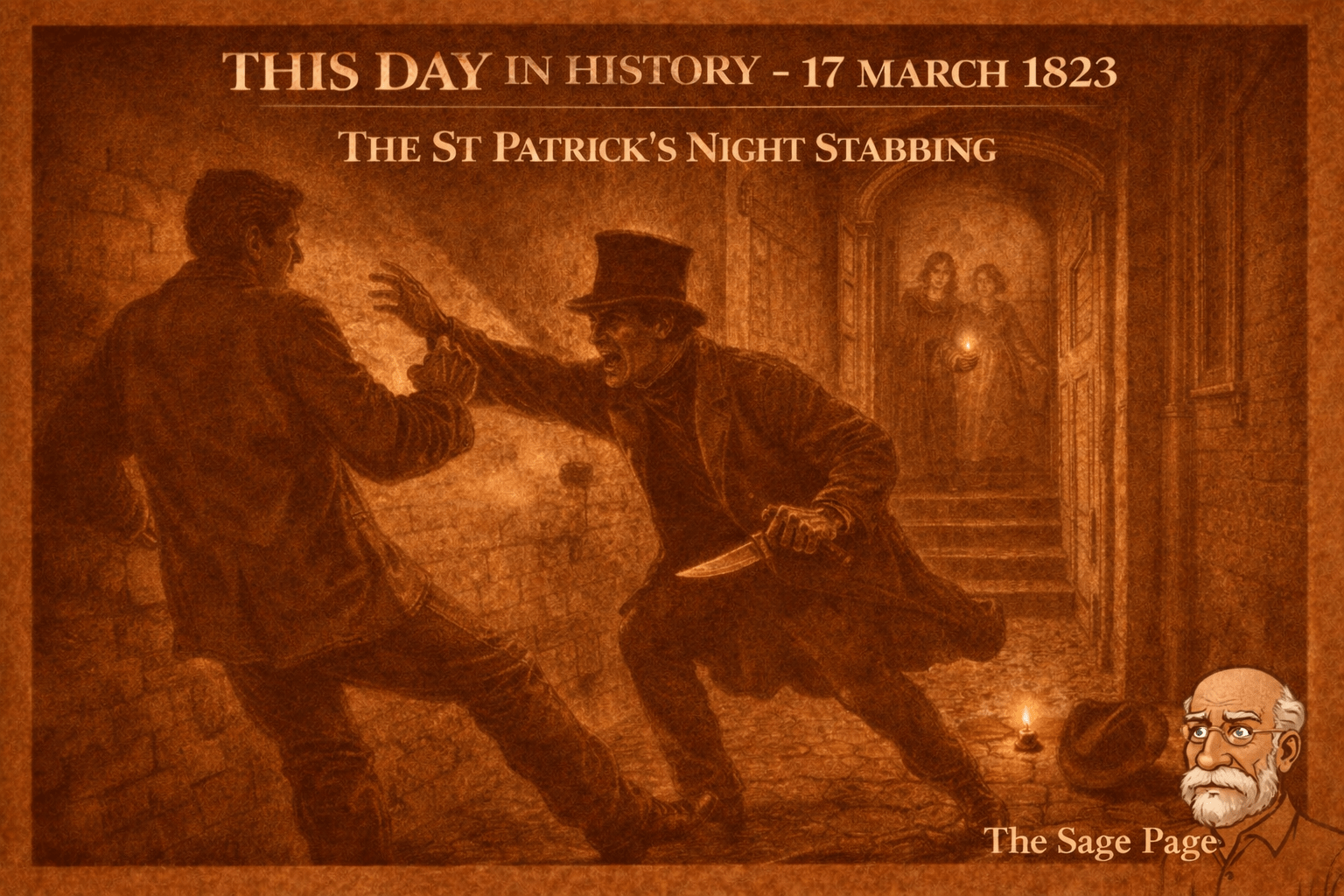
THE ST PATRICK’S NIGHT STABBING On the night of 17th March 1823, as Londoners marked St Patrick’s Day with drink and merriment, a far darker scene unfolded in a narrow passage off Manchester Square. John Leacy, a smith, returned to his lodgings after stepping out to buy a candle. The hallway was dark. As heContinue reading “THIS DAY IN HISTORY – 17 MARCH 1823”
This Day in History – 12 March 1723
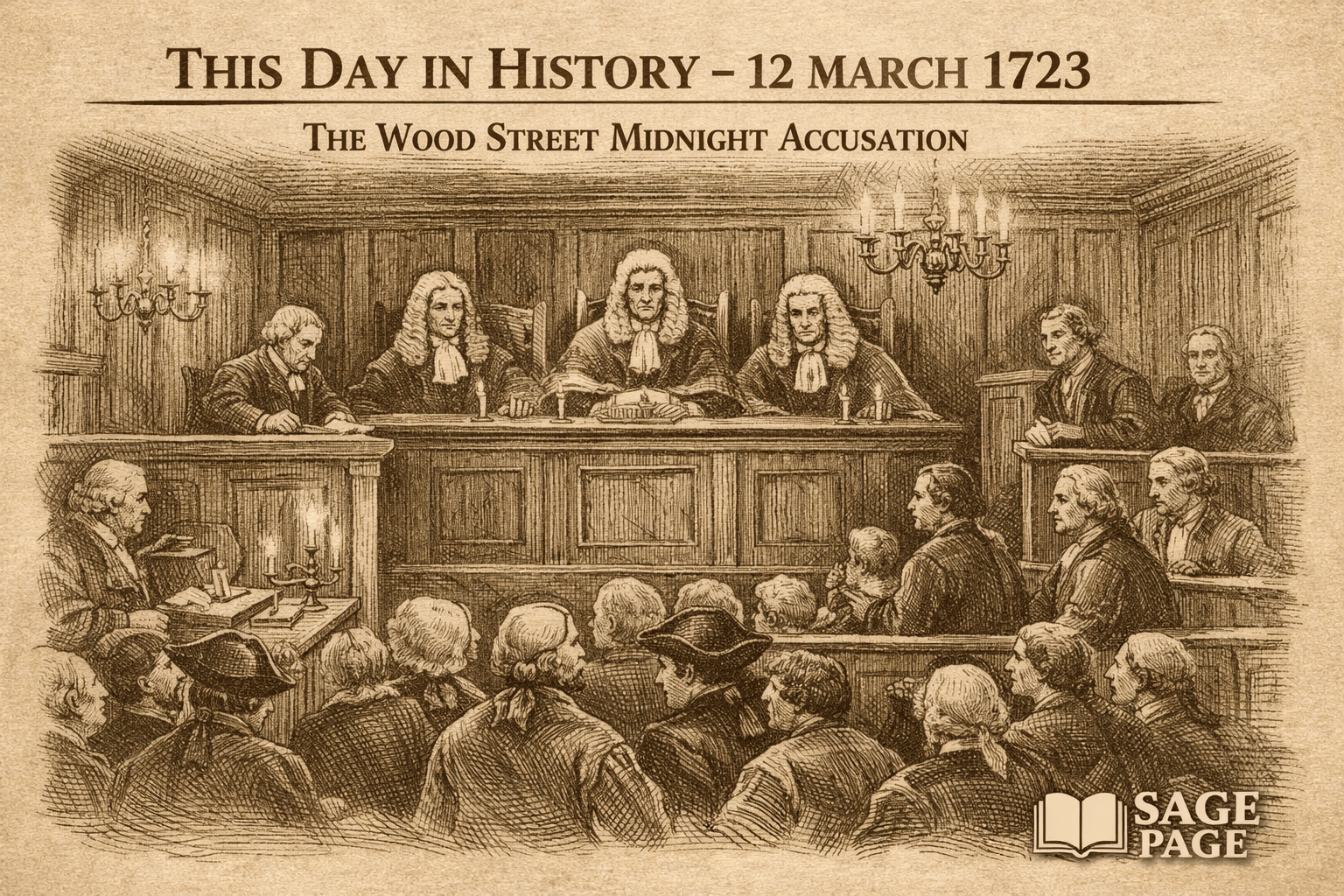
In March 1723 schoolmaster Charles Banner was accused at the Old Bailey of making an indecent assault on fifteen-year-old Nicholas Burgess in Wood Street, London. Although witnesses arranged a trap and arrested him at a planned meeting, the jury ruled the evidence insufficient and acquitted Banner of the charge.
This Day in History – 11 March 1878
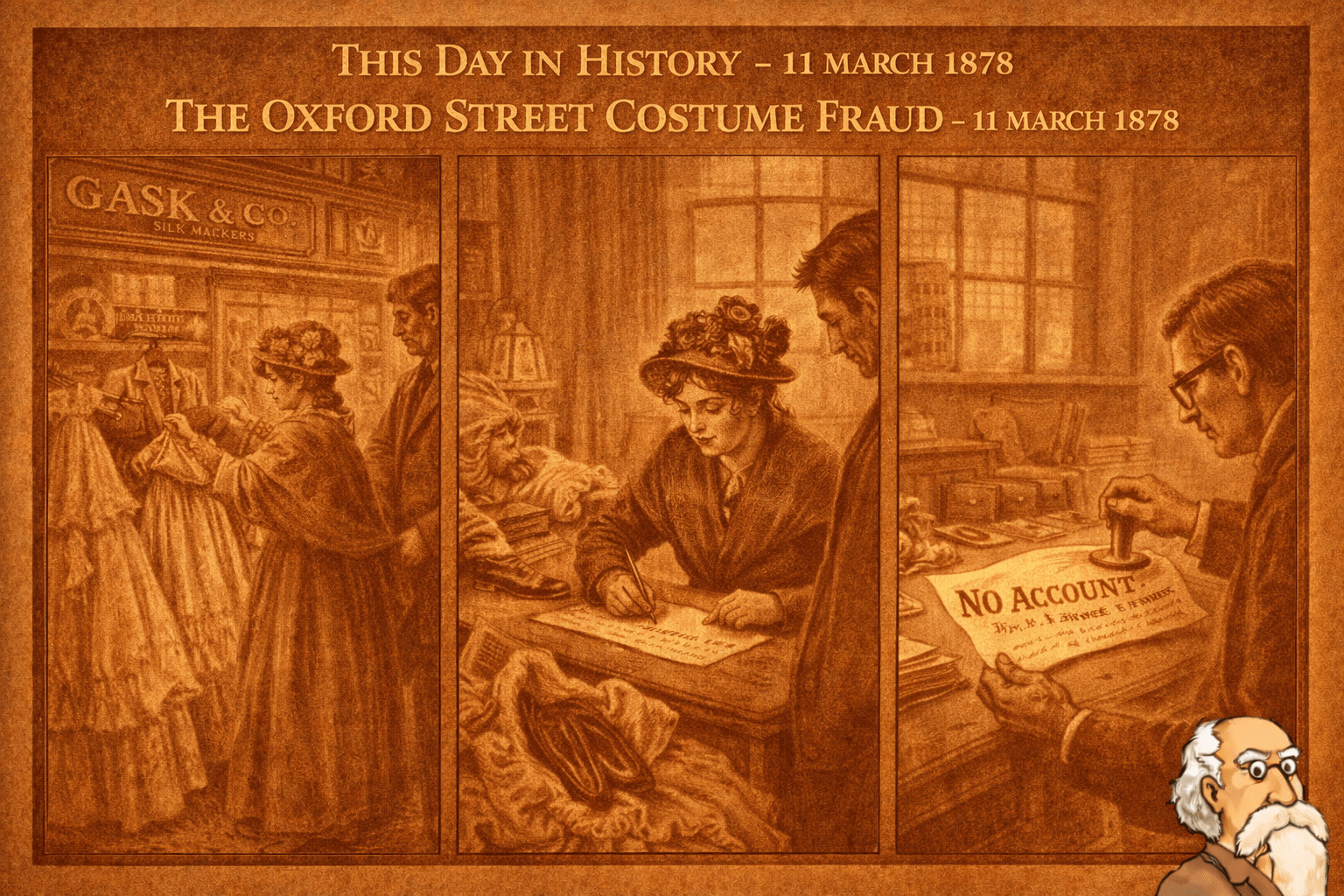
On 11 March 1878 Fanny Roper Keech was convicted at the Old Bailey for fraud after obtaining costly costumes from Oxford Street silk mercers Gask and Gask using a worthless cheque and a false address. Her deception relied on confidence and appearance—but the cheque was quickly exposed as fraudulent.
This Day in History – 6 March 1905
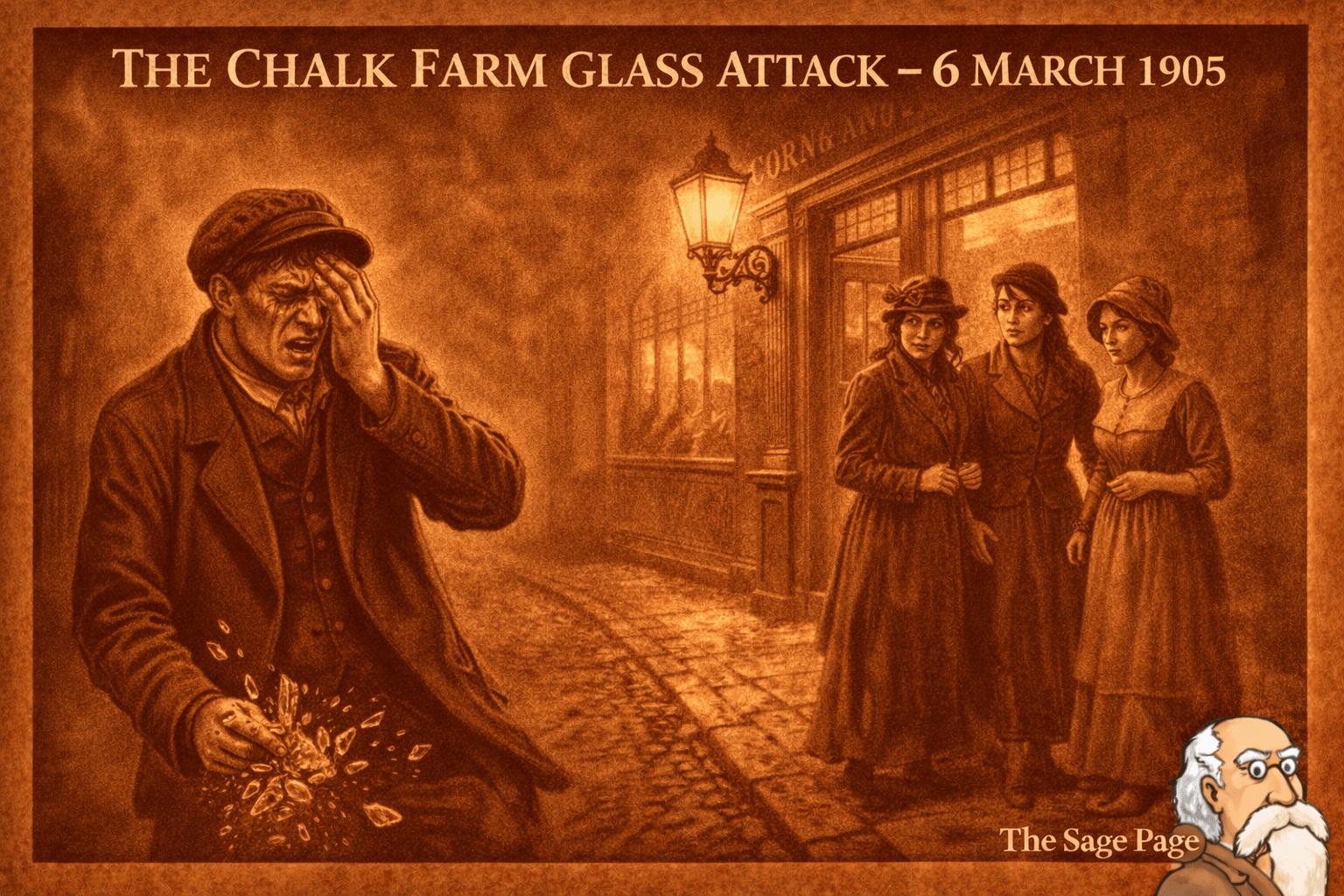
On 6 March 1905 Elizabeth Cove stood trial at the Old Bailey for wounding John Rubbins during a violent pub quarrel in Chalk Farm Road. The attack left the seventeen-year-old labourer permanently blinded in one eye. Despite the injury, the jury accepted the defence of self-protection and acquitted Cove.
This Day in History – 5 March 1839
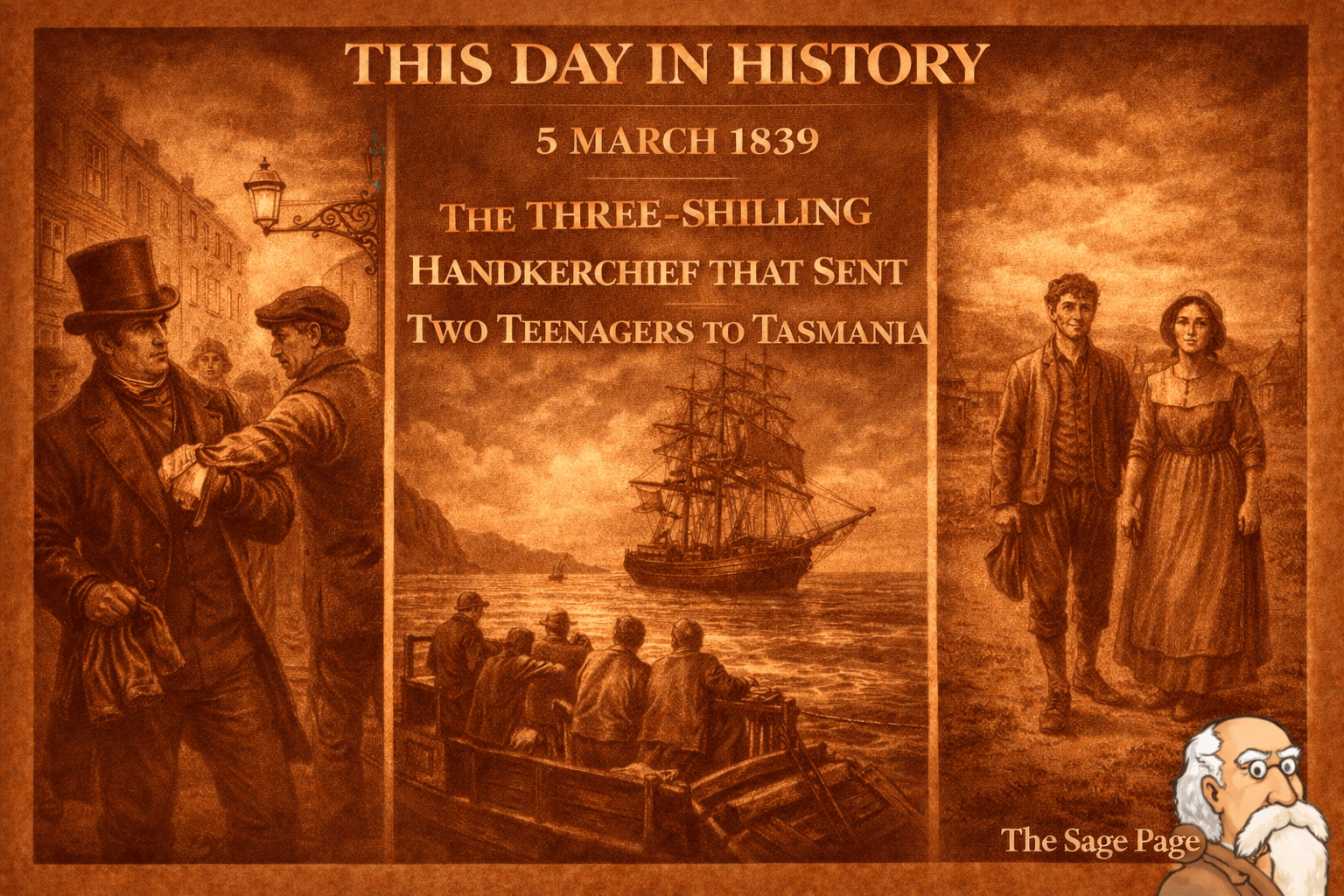
On 5 March 1839 two teenagers, Charles Chapman and Eliza Clements, were convicted at the Old Bailey for stealing a handkerchief in Fenchurch Street. Sentenced to ten years’ transportation, they were shipped to Van Diemen’s Land, where absconding, labour assignments, marriage and conditional pardons shaped their new colonial lives.
This Day in History – 28 February 1750
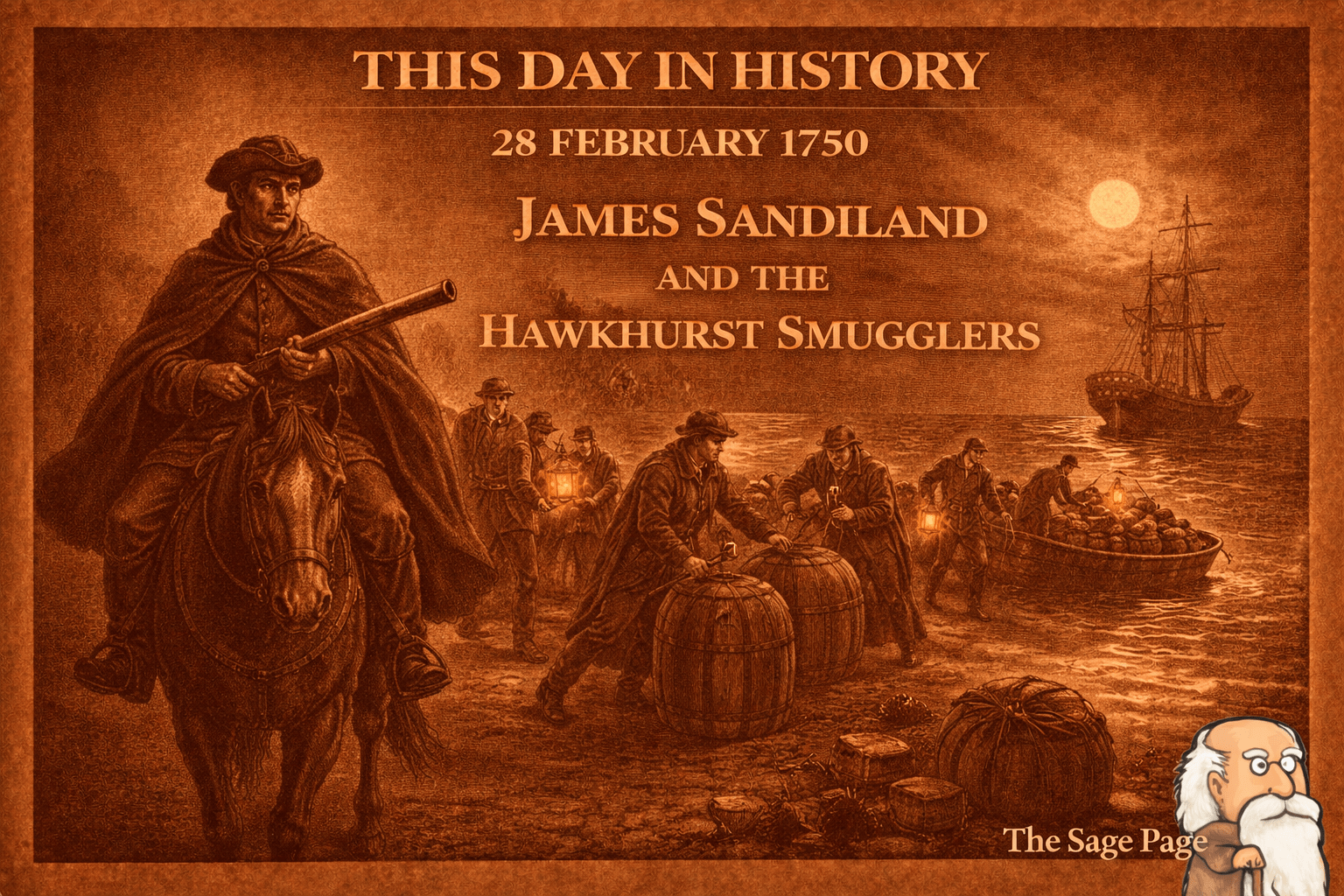
On 28 February 1750, James Sandiland was convicted at the Old Bailey for aiding armed smugglers of the Hawkhurst Gang in Kent. Despite claiming to be a respectable butcher, he was sentenced to death and executed at Tyburn for his role in landing untaxed tea and brandy.
This Day in History – 27 February 1843
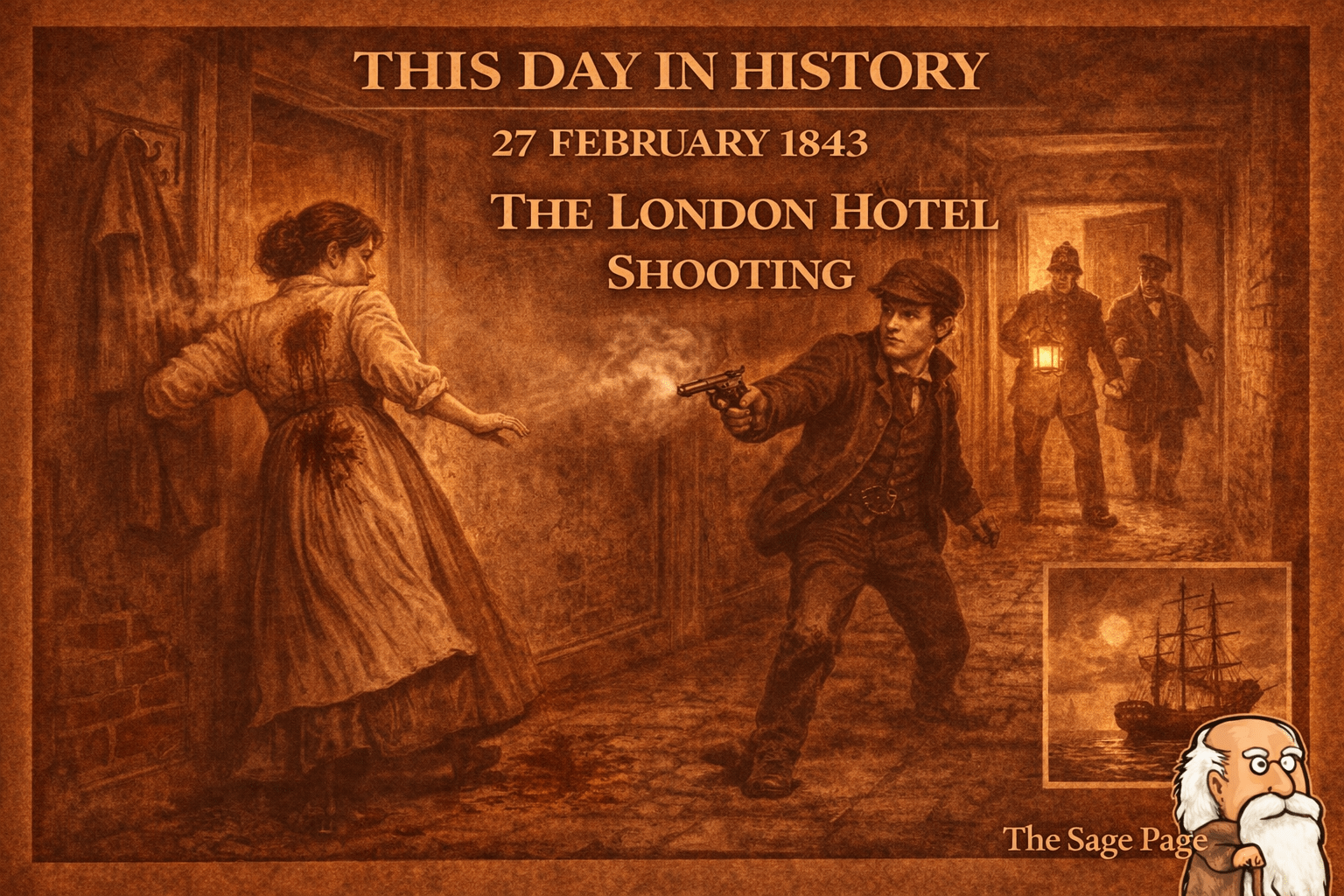
In 1843, William Cannell shot barmaid Elizabeth Sarah Magness at the Auction Mart Hotel in Bartholomew Lane. Surviving both the attack and his own suicide attempt, Cannell was transported to Tasmania for fifteen years, where he later married and received a conditional pardon
This Day in History: 25 February 1784 — John Smith and the Harley Street Robbery
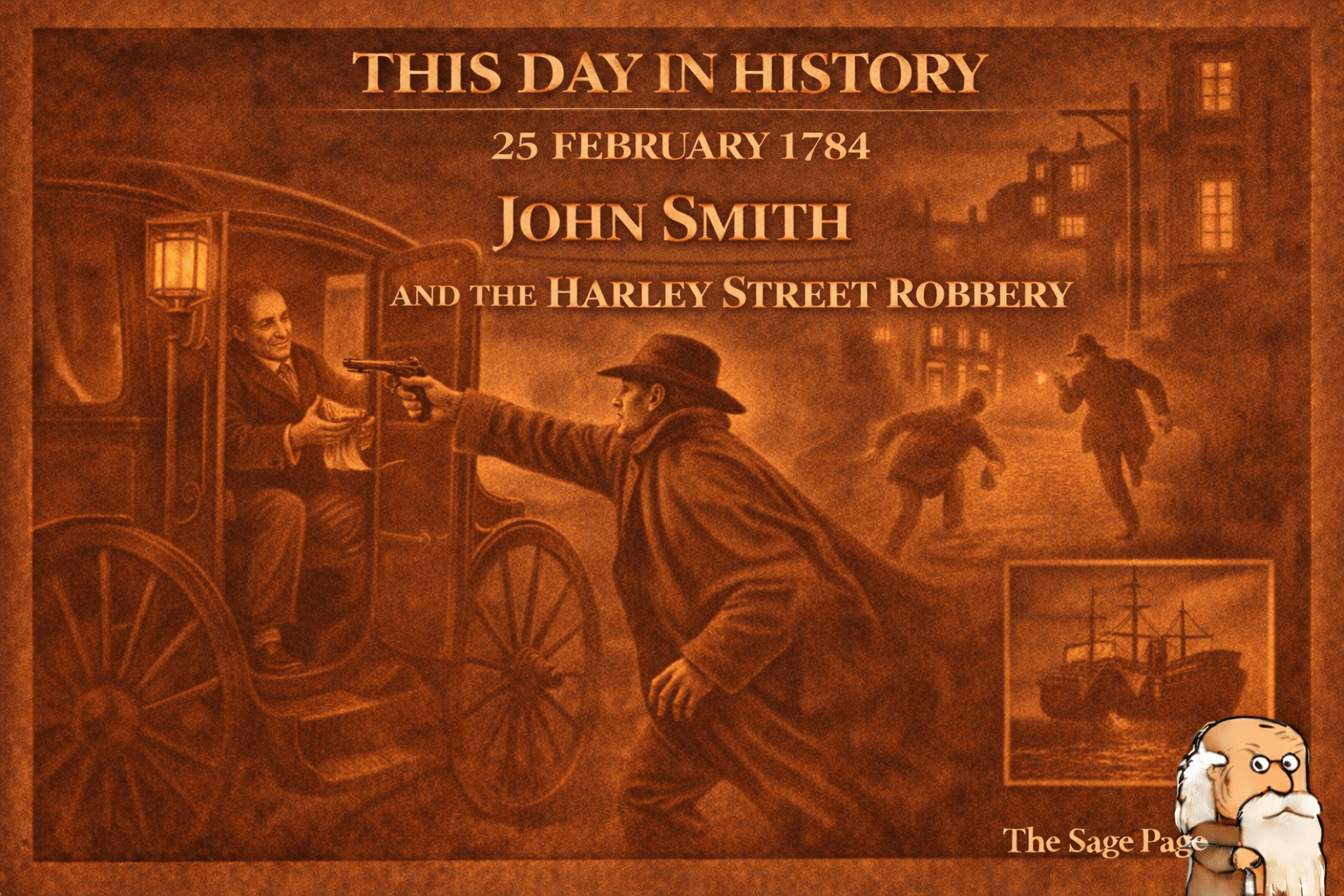
On 25 February 1784, John Smith was convicted at the Old Bailey for robbing Francis Franco at pistol-point in Harley Street. Though sentenced to death for stealing over sixty pounds in gold and a watch, his sentence was commuted, and he was transported to America for seven years.
 The Sage Page