Thought of the Day: The Melted Lollipop Theory

“Life is a lot like a lollipop
on a 35 °C day—
sweet, sticky,
and best enjoyed fast.”


The Sage knows summer heatwaves turn everyday life into a slow-motion sticky mess. When temps hit the mid-30s, even lollipops begin questioning their life choices.

Today’s thought? Treat life like that melting sweet: savour it while it’s intact, and move quickly before everything gets… unpleasant.

Stay cool, grab a nap, chase shade—and maybe skip that lollipop unless you’re standing over a sink.


Thank you for reading my writings. If you’d like to, you can buy me a coffee for just £1 and I will think of you while writing my next post! Just hit the link below…. (thanks in advance)

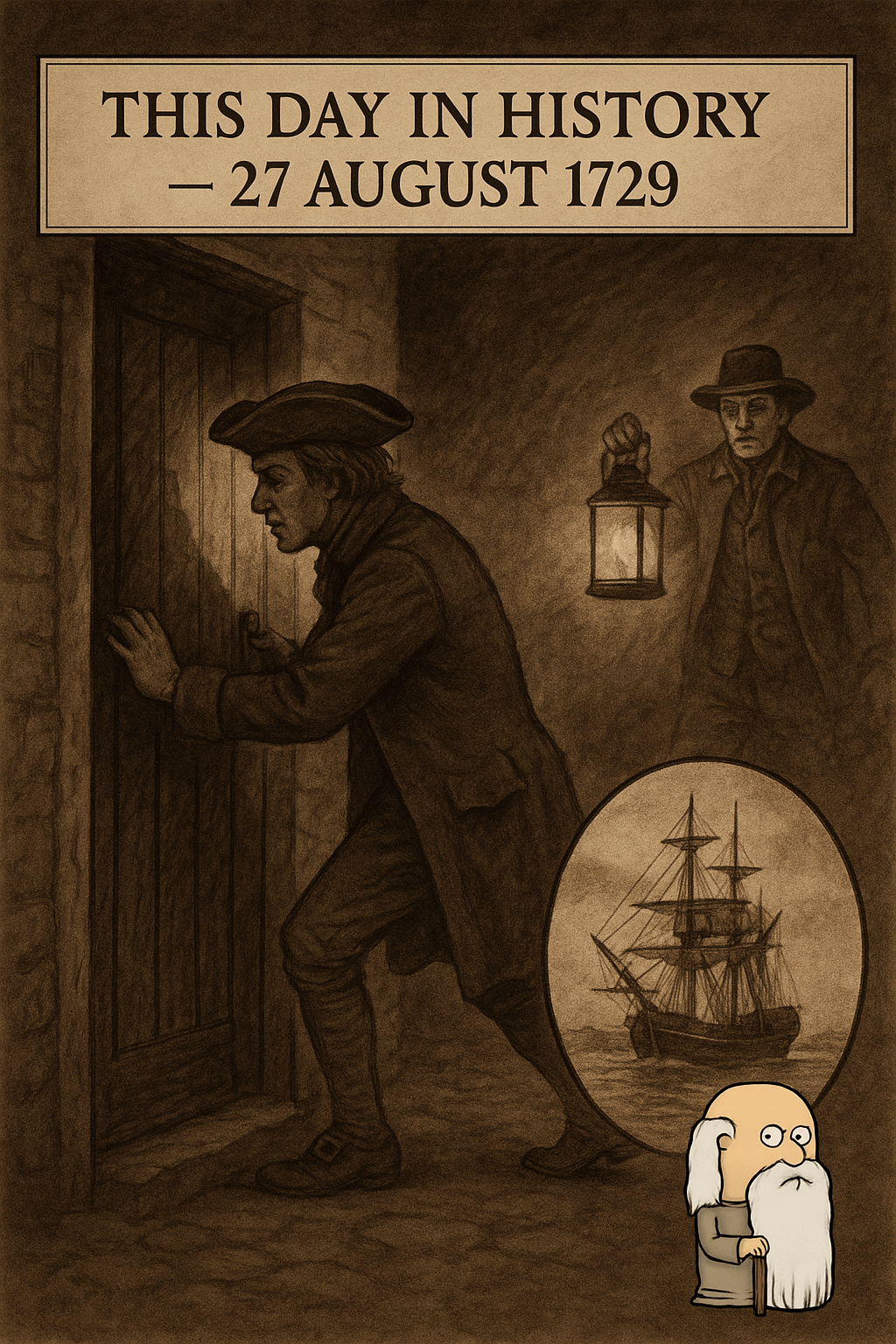
This Day in History – 23 July 1783


The Damask Thief of Spitalfields

A servant. A bundle of fine linen. A moment of temptation. And the lash of justice.


London, midsummer, 1783.

The heat settled heavily over the city like a woollen cloak. In the crowded streets of Spitalfields, where looms clattered and apprentices sweated through long days of cutting, stitching, and folding, one man was tempted by more than just the weather.

His name was Ot en Batley, a servant of unremarkable reputation. He had no long criminal record, no whispered reputation in the alehouses. But on one sultry day, he made a decision that would land him before the judges at the Old Bailey, accused of grand larceny.


The Goods in Question

Batley, according to the prosecution, had slipped away from his place of employment carrying more than just his lunch. Tied up in a rough cloth bundle were:

  • Four damask tablecloths worth £4 apiece — a princely sum
  • A fifth piece of linen valued at 10 shillings

This was no rag-and-bone haul. Damask was the pride of upper-class dining rooms — richly woven linen imported from abroad or made locally by skilled artisans. To steal such finery wasn’t merely theft. It was audacity.


The Trial

On 23 July, Batley stood in the dock, his cap in his hands and his eyes on the floor. The court bustled with murmurs as the charges were read aloud:

“Ot en Batley, for feloniously stealing on the 18th of July, four linen table-cloths, value 4 l. each, and one other piece of linen, value 10 s., the goods of—”

The rest, lost to time, is clear in implication: Batley stole from his employer — a betrayal that always stirred judges to anger.


No Great Defence

There’s no surviving record of Batley’s explanation. No fiery protestations, no tearful appeals to pity. Whether he admitted guilt, or simply stood in silent resignation, the court wasted little time.

The jury returned a swift verdict:

“GUILTY.”

And then — the twist.


Justice Tempered by Mercy

Unlike many convicted of grand larceny, Batley did not face the gallows, nor was he sent across the seas in chains. Instead, the judge pronounced a sentence that echoed with both pain and mercy:

“To be whipped and discharged.”

In other words: a public whipping, followed by freedom.


Why It Mattered

In 1783, theft of property worth more than a shilling was a capital offence. Yet, society was changing. The bloody code of 18th-century England — with its long list of hangable crimes — was slowly beginning to soften. Judges increasingly sought proportional punishment, especially for first-time offenders or cases tinged with desperation.

Batley’s sentence, humiliating though it was, reflects that shift. The lash in public served as both warning and release — an effort to deter the crime without destroying the man.


The Legacy of Linen and Larceny

Ot en Batley vanishes from the records after that day. We do not know if he returned to honest work or slipped again into petty crime. But for a brief moment, he stood at the intersection of temptation and reform — and received not the rope, but the rod.

Thank you for reading my writings. If you’d like to, you can buy me a coffee for just £1 and I will think of you while writing my next post! Just hit the link below…. (thanks in advance)
Thought of the Day: The Screen‑Free Smile

“Unplug for five minutes.
Then stare at nothing
and call it mindfulness.”

The Sage believes we’re living in a world where even our toasters have Twitter accounts. The solution? Unplug. For just five glorious minutes.

Instead of another notification, let your gaze fall on… absolutely nothing. A blank wall, your favoured fridge magnet, or the polite shadow of your houseplant. Then claim victory and call it mindfulness.

In that moment of quiet, you might discover clarity—and the curious hum of your own thoughts. Or the fact your teapot has been whistling for ten minutes. Either way, congratulations: you’re alive and off-grid.


Thank you for reading my writings. If you’d like to, you can buy me a coffee for just £1 and I will think of you while writing my next post! Just hit the link below…. (thanks in advance)

Advice of the Day: The AI Voice Scam Countermove

“If someone’s voice sounds too perfect—
respond with a duck quack.
Trust me.”

AI voice cloning is advancing fast—so fast that scammers can imitate your loved ones with just a few seconds of audio. The buzz is real: calls from your “grandchild” in trouble might actually be from a stranger behind a screen.

So here’s the Sage solution: when you hear a voice that seems unnaturally perfect, interrupt it. Launch into your best duck impression. If they back down or hang up—congratulations. You’ve just fended off a scam with style (and a honk).

Will it deter a legitimate caller? Maybe. But let’s be honest—if they can’t handle a well-timed quack, they weren’t who they claimed to be.


Thank you for reading my writings. If you’d like to, you can buy me a coffee for just £1 and I will think of you while writing my next post! Just hit the link below…. (thanks in advance)

This Day in History – 22 July 1850

The Curious Case of the Bread Coiner

🧑‍⚖️ The Trial:

On 22 July 1850, Frances Henesey, a 36-year-old widow, stood before the Old Bailey accused of uttering counterfeit coin — not by passing it in a shop, but by shoving it into a baker’s hand and bolting.


🍞 The Crime:

Frances entered Mr Ransom’s bakery and asked for a loaf of bread. The moment the baker placed it on the counter, she flung down a fake shilling, grabbed the bread, and fled into the street. Ransom gave chase, calling out, “Stop that woman! She’s given me bad money!”

She was eventually caught — with no bread and no explanation.


🎙️ In Her Defence?

Frances offered no defence. No witnesses. No story. When asked if she wished to say anything, she simply replied:

“No.”

The court was unimpressed. The jury deliberated quickly.


⚖️ Verdict:

Guilty.

🪙 Sentence:

One year in prison.


🔍 Why It Matters:

  • Coining offences — passing counterfeit money — were common but harshly punished in Victorian England.
  • Frances’s method was unusual: a grab-and-dash, more reminiscent of modern petty theft than organised counterfeiting.
  • Her silence in court added to the mystery — was she desperate, defiant, or just resigned?

Thank you for reading my writings. If you’d like to, you can buy me a coffee for just £1 and I will think of you while writing my next post! Just hit the link below…. (thanks in advance)

Advice of the Day: Plant-Based Paranoia

“If you suspect your houseplants are gossiping about you,
change their positions weekly to keep them off balance.”

We’ve all felt it — that rustling just out of earshot. That suspicious lean towards the kitchen when you enter the room. Your spider plant looks innocent, but it knows. And your peace lily hasn’t been peaceful in weeks.

The Sage recommends swift action. Rotate them. Relocate them. Shuffle the schefflera. Startle the succulents. Keep them guessing.

By changing their positions weekly, you assert dominance, sow confusion, and — most importantly — remind them who pays for the watering can. This method has the added benefit of cardio, confusion, and complete detachment from reality.

Ideal.


Thank you for reading my writings. If you’d like to, you can buy me a coffee for just £1 and I will think of you while writing my next post! Just hit the link below…. (thanks in advance)

Thought of the Day: If You Can’t Be Nice… Be Funny

“If you don’t have anything nice to say,
at least make it funny.”

The Sage understands that kindness is a virtue — but so is wit. And let’s be honest: if we all waited until we had something nice to say, most conversations would consist of prolonged silences and apologetic biscuit offers.

Instead, the Sage proposes a middle path. If you must criticise, at least aim for style points. Add a flourish. Wrap your barbed remark in charm and dazzle. If you can’t be diplomatic, be disarmingly hilarious.

This is not permission to be cruel. It’s encouragement to turn your inner sarcasm into a form of high art. Just make sure your delivery is better than their comeback.


Thank you for reading my writings. If you’d like to, you can buy me a coffee for just £1 and I will think of you while writing my next post! Just hit the link below…. (thanks in advance)

Quote of the Day: Reinventing the Wheel

“Don’t waste time reinventing the wheel.
Borrow the cart instead.”

— Helmutt Churchill


📜 About Helmutt Churchill & the Quote

Born in Leipzig in 1940, Helmutt Churchill developed his philosophy amidst post-war ingenuity — where repurposing wasn’t just a skill, it was a necessity. His quote about carts and wheels nods to his lifelong preference for pragmatic absurdity over romantic originality.

Rather than spend hours perfecting what already works, Helmutt would recommend ‘borrowing’ the whole apparatus and repurposing it with confidence. In his 1987 lecture “Efficiency, Ethics, and Other Inconveniences”, he quipped:
“In a world full of carts, it’s the confident borrower who arrives first — usually downhill.”

Churchill’s philosophy isn’t about taking shortcuts blindly — it’s about recognising which paths are already paved and rolling down them with style (and plausible deniability).


Thank you for reading my writings. If you’d like to, you can buy me a coffee for just £1 and I will think of you while writing my next post! Just hit the link below…. (thanks in advance)
This Day in History – 21 July 1751

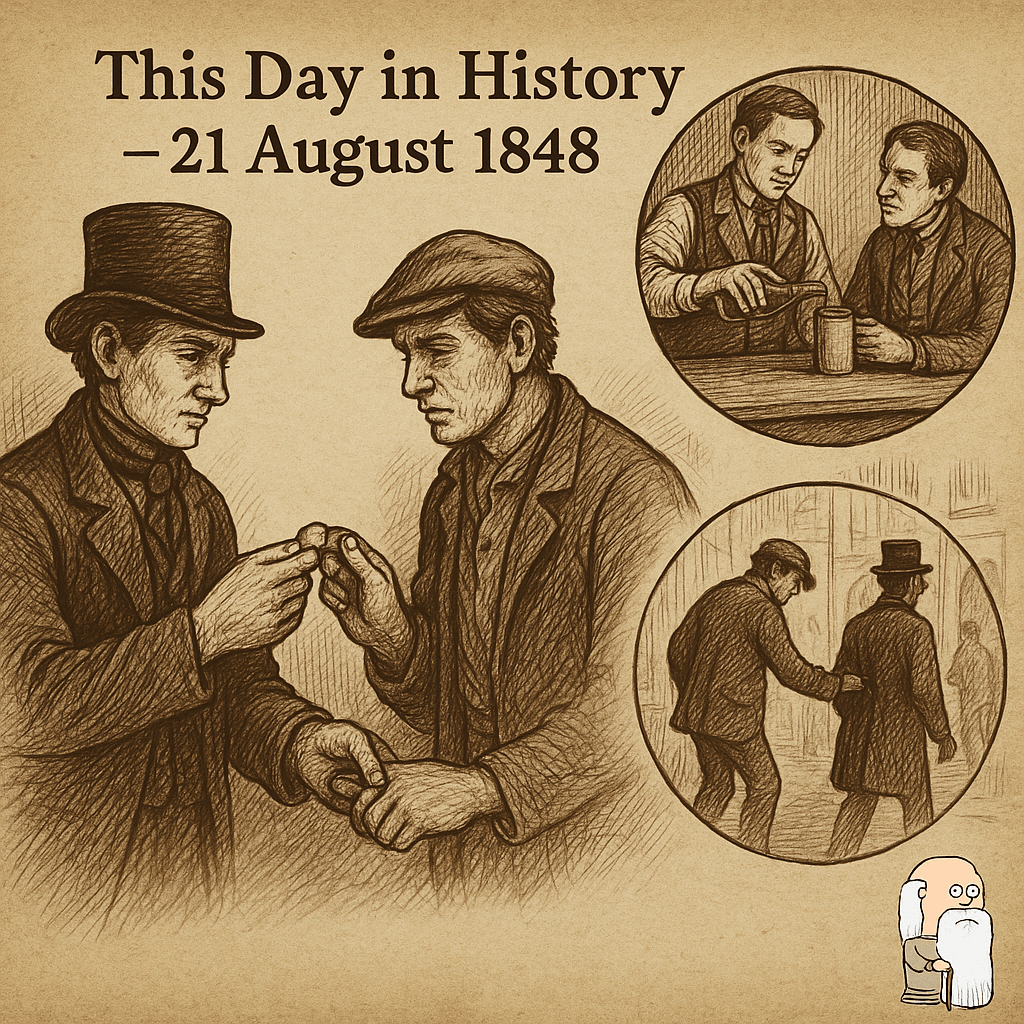
Horse-Turnpike Highway Robbery

Trial at the Old Bailey:

On 21 July 1751, a man named William Elkins was tried for highway robbery after being stopped “between five and six in the afternoon” at a turnpike on horseback, accompanied by Daniel Pope, who gave evidence against him.


The Crime & Context

Elkins was accused of holding up travellers on the road—an all-too-common fear in mid‑18th-century England, when ruffians lurked at turnpikes and lonely stretches outside London. On this occasion, his victim was Pope, who was returning through the gate when Elkins allegedly drew up beside him, threatened him, and demanded valuables.


Key Witness Testimony

Daniel Pope described the encounter:

“Between five and six in the afternoon, the prisoner was at the turnpike on horseback, in company…”

While testimony beyond that line isn’t included in the snippet, the fact that Pope recognized Elkins and identified him in court shows how eyewitnesses—particularly travellers at turnpikes—were critical to securing convictions.


Verdict & Sentencing

The details of Elkins’s verdict aren’t within our snippet, but many highway robbery convictions from that era resulted in transportation or the death penalty—punishments intended as stark deterrents to would-be thieves.


Why It Matters

  • Popular fear: Highwaymen were public enemies, and turnpikes—gatehouses on toll roads—became notorious ambush spots.
  • Prosecution relied on eyewitnesses, and Pope’s clear testimony likely sealed Elkins’s fate.
  • This trial highlights how travel—already precarious—became riskier as highway robbery surged in the 1750s.

Thank you for reading my writings. If you’d like to, you can buy me a coffee for just £1 and I will think of you while writing my next post! Just hit the link below…. (thanks in advance)
Quote of the Day: Burning Bridges

“Wisdom is knowing which bridges to burn
— and then turning it into a barbecue.”

— Helmutt Churchill


About Helmutt Churchill & the Quote

Helmutt Churchill (b. 1940, Leipzig) survived war, rationing, and three consecutive decades of mildly disappointing sausages. A master of metaphors and charcoal-fuelled epiphanies, this quote reflects his playful yet sharp philosophy: sometimes the act of destruction is also one of creation — particularly if it results in grilled bratwurst.

In his 1983 lecture “Flammable Ethics and Other Considerations” at the University of Tübingen, Helmutt expanded on this: “Not all bridges are built for crossing. Some are built for closure — and sausages.”

To Churchill, wisdom wasn’t just about restraint. It was about timing. And lighter fluid.

This quote reminds us that when we burn our bridges, we might as well roast something while we’re at it. Preferably with mustard.


Thank you for reading my writings. If you’d like to, you can buy me a coffee for just £1 and I will think of you while writing my next post! Just hit the link below…. (thanks in advance)