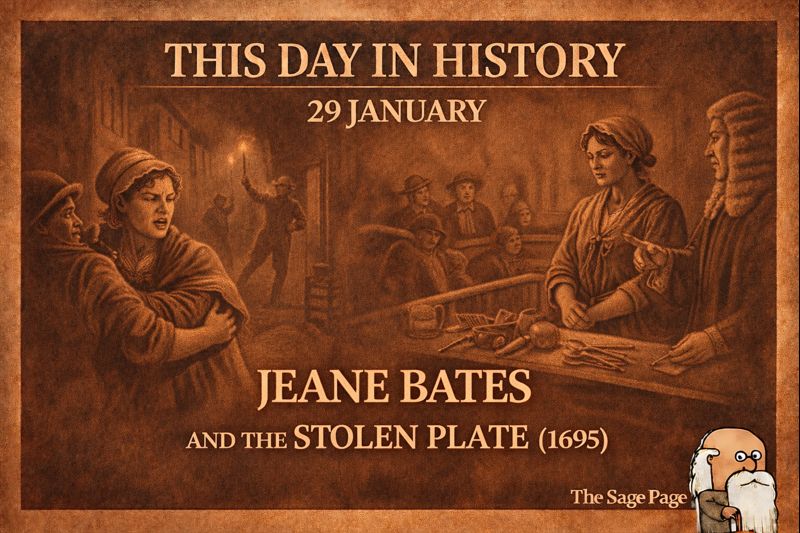
On 29 January 1695, Jeane Bates, using a false name, stole silver plate and household goods from her employer Peter Courtney. Tried at the Old Bailey, she was identified as a repeat offender, found guilty of felony, falsely claimed pregnancy, and was executed at Tyburn. Her case reveals the harsh punishment for servant theft in seventeenth-century London.
Tag Archives: Crime and punishment
This Day in History: 27 January 1688 — Mary Aubry and the Dismembered Murder
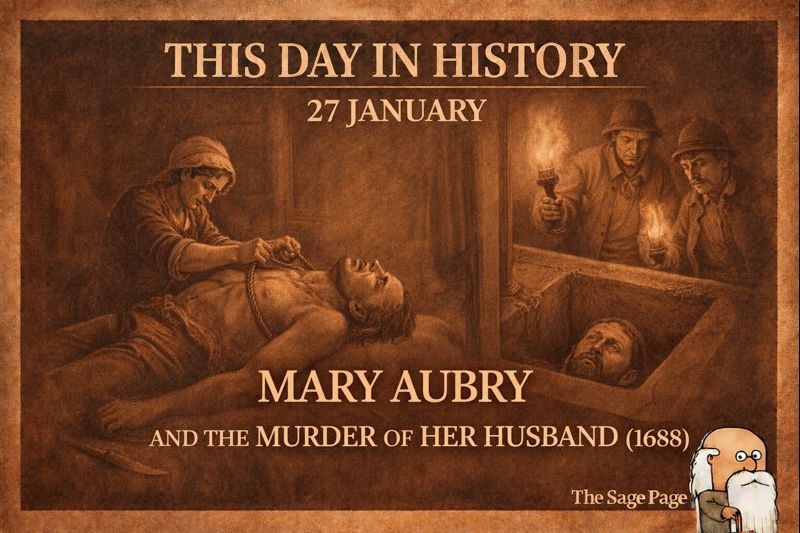
On 27 January 1688, French midwife Mary Aubry murdered her abusive husband in London and dismembered his body. Tried at the Old Bailey on 22 February, she pleaded guilty and was sentenced to burning at the stake, carried out at Leicester Fields on 2 March 1688. Her case became one of early modern England’s most notorious.
This Day in History: 20 January 1690 — Elizabeth Deacon and the Death of Mary Cox
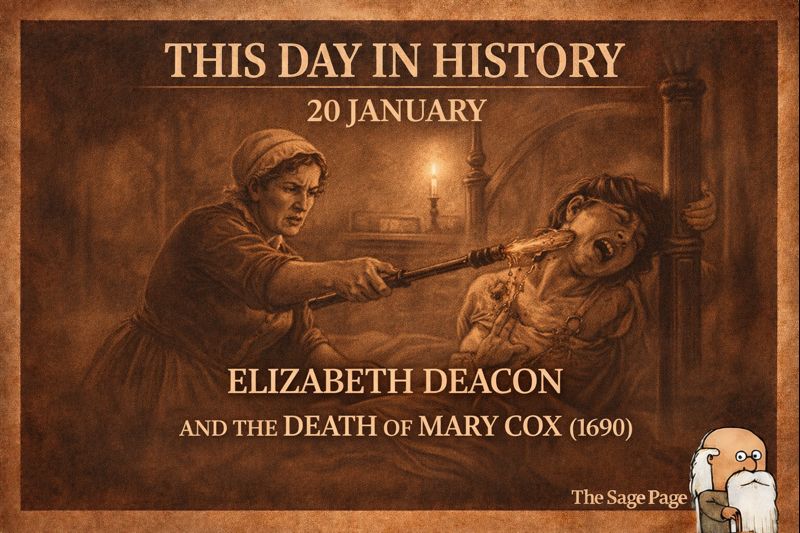
On 20 January 1690, Elizabeth Deacon brutally assaulted her servant maid Mary Cox, tying, whipping, burning and beating her over several days. Tried at the Old Bailey for wilful murder, Deacon was found guilty and sentenced to death, though execution was respited due to pregnancy. The case exposes the dangers faced by servants in seventeenth-century London.
This Day in History: 18 January 1694 — John Edwards and the Broad Cloth Theft
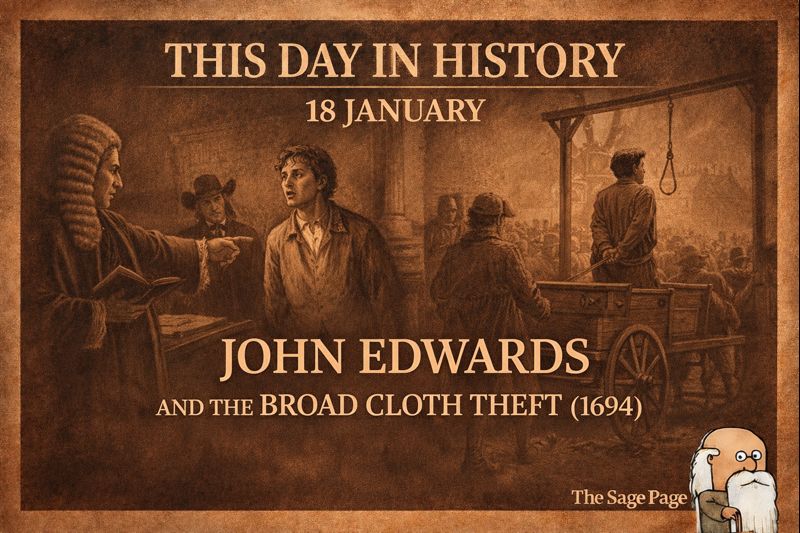
On 18 January 1694, John Edwards, a plasterer of Aldgate, was implicated in the theft of forty yards of white broad cloth. Found guilty of felony, he was sentenced to death. His repentance and execution at Tyburn weeks later are recorded in the Ordinary of Newgate’s account, revealing the harsh realities of seventeenth-century justice.
This Day in History: 17 January 1681 — Elizabeth Wigenton and the Murder of Her Apprentice
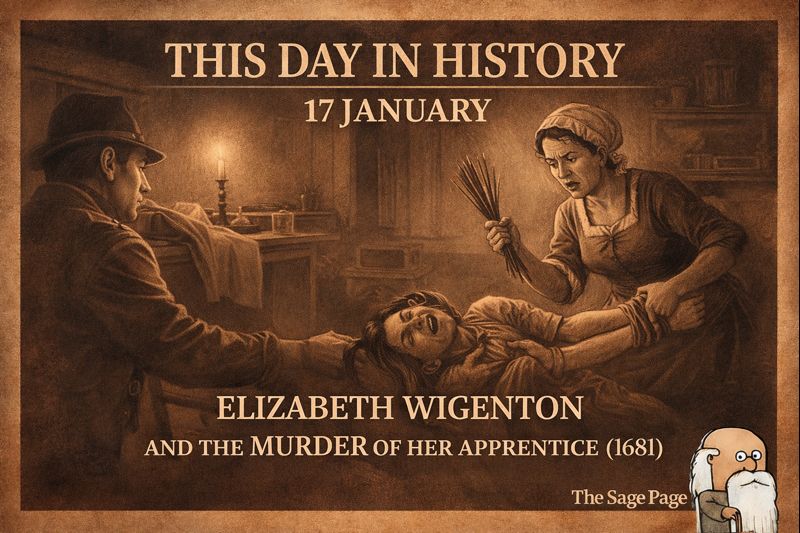
On 17 January 1681, Elizabeth Wigenton, a coat-maker of Ratcliff Parish, was tried at the Old Bailey for the wilful murder of her thirteen-year-old apprentice. After binding and beating the girl so violently that she died, Wigenton was found guilty of murder. This case reveals the brutal realities of apprenticeship and justice in seventeenth-century London.
This Day in History: 18 December 1865 — George Wheeler and the Long Sentence

On 18 December 1865, London clerk George Wheeler pleaded guilty to embezzlement at the Old Bailey. Sentenced to penal servitude, he passed through Newgate, Pentonville and Portland prisons before his release in 1869. His story reveals the realities of Victorian imprisonment beyond the courtroom.
This Day in History: 11 December 1765 — Catherine Wilks and the Printed Cotton

On 11 December 1765, Catherine Wilks was tried at the Old Bailey for stealing printed cotton from a London shop. Found guilty of grand larceny, she faced transportation, the common punishment for such thefts. Her case reveals the risks and realities of women navigating 18th-century London’s commercial world.
This Day in History: 9 December 1789 — The Case of the Missing Goods

On 9 December 1789, Thomas Davis was tried at the Old Bailey for simple larceny. The evidence failed to convince the jury, and he was found Not Guilty. This retelling highlights how even in Georgian London’s strict justice system, doubt could still outweigh suspicion.
This Day in History: 2 December 1838 — The Boy and the Pewter Hoard

On 2 December 1838, sixteen-year-old David Leary stole 65lbs of pewter from London tradesman Uzziel Emarmel. Tried at the Old Bailey, he was found guilty and transported for ten years to Van Diemen’s Land. This retelling shows how a boy’s small theft led to exile across the world.
This Day in History: 1 December 1838 — The Servant, the Spoons and the Silver Basket

On 1 December 1838, servant Ludlow Tedder stole two silver spoons and a valuable bread-basket from her master, Fitzowen Skinner. Tried at the Old Bailey later that month, she was convicted and transported for ten years to Van Diemen’s Land. This retelling explores trust, temptation and punishment in Victorian London.
 The Sage Page