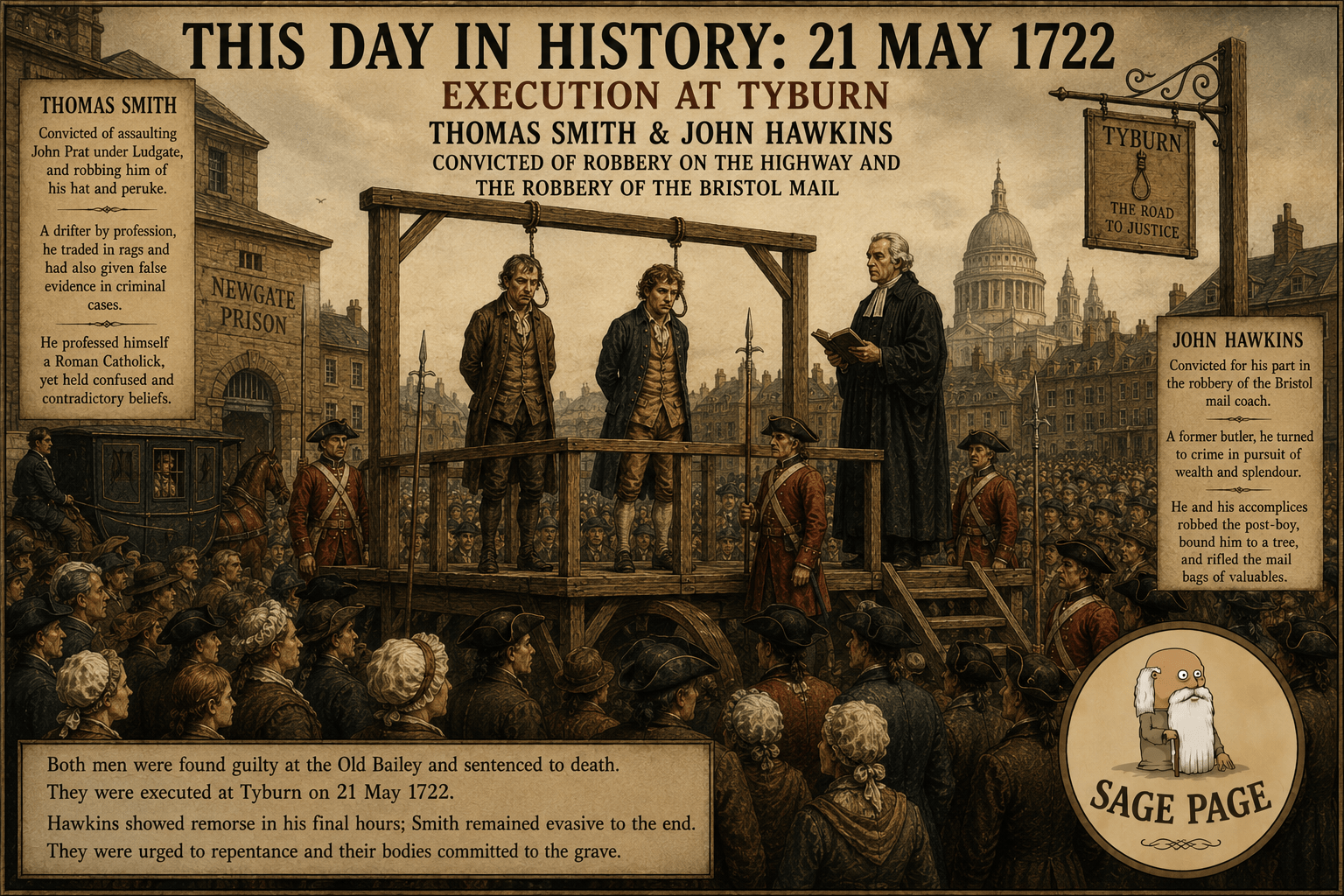
On 21 May 1722, Thomas Smith and John Hawkins were executed at Tyburn for highway robbery. Smith committed a petty theft under Ludgate, while Hawkins took part in a major mail coach robbery. Their cases highlight both opportunistic crime and organised theft in early 18th-century London.
Tag Archives: today
This Day in History – 20 May 1728
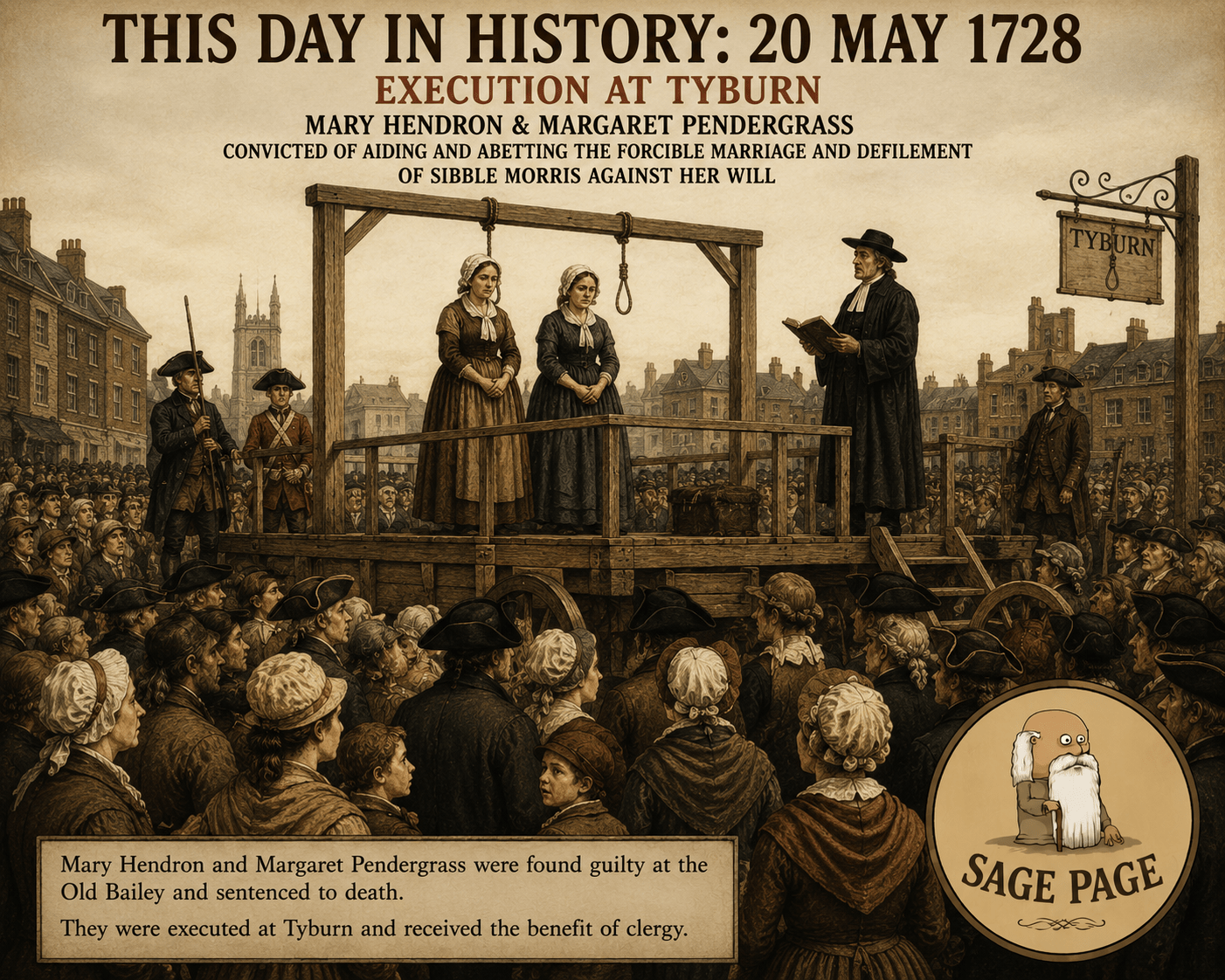
On 20 May 1728, Mary Hendron and Margaret Pendergrass were executed at Tyburn for their role in coercing Sibble Morris into a criminal scheme. While a male accomplice was acquitted, the two women were convicted and hanged, highlighting the harsh and uneven justice of 18th-century England.
This Day in History: 19 May 1743
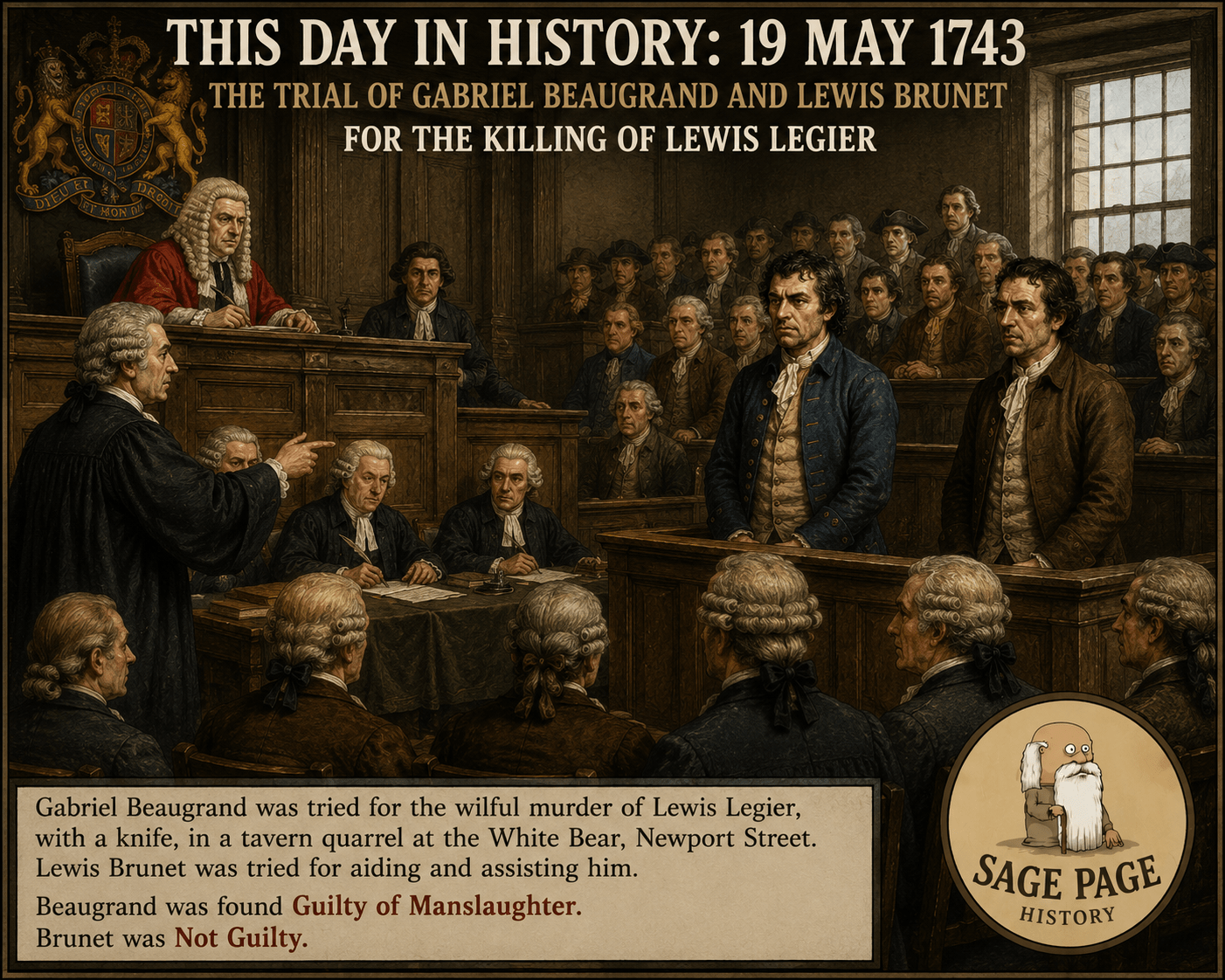
Gabriel Beaugrand was convicted of manslaughter on 19 May 1743 after a tavern dispute in Newport Street turned deadly. What began as a drunken argument over status at sea ended in a fatal stabbing. Beaugrand was branded rather than executed, while his uncle Lewis Brunet was acquitted.
This Day in History: 7 May 1740
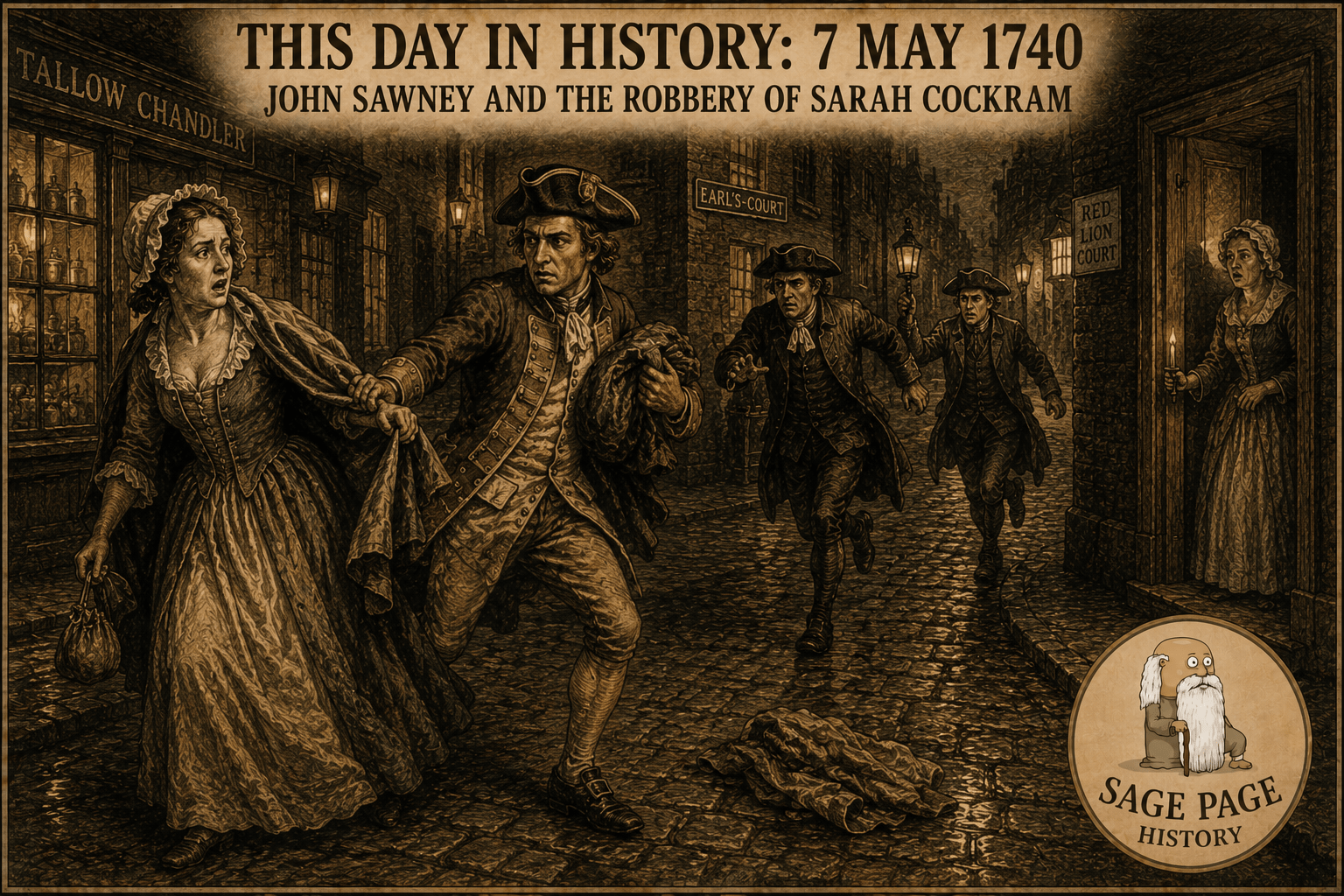
John Sawney was executed on 7 May 1740 for robbing Sarah Cockram of her cloak in Drury Lane. A former sailor turned soldier, his life spiralled into crime and drink. Captured moments after the theft, he was convicted and sentenced to death in a stark example of 18th-century justice
This Day in History: 6 May 1685
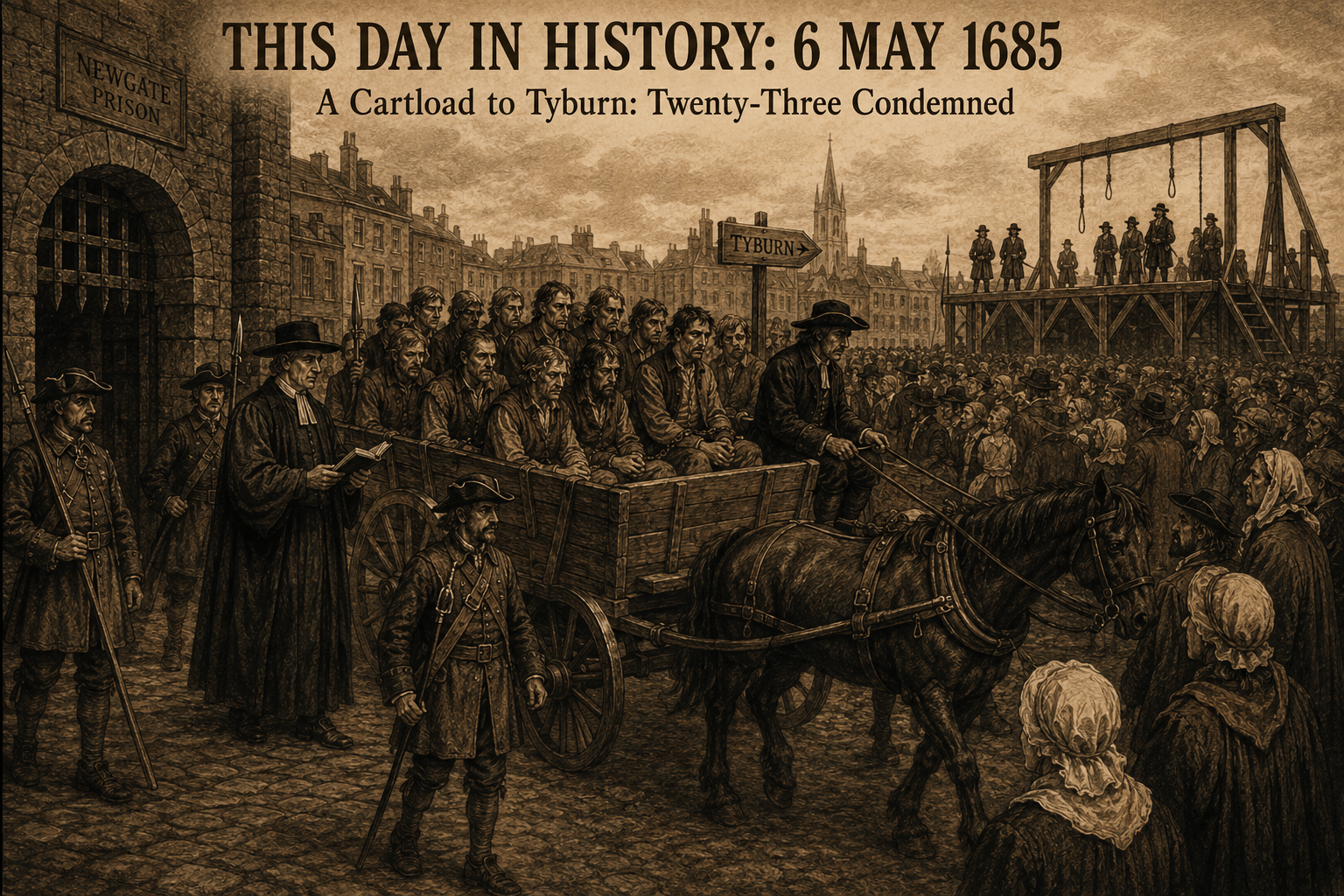
On 6 May 1685, twenty-three prisoners were executed at Tyburn following an Old Bailey session. Despite the Ordinary’s efforts, many remained unrepentant, hoping for pardon until the end. The account reveals a sombre mass execution marked by silence, resignation, and the harsh realities of early modern justice.
This Day in History: 5 May 1736
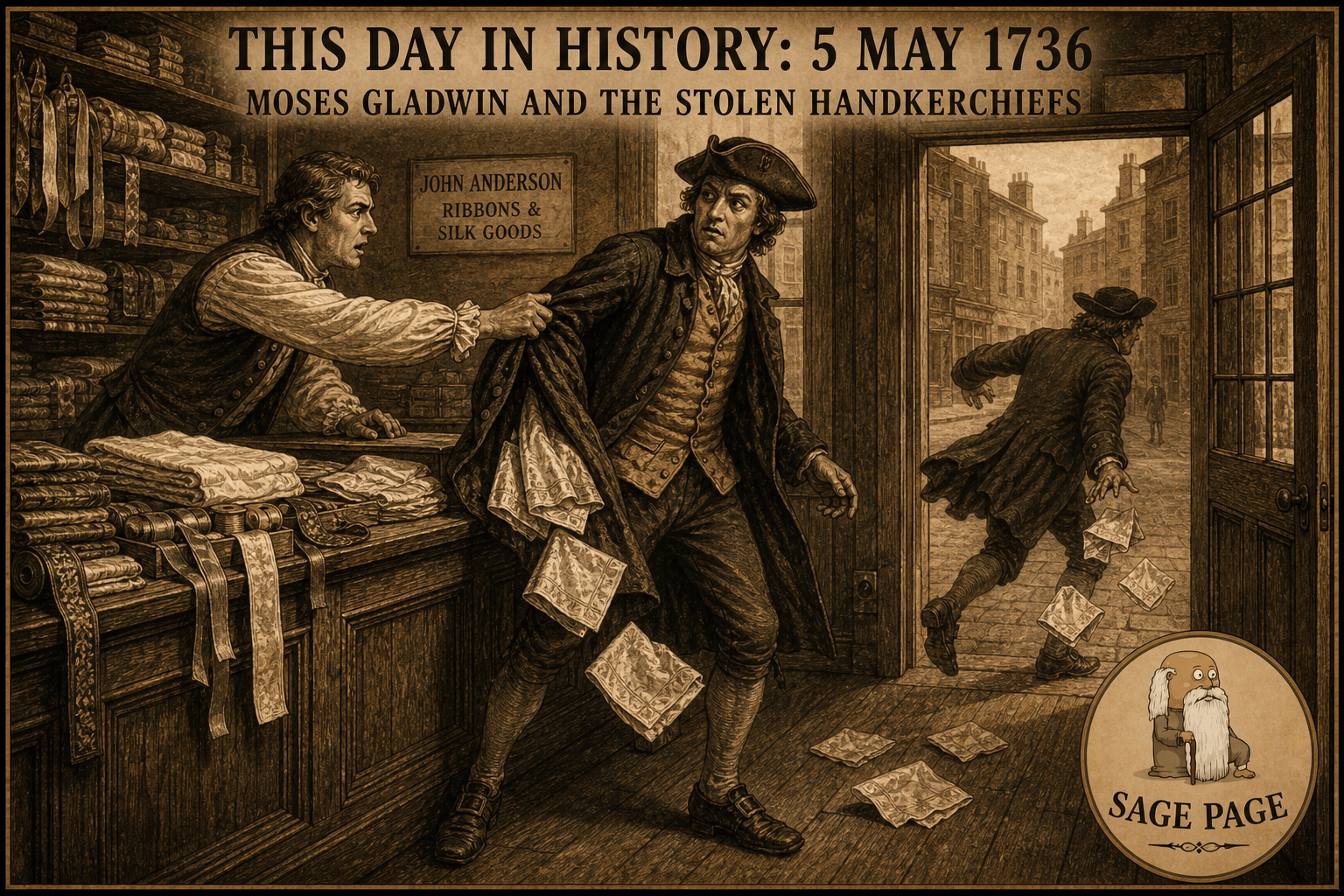
On 5 May 1736, Moses Gladwin was sentenced to death for shoplifting silk handkerchiefs worth 40 shillings. Caught hiding the goods under layered coats, his defiant defence failed, and the Old Bailey jury convicted him under England’s harsh “Bloody Code” laws.
This Day in History: 29 April 1724
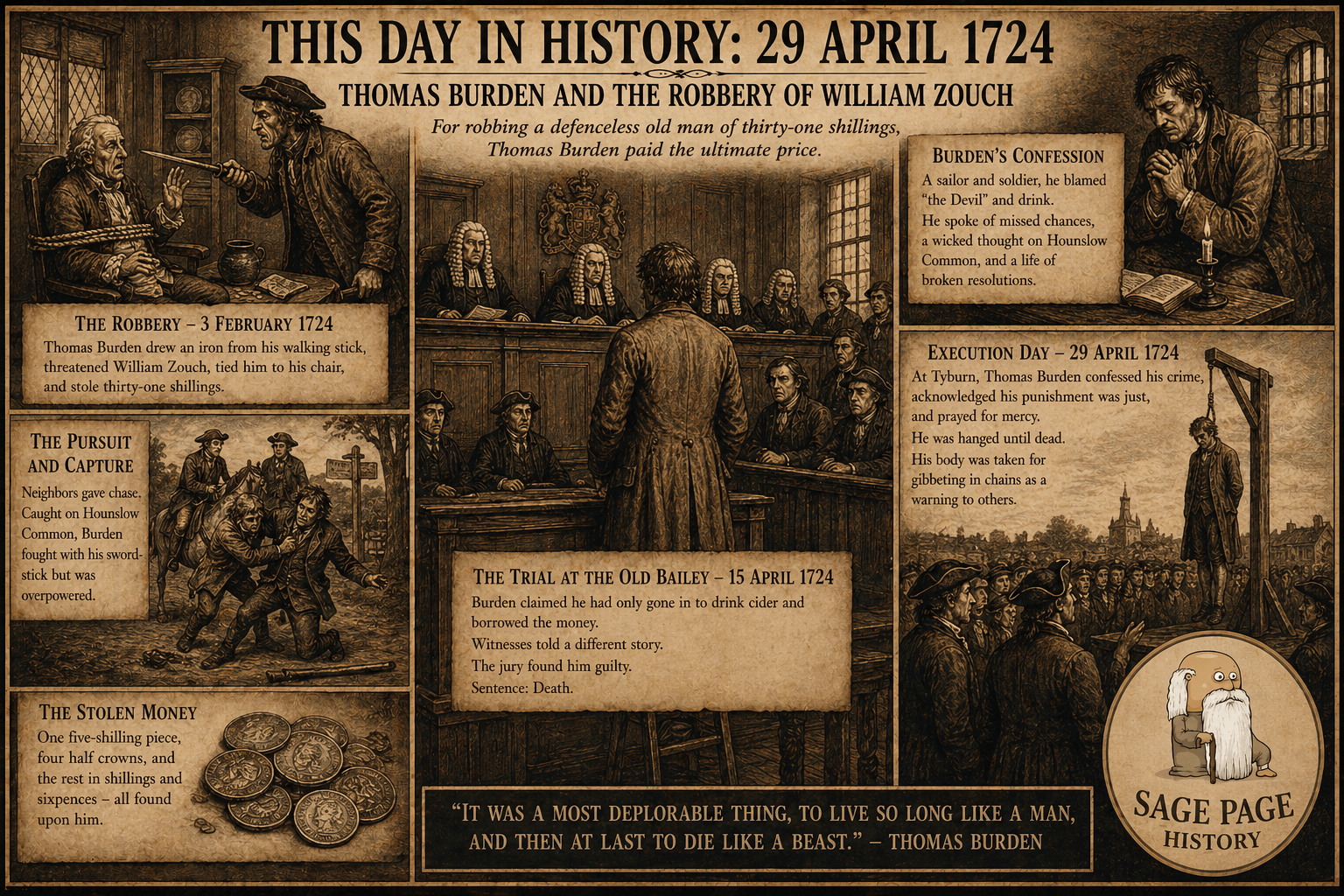
On 29 April 1724, Thomas Burden was executed for robbing elderly William Zouch at swordpoint. After tying the old man to a chair and stealing 31 shillings, Burden was quickly captured and sentenced to death, later blaming the Devil and drink for his downfall.
This Day in History: 25 April 1746
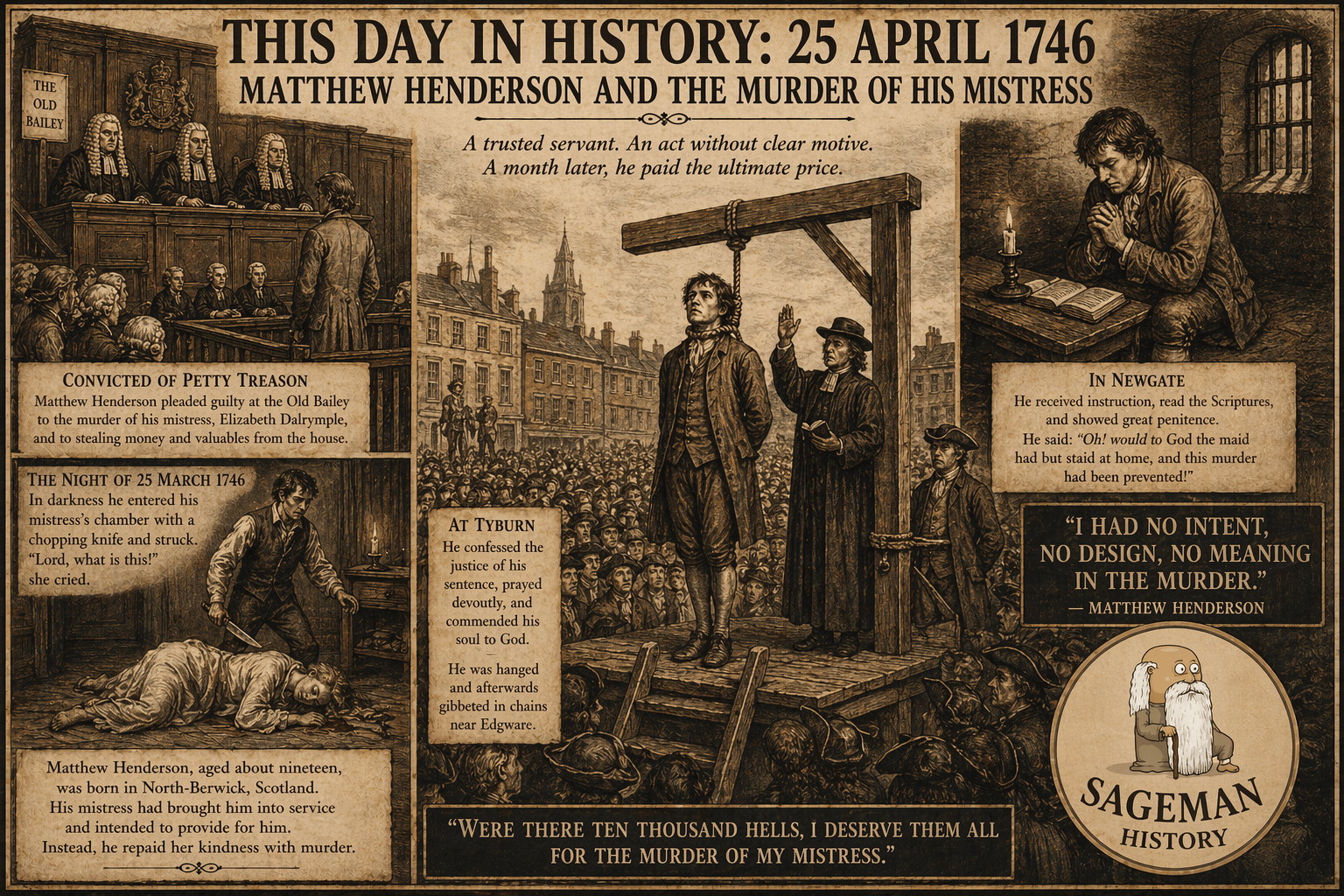
On 25 April 1746, nineteen-year-old servant Matthew Henderson was executed for murdering his mistress, Elizabeth Dalrymple. His confession shocked London: he claimed he had no clear motive, only a sudden temptation that led to one of the Old Bailey’s most disturbing domestic murders.
This Day in History: 24 April 1723
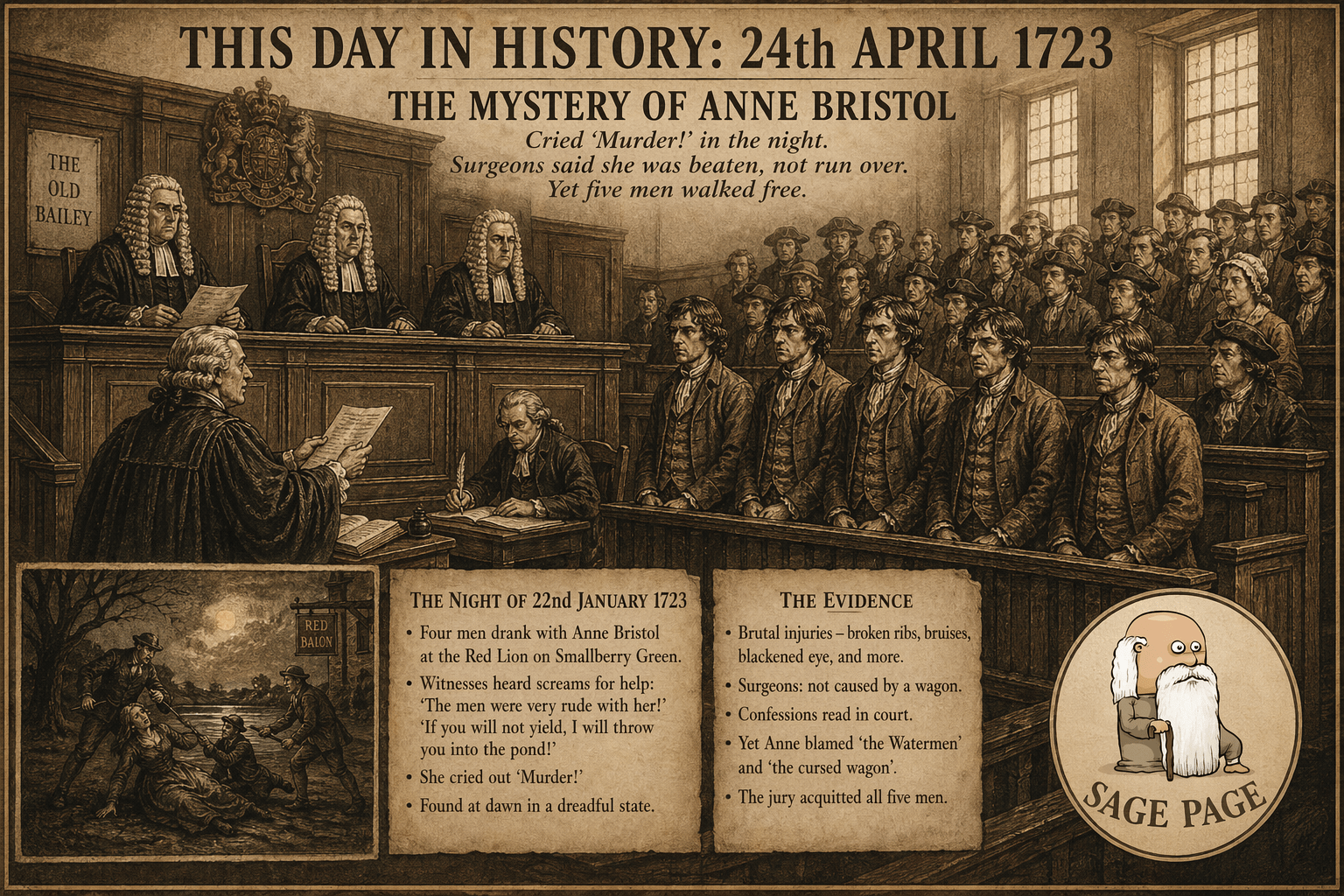
On 24 April 1723, five men were tried for the murder of Anne Bristol after she was found dying on Smallberry Green. Witnesses heard screams, surgeons found brutal injuries, and confessions were read—yet every accused man was acquitted.
This Day in History – 22 April 1789
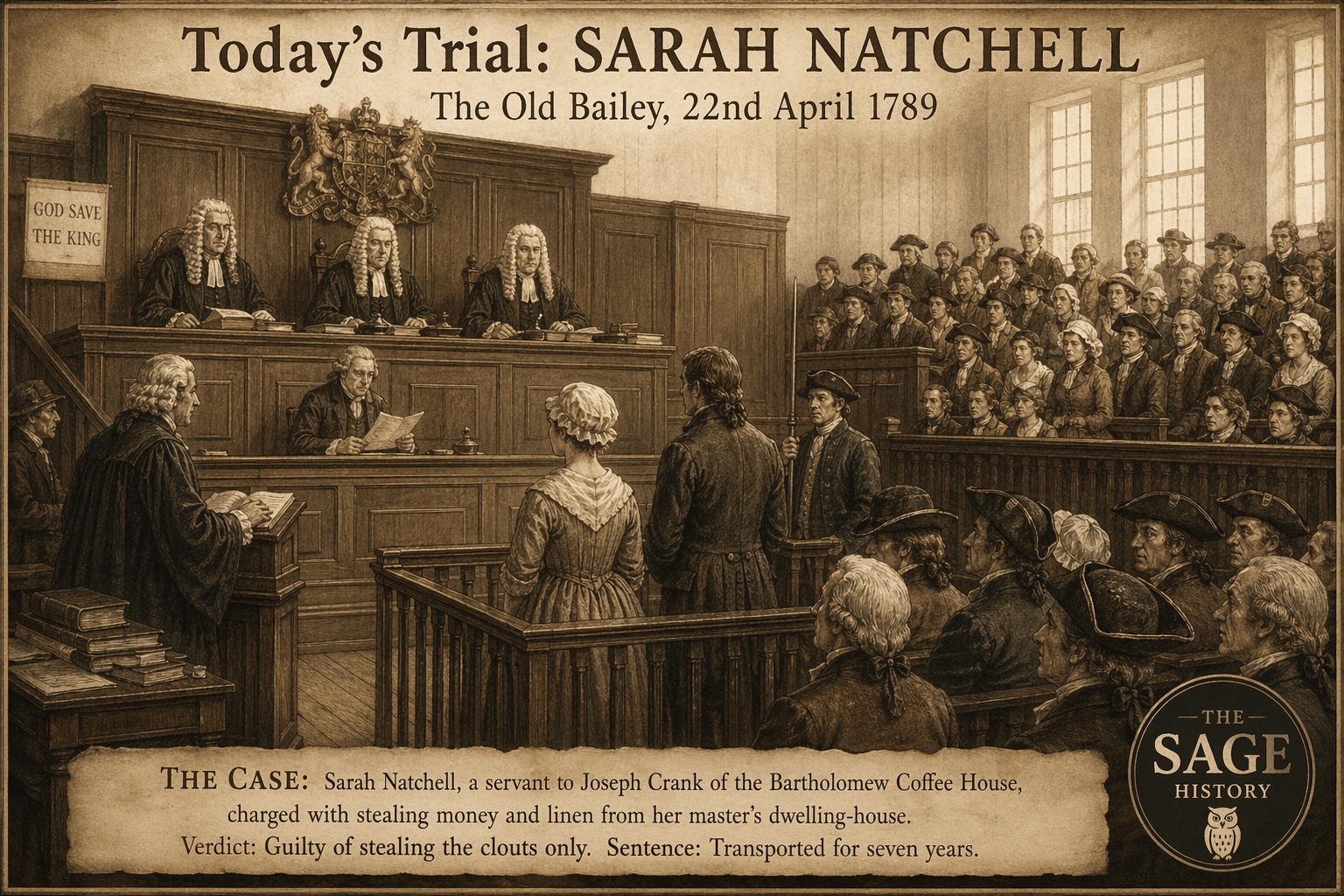
In 1789, servant Sarah Natchell was accused of stealing over £45 from Bartholomew Coffee House in West Smithfield. Though only convicted of stealing tea-cloths, the betrayal of household trust earned her a harsh sentence: seven years’ transportation to New South Wales aboard the Lady Juliana.

