Swipe Right for Laughter: A Collection of Dating Jokes
Navigate the sometimes bumpy dating world with a smile—our selection of dating jokes is your perfect match. Whether you’re nostalgic for awkward first date blunders or love clever one-liners about romance, these jokes bring relatable humour for singles, couples, and everyone in between. Ideal for lightening the mood or breaking the ice, this collection is guaranteed to elicit smiles, giggles, and maybe even a playful ‘LOL’ on a date night!
I heard that Oxygen and Magnesium are going out.
I was like OMg …
After kissing a girl on her sofa she said, “Let’s take this upstairs.”
“Okay,” I said, ” You grab one end and I’ll grab the other.”
I was crossing the street when I suddenly noticed my ex getting run over by a bus.
I thought to myself, “Wow! That could have been me!”
Then I remembered I can’t drive a bus.
The first time I had sex it was in my parent’s bedroom.
My wife said, “This is a bit awkward.” I said, “Just ignore them.”
A furniture store keeps calling me.
But all I wanted was one night stand.
He said – Since I first laid eyes on you, I’ve wanted to make love to you really badly.
She said – Well, you succeeded.
I once dated a girl with fiery red hair and a pale white thin body.
We met on match.com
The last time I was someone’s type, I was donating blood.
I used to go out with the lady who did the voice for the speaking clock.
We had a big falling out though, and now she won’t give me the time of day…
As I looked into her eyes I felt my knees go weak and my stomach turned to butterflies.
That’s when I realized I’d drugged the wrong glass.
When a girl changes clothes in front of you, she is really into you.
Or she hasn’t spotted you in the cupboard yet.
My mate has got a new wife called Peg.
He met her online.
I once dated a one-legged girl who worked in a brewery.
She was in charge of the hops.
I met my wife on Tinder.
That was awkward.
I was on a train and this woman opposite looked at me and said “Every time you smile, I feel like inviting you to my place…”
I asked, “Are you single??”
She replied, “No, I’m a dentist.”
I met my wife at ‘Castanets Club’.
We clicked straight away…
I went to a fancy dress party last weekend dressed as a loaf of bread…
The birds were all over me.
I used to go out with a girl whose left eye was missing.
She was a right looker…
I used to go out with a javelin thrower.
But then she chucked me.
Don’t date a tennis player – love means nothing to them.
I spelled out “marry me?” in balloons outside the house of a girl I met on the internet.
When I finally met her in person for the first time, I popped the question.
And that’s not all ….
Thank you for reading my writings. If you’d like to, you can buy me a coffee for just £1 and I will think of you while writing my next post! Just hit the logo below…. (thanks in advance)
I came across this quote for the first time 10 years ago and it has stayed with me ever since. Heraclitus proposes that in life nothing stays the same. If we put our foot in a river, then take it out before returning it again, the original water has moved on downstream, so it is a new river into which we place our foot. He even surmises that in that short space of time our foot is not the same as it has grown marginally older! I love this quote as it encourages us to embrace change because change is inevitable anyway.
Thank you for reading my writings. If you’d like to, you can buy me a coffee for just £1 and I will think of you while writing my next post! Just hit the logo below…. (thanks in advance)
Step into the lighter side of law enforcement with our crackling collection of crime jokes. Whether you’re a true-crime aficionado or just enjoy a good laugh about bungling burglars and pun-loving policemen, this page delivers quick-witted punchlines and clever crime-themed quips. From courtroom capers to heist hijinks, these jokes are the perfect way to lighten the mood—no investigation needed.
Last night I was walking down the street when I saw a guy trying to grab an old lady’s handbag, so I ran over to help.
We got it off her eventually.
The police suspected that my daughter accidentally burnt our house down.
But it was arson.
I got a parking ticket for being parked illegally the other day and I’ve no idea why.
The sign clearly said, “Fine for parking”.
I’ve just stolen a load of swimming inflatables.
I’d better lilo…
I buy all my guns from a guy called “T-Rex”.
He’s a small arms dealer.
A lorry load of Brillo pads was stolen last night.
Police are currently scouring the area…
I accused my friend of pouring glue on my weapons.
He denied it but I’m sticking to my guns.
Our local chiropodist has been arrested as he keeps stealing small pieces of nails after treating patients.
He’s a clipped toe maniac…
My dad said he was going to set me up for life.
Of course, I was excited by the idea.
Until he blamed me for the murder he committed.
Prison may be just one word.
But to some, it’s a whole sentence.
I had to interrogate a duck once.
Eventually, he quacked under the pressure…
I went bobsleighing last night.
Killed fifteen people called Bob.
As I suspected, someone has been adding soil to my garden.
The plot thickens.
The guy who stole my diary has died.
My thoughts are with his family.
The police knocked at my door last night…
“Sorry for troubling you sir, but can we have a quick word?”
I said, “Velocity?”
A terrorist attack has blown away two local houses, one made of straw & the other made of wood.
Police think that it’s probably a lone wolf.
Police are on the lookout after a man has been breaking into farms and stealing cows.
They are looking for a male with a large moo-stash.
I can’t believe someone broke into my house and stole all of my fruit.
I am peachless.
A gang has been caught smuggling jacket potatoes through customs.
They would have gotten away with it but they were foiled.
My friend was sent to prison last year for excessive burping.
He’s finally been let out with a pardon.
Dirty Derek our local flasher was thinking about retiring, but he’s decided to stick it out for another year!
Just got 15 Valentines cards!
It’s left me completely breathless.
That security guard at Clinton Cards gave quite a chase.
Last year I had to steal something to stir my pancake batter with…
But it was a whisk I was willing to take.
I’m embarrassed to say I got addicted to shoplifting but only from the bottom shelves in the supermarket.
How could I stoop so low?
Some guy just assaulted me with milk, cream, and butter.
How dairy!
Somebody stole my Microsoft Office and they’re going to pay – you have my Word.
Thank goodness I went to a psychic, she told me someone was going to swindle me out of some money.
Best 100 quid I’ve ever spent.
My Mum’s sister keeps taking the law into her own hands…
She’s a vigilauntie.
News just in:
Local police have acquired 1,000 bees.
They’re believed to be used as part of a sting operation.
I got stopped for speeding by a woman police officer.
I almost talked my way out of it by telling her she looked stunning.
Then I messed up by saying, “And that’s not even the drink talking!”
I got pulled over by a traffic policeman.
He walked up to my window and said, “Papers.”
I said, “Scissors, I win…” and I drove off.
He must be desperate for a re-match because he’s been chasing me for ages.
A load of irons were stolen from a launderette…
Police want to do a press conference.
A thief stole the wheels off my car last night.
I’m working tirelessly to catch him.
Don’t talk to me about stealing clothes from washing lines…
I’ve been there, done that, got the t-shirt…
A warning to the person who stole my glasses.
I have contacts!
I remember when you went to a newsagent with £1 and left with 2 bags of crisps, a chocolate bar, and a magazine.
Nowadays, CCTV is everywhere!
Breaking News!
Police are warning of a large volume of fake passports and photo driving licences hitting the black market this month.
Beware the IDs of March…
Worried about someone trying to steal my xylophone.
I’ve taken percussions.
I’ve been offered a job teaching poetry in prisons.
I’m considering all the prose and cons…
A man goes to the Psychiatrists and the Psychiatrist says: ‘What’s the problem?’
The man says, ‘I think I’m becoming a kleptomaniac.’
The Psychiatrist says, ‘Here take these tablets and if you’re no better in a week…. bring me a 4K TV’.
Police hunting a robber who stole a book about Stradivarius have warned the public not to approach him…
He has a history of violins…
I reckon I’m a wanted man for using too much coconut shampoo…
It’s like there’s a bounty on my head…
No one seems to kidnap cheesy 90s pop groups anymore…
I’ve taken Steps to rectify this…
Police want to interview a man suspected of burglary wearing stockings and suspenders…
However, the Chief Constable has insisted they wear their normal uniform.
I saw a van with a “No tools left in this van overnight” sticker on the back.
So I broke in during the day.
I bought a book on eBay called “How to scam idiots on eBay”
That was 3 months ago, and it’s still not arrived yet!
A guy I know called Paul Young was accused of allegedly shoplifting from the butchers several times in one week.
The butcher said to him ‘every time you go away, you take a piece of meat with you…’
The world is a dangerous place; only yesterday I went into Boots and punched someone in the face.
My mate is a professional counterfeiter.
He’s got loads of certificates to prove it.
I started carrying a knife after an attempted mugging a few years ago.
Now I’m a lot more successful.
If you’re being chased by a police dog, try not to go through a tunnel, then on to a little seesaw, then jump through a hoop of fire.
They’re trained for that…
To the scumbag that stole 100 cans of Red Bull from my shop!
I don’t know how you can sleep at night.
The police rang me earlier to say they’d recovered my stolen three-piece suite!
Which was nice of them, it was starting to look a bit tatty
My mate Sid’s been a victim of ID theft.
He’s now called ‘S’
I saw a sign on the train saying “Please give this seat to an elderly person”.
So I unscrewed it and took it round to my granddad’s house…
Police looking for a man who stabbed six people with knitting needles.
He seems to be following some sort of pattern!
Police raided Kermit’s lily pad and found 100s of nude pictures of Miss Piggy.
They said it was the worst case of frogs porn ever seen.
To the lad who stole my weight loss pills…
You’ll have nothing to gain.
If you’re a hostage and the gunman says “Who shall I shoot first?”
Saying, “It’s ‘WHOM shall I shoot first?'” is not the best answer.
I’ll never forget my gran’s final words to me. “
What are you doing with that hammer!?”
What do you say to a man who’s just stolen your gate?
Nothing. He might take a fence.
Someone stole all my next-door neighbour’s grass last night.
He’s out there now looking forlorn…
Hearing reports that Sting has been kidnapped.
The Police haven’t got a lead.
A burglar broke into our house last night. I didn’t shoot him.
I just put the red laser dot on his forehead.
Our three cats did the rest.
I went into the Police station and saw a man with three stripes on his arm and a trifle on his head…
He was the custardy sergeant.
What did the police officer say to his belly?
You’re under a vest!!!
Knowing how to pick locks has really opened a lot of doors for me.
Someone broke into my office and stole all the coffee cups.
I’ve got to go to the police station later to look at some mugshots…
As the judge sentenced me to death, I tried to offer him a high five.
But he left me hanging.
I have kleptomania, but when it gets bad, I take something for it.
The doctor gave me 4 months to live, so I shot him.
The judge gave me 20 years.
BREAKING NEWS!
Thieves broke into WH Smiths last night and stole A4 files, folders, poly pockets, and dividers.
Police are looking for a gang of organised criminals…
Got home and someone has stolen all the bits of carpets and the mats.
Police think it was the work of rug addicts.
Why did the burglar steal a bath?
He wanted to make a clean getaway.
To the thief who has stolen my sage, onion and breadcrumbs…
You can go and get stuffed…
Went to a ‘kleptomaniac’s anonymous’ meeting but arrived a bit late.
By the time I got there, all the seats had been taken…
It’s hard to explain puns to kleptomaniacs because they always take things literally.
Robber: “Give me all your money or you are GEOGRAPHY!’
Cashier (puzzled) “Did you mean to say “or you’re history?”
Robber: “Don’t change the subject.”
Stealing someone’s coffee is called mugging.
A man is at court today for damaging books by putting Tippex on all the full stops.
He’s expecting a long sentence.
My wife hates it when I sneak up on her.
Also, the police say I should stop referring to her as my wife.
A police officer accidentally arrested a judge who was dressed as a convict for a costume party.
He soon learned you should never book a judge by their cover.
A burglar stole all the light bulbs in my house.
I know I should be more upset, but I’m absolutely delighted!
I’ve been charged with murder for killing a man with sandpaper.
To be honest, I only intended to rough him up a bit.
To the person who stole my mattress;
I won’t rest till I find you…
Heathrow Airport police are concerned at the number of passengers smuggling helium-filled balloons in their luggage.
Cases continue to rise…
2 boys have been stopped by police for riding a vacuum cleaner down a steep hill.
A police spokesman said “those boys were Dyson with death”
What do you get when you cut a Policeman’s Head in 4 Pieces?
Police Head Quarters..
2 policemen knocked on my door last night.
They said “We’ve been getting complaints”
“You should start doing a better job then!” I replied
I get so angry when I see someone with their wallet chained to their belt.
I just can’t take it.
Just been to B&Q with my wife and she got a ladder in her tights…
She’s an amazing shoplifter.
An armed man has just run into an estate agents, and shouted
“Nobody move!!”
“What’s your name?” the cop asked when he pulled me over.
“Andy,” I said.
“And your last name?” he asked.
“It’s always been Andy,” I said.
Why do riot police like to get to work early?
To beat the crowd.
I donated 4 litres of blood today.
Never doing it again though.
They ask way too many questions.
Who’s blood is this? Where did you get it from? Why do you have it?
Did you know that you can murder someone with socks?
It’s true. It doesn’t matter what they’re wearing.
Proud of my son he has an anti-bullying wristband.
He took it off a fat ginger kid.
Witness “I saw an octopus rob a bank this morning!”
Reporter “Did he have a gun?” Witness “
No, but he was well-armed!”
Police have found a dead body at a Dominos which was covered in ham, cheese, and pineapple.
Police believe he may have topped himself.
Thieves who stole three tonnes of tarmac are believed to currently be in hiding.
A police spokesman said; “We are hoping that they will resurface soon”.
And that’s not all ….
Thank you for reading my writings. If you’d like to, you can buy me a coffee for just £1 and I will think of you while writing my next post! Just hit the logo below…. (thanks in advance)
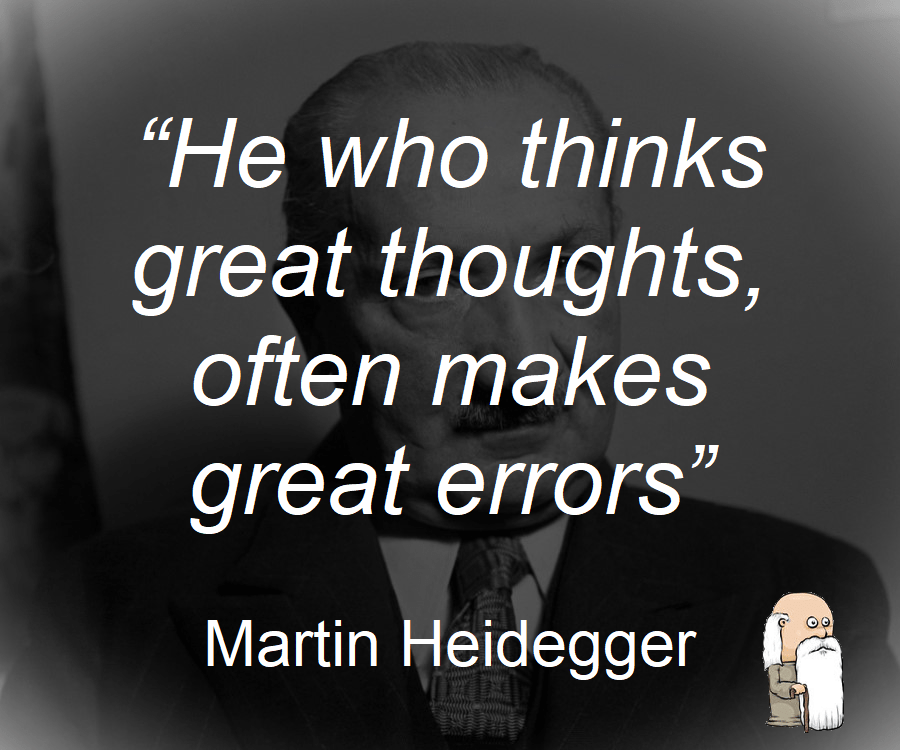
“He who thinks great thoughts, often makes great errors”
Martin Heidegger
Whilst I agree with Heidegger that the potential is there to over reach, or be over optimistic, I disagree with the sentiment of limiting one’s thoughts to closer horizons! I want to risk the mistakes in order to dream and achieve more? Am I right?
Thank you for reading my writings. If you’d like to, you can buy me a coffee for just £1 and I will think of you while writing my next post! Just hit the logo below…. (thanks in advance)
Strut down the runway of humor with our fashionable selection of clothing jokes! From witty one-liners about belts that “hold up” pants to puns knit together with clever tailoring, this collection is perfect for textile lovers and pun enthusiasts alike. Whether you’re rummaging through your closet for laughs or need a stylish ice breaker, these jokes are tailored to keep your spirits chic and cheerful—no fitting required!
I bought some shoes from a drug dealer.
Not sure what he laced them with but I’ve been tripping all day.
I’m struggling with these shoes I bought from East Asia..
They came with two pairs of laces but I can only Taiwan…
What do you call a Frenchman wearing sandals?
Phillipe Phillope.
What wears a fur coat in winter, and pants in summer?
A dog.
What color socks do bears wear?
They don’t wear socks, they have bear feet!
Me: “These orthodox shoes are great.”
Wife: “It’s ‘orthopaedic’ shoes.”
Me: “I stand corrected.”
I used to enjoy dressing up as a nun occasionally, but now I can’t seem to get out of the habit…
What does a house wear to a party?
Address.
I get so angry when I see someone with their wallet chained to their belt.
I just can’t take it.
My wife kept going on and on about what she should use the empty drawer for.
Eventually, I told her to put a sock in it.
Her: ‘Undress me with your words…’
Him: ‘There’s a spider in your bra !!’
I saw someone holding a pair of shoes to his ears.
Apparently, he was listening to sole music.
I had to give up my job at the dress alteration company.
Apparently, I didn’t turn up enough.
What do you call a chicken in a shell suit?
An egg.
Fun Fact: “T-Shirt” is actually short for “Tyrannosaurus Shirt”
Because of the shorter arms.
What do you call a man wearing two raincoats?
Max
I’m entering the world’s tightest hat competition.
Just hope I can pull it off.
My left shoe says “I don’t smoke or drink”.
My right shoe says “I don’t do drugs”.
They are a pair of sensible shoes…
And that’s not all ….
Thank you for reading my writings. If you’d like to, you can buy me a coffee for just £1 and I will think of you while writing my next post! Just hit the logo below…. (thanks in advance)
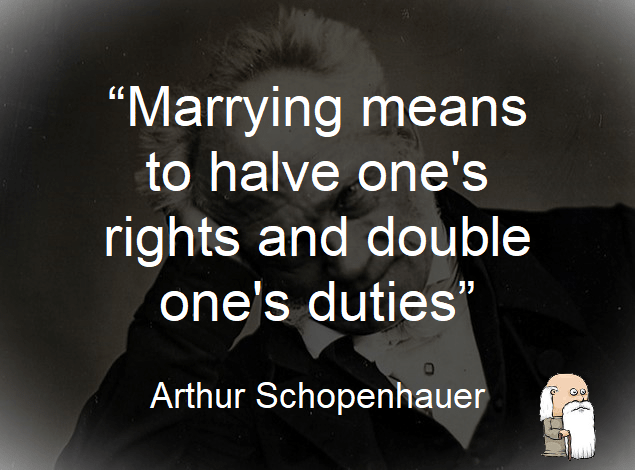
“Marrying means to halve one’s rights and double one’s duties”
Arthur Schopenhauer
Schopenhauer was a 19th Century philosopher who never married, so perhaps that might explain his take on the subject? He believed that marriage was about continuing the human species and he went on to say: ”what is looked for in marriage is not intellectual entertainment, but the procreation of children.’‘ His views on marriage seem rather dark! What do you think?
Thank you for reading my writings. If you’d like to, you can buy me a coffee for just £1 and I will think of you while writing my next post! Just hit the logo below…. (thanks in advance)
Sometimes I tuck my knees up into my chest and lean forward.
That’s just the way I roll.
I was having an argument with my wife last night and she accused me of being childish.
What does she know?
She’s just a stinky poo face…
Why didn’t the teddy bear eat his dessert?
Because he was stuffed.
I had a happy childhood, my dad used to put me inside a tire and roll me down a hill…
They were Goodyears.
My wife just told me to grow up.
I’m speechless!!
To be fair though, it’s pretty hard to say anything with 37 gummy bears in your mouth.
Two dogs are sitting in a bar.
The first says, “Wanna hear a joke?”
The second dog says, “Sure!”
The first dog says, “Knock knock.”
The second says… “WOOF WOOF WOOF! WOOF WOOF WOOF WOOF WOOF!!”
I tried to explain to my 4 year old son that’s it’s perfectly normal to poop your pants.
He’s still making fun of me though.
Check this one out: 1
To the person who hid my shoes while I was on the bouncy castle!…
Grow up.
Who hides in the bathroom at parties?
The party-pooper.
The condition of the man who was mauled at the Teddy bear’s picnic is said to be improving but he’s not out of the woods yet!
They say childbirth is the most painful thing someone can experience.
Maybe I was too young to remember, but I don’t think it hurt that much
I enjoyed my first time ever bobbing up and down in the sea yesterday…
It’s been my dream ever since I was a little buoy…
A kid asks his dad, “Do trees poop?”
The dad answers, “Where do you think number 2 pencils come from.”
I have a lot of growing up to do.
I realized that the other day in my fort.
Anyone want to swap some bum jokes?
I’ve got piles.
What do you call an ox with a large bum?
Big buttocks.
Look, I’m all for colouring books …
But dot-to-dots?
That’s where I draw the line.
Thank you for reading my writings. If you’d like to, you can buy me a coffee for just £1 and I will think of you while writing my next post! Just hit the logo below…. (thanks in advance)
“Whereof one cannot speak, thereof one must be silent”
Ludwig Wittgenstein
If we could all learn to follow Wittgenstein’s advice, I’m sure the world (and social media) would be a better place. It seems today that we are all experts on every subject. So rather than listen and learn when we are ignorant, or not well versed, on a subject, we are prone to talk and give our views! Facebook and Twitter are theatres for loud shouters, not thoughtful listeners.
Thank you for reading my writings. If you’d like to, you can buy me a coffee for just £1 and I will think of you while writing my next post! Just hit the logo below…. (thanks in advance)
It’s probably not safe for me to be driving my car right now.
But hey, bad brakes have never stopped me before.
People laugh at my car because it’s ugly and green.
But at least I avocado.
I renewed my car insurance over the phone today, and as I was about to hang up the woman on the other end asked if I had a pet.
I said, “Yes, I’ve got a dog.”
She asked, “Would you like to insure him too?”
I said, “No thanks, he can’t drive!”
A man is washing the car with his son.
His son asks, “Dad, can’t you just use a sponge?”
The other day someone left a piece of plasticine in my car.
I didn’t know what to make of it.
I was so worried the mechanic would rip me off because I confessed I knew nothing about cars…
Imagine my relief when he said I only needed indicator fluid.
BREAKING NEWS!
The M25 is blocked after a lorry shed its load of brightly coloured writing paper and envelopes…
Police say the traffic is pretty stationery…
What do we want? Race car noises!!!
When do we want them?
Neeeooowwwww
My car failed it’s emissions test today….
Fuming!
Took my car in for a service yesterday…
The vicar at the church was not impressed…
I just finished building a car using a motor from a washing machine.
I’m going to take it for a spin later…
Dad is down at the car dealership, looking at potential choices.
“Cargo space?” he asks.
The salesman says: “Car no do that. Car go road.”
My friend said he was thinking of buying a car with a transparent driving wheel.
I told him to steer clear.
Engineers have successfully made a car that can run on parsley.
They are now attempting to make trains that can run on thyme…
I was driving this morning when I saw a parked RAC van.
The driver was sobbing uncontrollably and looked very miserable.
I thought to myself, that guy’s heading for a breakdown.
What sound does a witch’s car make?
Broom broom.
I really wish I knew who kicked the jack out from under the car that I was working on?..
The suspension is killing me.
102 years ago everyone had a horse and only the rich had cars.
Nowadays everyone has a car and only the rich have horses.
Oh how the stables have turned…
Shania Twain has been boasting online about her new Subaru.
That don’t Impreza me much…
I invented a car that moves only when the driver is silent.
It goes without saying…
Quite difficult to get a job at Citroen.
Had to send them 2 CVs.
If you drive a Subaru in reverse, what are you?
U r a bus.
Children in the back seat cause accidents.
And accidents in the back seat cause children.
My great-grandad invented the rearview mirror for cars…
After that, there was no looking back.
I’m looking for a book on how to fix automatic gearboxes, but the library only has manuals.
I have a bumper sticker that says, “Honk if you think I’m sexy”…
When I’m feeling down, I just sit at green lights until I feel good about myself.
Pigeons must be wealthy.
They have no problem putting deposits on expensive cars.
I read that by law you must turn on your headlights when it’s raining in Sweden.
But how am I supposed to know when it’s raining in Sweden?
Thank you for reading my writings. If you’d like to, you can buy me a coffee for just £1 and I will think of you while writing my next post! Just hit the logo below…. (thanks in advance)
“A man who fears suffering is already suffering from what he fears”
Michel de Montaigne
This is a quote to remind us that the anticipation can be worse than the actuality. Anxiety through fear is suffering in itself.
Thank you for reading my writings. If you’d like to, you can buy me a coffee for just £1 and I will think of you while writing my next post! Just hit the logo below…. (thanks in advance)









 The Sage Page