Food brings people together — and, perhaps inevitably, produces a steady stream of jokes. This collection gathers classic food humour, familiar punchlines, and well-known gags that have been doing the rounds for years.
😂 Food Jokes
Why did the tomato turn red? Because it saw the salad dressing.
Why don’t eggs tell jokes? They’d crack each other up.
What did the biscuit say to the other biscuit? “I’m feeling crumby today.”
Why did the cookie go to the doctor? Because it felt crummy.
Why did the banana go to the doctor? Because it wasn’t peeling well.
Why don’t skeletons eat spicy food? They don’t have the stomach for it.
What do you call cheese that isn’t yours? Nacho cheese.
Why did the mushroom get invited to all the parties? Because he was a fungi.
Why did the baker go to therapy? He kneaded help.
What do you call fake spaghetti? An impasta.
Why did the chef blush? Because he saw the salad dressing.
Why did the chef break up with his girlfriend? She was too sour.
Why don’t pancakes ever argue? They just flip out.
What did the baby corn say to the mama corn? “Where’s popcorn?”
Why did the lettuce win the race? Because it was ahead.
What do you call a sad strawberry? A blueberry.
Why did the chef get arrested? Because he beat the eggs.
Why did the apple stop in the middle of the road? Because it ran out of juice.
Why did the butter go to school? To get a little “butter” education.
Why did the chicken go to the séance? To talk to the other side.
Food may be essential, but it rarely takes itself too seriously. Somewhere between the kitchen and the table, it seems to acquire a sense of humour — one that has been passed around almost as often as the dishes themselves.
Thank you for reading my writings. If you’d like to, you can buy me a coffee for just £1 and I will think of you while writing my next post! Just hit the link below…. (thanks in advance)
Computers may run on logic, but the people using them don’t always follow the same rules. This collection brings together classic computer jokes, well-known tech humour, and familiar punchlines about bugs, passwords, and the everyday frustrations of modern life.
😂 Computer Jokes
Why did the computer go to the doctor? Because it caught a virus.
Why was the computer cold? It left its Windows open.
Why did the computer show up at work late? It had a hard drive.
Why did the computer keep sneezing? It had a virus.
Why did the computer go to therapy? It had too many bytes from the past.
Why did the developer go broke? Because he used up all his cache.
Why do programmers prefer dark mode? Because light attracts bugs.
Why do Java developers wear glasses? Because they don’t see sharp.
Why did the computer cross the road? To get a byte to eat.
What do you call a computer that sings? A Dell.
Why was the computer tired when it got home? Because it had too many tabs open.
Why did the computer get glasses? To improve its web sight.
Why did the computer freeze? It left its Windows open.
What do you call a group of musical computers? A band-width.
Why don’t computers take their hats off? Because they have bad caps lock.
Why did the IT teacher go to jail? Because he was caught hacking.
Why did the computer get angry? Because someone pressed its buttons.
What’s a computer’s favourite snack? Microchips.
Why was the computer so smart? It listened to its motherboard.
Why did the laptop go to school? To improve its memory.
Technology promises efficiency, speed, and clarity, yet somehow manages to produce an entirely new category of confusion. Fortunately, where there is confusion, there is usually humour — and computers seem particularly generous in that regard.
Thank you for reading my writings. If you’d like to, you can buy me a coffee for just £1 and I will think of you while writing my next post! Just hit the link below…. (thanks in advance)
Clocks keep time, but they’ve also kept comedians busy for years. This collection brings together classic, well-known clock and time jokes — familiar punchlines, simple wordplay, and humour that has stood the test of time.
😂 Clock Jokes
Why did the man throw his clock out the window? He wanted to see time fly.
Why was the clock always hungry? Because it went back four seconds.
Why did the clock get in trouble at school? It kept tocking during lessons.
Why did the alarm clock get fired? It kept going off at the wrong time.
What do you call a belt made of watches? A waist of time.
Why did the clock go to therapy? It had too many issues with timing.
Why did the student sit next to the clock? He wanted to be on time.
Why did the clock break up with the calendar? It felt like their relationship was running out of time.
Why did the digital clock feel superior? Because it had more digits.
What did the clock say to the calendar? “Your days are numbered.”
Why did the clock get promoted? It worked around the clock.
Why did the watch go to school? To improve its second language.
Why did the clock go to the principal’s office? It was ticking off the teacher.
Why don’t clocks ever get tired? Because they always have time to rest.
What’s a clock’s favourite time of day? Any time.
Why did the grandfather clock get nervous? It felt under pressure.
Why did the clock sit in the corner? It needed some time out.
Why was the broken clock always calm? Because it didn’t care about time anymore.
Why did the clock get a medal? For outstanding timing.
Why did the clock join the band? Because it had good timing.
Time may move steadily forward, but humour has a habit of circling back on itself. And in the case of clocks, it seems that even the simplest ideas can keep ticking along, producing the same reliable laughs year after year.
Thank you for reading my writings. If you’d like to, you can buy me a coffee for just £1 and I will think of you while writing my next post! Just hit the link below…. (thanks in advance)
Churches are places of reflection, tradition, and—perhaps surprisingly—a rich source of humour. This collection brings together classic church jokes, familiar anecdotes, and well-known punchlines that have been shared for years.
😂 Church Jokes
A priest, a minister, and a rabbit walk into a blood donation clinic. The rabbit says, “I think I might be a type O.”
A pastor said, “Next week I plan to preach about the sin of lying. To help you understand, read Mark 17.” The following Sunday, he asked how many had read it. Nearly everyone raised their hand. The pastor smiled and said, “Mark only has 16 chapters.”
A burglar broke into a house one night. As he was sneaking around, he heard a voice say, “Jesus is watching you.” He froze. After a while, he continued… Again the voice: “Jesus is watching you.” He turned on the light and saw a parrot. “What’s your name?” he asked. “Clarence,” said the parrot. “Who names a parrot Clarence?” “The same people who named their Rottweiler Jesus.”
A man walked into a church and asked, “How much do you charge for a wedding?” The priest replied, “That depends on how beautiful the bride is.” The man said, “She’s average.” The priest said, “£100.” The man showed him a photo. The priest looked and said, “Oh… I didn’t realise she was so beautiful. That’ll be £10.”
A Sunday school teacher asked her class, “Why do you need to be quiet in church?” One child replied, “Because people are sleeping.”
A little boy was in church with his mum. During the service, he whispered, “Mum, I need to go to the toilet.” She said, “Wait until after the prayer.” He replied, “But my prayer has already been answered!”
The vicar’s wife was very upset. “You told everyone in your sermon that I’m greedy!” “I didn’t,” said the vicar. “I said we should be content with what we have.” “Yes,” she said, “and then you looked straight at me.”
A man told his friend, “I joined a new church.” “Really? What’s it like?” “They’re very friendly. They even have a special pew for people who snore.”
A minister was preoccupied with thoughts of how he was going to ask the congregation to come up with more money. So he announced, “After the sermon, the collection plates will be passed around. But before that, I’d like to ask the congregation to pray.” A little boy leaned over to his father and whispered, “Dad, if we pray, do we still have to pay?”
A priest was giving a sermon about honesty. Afterwards, he asked, “How many of you have read the Ten Commandments?” Everyone raised their hand. He said, “Good. Next week we’ll go through them one by one… slowly.”
A church sign read: “Don’t let worries kill you — let the Church help.”
Another sign read: “Come in and pray today — beat the Christmas rush.”
A priest said to his congregation, “The good Lord didn’t create anything without a purpose, but mosquitoes come close.”
A man walked into church late. The usher said, “You’ll have to sit in the front row.” The man replied, “No thanks, I’d rather stand.”
A Sunday school teacher asked, “Who knocked down the walls of Jericho?” A boy said, “Not me!” The teacher was shocked and told the headmaster. The headmaster said, “I know the boy—he’s very honest. If he says he didn’t do it, he didn’t do it.”
A pastor said, “I have good news and bad news. The good news is we have enough money to pay for the new roof. The bad news is—it’s still in your pockets.”
A man said to the vicar, “I haven’t been to church in years.” The vicar replied, “That’s alright… we’ve kept your seat warm.”
During a long sermon, a man leaned over and said, “How long has he been preaching?” His friend replied, “About 30 years.” “30 years?” “Yes… but don’t worry, he’ll finish soon.”
A child asked, “Why does the pastor talk so loudly?” The father replied, “So he can wake up the people at the back.”
The church choir sounded terrible one Sunday. Afterwards, someone asked the vicar what went wrong. He said, “I think they were singing by faith, not by sight.”
Tradition and humour have always had a curious relationship, and nowhere is that clearer than in church life. Even in the most solemn settings, a well-timed joke has a way of reminding everyone that a little laughter can sit quite comfortably alongside reflection.
Thank you for reading my writings. If you’d like to, you can buy me a coffee for just £1 and I will think of you while writing my next post! Just hit the link below…. (thanks in advance)
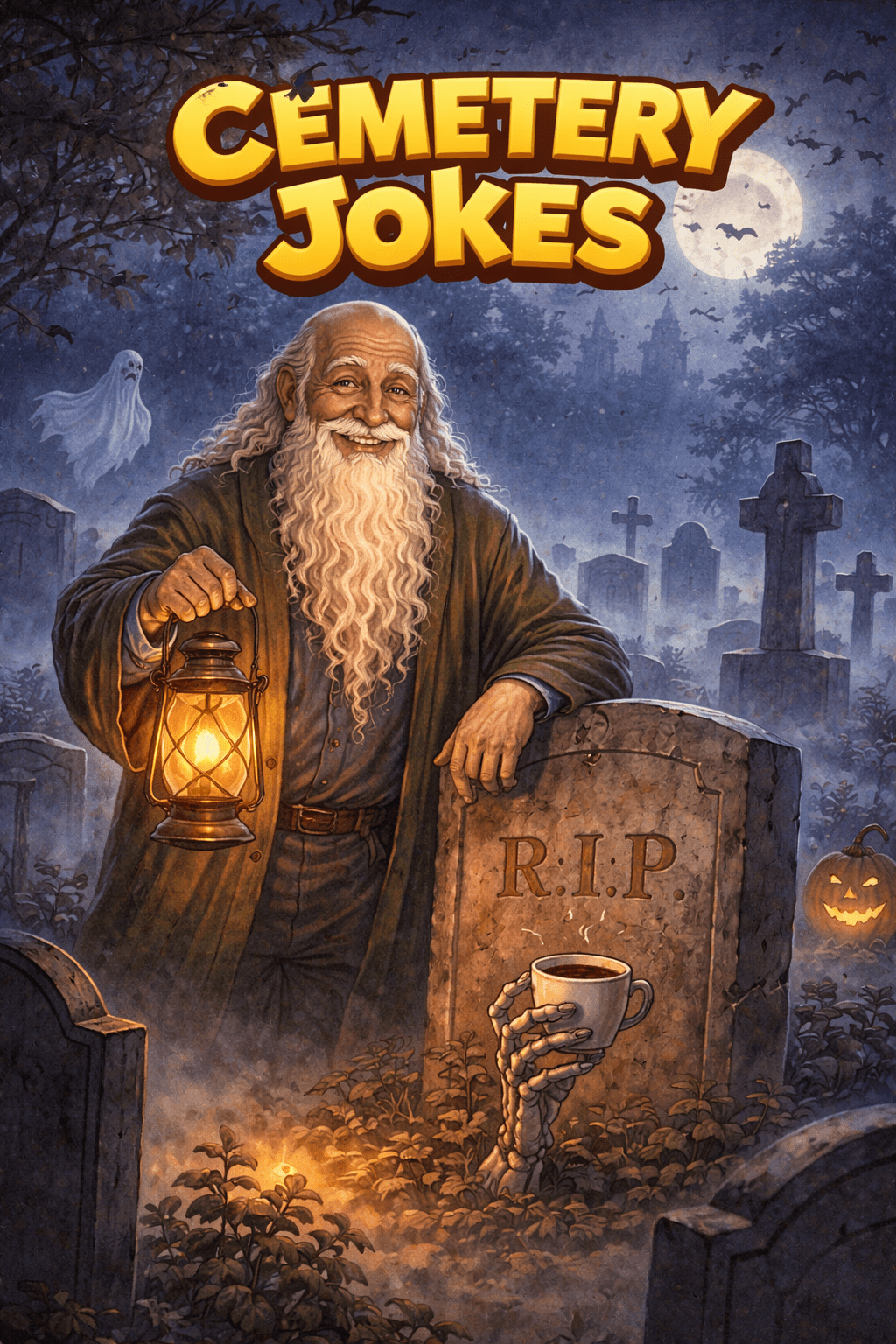
Cemeteries may be places of quiet reflection, but they’ve also inspired a surprising amount of classic humour. This collection brings together well-known graveyard jokes, familiar one-liners, and time-tested puns that have been doing the rounds for years.
😂 Cemetery Jokes
Why don’t skeletons fight each other? They don’t have the guts.
Why don’t skeletons go to parties? Because they have no body to go with.
Why are cemeteries so noisy? Because of all the coffin.
Why did the skeleton stay home from the dance? He had no body to go with.
What do you call a skeleton who won’t work? Lazy bones.
Why did the skeleton cross the road? To get to the body shop.
Why didn’t the skeleton go to the scary movie? He didn’t have the stomach for it.
What kind of streets do ghosts haunt? Dead ends.
Why are graveyards so popular? People are dying to get in.
What’s a skeleton’s least favourite room? The living room.
Why did the ghost go into the bar? For the boos.
What do ghosts drink? Spirits.
Why don’t ghosts like rain? It dampens their spirits.
What do you call a ghost with a broken leg? A hoblin goblin.
Why did Dracula become a vegetarian? Because biting necks was a pain in the neck.
What do you get when you cross a vampire and a snowman? Frostbite.
Why don’t vampires go to barbecues? They don’t like steak.
Why did the ghost get a job? He wanted to make a living.
What do you call a cemetery with strict rules? Grave regulations.
Why are ghosts such bad liars? Because you can see right through them.
There is something oddly reassuring about humour in unlikely places. Even among gravestones and quiet paths, the human instinct to joke persists — perhaps as a reminder that laughter, like memory, has a way of lingering.
Thank you for reading my writings. If you’d like to, you can buy me a coffee for just £1 and I will think of you while writing my next post! Just hit the link below…. (thanks in advance)
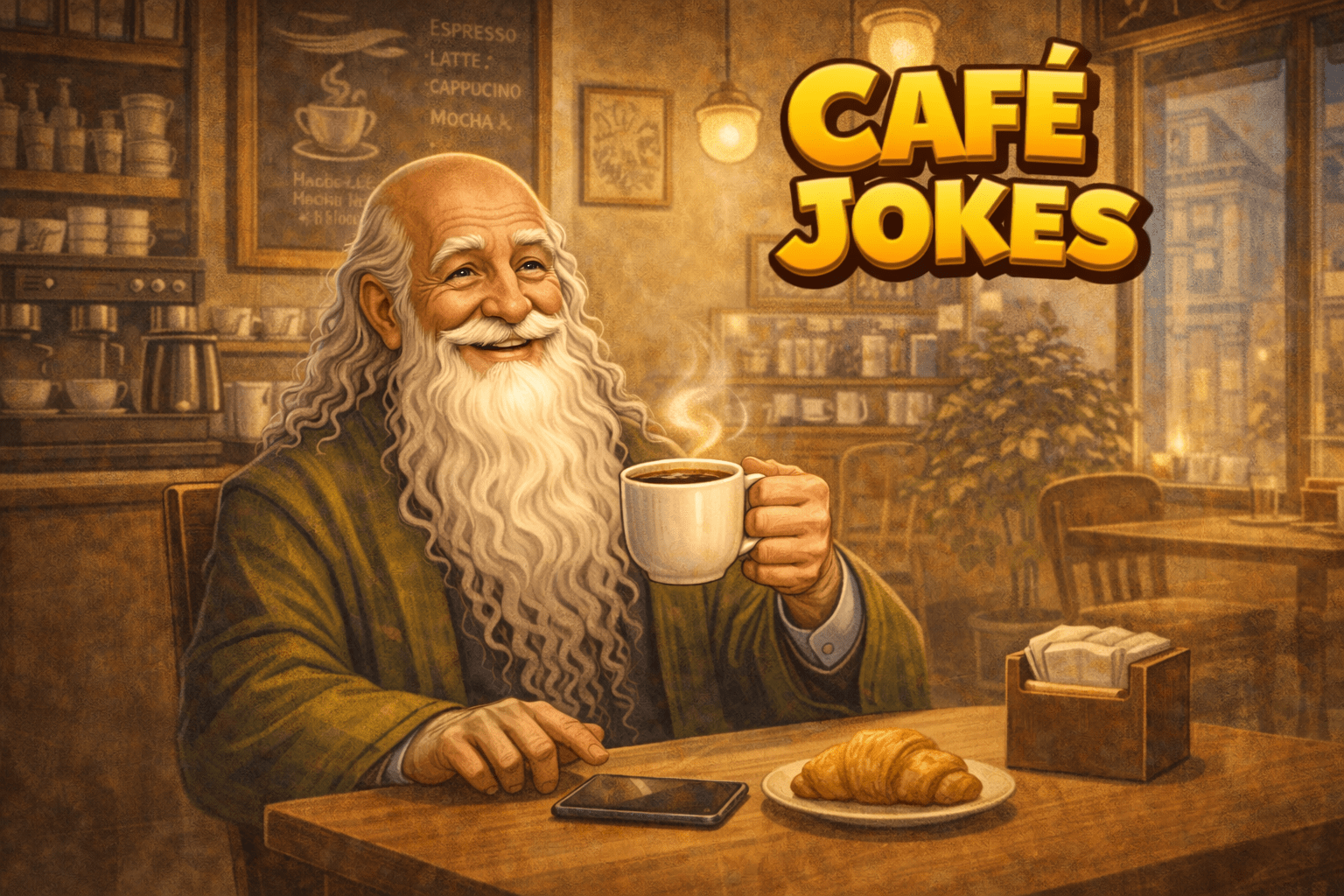
Cafés run on coffee, conversation, and the quiet understanding that nobody is fully functional before their first cup. This collection focuses on classic, well-known coffee jokes — familiar, reliable, and properly brewed for maximum effect.
😂 Café Jokes
Why did the coffee file a police report? It got mugged.
How does Moses make his coffee? Hebrews it.
What do you call sad coffee? Depresso.
Why did the barista quit their job? They were tired of the daily grind.
Why did the espresso keep checking his watch? Because he was pressed for time.
Why did the coffee go to therapy? It had too many grounds for concern.
What’s a barista’s favourite exercise? The French press.
Why did the hipster burn his tongue? He drank his coffee before it was cool.
I like my coffee like I like my jokes… Dark and bitter.
Decaf coffee only works… If you throw it at people.
What’s the best Beatles song about coffee? Latte Be.
I don’t have a problem with coffee… I have a problem without it.
Coffee: because adulting is hard.
I like my coffee how I like myself… Strong, sweet, and too hot for you.
Behind every successful person… Is a substantial amount of coffee.
I drink coffee for your protection.
Coffee first… Schemes later.
I put instant coffee in a microwave… And almost went back in time.
A yawn is just a silent scream for coffee.
Life begins… After coffee.
Coffee may not solve every problem, but it does provide a reliable pause between them. And somewhere between the first sip and the last, it seems to generate just enough humour to make the rest of the day feel manageable.
Thank you for reading my writings. If you’d like to, you can buy me a coffee for just £1 and I will think of you while writing my next post! Just hit the link below…. (thanks in advance)
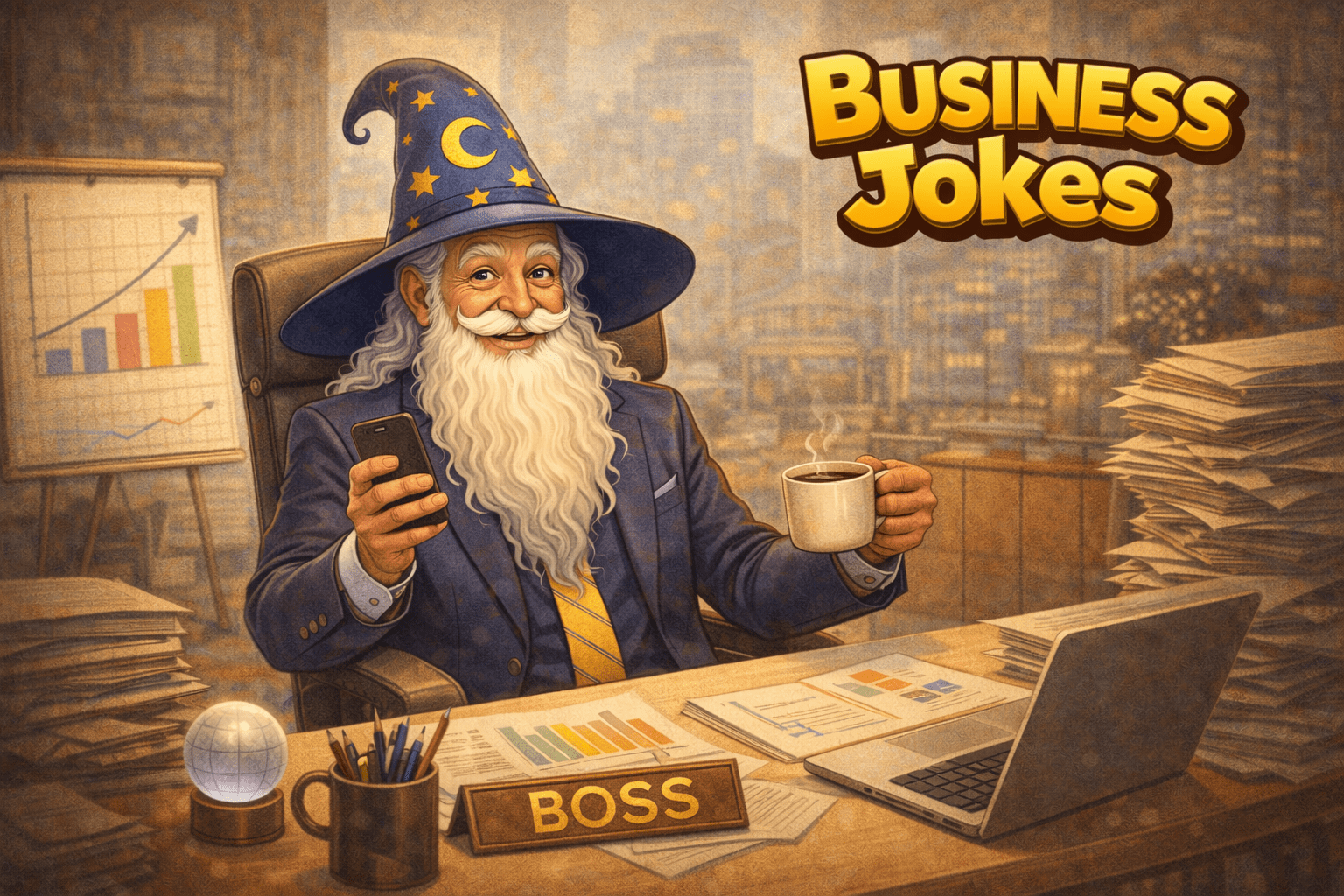
Business may run on strategy, numbers, and meetings that could have been emails — but it also produces a steady stream of humour. This collection of business jokes brings together classic, well-known gags about offices, management, and the curious logic of the corporate world.
😂 Business Jokes
I told my boss three companies were after me… So I had to leave. He said, “Which companies?” I said, “Gas, electric, and water.”
I got fired from the calendar factory… All I did was take a day off.
I quit my job at the helium factory… I refused to be spoken to in that tone.
I used to work in a shoe recycling shop… It was sole destroying.
I got fired from the keyboard factory… They said I wasn’t putting in enough shifts.
I got fired from the orange juice factory… I couldn’t concentrate.
My boss said, “Dress for the job you want.” So I came in dressed as Batman.
I got fired from the bank… An old lady asked me to check her balance, so I pushed her over.
I used to work at a paper company… But it folded.
I got fired from the bakery… I kept loafing around.
I got fired from the gym… I just didn’t work out.
I used to work in a mirror factory… I could always see myself working there.
I got fired from the recycling centre… They said I was rubbish.
I got fired from the library… It was a quiet job, but I couldn’t handle the pressure.
I used to be a banker… But I lost interest.
I got fired from the clock factory… I kept taking time off.
I used to work at a blanket factory… But it smothered me.
I got fired from the computer factory… They said I wasn’t processing things properly.
I used to work at a restaurant… But I couldn’t handle the table turnover.
I got fired from the elevator company… I just couldn’t handle the ups and downs.
The business world thrives on efficiency, clarity, and results — at least in theory. In practice, it seems to generate just as many baffling situations as it does profits, leaving humour to quietly balance the books.
Thank you for reading my writings. If you’d like to, you can buy me a coffee for just £1 and I will think of you while writing my next post! Just hit the link below…. (thanks in advance)
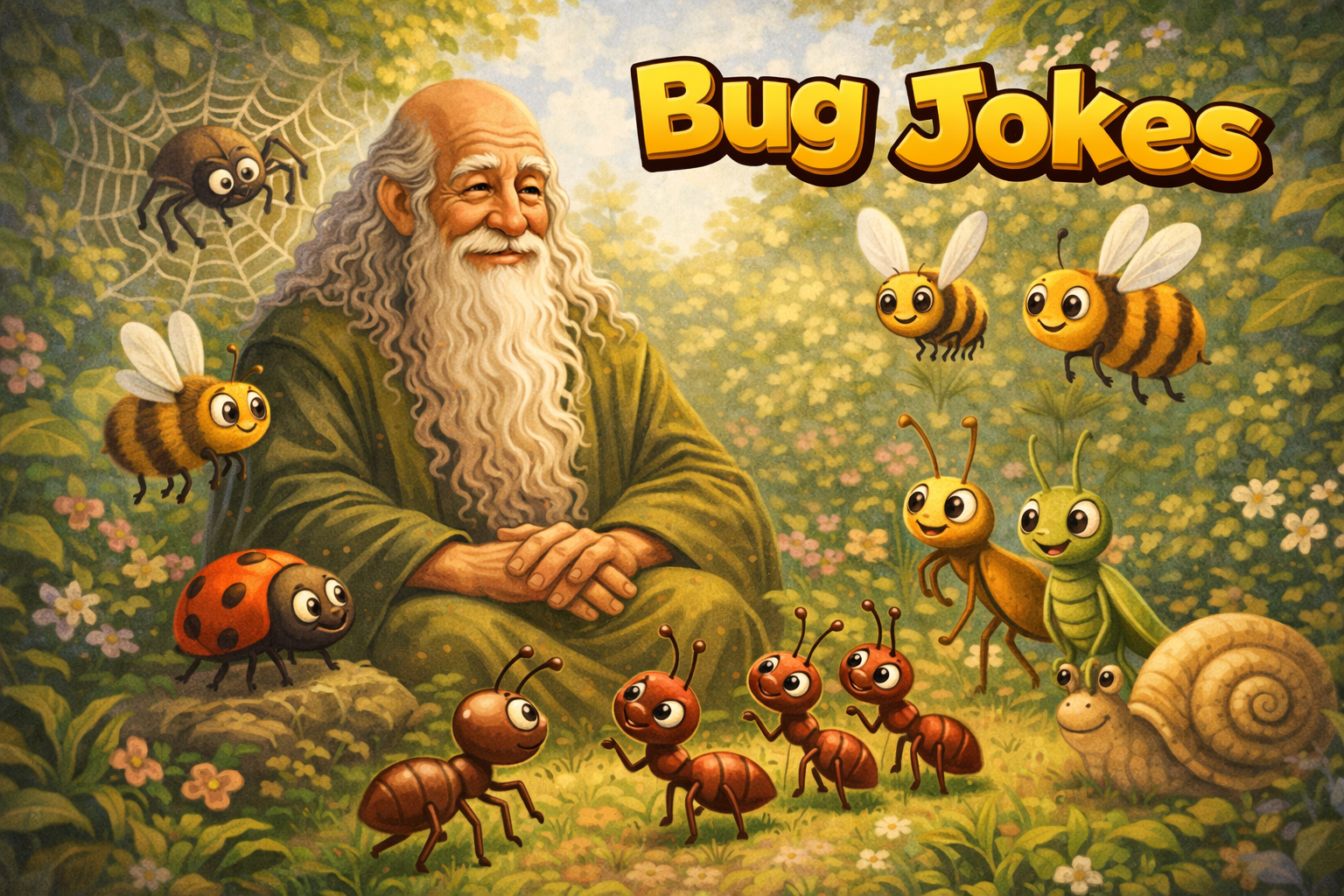
Bugs may be small, but they’ve inspired some surprisingly big laughs over the years. From ants and bees to spiders and snails, this collection of classic bug jokes brings together well-loved gags, gentle wordplay, and timeless humour that actually lands.
😂 Bug Jokes
Why don’t ants get sick? Because they have little anty-bodies.
What do you call a fly without wings? A walk.
Why did the spider go to the computer? To check his web site.
What do you call two bugs that live on the moon? Luna-ticks.
Why do bees hum? Because they don’t know the words.
What did one flea say to the other flea? Shall we walk or take the dog?
Why did the fly fly? Because the spider spied her.
What do you call a snail on a ship? A snailor.
What do bees use to brush their hair? A honeycomb.
Why do ants dance on jam jars? Because the lids say “twist to open.”
What’s worse than a worm in your apple? Half a worm.
What do you call a clumsy bee? A fumble bee.
What do you call an insect that hesitates before biting? A nervous tick.
Where do bees wait for a ride? At the buzz stop.
Why are frogs always happy? Because they eat whatever bugs them.
What do you call a bug that smells nice? A deodor-ant.
What do you call a bee born in May? A maybe.
What did the judge say when the stink bug entered? Odour in the court!
What do you call a grasshopper with hiccups? One that jumps a mile a minute.
Why did the insect fail the exam? Because he kept bugging the teacher.
The natural world is full of strange, tiny creatures quietly going about their business — and, it seems, unintentionally providing material for some of the oldest jokes around. Proof, perhaps, that even the smallest things can leave a lasting impression… especially when they come with a decent punchline.
Thank you for reading my writings. If you’d like to, you can buy me a coffee for just £1 and I will think of you while writing my next post! Just hit the link below…. (thanks in advance)
Every workplace has one — the boss who inspires, motivates… and occasionally leaves everyone quietly confused. This collection of boss jokes takes a light-hearted look at office life, management wisdom, and the curious art of being in charge.
😂 Boss Jokes
My boss told me to start every presentation with a joke… So I introduced him.
I used to work in a shoe recycling shop… It was sole destroying.
I told my boss three companies were after me… So I had to leave. He said, “Which companies?” I said, “Gas, electric, and water.”
My boss said, “Dress for the job you want.” So I came in dressed as Batman.
I got fired from the keyboard factory… They said I wasn’t putting in enough shifts.
I told my boss I needed a pay rise because of inflation… He said, “We’ll deflate your expectations.”
I got sacked from the calendar factory… All I did was take a day off.
My boss asked me why I only get sick on work days… I said, “It must be my weekend immune system.”
I quit my job at the helium factory… I refused to be spoken to in that tone.
My boss said, “You’ve been late three times this week — do you know what that means?” I said, “It’s Wednesday.”
I told my boss I was thinking of leaving… He said, “Good — think outside the company.”
I got fired from the orange juice factory… Couldn’t concentrate.
My boss said, “We need to cut costs.” So I stopped coming in.
My boss told me to have a good day… So I went home.
My boss said, “Dress for the job you want.” So I came in wearing pyjamas.
I told my boss I needed a raise… He said, “You already raise my expectations.”
My boss asked me why I was late… I said I was enjoying my morning.
My boss said I have a problem with authority… I said, “I don’t recognise that as your decision.”
I asked my boss for a day off… He said, “Why?” I said, “Because I work here.”
My boss told me to think outside the box… So I thought about leaving.
My boss said, “We’re like a family here.” That explains the constant arguing.
I told my boss I was overworked… He said, “That’s because you’re here.”
My boss asked for my opinion… Then explained why it was wrong.
My boss said, “Don’t bring me problems, bring me solutions.” So I stopped bringing anything.
My boss told me to take initiative… So I took the afternoon off.
My boss said I needed to be more proactive… So I proactively avoided him.
I asked my boss for feedback… He said, “You’re still here.”
My boss said, “There’s no ‘I’ in team.” I said, “But there is in ‘quit’.”
My boss told me to aim higher… So I aimed for his job.
My boss said I should work smarter, not harder… So I stopped working harder.
My boss asked me to multitask… So I worried about several things at once.
My boss said, “You’re replaceable.” I said, “So are batteries — but things don’t work without them.”
Workplaces are curious ecosystems, full of hierarchy, ambition, and the occasional baffling instruction. And while the boss may sit at the top, it is often humour that keeps everything running — quietly smoothing over the moments that make no sense at all.
Thank you for reading my writings. If you’d like to, you can buy me a coffee for just £1 and I will think of you while writing my next post! Just hit the link below…. (thanks in advance)
Anniversaries are a time to celebrate love, commitment, and the remarkable achievement of putting up with each other for another year. This collection of anniversary jokes keeps things light, affectionate, and gently honest — because nothing says romance quite like a well-timed joke.
😂 Anniversary Jokes
Marriage is a relationship in which one person is always right… And the other is the husband.
My wife and I were happy for 20 years… Then we met.
Marriage is finding that one special person… You want to annoy for the rest of your life.
I told my wife the truth… I said I was seeing a psychiatrist. Then she told me the truth: she’s seeing a psychiatrist, two plumbers, and a bartender.
A good marriage is like a casserole… Only those responsible for it really know what goes in it.
Marriage is a relationship in which one person is always right… And the other is the husband.
We’ve been married so long… I remember when we used to talk to each other.
Marriage is like a walk in the park… Jurassic Park.
I asked my wife what she wanted for our anniversary… She said, “Nothing would make me happier.” So I got her nothing.
We still hold hands after all these years… If I let go, she shops.
I bought my wife a gift for our anniversary… She said, “Oh, you shouldn’t have.” I said, “I know.”
Marriage is about compromise… For example, I admit I’m wrong — even when I’m thinking I’m right.
We’ve been married so long… We finish each other’s sentences… and arguments.
I told my wife she should embrace her mistakes… She gave me a hug.
For our anniversary, I took my wife somewhere expensive… The petrol station.
We’ve been married for years… And I still haven’t figured out the correct answer to “What are you thinking?”
My wife said she wanted something shiny for our anniversary… So I showed her the kitchen sink.
I asked my wife what she wanted for our anniversary… She said, “Just your love.” So I got her a card and kept the receipt.
We’ve been married so long… Our inside jokes have become historical documents.
My wife said I never listen to her… Or something like that.
Marriage teaches you patience… And many other things you didn’t want to learn.
For our anniversary, I wrote my wife a heartfelt message… She preferred the gift receipt.
After all these years, I still get butterflies… Mostly when I check the bank account.
Time has a curious way of turning shared moments into shared history — and shared history into something quietly enduring. And while love may be the foundation, it is often laughter that keeps things standing, year after year.
Thank you for reading my writings. If you’d like to, you can buy me a coffee for just £1 and I will think of you while writing my next post! Just hit the link below…. (thanks in advance)