
Quote of the Day: Certainty

“The more certain you become, the more housework your mind requires.”
The Sage


The Sage has never been particularly fond of certainty. He finds it far too tidy for a world that insists on being untidy. To him, certainty is like buying a very expensive carpet — at first it looks impressive, but before long you realise you now have to constantly tiptoe around life trying not to get it dirty. And life, as he is fond of pointing out, has muddy boots.

What he means by “housework of the mind” is the exhausting mental maintenance required to defend rigid beliefs. Certainty demands protection. Once you’ve convinced yourself you are absolutely right, you must keep sweeping away doubts, mopping up contradictions, and polishing your arguments daily. Otherwise the cracks start to show — and certainty hates visible cracks.

The Sage, with his usual dry humour, suggests that doubt is actually a far easier tenant. It doesn’t demand so much cleaning. It simply sits in the corner, occasionally humming, and leaves you free to think, adjust, and grow. He reminds us that a mind open to uncertainty needs less maintenance and far more curiosity — and curiosity, unlike certainty, is wonderfully self-cleaning.


Thank you for reading my writings. If you’d like to, you can buy me a coffee for just £1 and I will think of you while writing my next post! Just hit the link below…. (thanks in advance)


Advice of the Day: Dangerous Observations

“Never tell your partner her diet’s not working.”

The Sage has survived wars, plagues, unspeakable soups, and several committee meetings — and yet he insists that nothing on Earth is more perilous than commenting on a partner’s diet. His solemn warning today is simple: “Never tell your partner her diet’s not working.”

According to The Sage, this is not a statement — it is a declaration of war. Even if you are technically correct, mathematically accurate, and supported by scientific data, you are still wrong in every way that truly matters. Diets are not just nutritional plans; they are emotional ecosystems balanced on hope, biscuits, and quiet determination.

The Sage advises a safer alternative approach: if asked, respond only with vague encouragement such as, “You look great,” or, “That salad seems very… committed.” Never mention scales, inches, portions, or mirrors under any circumstances. And remember: silence is not cowardice — it’s wisdom.


Thank you for reading my writings. If you’d like to, you can buy me a coffee for just £1 and I will think of you while writing my next post! Just hit the link below…. (thanks in advance)

This Day in History: 20 November 1782 — The Watch in the Moonlight

On a crisp evening in November 1782, the streets of London were full of fog and hurried footsteps. In the parish of St Martin’s-in-the-Fields, a young labourer named John Reynolds made a choice that would bring him to the bar of the Old Bailey before the month was out.

That night, he stole a silver watch from a passer-by — a small object, but a valuable one. Watches were not mere timepieces; they were symbols of status, savings, and security. Losing one could ruin a working man. Stealing one could ruin the thief.


The theft

The victim, John Langford, was returning home at dusk. The streets were busy, lit by the dim glow of oil lamps. A jostle, a shove, a swift tug — and the watch was gone.

Langford wheeled around.

Langford: “My watch! The fellow’s run off with it!”

A nearby boy saw a man darting toward the Strand, clutching something close to his coat. He shouted the alarm. Within minutes, a constable gave chase.

Reynolds was stopped in a narrow court, panting, coat bulging.

Constable: “What have you there?”
Reynolds: “Nothing of consequence, sir.”

But the silver watch was found tucked inside his waistcoat.


The trial at the Old Bailey — 20 November 1782

On 20 November, Reynolds stood in the crowded courtroom, facing the charge of stealing a silver watch, value forty shillings, the property of John Langford.

Clerk: “How say you — Guilty or Not Guilty?”
Reynolds: “Not guilty. I bought it from a stranger not an hour before.”

It was a common defence — and an unlikely one.

Langford identified the watch instantly, noting the unique mark on the inner case.
The boy who saw Reynolds flee told the court what he had witnessed.
The constable described the chase and the recovery.

The jury required little discussion.

Foreman: “Guilty.”


Sentence and aftermath

For a theft of this value, and with such clear evidence, there was only one likely outcome.

Judge: “The prisoner is sentenced to transportation for seven years.”

Reynolds went from the cramped courtroom to Newgate, and from there to the hulks on the Thames.
In the spring months that followed, he was loaded onto a transport ship, bound for the penal colonies — one more Londoner carried away for the price of a stolen watch.


Why this mattered

The case of John Reynolds shows how, in 1780s London, even a moment of opportunistic theft could shape a life’s entire course.

  • A silver watch represented months of wages.
  • Theft was treated as a direct threat to public order.
  • Transportation was the common cure for what the courts called “thefts of opportunity.”

In one night, Reynolds seized a watch — and lost his freedom.


Source

R v. John Reynolds (t17821120-34), tried at the Old Bailey on 20 November 1782 for stealing a silver watch from John Langford.
Verdict: Guilty. Sentence: Transportation for seven years.


Thank you for reading my writings. If you’d like to, you can buy me a coffee for just £1 and I will think of you while writing my next post! Just hit the link below…. (thanks in advance)
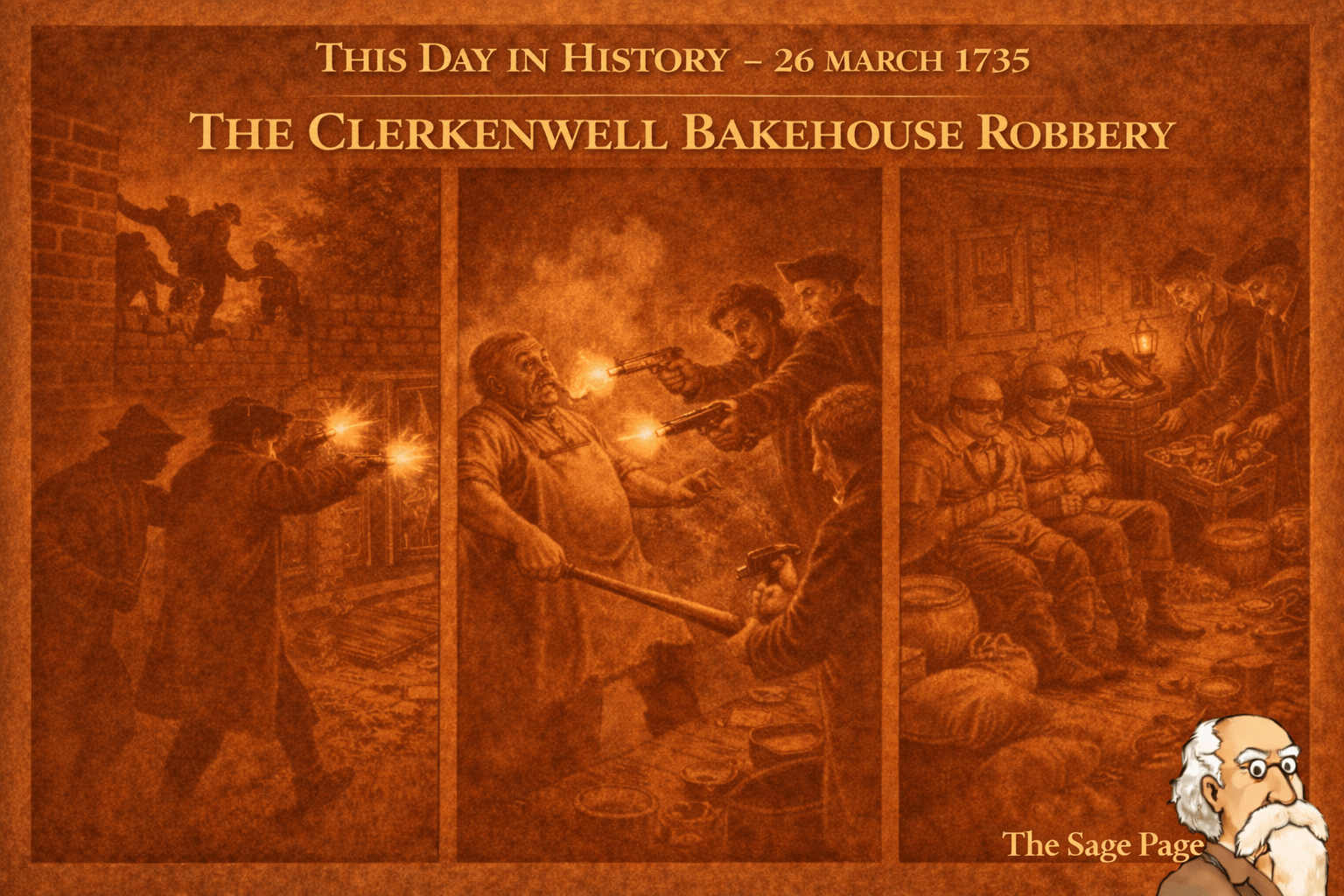
Quote of the Day: Excuses

“Most problems aren’t as complicated as the excuses we make for them.”
The Sage


The Sage has long believed that human beings possess an extraordinary talent for complication. Problems, he says, tend to arrive in simple shapes — a decision to be made, a truth to be faced, a task to be started. But instead of meeting them head-on, we cloak them in layers of hesitation, justification, and imaginative avoidance. The excuses, he notes with a sigh, often take more energy than solving the problem itself.

He observes that excuses are rarely about the problem at all. They’re stories we tell ourselves to protect our pride, our comfort, or our fear of failure. The Sage does not condemn this — he understands that excuses are simply padded armour for the ego. But he also gently reminds us that armour is heavy, and carrying it slows us down more than the problem ever would.

His humour softens the message, but the truth remains: clarity often returns the moment excuses fall away. When we stop explaining why something can’t be done, the path to doing it appears far less daunting. The Sage encourages us to see excuses for what they are — clever distractions — and to embrace the lightness that comes from letting them go.


Thank you for reading my writings. If you’d like to, you can buy me a coffee for just £1 and I will think of you while writing my next post! Just hit the link below…. (thanks in advance)

Advice of the Day: Food & Foolishness

“Never trust a dog to watch your food.”

The Sage has made many questionable decisions in his long life, but none as consistently disastrous as trusting a dog to guard his food. Today, he shares the distilled wisdom of these countless failures: “Never trust a dog to watch your food.” It sounds obvious — but as The Sage knows, hunger makes optimists of us all. The moment you walk away, that “loyal” companion becomes a furry vacuum cleaner.

Dogs, he explains, operate on a simple moral principle: If it is edible, it is mine; if it is not edible, I will still attempt to eat it. Leaving your food under a dog’s supervision is like leaving your tax return with a goat. You may return to find a very satisfied animal — but your dinner (and dignity) will be gone. Even the best-behaved dog struggles when faced with an unattended sandwich. It’s not disobedience… it’s destiny.

So take The Sage’s advice: if you value your meal, keep it in your hands, on your plate, or locked in a safe. Dogs are wonderful companions, loyal protectors, and enthusiastic thieves. Trust them with your heart — but never, ever with your lunch.


Thank you for reading my writings. If you’d like to, you can buy me a coffee for just £1 and I will think of you while writing my next post! Just hit the link below…. (thanks in advance)
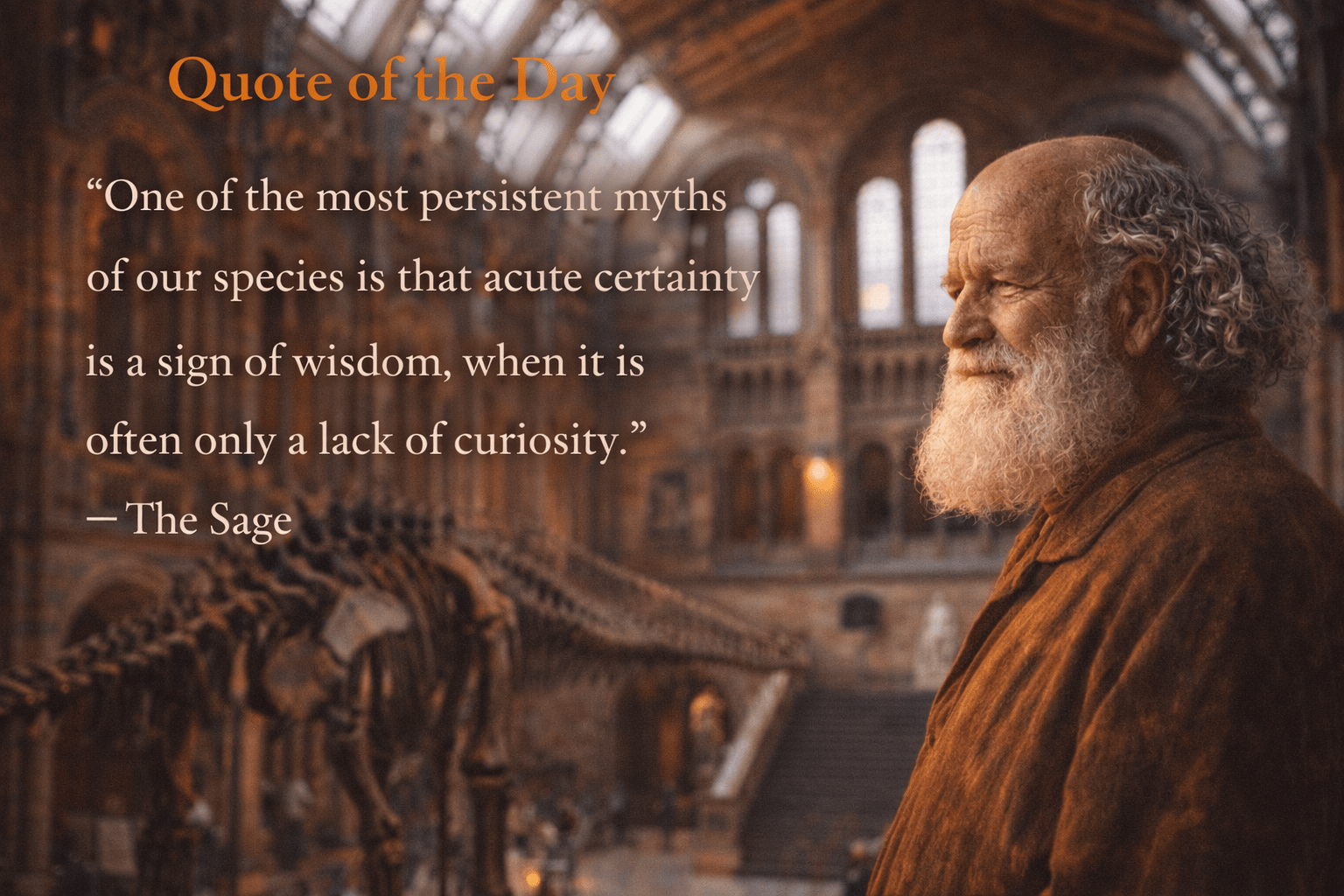
This Day in History: 18 November 1878 — The Night Watch on Frances Street

On 18 November 1878, the gas-lamps of London’s East End burned low, gutters filled with sleet, and the police patrolled streets where the boundary between hunger and crime was perilously thin.
It was on such a night that John Burke, age twenty-seven, found himself standing before the bar of the Old Bailey, charged with breaking and entering the home of Frances Marshall with intent to steal.
The crime had occurred only weeks earlier — a cold, dark night when the Marshall household slept unaware that an intruder was quietly testing the back window.


The attempted burglary

Frances Marshall, a widow of modest means, lived in a narrow terraced house just off Commercial Road.
Shortly after midnight, the soft rattle of a sash window stirred her from sleep.

Frances: “I heard the window frame move as though someone was working it with a knife. I lit my candle and called for the constable.”

Her lodger, awakened by her alarm, hurried downstairs. By the time they reached the kitchen, the window was raised a few inches, and a man’s shadow could be seen slipping away along the yard wall.

A patrolling constable, hearing the commotion, gave chase. He caught Burke less than a hundred yards from the house.

Constable: “I stopped him. He was in some agitation and gave no proper account of himself.”

In Burke’s pocket: a short-bladed knife and a length of cord — typical burglar’s equipment.


The trial at the Old Bailey — 18 November 1878

Burke, wearing a patched coat and a look of weary resignation, pleaded Not Guilty.

Clerk: “You stand indicted for unlawfully breaking and entering the dwelling-house of Frances Marshall, with intent to steal therein. How say you?”
Burke: “Not guilty, sir. I never meant no housebreaking.”

The prosecution laid out its case:

  • The window had been forced upward.
  • Burke was seen escaping the yard.
  • He was caught almost immediately with tools suited for quiet entry.

The defence argued that he was merely “passing through,” but the jury had little patience for chance coincidence presented as alibi.

Foreman: “We find the prisoner — Guilty.”


Sentence and aftermath

Victorian justice was brisk. Though the entry was not completed and nothing was taken, the intent was enough for a severe punishment.

Judge: “The security of the home must be protected. You are sentenced to twelve months’ imprisonment with hard labour.”

Burke was removed to Coldbath Fields Prison, where the days were marked not by opportunity but by stone-breaking yards, oakum-picking rooms, and the relentless discipline of the treadmill.


Why this mattered

Burke’s case sits at the quieter end of Victorian crime — not a headline-grabbing murder, nor a great bank robbery, but the daily struggle between poverty and the sanctity of the home.
By 1878, the Old Bailey no longer hanged petty housebreakers, but the courts still viewed the nighttime intrusion of a dwelling as a serious threat to public safety.

One creaking window.
One cold November night.
And one young man whose life took a hard detour through the prison system.


Source

  • R v. John Burke, trial at the Old Bailey, 18 November 1878, for breaking and entering the dwelling-house of Frances Marshall with intent to steal.
    Case reference: t18781118-5
    Verdict: Guilty
    Sentence: 12 months’ imprisonment with hard labour.
    Source: Old Bailey Proceedings Online.

Thank you for reading my writings. If you’d like to, you can buy me a coffee for just £1 and I will think of you while writing my next post! Just hit the link below…. (thanks in advance)

Quote of the Day: Search for the Truth

“If you want the truth, ask a child. If you want reassurance, ask an adult.”
The Sage


The Sage has always admired the fearless honesty of children. They have not yet learned the delicate social art of softening their words or disguising their thoughts. To a child, truth is not a weapon or a burden — it is simply the natural shape of things, spoken aloud without hesitation. Their clarity, The Sage suggests, comes from seeing the world without the layers of expectation adults accumulate over time.

Adults, however, often trade that clarity for comfort. They’ve learned to cushion their answers, to offer reassurance instead of reality, to prioritise feelings over facts. There is wisdom in this too — a softer, more empathetic wisdom. But The Sage reminds us that it is not the same as truth, nor should we expect it to be.

His point is not to elevate one above the other, but to recognise what each offers: children give us truth, even when it stings; adults give us reassurance, even when it bends. Understanding the difference, he says, is a small but powerful kind of wisdom — one that helps us choose the voice we truly need to hear.


Thank you for reading my writings. If you’d like to, you can buy me a coffee for just £1 and I will think of you while writing my next post! Just hit the link below…. (thanks in advance)
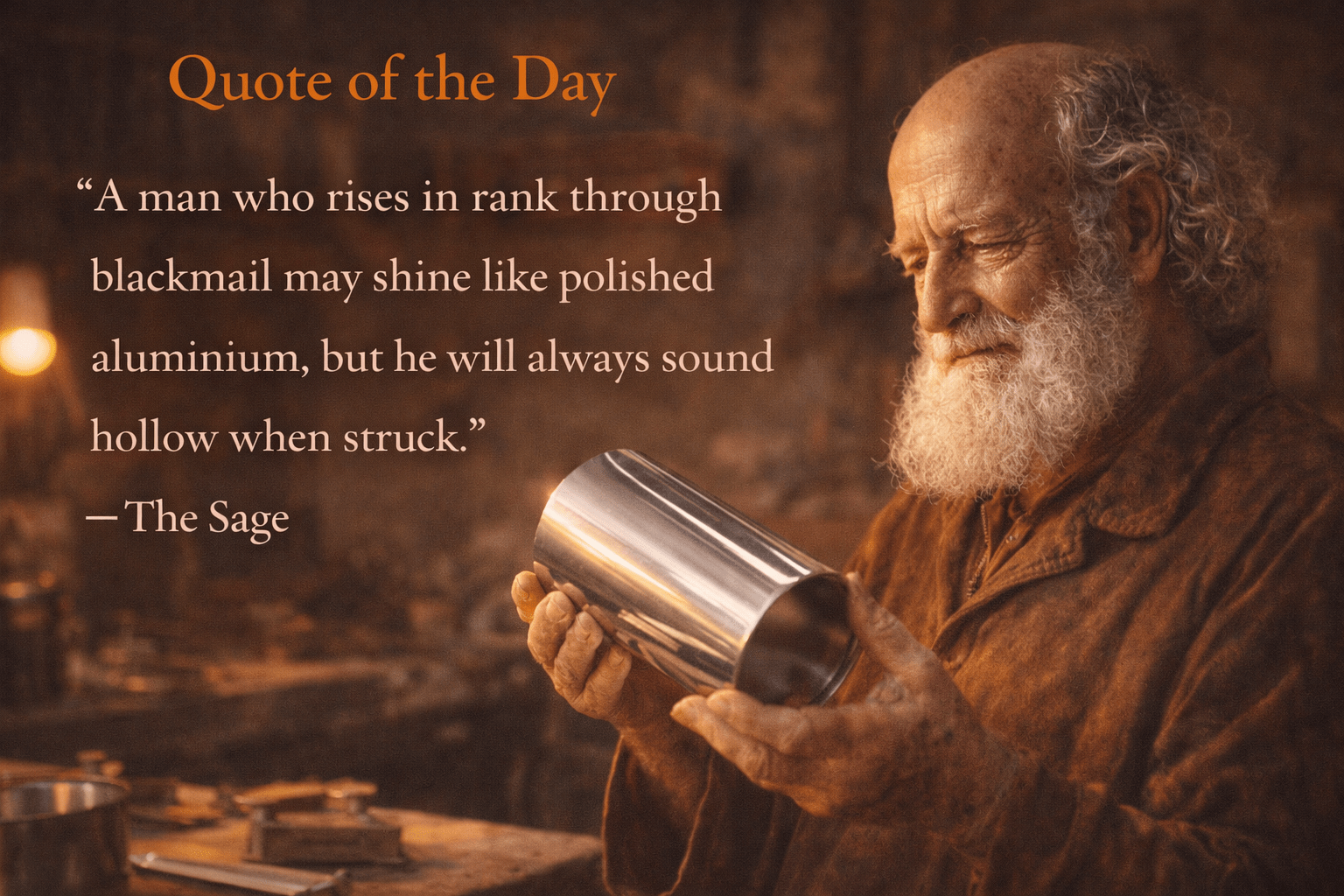
Advice of the Day: Soap & Suspicion

“No matter how nice the soap smells, never walk out of the restroom sniffing your fingers.”

The Sage understands the delicate balance of social behaviour, and today he offers perhaps his most important lesson in public perception: “No matter how nice the soap smells, never walk out of the restroom sniffing your fingers.” What begins as a simple appreciation of citrus-and-herb hand wash can rapidly transform into a catastrophic misunderstanding. The Sage has seen more reputations damaged by lavender-scented enthusiasm than by actual wrongdoing.

He reminds us that context is everything. Inside the restroom? Fine. Hands under the dryer? Fine. But the moment you cross that threshold and rejoin civilisation, all bets are off. What you think looks like “hmm, delightful bergamot” will absolutely look like “deeply suspicious behaviour” to strangers, colleagues, and anyone waiting their turn for the cubicle. Even dogs will judge you for it.

The Sage recommends a simple method for avoiding this social disaster: appreciate the scent inwardly, maintain a neutral expression, and walk out as if you’ve never smelled anything in your life. Only once you’re 20 feet from the door may you resume your olfactory investigation in private. True wisdom is not avoiding pleasure — it’s avoiding explanations.


Thank you for reading my writings. If you’d like to, you can buy me a coffee for just £1 and I will think of you while writing my next post! Just hit the link below…. (thanks in advance)
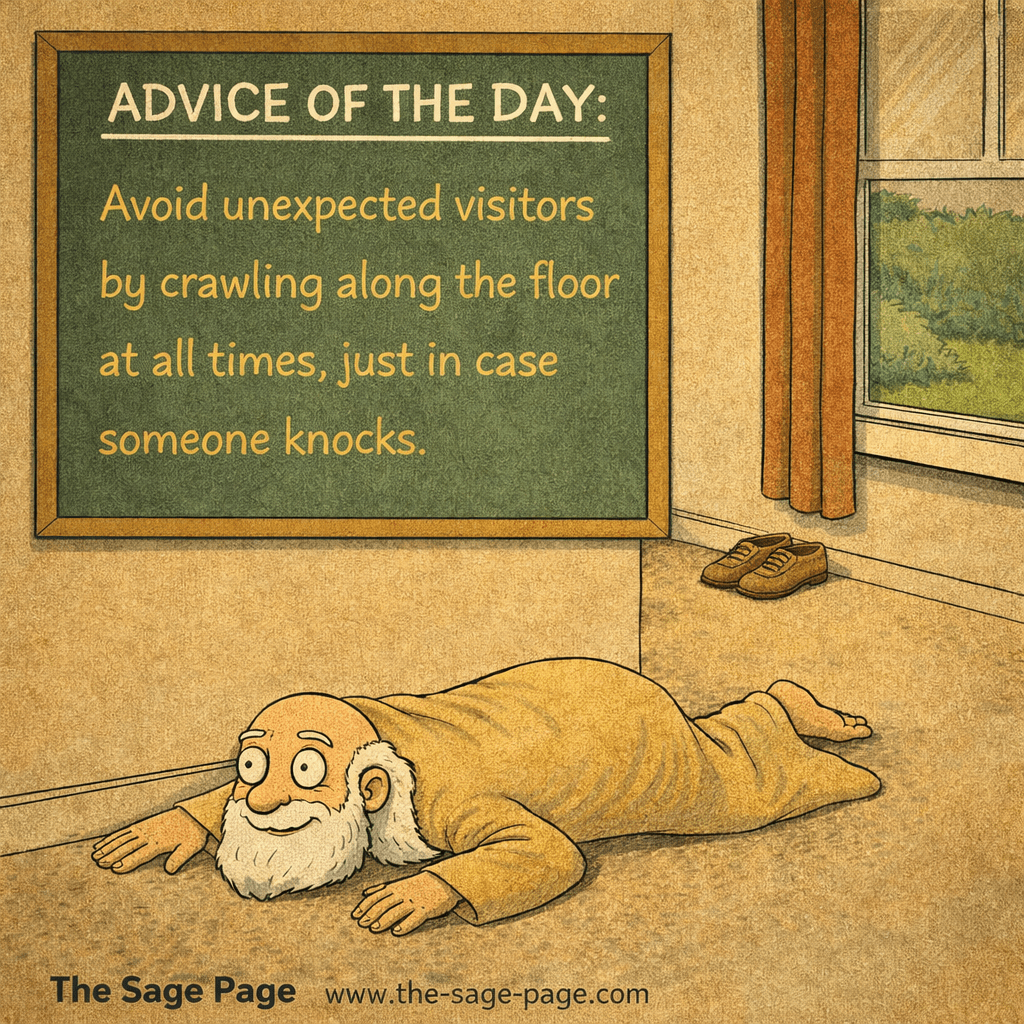
Advice of the Day: Target Practice

“To be sure of hitting the target, shoot first and call whatever you hit the target.”

The Sage

The Sage has never been troubled by accuracy, precision, or basic safety standards. His philosophy is much simpler — and considerably more alarming: “To be sure of hitting the target, shoot first and call whatever you hit the target.” It’s a strategy that has baffled archers, terrified bystanders, and revolutionised the world of competitive laziness.

Why fret about aim when you can simply redefine success afterwards? According to The Sage, disappointment is just a matter of misplaced expectations. Fire an arrow into the shed? Congratulations — you’ve just invented Shed Archery. Hit a passing wheelbarrow? That’s a moving target, worth extra points. Accidentally take out the neighbour’s gnome? You’ve unlocked the bonus round.

Of course, The Sage insists this method isn’t about chaos — it’s about freedom. Freedom from pressure, freedom from perfection, and freedom from ever admitting you missed. After all, true mastery isn’t about hitting the target… it’s about making the target hit you.


Thank you for reading my writings. If you’d like to, you can buy me a coffee for just £1 and I will think of you while writing my next post! Just hit the link below…. (thanks in advance)
Quote of the Day: Inner Peace

“Most people want inner peace; few want the silence that comes with it.”
The Sage


The Sage has always found it curious that people speak of “inner peace” as if it’s something you can buy at a market stall. To him, peace is not an object but an atmosphere — and that atmosphere is built from silence. Not the uncomfortable kind, but the deep, steady quiet in which the mind can finally hear itself again.

He observes that many seek calm without wanting to release the noise that fills their days. We want calm without stillness, clarity without pausing, serenity without surrendering our constant need for distraction. The Sage smiles at this contradiction, not with judgment, but with gentle understanding. He knows that silence can feel intimidating before it becomes comforting.

And yet, he insists that silence is not a void — it is a doorway. When embraced rather than feared, it becomes the foundation on which true peace rests. His reminder today is simple: if we long for inner peace, we must also learn to value the quiet that allows it to grow.


Thank you for reading my writings. If you’d like to, you can buy me a coffee for just £1 and I will think of you while writing my next post! Just hit the link below…. (thanks in advance)