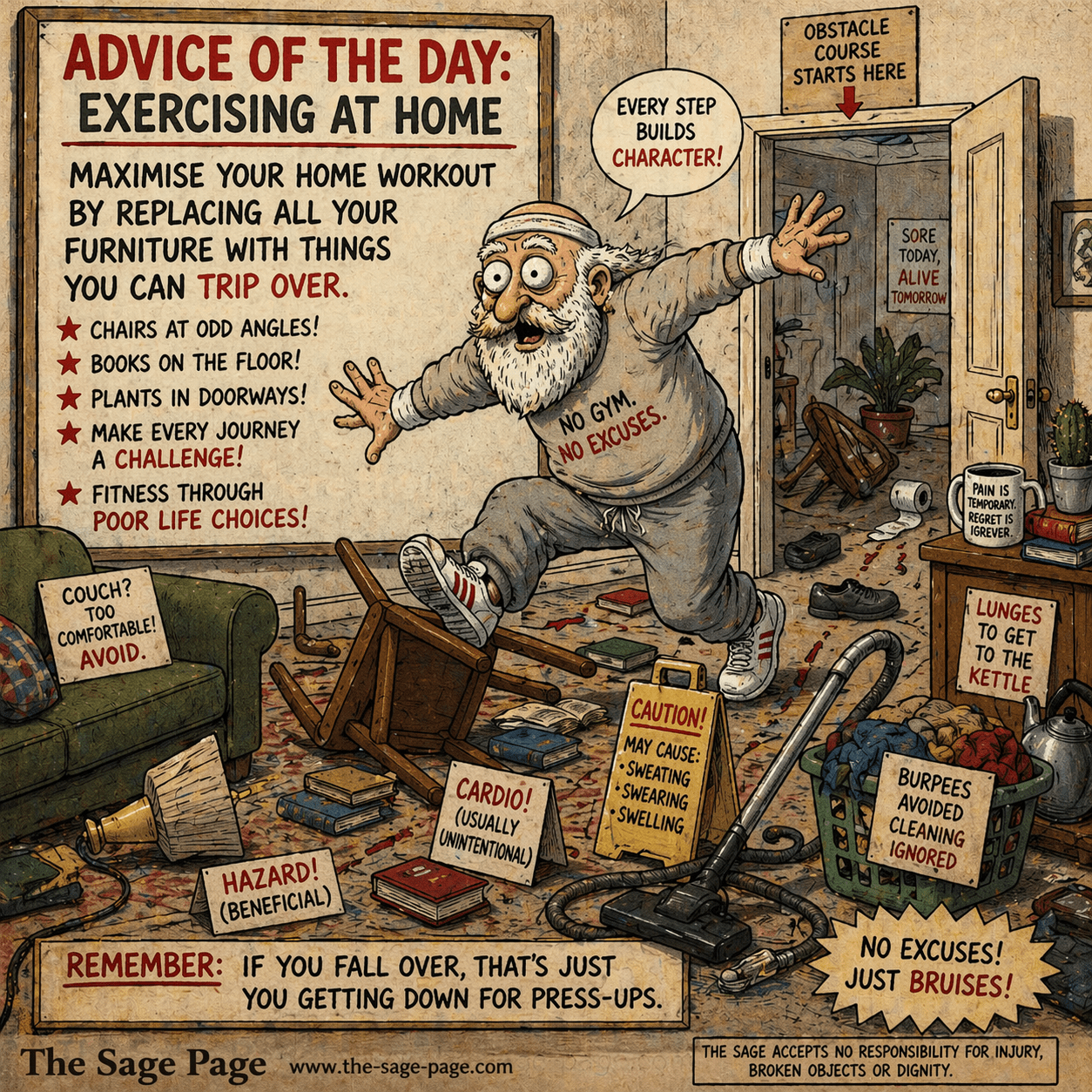
Advice of the Day: Exercising at Home

Maximise your home workout by replacing all your furniture with things you can trip over.

the sage

Many people struggle to find time and motivation to exercise. The Wise Sage believes the problem lies not in effort, but in environment. A truly effective workout should be unavoidable.

Begin by rearranging your home into a carefully engineered obstacle course. Chairs at odd angles, books on the floor, and at least one inexplicable object in every doorway will ensure that every journey — whether to the kitchen or the sofa — becomes a full-body challenge.

For added intensity, the Sage recommends performing everyday tasks at speed. Making tea becomes a sprint, answering the door a hurdle event, and locating the remote control an endurance trial. Over time, your reflexes will sharpen, your balance will improve, and your confidence in walking normally will diminish entirely.

If you wish to incorporate strength training, simply carry increasingly unnecessary objects from room to room. A chair, a lamp, or perhaps the entire contents of a drawer will provide excellent resistance.

As always, The Sage accepts no responsibility for stubbed toes, unexpected collisions, or explaining to guests why your house appears to be actively fighting back.


Thank you for reading my writings. If you’d like to, you can buy me a coffee for just £1 and I will think of you while writing my next post! Just hit the link below…. (thanks in advance)

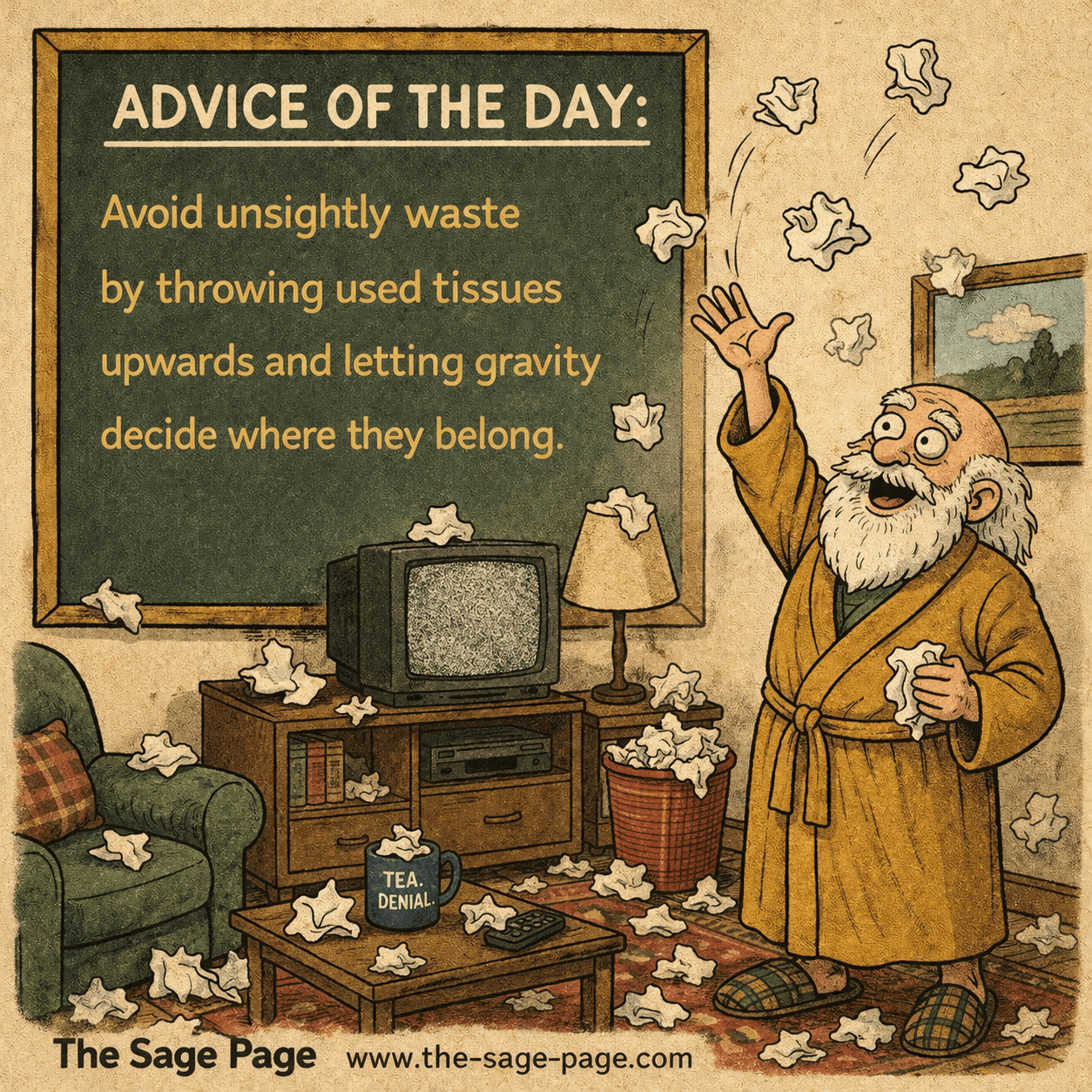
This Day in History: April 21st, 1680

“Jealousy and Cruelty at the Old Bailey”

On this day in 1680, two very different crimes were heard at the Old Bailey—yet both ended in the same grim conclusion:

A sentence of death.

One case spoke of jealousy, rivalry, and fatal confrontation.
The other revealed a crime of shocking cruelty against a child.

Together, they offer a stark reminder of the breadth—and brutality—of early modern justice.


The Killing of John Jacob

The first case concerned Edward Harrison, accused of murdering John Jacob in King Street, Westminster.

What lay behind the violence was not random conflict, but something far more personal.


A Rivalry Turned Deadly

Evidence presented in court revealed a long-standing feud between the two men.

At the heart of it was Jacob’s belief that Harrison had been too familiar with his wife.

This suspicion led to repeated quarrels, threats, and escalating hostility.

According to witnesses:

  • Harrison had previously lain in wait for Jacob
  • He had attacked him on earlier occasions
  • And had openly threatened to end his life—or lose his own

The situation had been building for some time.


The Final Encounter

On the night in question, tensions reached their breaking point.

After another incident involving Jacob’s wife—one that deeply angered him—Jacob reportedly vowed revenge.

Later that evening, at around ten o’clock, the two men met.

What followed was a violent confrontation.


A Fight to the Death

Harrison claimed that Jacob drew first, attacking him with his sword.

Forced to retreat into his own house, Harrison was pursued.

With no further room to escape, he drew his weapon and defended himself.

In the struggle that followed, Jacob received two deep wounds to the chest, each described as mortal, and fell dead at Harrison’s feet.


The Verdict

Despite the history of threats and the apparent aggression of the deceased, the jury reached a measured conclusion:

Guilty of manslaughter.

Even so, in the harsh legal climate of the time, this still carried the ultimate penalty.


🔎 Trial Echo

“Two mortal wounds on the breast… made him fall breathless at his feet.”


A Crime of Unspeakable Cruelty

The second case, tried at the same sitting, was of an entirely different—and far more disturbing—nature.

William Harding stood accused of the rape of a young girl, Sarah Southy, aged just seven or eight.


Lured and Attacked

Harding was said to have lured the child into a dark cellar with the promise of apples.

Once there, he committed what the court described as a “detestable villainy.”

The evidence revealed that the child had suffered severe harm.

For some time, she remained silent—fearful of punishment from her mother.


The Truth Revealed

Eventually, the extent of her suffering forced her to speak.

Her mother, upon learning what had happened, immediately sought medical assistance.

Surgeons examined the child and concluded that she had indeed been violently assaulted. She had also (tragically) contracted the venereal disease.

Her own account confirmed the attack.


A Pattern of Depravity

Further testimony painted a deeply troubling picture of Harding’s character.

Witnesses described him as:

  • A habitual offender
  • Engaged in acts of extreme moral corruption
  • And suffering from a venereal disease, the symptoms of which were observed upon examination

The case left little room for doubt.


The Verdict

The jury found Harding:

Guilty of rape.

Like Harrison, he too was sentenced to death.


Justice in 1680

These two cases, heard side by side, reveal the stark realities of justice in the late 17th century:

  • Violence born of jealousy
  • Crimes of calculated cruelty
  • And a legal system that dealt with both in the same final way

Though the circumstances differed greatly, both men stood before the same court…
and faced the same end.


Why This Day Matters

April 21st, 1680, serves as a sobering reflection on:

  • The consequences of unchecked anger and suspicion
  • The vulnerability of the young and powerless
  • And the severity of early modern punishment

It is a day that shows both the human causes of crime…
and the unyielding nature of justice in the Old Bailey.


Thank you for reading my writings. If you’d like to, you can buy me a coffee for just £1 and I will think of you while writing my next post! Just hit the link below…. (thanks in advance)
Quote of the Day: Reflection

“There are questions that no examination can ask, yet they arrive quietly at midnight, inviting a withdrawal not from life, but into it.”
— The Sage


There is a kind of reflection that cannot be scheduled. It does not arrive in classrooms, nor does it follow the structure of formal examination. Instead, it comes unannounced — often in the stillness of midnight — when the distractions of the day have fallen away and the mind is left to wander more freely.

At such times, the questions we face are different. They are not about right or wrong answers, but about meaning, direction, and truth. The Sage suggests that these moments are not interruptions, but invitations — opportunities to step back from noise and look more closely at the life we are living.

This withdrawal is not an escape. It is a return. A quiet turning inward that allows us to reconnect with what matters beneath the surface. In the silence of midnight, without audience or pressure, we often find the clarity that eludes us in the daylight.

— The Sage


Thank you for reading my writings. If you’d like to, you can buy me a coffee for just £1 and I will think of you while writing my next post! Just hit the link below…. (thanks in advance)
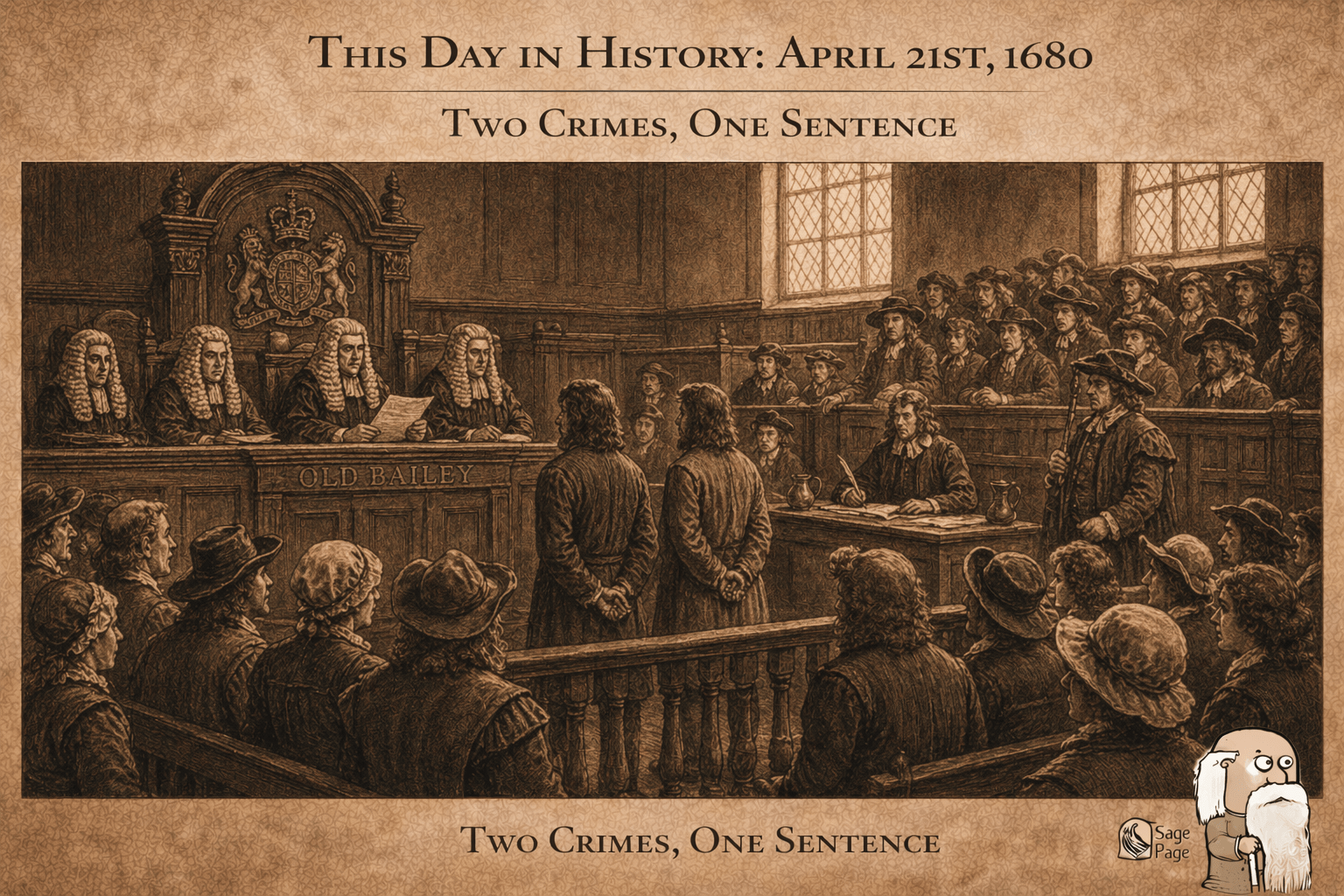
Quote of the Day: Practice

“The first time you try anything worthwhile, you will feel like rubbish — but even riding a bike was once just practice in falling.”
— The Sage


There is a quiet discouragement that often arrives at the beginning of any new pursuit. Whether it is a skill, a habit, or a long-held ambition, the early attempts rarely match the picture we had in mind. The Sage reminds us that this feeling is not failure — it is simply the natural starting point.

We tend to forget how many things we now do effortlessly once felt impossible. Riding a bike, for example, is not something anyone begins by mastering. It is learned through imbalance, misjudgment, and the occasional fall. What looks smooth in hindsight was once awkward, uncertain, and full of small mistakes.

Progress is built on repetition, not perfection. Feeling like rubbish at the start is not a sign to stop, but a sign that you have begun. With patience and practice, what once felt impossible becomes familiar — and eventually, even effortless.

— The Sage


Thank you for reading my writings. If you’d like to, you can buy me a coffee for just £1 and I will think of you while writing my next post! Just hit the link below…. (thanks in advance)
Quote of the Day: The Good Guide

“A good guide does not carry you when your hands are full, but shows you how to travel lightly — for even a feather feels heavy when you refuse to let go.”
— The Sage


We often look to others for guidance when life feels heavy. We want solutions, direction, and sometimes even rescue — someone to take the weight from our hands and lead us forward. But The Sage reminds us that true guidance rarely works that way.

A good guide does not remove our burdens for us. Instead, they help us understand what we are carrying — and whether we need to carry it at all. Much of what weighs us down is not necessity, but habit: old worries, expectations, or attachments that we have never thought to question.

When our hands are full, even the smallest thing can feel like too much. A feather becomes a burden. But when we learn to let go, to travel more lightly, the path itself becomes easier. The role of a guide is not to carry us, but to show us that we were never meant to carry so much in the first place.

— The Sage


Thank you for reading my writings. If you’d like to, you can buy me a coffee for just £1 and I will think of you while writing my next post! Just hit the link below…. (thanks in advance)
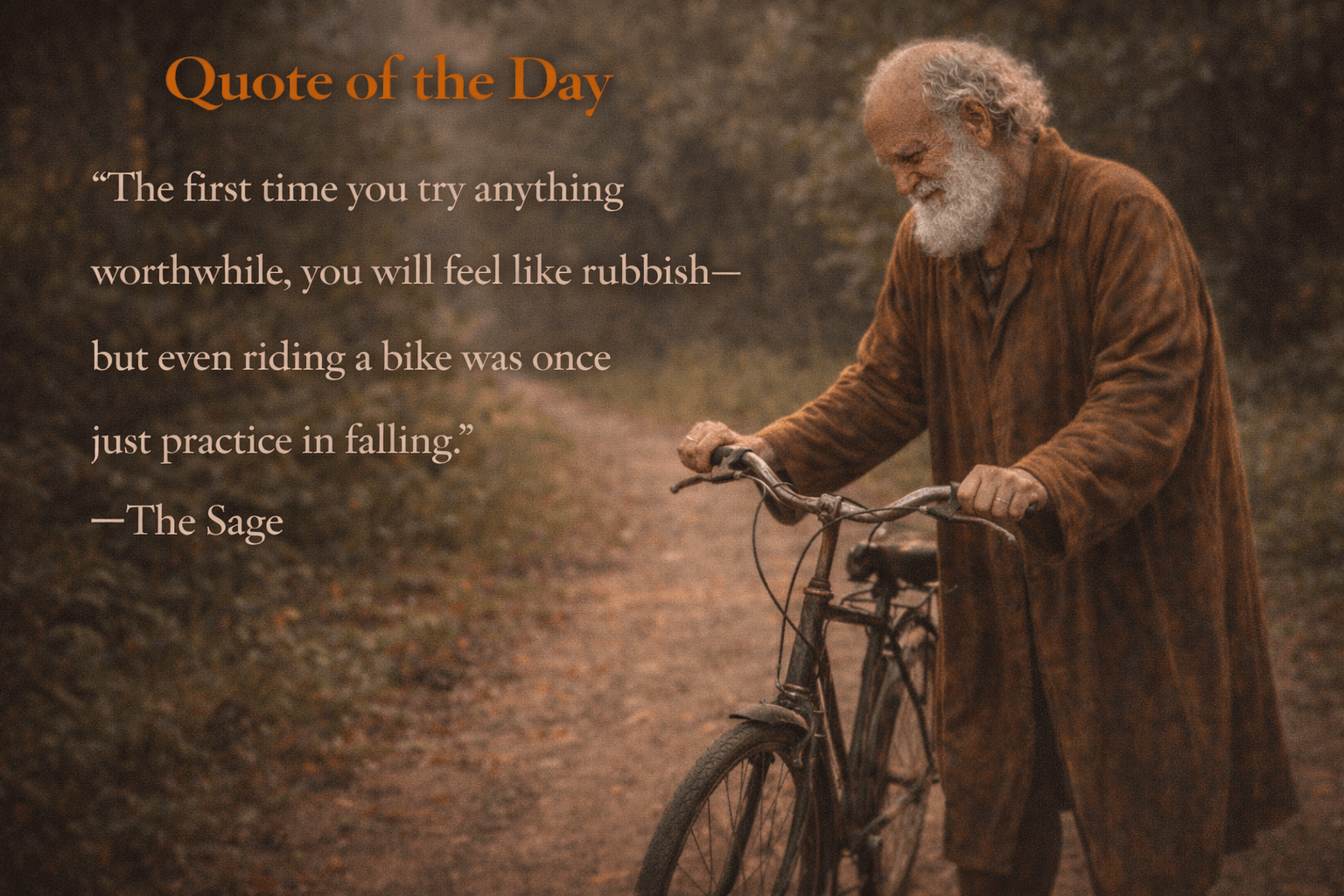
Advice of the Day: Disposing of Used Tissues

Avoid unsightly waste by throwing used tissues upwards and letting gravity decide where they belong.

the sage

Used tissues present a surprisingly persistent problem. Bins fill up, pockets become questionable, and surfaces begin to develop a troubling history. The Wise Sage recommends outsourcing the entire decision to physics.

Simply toss each used tissue confidently into the air and carry on with your day. Gravity, ever reliable, will ensure that the tissue eventually comes to rest somewhere. Over time, a natural distribution system will emerge, creating what experts might describe as “organic placement.”

For best results, vary your throwing technique. A gentle lob will encourage close-range placement, while a more ambitious launch can introduce tissues to entirely new areas of the home. This keeps the environment dynamic and prevents any one location from becoming overwhelmed.

If guests appear concerned, simply explain that you are experimenting with “decentralised waste management.” This suggests innovation and will discourage further questions.

As always, The Sage accepts no responsibility for where anything lands, what anything touches, or discovering one several days later in a place you absolutely did not expect.


Thank you for reading my writings. If you’d like to, you can buy me a coffee for just £1 and I will think of you while writing my next post! Just hit the link below…. (thanks in advance)

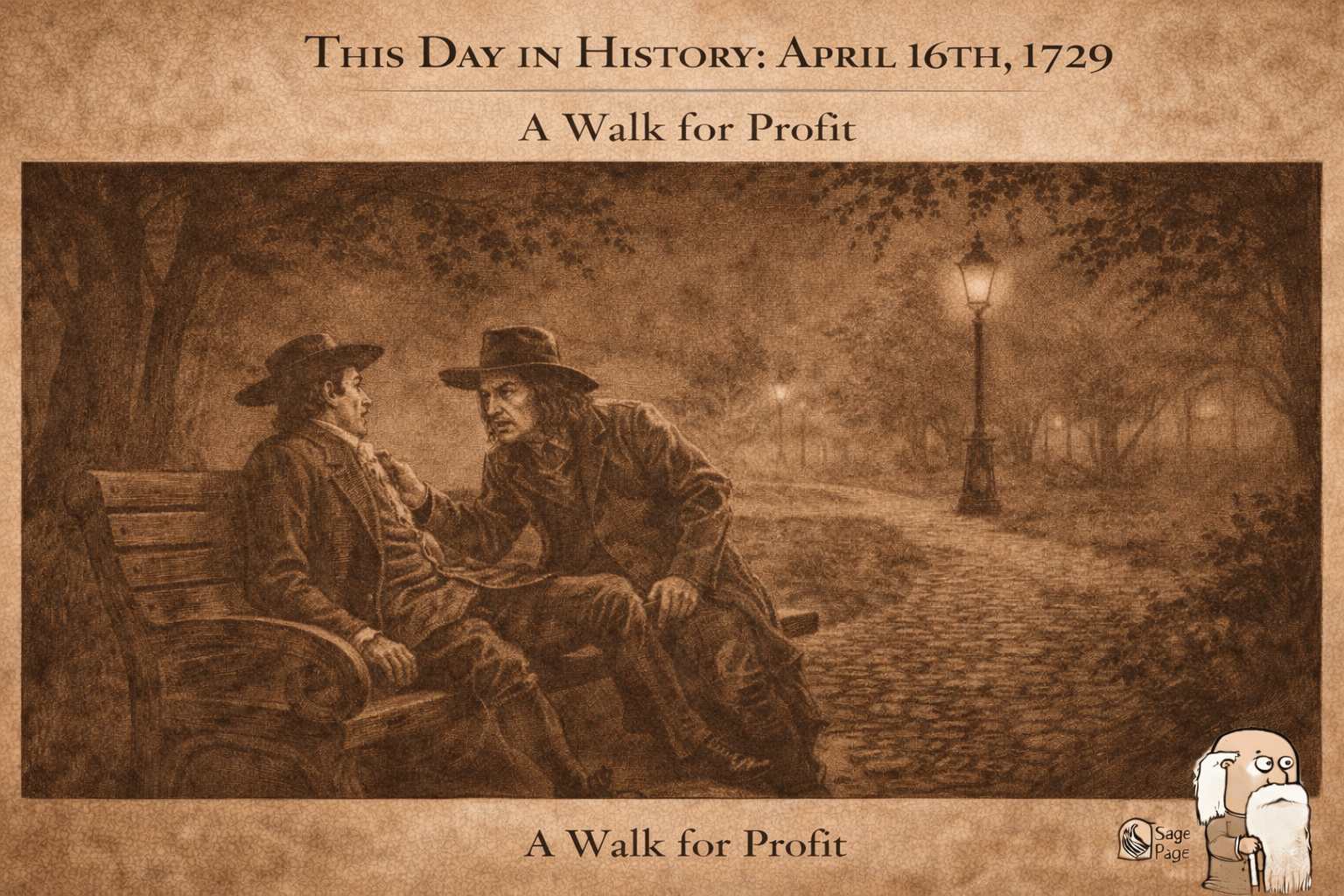
This Day in History: April 16th, 1729

“A Walk in the Park… for Profit”

On a spring evening in 1729, a quiet walk through St James’s Park became the setting for a calculated scheme of intimidation—one that relied not on violence, but on fear, reputation, and the threat of scandal.

At its centre was a man named John Mitchel, whose chosen method of making money was as simple as it was effective:

Accuse… and be paid to stay silent.


An Encounter at Night

On the evening of March 29th, at around nine o’clock, William Cornish was sitting on a bench in St James’s Park when Mitchel approached him.

At first, the conversation appeared ordinary enough.

Mitchel asked whether Cornish was a servant, and began speaking casually about himself. But the exchange quickly took an uncomfortable turn, becoming suggestive and intrusive.

Sensing something was amiss, Cornish got up to leave.


The Threat

He did not get far.

Mitchel seized him and delivered a chilling ultimatum:

Pay—or face ruin.

He told Cornish that unless he handed over money, he would swear an accusation of sodomy against him—a charge which, in 18th-century England, carried not only social destruction but the very real possibility of death.

This was not an idle threat.

Mitchel made it clear that this was his trade.


A Criminal Business Model

According to Cornish’s testimony, Mitchel openly boasted of his method:

  • He walked the park at night
  • Selected his targets carefully
  • And extracted money through fear of exposure

He claimed he could make four or five guineas in a single evening, relying on the fact that his victims would rather pay than risk public accusation.

It was extortion built on silence.


🔎 Trial Echo

“William Cornish depos’d, That being in St. Jame’s Park on the 29th of March , near 9 a-Clock at Night, he sat down on a Bench by him, and ask’d him, if he was a Gentleman’s Servant? telling him, that he liv’d with his Father, an Upholster in Gerard-Street, and that he, the Prisoner could show 9 Inches; asking the Prosecutor if he could? Upon this, he, the Prosecutor, went away; but he collar’d him, and told him, If he did not give him a Guinea, he would swear Sodomy to him; telling him, he had got so much Money of such a One, and so much of such a One, on the same Account; and that when he wanted Money, he took a Walk in the Park, and got 4 or 5 Guineas a-Night of Gentlemen, because they would not be expos’d”


The Payment

Under pressure, Cornish eventually gave in.

He paid half a guinea (10s 6d)—money he had to borrow from a friend—simply to make the threat go away.

But Mitchel did not stop there.

Days later, he returned—this time attempting to extract even more, asking for three additional guineas, brazenly offering a note as if this were a legitimate transaction.


Turning the Tables

This second approach proved his undoing.

Rather than comply again, Cornish used the opportunity to have Mitchel apprehended.

What had been a private act of intimidation was now dragged into the public arena—exactly the situation Mitchel had relied on his victims to avoid.


The Verdict

At trial, the facts were clear and straightforward.

The jury found Mitchel:

Guilty.

His punishment reflected the nature of the crime—not violent, but deeply disruptive to public order and trust.


Sentence

The court ordered:

  • Three months’ imprisonment
  • A fine of £10
  • And most visibly—
  • The pillory at Charing Cross

Justice in Public

The pillory was not merely a punishment—it was a spectacle.

Placed in a public thoroughfare, the offender was exposed to the crowd, often subjected to ridicule, abuse, and worse.

For a man whose crimes depended on secrecy and intimidation, this was a fitting reversal.

Mitchel, who had relied on silence, was now made into a public example.


Why This Case Matters

This case offers a fascinating glimpse into:

  • The power of reputation in 18th-century society
  • The dangers of false accusation
  • And the ways in which crime adapted to social fears

Mitchel’s scheme worked because the accusation he threatened was so serious—and so shameful—that many would pay to avoid it ever being spoken aloud.

It is a reminder that not all crime relies on force.

Sometimes, fear is enough.


Thank you for reading my writings. If you’d like to, you can buy me a coffee for just £1 and I will think of you while writing my next post! Just hit the link below…. (thanks in advance)
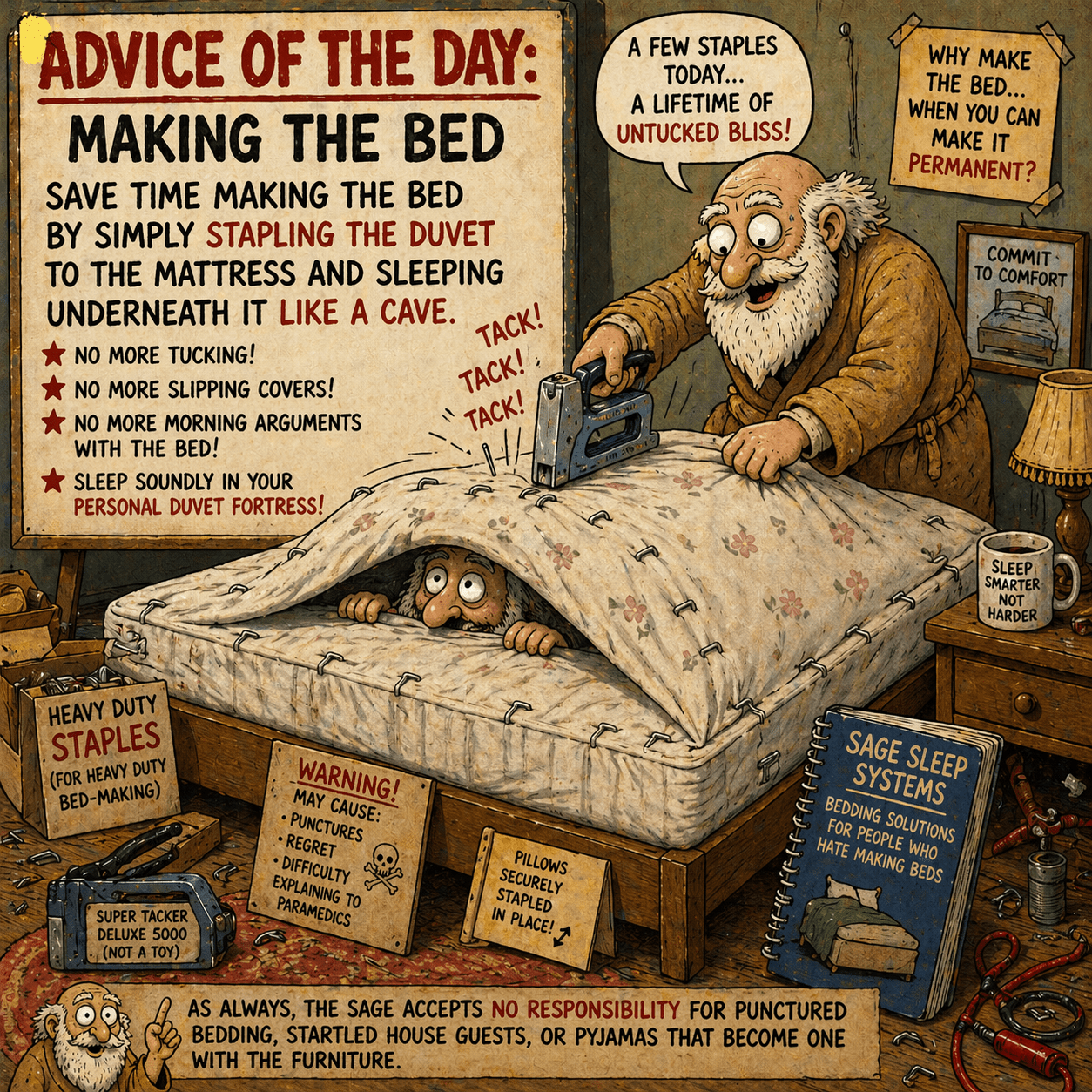
Advice of the Day: Treating a Cold

Stop your nose running by inserting a slug up each nostril.

the sage

A runny nose is one of the most persistent and irritating symptoms of a cold. Tissues offer only temporary relief, and dignity is quickly abandoned. The Wise Sage proposes a more… organic solution.

Slugs, being naturally slow-moving and moisture-loving, are ideally suited to the task of regulating nasal flow. By carefully placing one slug in each nostril, you create a living barrier that both blocks and manages unwanted movement. It’s nature solving a problem it never intended to solve.

For best results, select slugs of equal size to ensure balance and symmetry. The Sage recommends a calm approach during insertion, as sudden movements may encourage independent decision-making on the part of the slugs.

If questioned, simply explain that you are “trying something holistic.” This will prevent most follow-up enquiries.

As always, The Sage accepts no responsibility for horrified reactions, unexpected sensations, or needing to explain yourself to a medical professional.


Thank you for reading my writings. If you’d like to, you can buy me a coffee for just £1 and I will think of you while writing my next post! Just hit the link below…. (thanks in advance)

Quote of the Day: Deception

“Fraud often hides behind a heavy curtain, but the performance is usually betrayed by how cheaply it is staged.”
— The Sage


Deception rarely presents itself as obvious. It prefers atmosphere — a sense of importance, complexity, or authority that discourages closer inspection. Like a stage production, it draws the eye to the curtain, the lighting, the suggestion that something substantial lies behind it.

But The Sage reminds us that appearances can only carry an illusion so far. Sooner or later, the details begin to show. The stitching looks rushed, the props feel insubstantial, and the story begins to strain under its own weight. What seemed impressive at a distance often reveals itself as cheaply constructed upon closer view.

There is a quiet skill in learning to look past the curtain. To notice not just what is presented, but how it is held together. In doing so, we become less susceptible to illusion — and more attuned to what is genuine, which rarely needs such elaborate disguise.

— The Sage


Thank you for reading my writings. If you’d like to, you can buy me a coffee for just £1 and I will think of you while writing my next post! Just hit the link below…. (thanks in advance)
This Day in History: April 15th, 1692

“The Execution of Henry Harrison”

On a cold April morning in 1692, Henry Harrison was led from Newgate to the gallows—his fate sealed by a case that combined murder, deception, and a motive rooted in money.

At the centre of it all was a respected physician:

Dr. Nicholas Clench.


The Murder of Dr Clench

Dr Clench was a well-known London physician—a man of standing, wealth, and reputation.

His death was sudden.

His body was discovered under deeply suspicious circumstances, and almost immediately, attention turned toward Harrison.

Why?

Because Harrison had been in direct contact with him shortly before his death.


The Motive: Money and Trust

The case quickly revealed a powerful motive.

Harrison was believed to have gained access to Dr Clench under false pretences, luring him into a situation where he could be robbed.

This was no random act.

It appeared planned.

Dr Clench, a man of means, had been targeted—and after his death, suspicion fell heavily on Harrison as someone who had both opportunity and intent.


The Evidence Against Him

At the Old Bailey trial on 6th April 1692, the prosecution laid out a case built on:

  • Harrison’s association with Dr Clench
  • His presence at crucial moments
  • And most damaging of all—his inconsistent explanations

Witnesses came forward to contradict him.

His story shifted.

Details changed.

And with each contradiction, the jury’s confidence in him weakened.


A Case of Credibility

In one of the most telling aspects of the trial, Harrison’s own words worked against him.

What he claimed at one moment, he appeared to abandon the next.

In a courtroom without forensic science, this was devastating.

The case became less about proving exactly how Dr Clench died…

…and more about whether Harrison could be believed at all.


🔎 Trial Echo

“He was seen in company with the Doctor, and being questioned thereof, gave such differing Accounts, as rendered him suspected by all that heard him.”


The Verdict

The jury did not hesitate.

Harrison was found:

Guilty.

In the justice system of the time, where reputation and consistency carried enormous weight, his failure to present a coherent defence proved fatal.


Newgate and the Final Days

Awaiting execution in Newgate Prison, Harrison came under the care of the Ordinary of Newgate.

He attended prayers.

He listened to instruction.

He appeared, outwardly, to prepare for death.

But crucially—he never delivered a clear, unequivocal confession.


🔎 The Ordinary’s Reflection

“He applied himself to Devotion, yet was not so free in his Confession as might be expected of one under such Circumstances.”


The Execution

On April 15th, 1692, Harrison was taken to the place of execution.

As was customary, he addressed the crowd—but his words did not resolve the lingering uncertainty.

No clear admission.

No final clarity.

Only the end.


A Case That Lingers

The death of Dr Clench was avenged in the eyes of the law.

But the case leaves behind a troubling question:

Was Harrison unquestionably guilty?

Or was he condemned, in part, because he failed to convince?

In an age before modern evidence, the line between the two was dangerously thin.


Why This Case Matters

This case is a powerful example of how justice once operated:

  • Motive mattered
  • Testimony ruled
  • Consistency could decide life or death

Henry Harrison’s fate reminds us that in early modern England, a man could hang not only for what he had done…

…but for how poorly he explained himself.


Thank you for reading my writings. If you’d like to, you can buy me a coffee for just £1 and I will think of you while writing my next post! Just hit the link below…. (thanks in advance)