Wednesday’s whirlpool of wonderment ….

Listen – don’t read!

My favourite name for a planet is Saturn.

It has a nice ring to it…

I recently took some new photographs of Will Smith and they’ve just been developed….

They are the fresh prints…

“I bought my wife an electric guitar yesterday”

“A Fender ?”

“No, she loved it…”

My wife threatened to divorce me when I said I was going to give our daughter a silly name…

So I called her Bluff…

I’m embarrassed to say I got addicted to shoplifting but only from the bottom shelves in the supermarket.

How could I stoop so low?

So my girlfriend told me to choose between our relationship and my career as a reporter.

Well, I’ve got some news for her.

The Grim Reaper came for me last night, and I beat him off

with a vacuum cleaner.

Talk about Dyson with death.

If we aren’t supposed to eat animals, why are they made of meat?

There’s no future in time travel.

My wife is threatening to leave me because of my constant puns about Africa.

Kenya believe that?

Ghana miss her if she goes…

I’m not happy with our new sandwich toaster, we should have stuck with the old one…

Oh well, better the Breville you know…

The guy who invented throat lozenges died last week.

There was no coffin at the funeral.

I’ve got a phobia of over-engineered buildings.
It’s a complex complex complex.

Tuesday’s carnival of custard ….

Not all maths puns are bad.

Just sum

At a job interview I filled my glass of water until it overflowed a little.

“Nervous?” asked the interviewer.

No, I always give 110%”

My son asked me for a pet spider for his birthday, so I went to our local pet shop and they were £70!

Blow this, I thought, I can get one cheaper off the web.

My friend Timmy was once bitten by a rattlesnake, and if I knew the difference between antidote and anecdote he’d still be alive today.

Women like silent men, they think they’re listening.

BREAKING NEWS!

Big delays on the motorway this morning after a truck carrying grain collided with an Ovaltine lorry.

Police describe it as a malty vehicle accident…

My granddad always used to say; “As one door closes, another one opens…”

Lovely man, terrible cabinet maker.

I applied for a job looking after the Australian marsupials at the zoo…

However I didn’t possess the necessary koalafications…

FUN FACT!

Did you know that the patron saint of checking if your bread rolls are ready to come out of the oven is St John the Bap Test…?

I saw a slide with an 85 degree incline for sale the other day for £1000.

I thought that’s a bit steep…

I had a dream that John Lennon and Gary Barlow formed a supergroup…

Imagine that!

You know Bruce Lee was fast, but he had an even faster brother…

Sudden Lee.

I’m thinking of giving my Shetland pony a Covid test…

His main symptom is that he’s a little hoarse.

Monday’s bag of balderdash ….

Today I decided I won’t drink anymore…

I won’t drink any less either though.

I once thought I had a Japanese friend.

But it was just my imagine Asian.

My uncle drank a whole bottle of wood varnish.

He had a horrible death but a lovely finish.

Can anyone remember?

What was the name of the big bird in Sesame Street?

Why do Swedish warships have barcodes on them?

So when they dock they can Scandinavian.

My grandad always said “don’t believe everything you hear”

It was great advice…

Or was it?

Why did the chicken cross the road?

Because the gas board had dug up the pavement again.

What do you call a man with a rubber toe?

Roberto.

What do you call a Frenchman wearing sandals?

Phillipe Phillope.

I’ve started my new job as a settee salesman today..

Sofa so good.

My mate’s gf was dancing on a table

“Good legs”

“Do you really think so?”

“Yes, most other tables would’ve collapsed under that weight.”

English is weird.

It can be understood through tough thorough thought, though.

Wednesday’s waterfall of wonderment …

My wife is always nagging me about my obsession with Lulu.

She makes me want to shout…

My wife asked me ‘What are the chances I will get accepted into a convent if I lose weight?’

I said ‘slim to nun’

Went to the doctors and he told me I needed a pacemaker.

So now I’ve got this annoying Kenyan athlete two yards in front of me everywhere I go!

My wife bought a new oven glove in a bright yellow colour.

I kept making puns about it, and now she’s not talking to me.

I probably did take it too far, I mustard mitt…

Someone stole all my next door neighbours grass last night.

He’s out there now looking forlorn…

A bike in town keeps running me over…

It’s a vicious cycle.

What is the best kind of oil to massage your enemies with?

Turmoil.

I used to hate my job standing on one corner of the room, blowing air at people.

Now I’m a big fan.

I saw an onion ring…

So I answered it.

I’ve just been diagnosed colour blind.

I know .. it’s certainly came out of the purple.

I poured some water over a duck’s back yesterday.

He didn’t care.

I keep saying ‘Welsh rabbit’ instead of ‘Welsh rarebit’

Think I’m suffering from mixing my toasties…

I was just looking at my ceiling.

Not sure if it’s the best ceiling in the world, but it’s definitely up there.

Aristotle’s argument against democracy.

Aristotle’s argument against democracy – but was he right?

Aristotle believed the best type of government was by monarchy, or, at the very least, by aristocracy. Democracy was not to be encouraged! To better understand this seemingly somewhat outdated and extreme “right-wing” view, we must look at his philosophical reasonings for his proposition.

Aristotle linked politics with ethics and believed society’s ethics should come before an individual’s ethics. Ethics concern a man’s virtues, and Aristotle considered the greatest of all virtues to be magnanimity. Magnanimity is the virtue of being great of mind and heart, and is defined in the OED as “behaviour that is kind, generous and forgiving, especially towards an enemy or competitor.” And herein lies the first clue to his postulation on government – it is easier for a great ruler to be magnanimous than for a body of people to do so in a democracy.

Like Socrates and Plato before him, Aristotle believed that the job of a ruler was to rule, and to do other work would be a handicap in his industry as a ruler. And rulers should be philosophers. His tutor Plato had stated in his manifesto “Republic” that kings should become philosophers or that philosophers should become kings, and in reality, it was probably more likely that the former would happen.

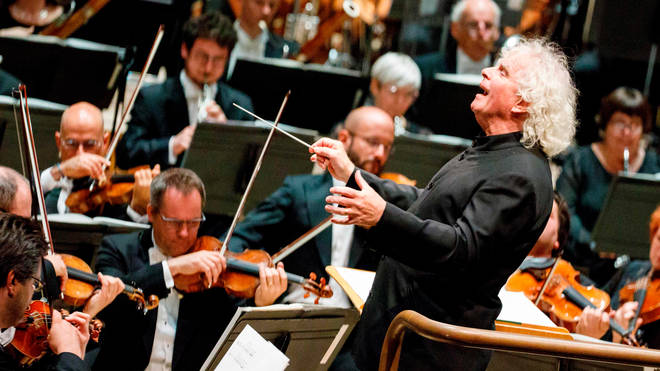
An analogy to best describe Aristotle’s views on the supremacy of a monarchal government is that of the musical harmony created by an orchestra. The orchestra has only one conductor. This leader is responsible for the total musical output of the whole orchestra. This is his sole job, whilst playing no instrument himself. Each member of the orchestra has a particular job. On the command of the conductor, he is to play the instrument assigned to him (based on his individual merit and ability to play that instrument) only when instructed to do so. The lead violinist has a greater importance than the oboe player. As stated, the ability to play an instrument will vary amongst the orchestra members, and so the assigning of the instruments will be decided by determining the merit and abilities of the performers. If each player were to be given equal status, importance, and freedom to “go solo”, the resultant composition would be far from harmonious!

Analogies are imperfect ways to present arguments, and parallels between governments and states with those of musical ensembles may well stretch the elasticity of reason to breaking point, but I shall end the essay with a quote from the great man – “To lead an orchestra, you must turn your back on the crowd.

Thank you for reading my writings. If you’d like to, you can buy me a coffee for just £1 and I will think of you while writing my next post! Just hit the link below…. (thanks in advance)


Thursday’s tidal wave of trifle

Any guy who plays heavy metal at work…

Is office rocker.

As I looked into her eyes I felt my knees go weak and my stomach turned to butterflies.

That’s when I realized I’d drugged the wrong glass.

My girlfriend bet me I couldn’t do a butterfly impression.

I thought to myself, that’s got to be worth a little flutter!

BREAKING NEWS!

A Cadburys lorry and a Lego truck have collided on the motorway.

Police say the road is choc a block…

Frank Sinatra was once asked if he ever kept herons as pets…

Egrets? I’ve had a few…” he replied.

I just received a ‘Save the Date’ card.

I didn’t even know they were an endangered fruit?

Some people think filling animals with helium is wrong…

I don’t judge.

Whatever floats your goat.

What moisturiser do Spanish bullfighters use?

Olay.

Becoming a vegetarian is a big missed steak.

What do you say to a man who’s just stole your gate?

Nothing. He might take a fence.

After giving my son two karate lessons, he said he didn’t want any more.

Still, at least I got my car washed and my fence painted.

Have YOU had to walk 500 miles?

Were you advised to walk 500 more?

You could be entitled to compensation.

Call the Pro Claimers NOW.

I overheard two of my friends talking about me the other day…

I said, “you disgust me.”

“Yes, we did.” they replied.

I used to work in a Russian napkin factory…

I was in the serviette union…

Apparently to start a zoo you need at least two pandas, a grizzly and three polars.

It’s the bear minimum.

The horse in the field.

The horse in the field – A metaphor about the past not equaling the future.

There was an old farmer who kept a horse in a field. It was a working farm but it wasn’t a working horse, the farmer had kept the horse for a long time for his children and grandchildren to ride. Now the horse was old and, this is the sad part of the story, as old horses do, he died.

Although the farmer didn’t need another horse, he thought it would be nice to get another horse. But he couldn’t get an old horse so he got a young colt. The young colt was not like the old horse; the old horse would spend all of his days in the middle of the field, this was not like the young colt.

So the first day whilst the farmer was working on the farm the young horse pushed against the fence, the fence gave way and the horse got out. The farmer had to stop his work, push the horse back in the field and push back the fence. This happened again two, three, four times and the farmer got angry and frustrated.

So on day two he got up very early, he went to the barn and got a single strand of wire and ran the wire around the fence and connected it to a car battery. The horse awoke and pushed against the fence as he had done before – Zap! The horse jolted back, but after a few moments pushed again with more force, ZAP! He tried it again three more times, he had to learn. Shocked and defeated he gave up for the rest of the day and just stood by the dangerous fence.

On day three he tried to push the fence again as it may have just been what happens on one day… Zap! He tried two times more and gave up and just stood by the fence. On the fourth day he remembered not to push against the fence but whilst looking over he got too close to the fence and Zap! He now learnt that even touching the fence would cause pain, so he stood a little distance away from the fence just in case.

On the fifth day he walked round and round the field next to the fence and with the carelessness of a young colt he brushed against the fence and Zap! He moved away from the fence.

On the sixth day he cautiously walked around the centre of the field, by the seventh day he just stood in the centre of the field… just like the old horse. This pleased the farmer.

A year went by, the farmer received his electricity bill (and we know about farmers and their money), he scanned through the bill and saw he’d been spending a lot more money. “Aaaaaaah” he thought to himself, “it’s because I’ve been charging that car battery”. So he continued thinking to himself… ”Hmmm… If I stop charging the battery the horse won’t know,” so he stopped the charging and the horse… didn’t know.

A few months went by and the pigs started to escape. The farmer knew what to do – he took the wire and the battery from the horse’s fence and wrapped it around the pig enclosure… He smiled, and in seven days, the pigs had learnt too. And the horse stayed in the middle of the field.

Another few months went by and the big storms came, (you know the sort – those storms that blow down fences and blow over wheelie bins) the storm blew over one whole side of the horse’s fence. The farmer went to repair it the next day but stopped. There was his horse, despite no fence – just standing in the middle of the field, so the farmer put his tools down and let the fence lay broken.

Another few months went by and now the cows needed re-fencing, so, to save money, the farmer took down the remainder of the young colt’s fence and enclosed the cows. The horse stood in the middle of the field.

With no barriers, no fences, no boundaries whatsoever, the young colt stood still in the middle of the field. The farmer smiled.

Eplilogue

A few months later an old travelling circus passed down the lane adjacent to the field in which the horse stood. You know the kind of travelling circus – the type with many brightly coloured caravans and horses of all sizes. And our young horse strode out of his field and joined this circus.

Several years later he sired a colt of his own.

What are our fences….what are our limiting beliefs … so old that we even forgot they were there?

Tuesday’s triumph of tittle-tattle …

How much room do you need to grow fungus?

As mushroom as possible.

Nothing succeeds like a budgie with no teeth.

I used to be addicted to eating soap.

But I’m clean now.

Did you know people are born with four kidneys?

It’s just that when they grow up, two of them turn into adult knees…

Need to find out the cost of buying one of those Elizabethan circular neck garments for a fancy dress party.

Can anyone give me a ruff estimate?

What’s the most helpful medical problem?

A cyst.

Who’s the genius that decided to call it “Emotional baggage”…

And not “griefcase”.

Dad is down at the car dealership, looking at potential choices. “Cargo space?” he asks.

The salesman says:

“Car no do that. Car go road.”

I was really struggling to get my wife’s attention….

So, I sat down on the sofa and looked comfortable. That did the trick.

I think my wife is putting glue on my antique weapons collection…

She denies it but I’m sticking to my guns!

Monday’s menagerie of misquotes …

I always feel warm on my birthday because people don’t stop toasting me.

Age is a relative thing.

All my relatives keep reminding me how old I am.

“Were any famous men born on your birthday?”

“No, only little babies.”

The older you get, the more you need to keep a fire extinguisher close to the cake.

I once dated a girl with a twin.

People asked me how I could tell them apart. It was simple, Jill coloured her nails purple and bob had a penis

I quit my job to start a cloning business and it’s been great…

I love being my own boss.

Most people are shocked when they find out…

How incompetent I am as an electrician.

My son asked: “Are these gay cows, Daddy?”

“No, they’re bison,” I replied.

At first, my girlfriend didn’t want to get a brain transplant.

Then I changed her mind.

I’m addicted to seaweed.

I must seek kelp.

Why doesn’t Elton John eat lettuce?

Because he’s a rocket man!

I bought one of those ‘smart light switches’ but it was much too clever…

So I replaced it with a dimmer switch.

I’ve got a rare skin condition that looks like I’m covered in camouflage.

I went to the doctor but he said he couldn’t see me…

Took my car in for a service yesterday…

The vicar at the church was not impressed…

I found a four leaf clover!

It’s a bit creased, I was going to iron it but I don’t want to press my luck..

Did my first nude painting this morning.

The neighbours weren’t happy but the front door looks great!

Just lost in the final of the ‘UK Crossword Championship’…

Gutted isn’t the word!

I was in London the other day when an American tourist stopped me and asked me the best way to Selfridges…

I told him probably to put them on eBay…

Just finished reading a new book called “Falling off a cliff” by Eileen Dover.

I just finished building a car using a motor from a washing machine.

I’m going to take it for a spin later…

I went on a trip to a postcard factory last week. It was OK.

Nothing to write home about.

When is liberty worth fighting a revolution for?

When is liberty worth fighting a revolution for?

In this essay, I will argue that there are only a few occasions when liberty is worth fighting a revolution for, and I will illustrate this by discussing the ideas and works of English philosophers Thomas Hobbes (1588–1679) and John Locke (1632 – 1704). Both philosophers were alive and wrote at a time of great civil unrest in England, the former writing in exile during the English Civil War, and the latter writing his treatise on government a year after the Glorious Revolution of 1688. I will argue that within a commonwealth our individual rights cannot come before society’s collective rights and that equality of outcome is not the same as equality of opportunity. Central to my argument is that if the state is meeting its obligations (principally when there is a recorded and agreed covenant with the people) then revolution is unjust, especially if it is for personal benefit. I will also argue that fighting for the rights of others is not justified on the basis of “I know better than them”.

At this point it is important to discuss what is meant by “liberty”. The Oxford English Dictionary (O.E.D.) defines liberty as ‘The state or condition of being free’ and this inevitably leads on to examining the O.E.D. definition of “freedom” which is ‘The state or fact of being free from servitude, constraint, inhibition, etc.; liberty’. But freedom is more than being “free from” (a negative freedom), it also involves being “free to” (a positive freedom). While considering terminology, I will argue from the viewpoint that “fighting a revolution” in this context would involve a violent or armed struggle to either overthrow the governing body or at the very least, to change laws that were unpalatable or intolerable to members of that society. That said, it is worth mentioning that at the time of Hobbes’ and Locke’s writings, sedition (considered to be treason) was a capital offence in England.

To understand Hobbes’ views on liberty it is necessary to appreciate that when he viewed freedom it was in terms of “freedom from” the state of nature. Hobbes’ described the “state of nature” in his tetralogy of books Leviathan in 1651 by undertaking a thought experiment – this was to mentally go back to a time in mankind’s history before there was civilisation, government, organised rule or civic duty. In such times, Hobbes surmised, life would be ‘nasty, brutish, and short’. Hobbes considered that lack of civil authority would allow individuals complete freedom to follow their base desires, resulting in a perpetual state of conflict at the individual and family levels, where everyone would be forced to try and hold on to (or take from another) whatever meagre possessions they had. Under this regime no community activities such as farming, industry, or education would be possible, thus even rudimentary civilisation could not be founded. So Hobbes believed that where there was an absence of a sovereign power or government that provided law, negative liberty would result. Thus, the state of nature was a prescription for disorder and lawlessness. The result of this would be people only using their ‘liberty’ in negative ways, to plunder and pillage others.

Hobbes expands his views on liberty in Chapter 21 of Leviathan by explaining that when people act within the law they do so with liberty, and therefore it would seem absurd to want liberty from the very laws that were there to protect you. Furthermore, when people act outside the laws, they do so without the protection of those laws, thus they are in effect returning to the state of nature. So Hobbes very much expounded the concept that with freedom comes obligation (to follow the law of the land).

John Locke recorded his thoughts on societal liberty in his publication Two Treatises of Civil Government in 1689, almost three decades after Hobbes’ Leviathan. Locke re-affirmed Hobbes’ postulate that liberty is synonymous with acting within the law when he stated ‘all the states of created beings capable of laws, where there is no law, there is no freedom for inWhilst Locke’s views on the state of nature differed from Hobbes, in that he thought that pre-societal life was more harmonious and less chaotic, he agreed with Hobbes by arguing against the potential anarchy of an uncivilised state by writing ‘for liberty is, to be free from restraint and violence from others; which cannot be, where there is no law’.

It can be seen that both philosophers considered true liberty to be only possible within a society governed by laws, hence both favoured a commonwealth with a sovereign power (be that one person or a collective) at its head. Therefore, both Locke and Hobbes discussed types of governance and agency within a commonwealth and then asserted that individual rights cannot trump the collective rights of that society where a sovereign commits to protect its individuals. Hobbes writes in Leviathan that the common good (or collective good of a society) does not differ from the private good in other animal species. It could be argued though that Hobbes and Locke provide us with three premises for liberty within a commonwealth, each of which needs to be tested. The first premise is that people in society only have true liberty when they are governed by laws, secondly that we consent to keep these laws, and thirdly that the collective good outweighs or is equal to the individual good.

To bolster the first premise Hobbes argues in Chapter 13 of Leviathan that even within a lawful society we lock away belongings, and lock our doors at night when we sleep. Hobbes believed that liberty was only possible when there were laws and punishments for breaking them. Locke addressed a weakness in the second premise which is that people do not “sign up” to a covenant within a commonwealth and there is no written agreement between citizens and the sovereign in almost every state, but he countered this by stating that ‘every man, that hath any possessions, or enjoyment, of any part of the dominions of any government, doth thereby give his tacit consent, and is as far forth obliged to obedience to the laws of that government’. In simple terms, Locke stated that even when enjoying the simple freedom of walking down a state’s highway you have given your tacit consent to follow that state’s laws. The third premise is argued by Hobbes with respect to utility and security, and Barber explains Hobbes’ premise by saying ‘A common power of this kind […] is only possible if everyone hands over all their power to a single man or a single body of men’.Thus, when all members of society have the benefit of security of this central power, by definition every individual enjoys those benefits equally. It follows then, that they are not subservient to any individual in the state, only to the sovereign.

If the above conditions of liberty are provided within a commonwealth, then when would it be possible to fight a revolution? It was Hobbes’ view that the only valid exception to fight a revolution is for the preservation of the first right in the law of nature- that being to protect ourselves from death, injury or imprisonment. Furthermore, to assert this point Hobbes’ considered why it was that men fight or come to a state of war with each other. Hobbes’ concluded there were three reasons: ‘The first, maketh men invade for Gain; the second, for Safety; and the third, for Reputation’.

So Hobbes’ remedy lay in addressing these root causes by ensuring that the covenant between the individual and the sovereign within the commonwealth provided strong laws and security. While the covenant is intact and the sovereign is providing security, people are compelled not to revolt. To re-enforce this, Hobbes believed that to make citizens comply with the law, the punishment for any offence must be greater than any potential gain from committing that crime. However, if the sovereign cannot provide this security, either in the immediate short term (for example when an individual is confronted by a thief), or in the long term through dereliction of duty or lack of law enforcement, then citizens become entitled to fight as a person cannot give away their first right in the law of nature to protect oneself. Hobbes went further in his heeding of revolutions by stating that when commonwealths are set up by revolution the subjects are ruled by fear and not by trust, as there is no covenant in place, and he concluded that ‘rebellion was like war renewed’. Locke, similarly, held the principle that when citizens act outside the law then they act outside the state of nature and therefore they are acting in a state of war. In such cases, they have the right to protect themselves using force not normally permitted within the law.

It can be seen that a pre-condition for a safe and secure society for both Hobbes and Locke was a commonwealth in which the sovereign power provided fair and just laws to protect its citizens, but could this state be seen to be fair and equitable if the sovereign power was exempt from (or above) the law? Hobbes believed that the sovereign is subject to the laws of nature but not to civil law, for if he were bound by civil law then it would necessitate a sovereign above him setting and enforcing that law. Locke did not accept this view, and considered that rulers, be they monarchs or elected government, should be subject to civil law, and went on to argue that ‘wherever law ends, tyranny begins’. This difference between Hobbes and Locke is important, for if you follow Locke’s viewpoint then there is a greater need to legitimise the covenant between sovereign and citizen through a formal written treatise to prevent digressions and excesses of that sovereign power. In 1689, The Bill of Rights (1688) became law in England and although Locke was not credited with authorship, it is believed that his political philosophy was the bedrock of its content. In this legislation, the King could no longer circumnavigate laws enacted by a Parliament which was voted for and made up of, the people. He could no longer keep a standing army without parliamentary approval. This law also made freedom of speech and petition of the King legal, and it gave citizens the right to bear arms for their own protection. In effect, Locke had overcome some of the objections against Hobbes’s view on liberty by proposing a system where there was greater accountability of the ruling power and greater equity for the citizens.

Therefore, both Hobbes and Locke agreed that there are determinable bases for when it is worth fighting a revolution in the cause of liberty; these being for Hobbes the right of self-defence to protect oneself against individuals or the sovereign at such times when that sovereign can no longer provide protection; and for Locke, citizens have the right to rebel when their leader becomes a tyrant and acts outside the civil laws, or their government can no longer protect them.

A flaw to this limited approach is that whilst rules and obligations are in place to provide every citizen with basic liberties to live peacefully within a set legislative framework designed to protect life and provide a base level of security, there is no consideration of minimum standards for the quality of life or for the means of provision thereof. Any liberty under such a regime can be described as the enactment of negative rights (laws to prevent yourself and others from doing harm). To address this Locke argued that natural rights extend beyond life and liberty, a third right being that of individual property, stating a citizen entering society does so ‘only with an intention in everyone the better to preserve himself, his liberty and property; (for no rational creature can be supposed to change his condition with an intention to be worse)’. Locke proposed that in a commonwealth there is communal property that everybody owns and is available to all, and as soon as a man puts his labour into the provisions nature has provided it becomes his, with the caveat that he does not take more natural resource than that which would deprive others of their fair share. In other words, property is the fruit of labour. Therefore, he considered that there is equality of opportunity if men are free and unhindered to use nature’s resources and that they would have agency to shape their destiny. Thus any inequality and personal hardship would lie in the inequality of outcome, not opportunity.

This argument against inequity, though, still falls short of being a positive right (that is to say, the state providing minimum means of sustenance). A premise could be put forward that if the standard of subsistence in a state is declining or has declined below that which is necessary to give a healthy and secure living, then conditions are met for disenfranchising oneself from that state. However, this hardship premise again is problematic, in that without recorded and universal subsistence standards, any ranking of individual circumstances is subjective. Furthermore, it could be argued that as long as the majority of the population is above the arbitrary subsistence threshold then the greater good of the community is being met by the state, and the rights of any individual below the threshold do not supersede those of the majority.

Therefore, individual rights should not take precedence over the collective good. And even if the majority of the population fell below a poverty or hardship threshold but they were content with the sovereign, then it could also be argued that it would be ethically wrong for an individual to fight on others behalf; this would be to presumptuously act as a surrogate for other less well off citizens in the belief that “I know better than them”, and would go against the collective will. It follows, therefore, that the decision to fight a revolution must be in regard to an individual’s personal circumstances together with the irrefutable knowledge that it is the will of the majority of the people to fight, and that will is for the good of the majority of the people.

I mentioned in my introduction that I would limit my arguments around the term “fighting” a revolution to that of violent struggle. It is fair to state that this is a limited stance as violence is at one end of a wide spectrum of revolutionary measures that can be taken to oppose a regime (the other end being acts such as distributing propaganda or peaceful marches). However, if one were to believe that armed conflict, which may lead to the taking of lives, is only permissible when one’s own life is in immediate peril, then it is important to appreciate that any act of opposition or sedition, however seemingly small, may lead to a violent conclusion. There are numerous examples throughout history where justifiable non-violent direct action has resulted in civil disobedience and loss of life, and the threat of violence from either the protestors’ or state’s side often results in the arming of both.

In conclusion, if a state has a tacit or written set of rights or a formal constitution within a commonwealth, and if the sovereign does not break the covenant with its citizens, it follows that there is no right to revolution, as sufficient individual liberty exists within this framework. The notable exception to this is the need for immediate self-preservation which supersedes all agreements. Self-preservation encompasses the right of an individual to prevent harm to life, health, and freedom from imprisonment. During those times when an individual does not enjoy the protection and security of its sovereign power, an individual is deemed to be free from any covenant and is put into a state of war, thus enabling them to act outside the laws of nature which includes the right to fight with proportionate violence.

Thank you for reading my writings. If you’d like to, you can buy me a coffee for just £1 and I will think of you while writing my next post! Just hit the link below…. (thanks in advance)